A roof leak in Jacksonville is not the same event as a roof leak in a dry climate. Florida's average relative humidity runs 74 to 90 percent, and indoor humidity in an unconditioned or poorly conditioned space frequently exceeds 70 percent — the threshold at which most mold species begin colonizing wet organic materials within 24 to 48 hours.
That timeline matters. If you discover a roof leak on a Saturday and wait until Monday to call anyone, mold may already be establishing on the drywall, insulation, and wood framing that got wet. The cost of the water damage and the cost of the mold remediation are now two separate projects.
This guide walks through every step of the process — documenting the leak, hiring the right assessor, getting legitimate bids, understanding what remediation involves, and coordinating everything with your roofing contractor and insurance adjuster.
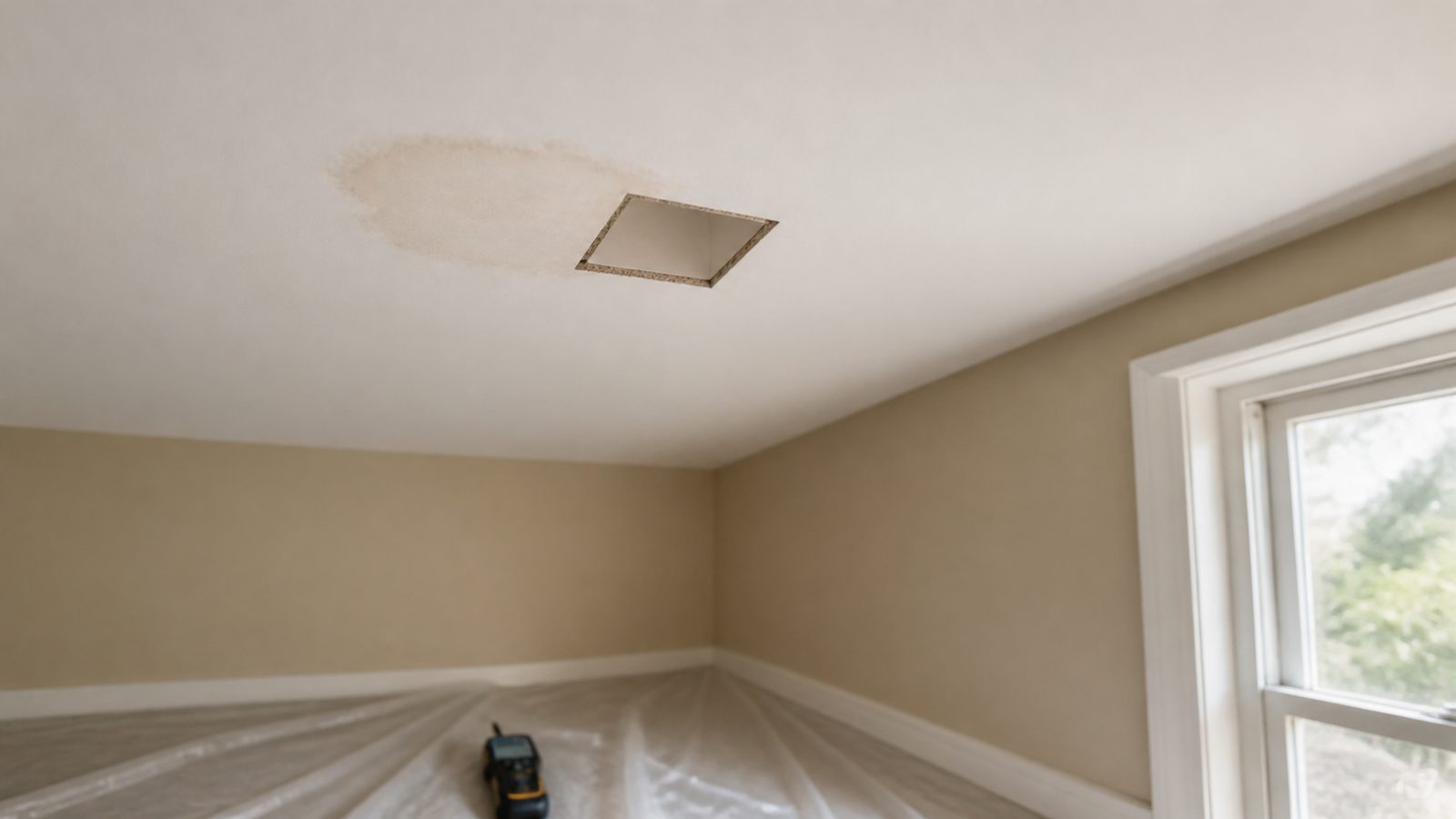
Step 1: Understand the 24–48 Hour Mold Onset Window in Florida
Mold requires four conditions to grow: a food source (organic material like drywall, wood, or insulation), moisture, appropriate temperature, and time. Florida satisfies three of those conditions at baseline. The fourth — moisture — is what the roof leak supplies.
CDC guidelines and the EPA's mold remediation guidance both note that mold colonization begins within 24 to 48 hours on wet materials in warm, humid conditions. In Jacksonville from April through October, those conditions are essentially continuous. Even in winter months, a roof leak that allows outdoor humidity to penetrate into wall cavities can trigger growth within 48 to 72 hours.
The practical implication: do not wait to start the response process. A one-day delay in response is meaningful, not cosmetic.
Step 2: Document the Leak Source and Extent Before Drying
Before any drying, extraction, or demo begins, document everything. Insurance claims and remediation bids both require evidence of the leak source and the extent of water intrusion.
Documentation steps:
- Photograph the roof from the exterior. Show the damaged area, any missing shingles, split flashing, or failed penetrations. If the damage is not safely accessible from the ground, note its location for the roofing contractor.
- Photograph the interior at the point of entry. Water staining on ceilings, wet insulation, water on the floor of the attic, or water tracking along framing members.
- Mark the extent of wet material. Use a moisture meter (available at hardware stores for $30 to $80) to check drywall, subfloor, and framing in the affected area and in adjacent areas. Water travels — check at least 4 feet beyond the visible staining in every direction.
- Record the date and time of discovery and the weather conditions that preceded it (storm, heavy rain event, or slow leak over time).
Do not remove or discard damaged materials before the insurance adjuster or the mold assessor has seen them. Premature disposal eliminates evidence that supports your claim.
Step 3: Hire a Certified Mold Assessor — Separate from the Remediation Contractor
This is the step that most Florida homeowners skip and later regret. The mold assessor and the mold remediation contractor must be different companies.
Florida Statute 468.8425 specifically addresses this conflict of interest: a licensed mold assessor may not perform both assessment and remediation on the same project. The separation exists because a contractor who both identifies the mold problem and prices the solution has a financial incentive to overstate the scope of the problem.
A certified mold assessor (licensed under Florida Statute 468 Part XVI) will:
- Conduct a visual inspection of all affected areas
- Take air samples and/or surface samples as appropriate
- Identify the extent of visible mold growth
- Identify species present through laboratory analysis (results take 3 to 7 business days from a qualified lab)
- Produce a written mold assessment report that defines the scope of work for remediation
The mold assessment report is the document that remediation contractors bid against. Without it, different contractors are pricing different scopes and their bids are not comparable.
Cost of a residential mold assessment in Jacksonville: $300 to $600 for a standard single-family home, higher for larger homes or if multiple sampling locations are needed. This is money well spent.
You can verify a mold assessor's Florida license at myfloridalicense.com under "Mold Assessor."
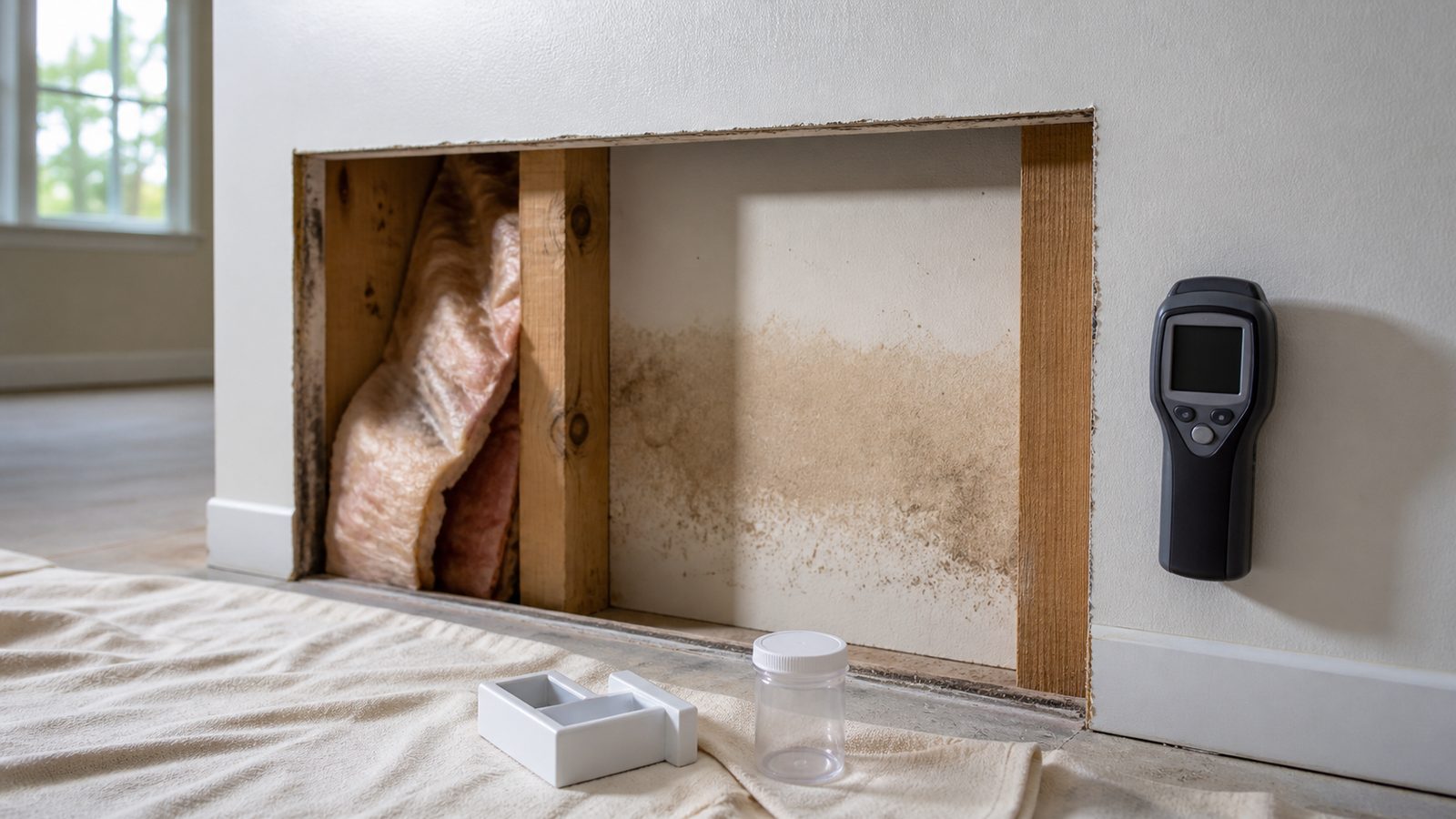
Step 4: Understand What the Mold Assessment Report Contains
The mold assessment report is a technical document that drives everything downstream. It should include:
- Description of affected areas with photographs, dimensions, and material types
- Moisture readings from the assessor's meter at multiple locations
- Air sample results comparing indoor spore counts to outdoor baseline counts (elevated indoor spore counts relative to outdoor is the diagnostic indicator)
- Surface sample results identifying genera (e.g., Cladosporium, Aspergillus, Stachybotrys — the last of which is colloquially called "black mold")
- Recommended protocol — a written scope specifying containment requirements, materials to be removed, treatment specifications, and clearance testing requirements
- Clearance criteria — the air quality and surface conditions the remediated space must meet before it is cleared
The protocol is not a bid — it is a scope. You will take this protocol to remediation contractors for pricing.
Step 5: Get Two to Three Remediation Bids Based on the Same Assessment Report
With the mold assessment report and protocol in hand, contact two to three licensed mold remediation contractors and ask each of them to bid against the same protocol. Every contractor should be pricing the same scope; if they are not, the bids are not comparable.
Florida mold remediation contractors are licensed under the same Florida Statute 468 framework as assessors. Verify their license before accepting a bid.
What to look for in a remediation bid:
- Itemized scope that matches the protocol's requirements
- Containment type specified (critical barrier vs. full containment — more on this below)
- Disposition of removed materials (on-site bagging and disposal to licensed facility)
- Antimicrobial treatment specified (EPA-registered product, application method)
- Clearance test included or excluded — some contractors include a clearance test, some do not; clarify who pays for it and who performs it (the assessor should do clearance, not the remediator)
Price ranges for residential mold remediation in Jacksonville in 2025: a limited scope (single room, contained area) runs $1,500 to $4,000. A moderate scope (multiple rooms, attic, or crawl space) runs $4,000 to $12,000. Extensive remediation involving structural framing, multiple floors, or long-term leak damage can exceed $20,000.
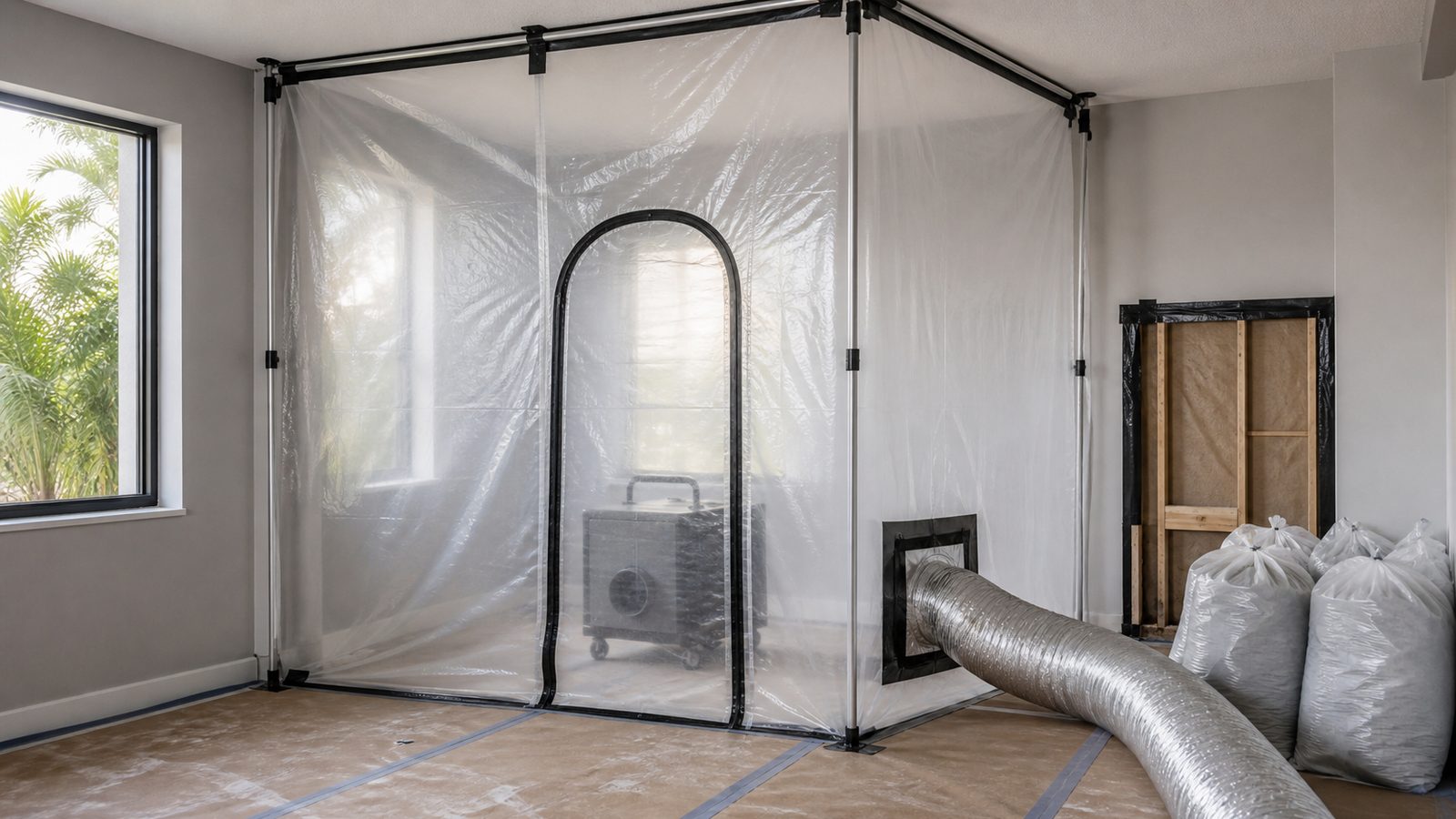
Step 6: Understand the Remediation Process
Professional mold remediation is not spraying bleach and wiping surfaces. The process follows the protocol established in the assessment:
Containment. Affected areas are isolated from the rest of the structure using plastic sheeting and negative air pressure (air is pulled out of the containment zone through a HEPA-filtered air scrubber, preventing cross-contamination of clean areas). This is non-negotiable for any job where mold-contaminated materials are being removed.
HEPA air scrubbing. High-efficiency particulate air (HEPA) scrubbers run continuously during removal to capture airborne mold spores.
Removal of affected drywall, insulation, and porous materials. Mold colonizes porous materials — drywall paper, insulation batts, cardboard, wood framing with active surface growth. These materials are bagged inside the containment, sealed, and removed. Non-porous surfaces (metal, concrete, intact wood framing with surface-only growth) can be cleaned rather than removed.
Antimicrobial treatment. Remaining structural surfaces are treated with an EPA-registered antimicrobial agent. Encapsulants may be applied to wood framing if specified in the protocol.
Clearance testing. After remediation is complete and the containment is still in place, the assessor (not the remediator) returns to take clearance air and surface samples. If samples pass the protocol's clearance criteria, the project is cleared and containment can be removed. If not, additional work is required before clearance.
Step 7: Coordinate the Roof Contractor and the Remediation Contractor in Sequence
The remediation contractor cannot complete their work if the roof is still leaking. But the roofing contractor may not be able to fully repair the roof until the extent of deck damage is known. And the remediator cannot work in an area that is actively wet from ongoing precipitation.
The correct sequence:
- Emergency tarping by the roofing contractor to stop active water entry — within 24 to 48 hours of leak discovery
- Mold assessment — schedule immediately; can often be completed within 2 to 3 days
- Interior drying — professional water mitigation company deploys dehumidifiers and air movers to reduce moisture content before mold work begins
- Roofing repair — full repair once the emergency tarp has stopped the leak; roofing contractor assesses deck damage
- Mold remediation — after roofing is sealed and interior is dried to protocol-acceptable moisture levels
- Reconstruction — drywall, insulation, and finishes reinstalled after clearance
At JK Prestige Construction, we self-perform roofing work — including emergency tarping and full roof replacement. See our roofing services for scope and certifications. We coordinate with mold assessors and remediation contractors to sequence the project correctly rather than letting gaps between trades extend the timeline.
Step 8: Understand Insurance Claim Implications
Homeowner's insurance in Florida covers sudden and accidental water damage — which includes a roof leak caused by a storm or sudden structural failure. It typically does not cover gradual water damage (a slow drip that has been happening for months) or mold that results from the homeowner's failure to maintain the property.
Document your timeline carefully. If the leak is storm-related, the date of the storm and the date of discovery matter. Your insurer will send an adjuster; the mold assessment report is your documentation of scope.
Key insurance points:
- File promptly. Florida's claim deadlines under the Homeowner Claims Bill of Rights require timely notice.
- Get separate line items for the roofing repair and the mold remediation. These may be handled by separate adjusters within the same company.
- Understand your mold coverage sublimit. Many Florida homeowner's policies cap mold coverage at $10,000 or $25,000 regardless of the actual remediation cost. Know your limit before you start work.
- Do not sign an assignment of benefits (AOB) agreement with any contractor without reading it and understanding its implications for your claim.
Pro tip: Ask the mold assessor to note the approximate age of the growth in their report. New growth (within 72 hours) looks different than established growth (weeks to months). This matters for insurance: new growth from a documented storm event is more clearly covered than growth that has been there for months.
Warning: Do not hire a contractor who offers to perform both the mold testing and the remediation. In Florida, that is a licensing violation. It is also a practical conflict — the same company assessing and remediating removes any independent verification that the work was necessary and done correctly.
Get a written estimate in 48 hours. Call (904) 944-0278 or request a consultation.
No call center. No coordinator. A JK principal reviews every inquiry and replies with a real number, not a range, not a follow-up form.
Request Free Estimate →