Florida homeowners pay some of the highest property insurance premiums in the country. One of the few tools available to reduce those premiums without changing your coverage is the wind mitigation inspection. A completed OIR-B1-1802 form — Florida's standard wind mitigation report — submitted to your insurance carrier can produce premium reductions of 10 to 45 percent, depending on your home's construction features.
If you have replaced your roof in the last several years, or if you have never had a wind mitigation inspection done, you are likely overpaying for insurance. This guide covers exactly how to get an inspection, what it examines, what it costs, and when Jacksonville homeowners should expect the largest discounts.
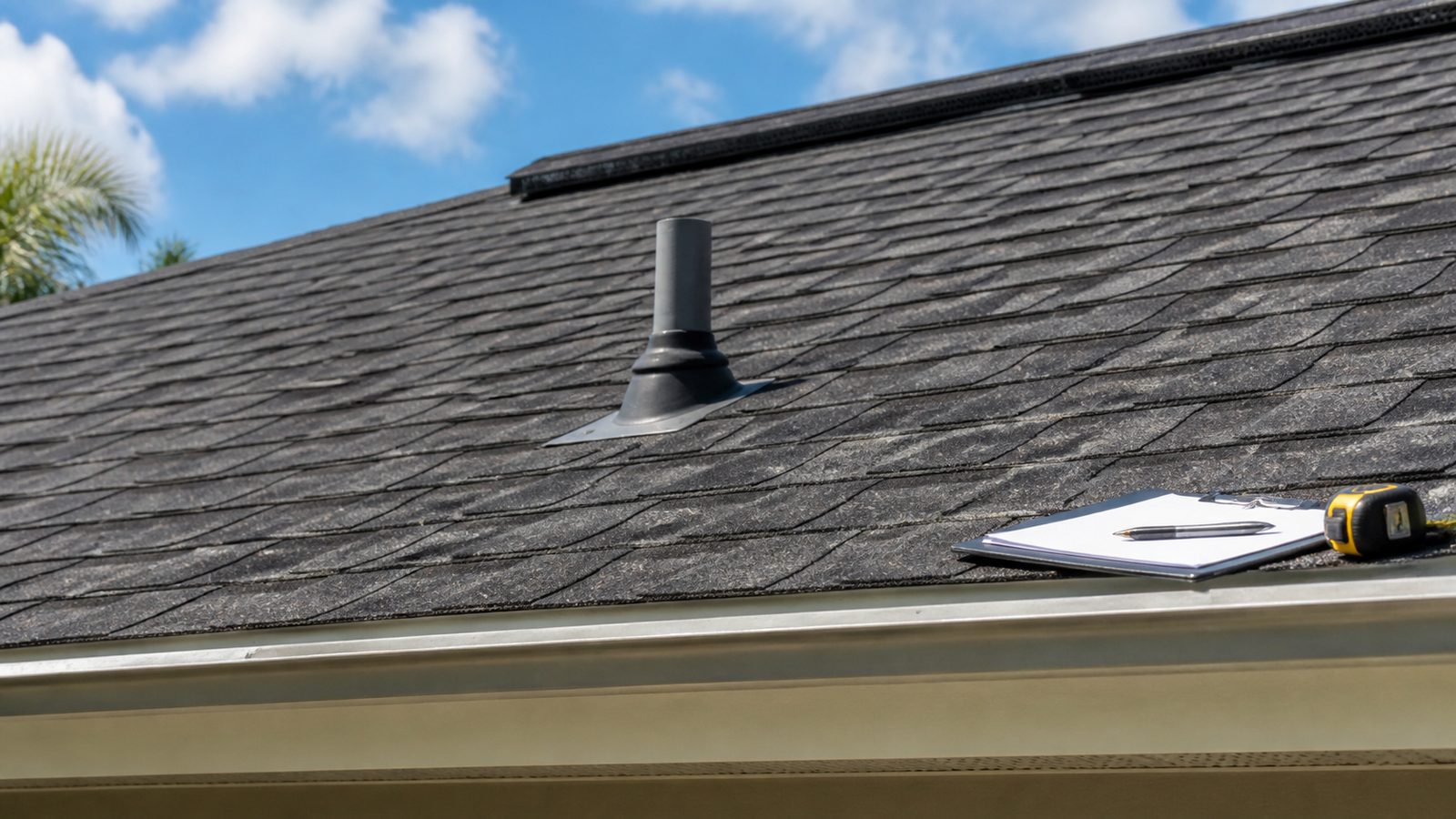
Step 1: Understand What the OIR-B1-1802 Form Covers
The OIR-B1-1802 is the Florida Office of Insurance Regulation's standard wind mitigation report form. It documents seven attributes of your home's construction that influence its ability to withstand hurricane-force winds:
- Roof covering (type and installation date)
- Roof deck attachment (how the sheathing is fastened to the roof structure)
- Roof-to-wall connection (how the roof structure connects to the walls — clips, single wraps, double wraps, or structural)
- Roof shape (gable vs. hip vs. flat — hip roofs perform better in high winds)
- Secondary water resistance (SWR — whether there is a sealed underlayment layer beneath the shingles)
- Opening protection (impact-rated windows, doors, and skylights)
- Roof cover classification (whether the installed shingles or membrane meet FBC — Florida Building Code — standards for wind speed)
Each attribute is scored, and those scores translate into credits your insurance carrier applies to your premium. A home with a hip roof, double-wrap connections, impact windows, and a post-2002 FBC-compliant roof covering will receive substantially larger credits than a gable-roof home with single-wrap connections and standard windows.
Pro tip: You do not need to make any upgrades before getting an inspection. Get the inspection first, review the results, and then evaluate which upgrades provide the best return relative to their cost. Your insurance agent can tell you exactly how each attribute change would affect your premium.
Step 2: Hire a Licensed Wind Mitigation Inspector
Florida law limits who can complete the OIR-B1-1802 form. Qualified inspectors include: Florida-licensed home inspectors who have completed wind mitigation inspection training, Florida-licensed engineers, and Florida-licensed general contractors. Not all home inspectors are trained in wind mitigation — confirm specifically that the inspector holds wind mitigation credentials before hiring.
You can find licensed inspectors through the Florida Department of Business and Professional Regulation (DBPR) licensee search at myfloridalicense.com. Confirm the license type and verify it is active before scheduling.
Your insurance carrier may also have a preferred inspector list, and some carriers offer discounts for using their network inspectors. Call your carrier before scheduling to check.
Warning: Roof inspection companies and roofing contractors sometimes offer free wind mitigation inspections as part of a sales pitch for a new roof. There is nothing inherently wrong with this, but understand that the inspector in this scenario has a financial interest in finding deficiencies that justify a replacement. Hire an independent inspector if you want an unbiased assessment.
Step 3: Know the Cost — $75 to $150 for Most Jacksonville Homes
Wind mitigation inspections in the Jacksonville and Duval County market typically run $75 to $150 for a standard single-family home. Larger homes or homes requiring more extensive attic access may cost slightly more. The inspection itself takes 45 minutes to an hour.
That $75 to $150 fee is almost always recovered in the first month of reduced premiums. If your home qualifies for a 20% premium reduction on a $4,000 annual policy, the inspection pays for itself in the first two weeks.
Some inspectors bundle wind mitigation inspections with four-point inspections (which cover roof, HVAC, plumbing, and electrical) at a combined rate of $150 to $200. If your insurance carrier requires a four-point as well — common on homes over 25 years old in the Jacksonville market — bundling is cost-effective.
Pro tip: Schedule the inspection during daylight hours and confirm the inspector needs attic access. The roof deck attachment attribute — one of the highest-value scoring items — is typically assessed from inside the attic by measuring nail spacing and gauge. Inspectors who assess deck attachment from the exterior only are giving you an incomplete report.
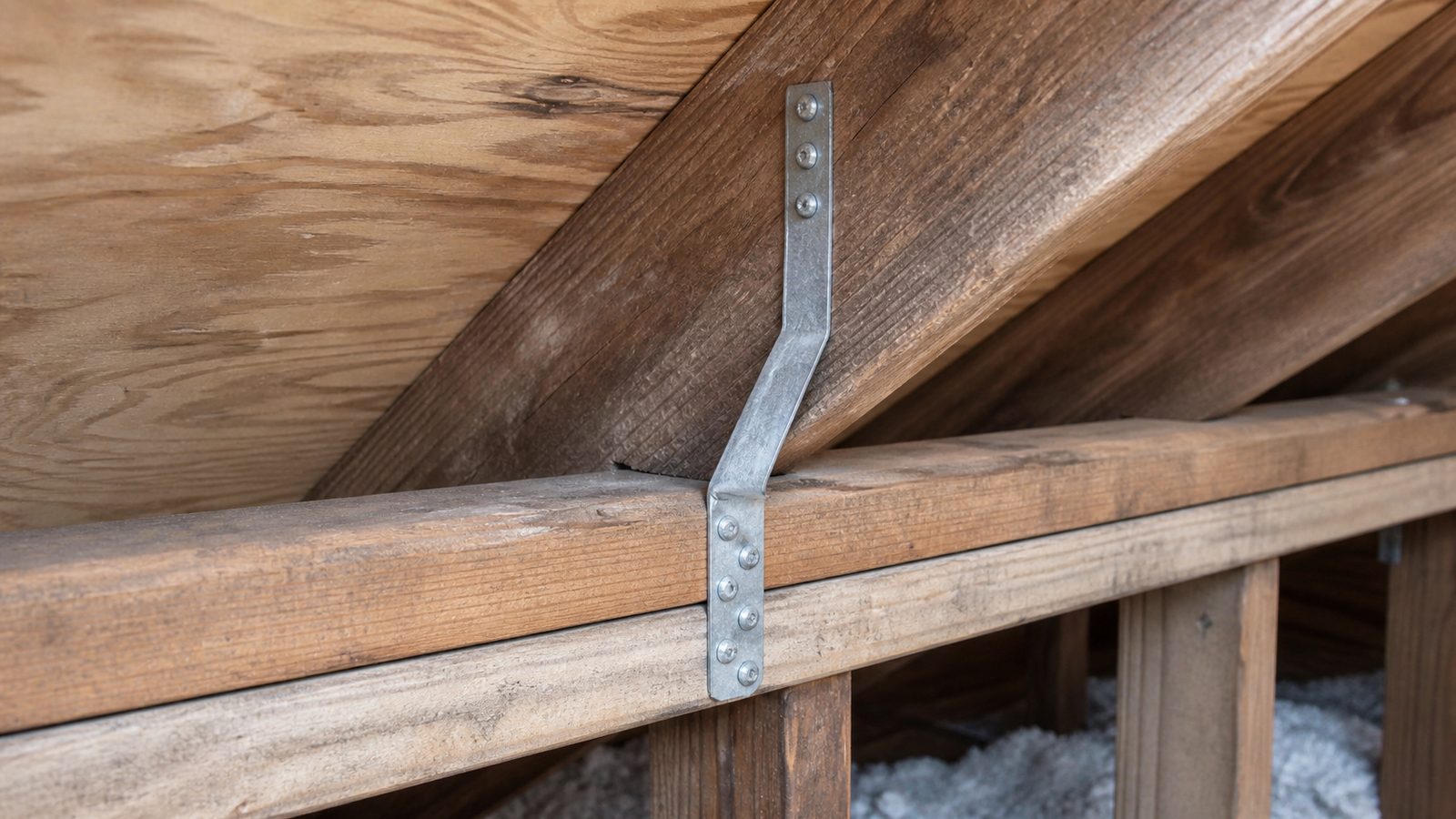
Step 4: The Inspector Examines Roof from Both Attic and Exterior
The actual inspection involves two physical access points: the attic and the roof exterior. From the attic, the inspector looks at roof deck attachment (nail size and spacing on the sheathing), roof-to-wall connection type, and the presence or absence of secondary water resistance underlayment.
From the exterior, the inspector assesses roof shape, roof covering type and condition, and opening protection (windows, doors, garage doors, and skylights).
Be prepared to provide: the permit record or product approval number for your roof covering (your roofing contractor should have provided this at project completion), documentation of any impact-rated window or door products, and access to your attic through an accessible hatch or pull-down stair.
If you cannot provide the product approval number for your roof covering, the inspector will use the visual classification standard, which may result in a less favorable score than the actual installed product qualifies for. Keep all roofing documentation in a home file.
Warning: If your attic is inaccessible — no hatch, or a hatch that has been drywalled over — the inspector cannot assess deck attachment, and your form will show "unable to determine" for that attribute. "Unable to determine" typically scores as the least favorable option. Fix attic access before scheduling the inspection.
Step 5: Receive the Completed OIR-B1-1802 Form
After the inspection, the inspector completes the OIR-B1-1802 form and signs it. The completed form includes photographs documenting each attribute, the inspector's license number, and the specific scores assigned to each of the seven attributes.
Review the form before submitting it to your carrier. Confirm that the roof covering installation date matches your records, that the connection type matches what you believe is installed, and that any impact-rated openings you have installed are reflected.
If you disagree with a finding, you have the right to provide documentation to support a different classification. For example, if the inspector classified your roof-to-wall connection as a clip when you have verified through your builder that double-wrap connectors were installed, you can provide the engineer's letter or permit documentation to support the correct classification.
Pro tip: The completed OIR-B1-1802 form is typically valid for five years, though carriers may require re-inspection sooner if there is a change in roof condition. Keep a copy of the form in your home file along with your insurance policy.
Step 6: Submit to Your Insurance Carrier and Expect 10 to 45 Percent Premium Reduction
Submit the signed, completed OIR-B1-1802 form to your insurance carrier. By Florida law, insurers are required to offer discounts or credits for documented wind mitigation features. The specific credit amounts vary by carrier — some carriers have more favorable credit schedules than others.
Ask your carrier for a premium comparison before and after applying the wind mitigation credits so you can see exactly which attributes are producing the reduction. Some homeowners discover that a specific upgrade — adding impact windows, for example — would push them into a significantly higher credit tier, and the math justifies the investment.
Premium reductions in the 10 to 20 percent range are common for homes with some favorable attributes. Homes with hip roofs, double-wrap connections, and full impact opening protection can see reductions of 30 to 45 percent. In a Jacksonville market where homeowners insurance often runs $3,000 to $6,000 annually, a 30 percent reduction is $900 to $1,800 per year — every year.
Warning: If you have recently replaced your roof and did not get a new wind mitigation inspection, you may be missing credits. A new roof almost always improves your score on at least two attributes: roof covering and secondary water resistance. The old inspection on file with your carrier may not reflect the improvements.
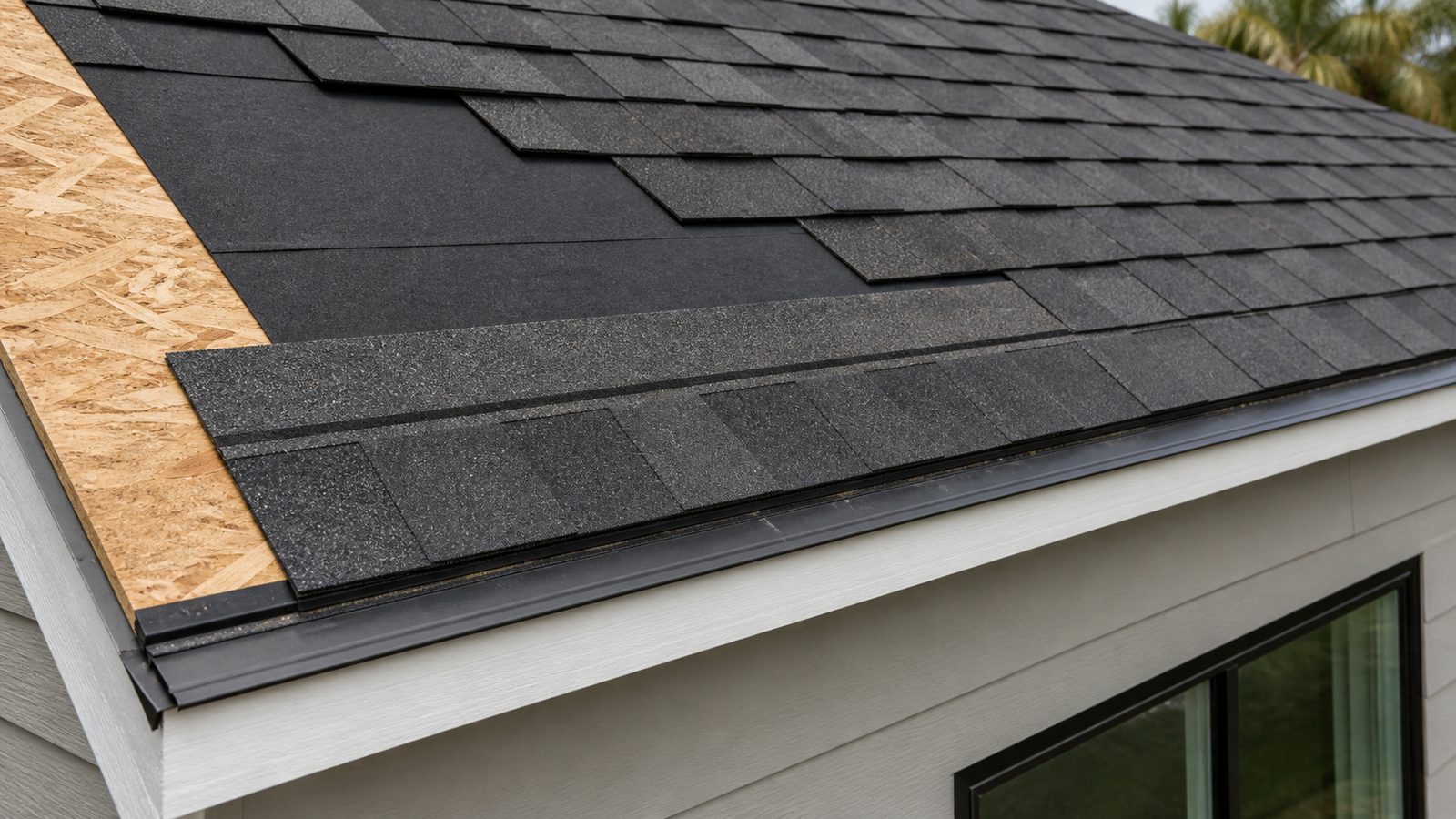
Step 7: Re-Inspect After Roof Replacement to Capture New Coverage Credits
A new roof is one of the most valuable events for a wind mitigation report. Post-2002 roofs in Jacksonville typically use:
- FBC-compliant shingles rated for the local wind speed zone
- 6D or 8D ring-shank nails at 6-inch spacing on the deck — a significant improvement over older staple or smooth-nail attachment
- Peel-and-stick secondary water resistance underlayment
Each of these improvements can move your score on one or more OIR-B1-1802 attributes. A home that previously scored poorly on roof deck attachment and SWR may qualify for substantial new credits after a code-compliant replacement.
Schedule a new wind mitigation inspection within 30 days of roof completion. You will need the completed permit, the product approval numbers for the shingles and underlayment, and the nail specification from the roofing contractor.
JK Prestige Construction is a GAF Master Elite certified roofing contractor. When we replace a roof in the Jacksonville market, we provide all product approval documentation needed for your post-installation wind mitigation inspection. Learn more about our roofing services at jkprestigeconstruction.com/#/roofing.
Local context: Jacksonville homes built before 2002 were not constructed under the current FBC wind provisions. Many of these homes have substandard deck attachment (staples rather than ring-shank nails), no secondary water resistance, and gable roof configurations that score poorly on the form. If your home was built before 2002, a wind mitigation inspection will likely reveal several attributes in the lowest scoring tier — and a code-compliant roof replacement could move multiple attributes and produce meaningful premium reductions.
Get a written estimate in 48 hours. Call (904) 944-0278 or request a consultation.
No call center. No coordinator. A JK principal reviews every inquiry and replies with a real number, not a range, not a follow-up form.
Request Free Estimate →