A hospital renovation contractor who has built 20 medical office buildings is not the same as one who has renovated ICUs with patients in adjacent rooms. The credential gap between those two is not captured by a contractor's license, bond amount, or general project volume. It shows up in the interview — specifically in how the GC answers questions about ICRA (Infection Control Risk Assessment), interim life safety measures, noise and vibration management, and how they handle work hour restrictions.
This post gives facility directors and healthcare developers the exact questions to ask before awarding a phased, occupied-facility hospital renovation to a general contractor. Ask them all. If the answers are vague, move on.
Why Occupied Hospital Renovations Require a Different Vetting Process
Most GC selection processes focus on price, schedule, and project volume. For occupied hospital renovations, those factors matter — but they are not the primary screen. The primary screen is operational risk to patients and clinical staff.
On a phased renovation in a live facility, the GC is managing:
- Infection control barriers in clinical spaces where an airborne pathogen can reach immunocompromised patients
- Interim life safety measures (ILSMs) when fire-rated separations, sprinkler zones, or egress paths are disrupted
- Noise and vibration that affects surgical procedures, monitoring equipment, and patient recovery
- Coordination with nursing staff, infection control practitioners, and facilities management on a daily basis
- Work hour restrictions that compress construction activity into narrow windows without compressing the schedule
A GC who does not have deep, repetitive experience in this environment will improvise. In a live hospital, improvisation is a patient safety event waiting to happen. See JK Prestige's occupied-facility hospital construction track record here.
The Questions to Ask Every Hospital Renovation Contractor
1. ICRA Experience — Be Specific
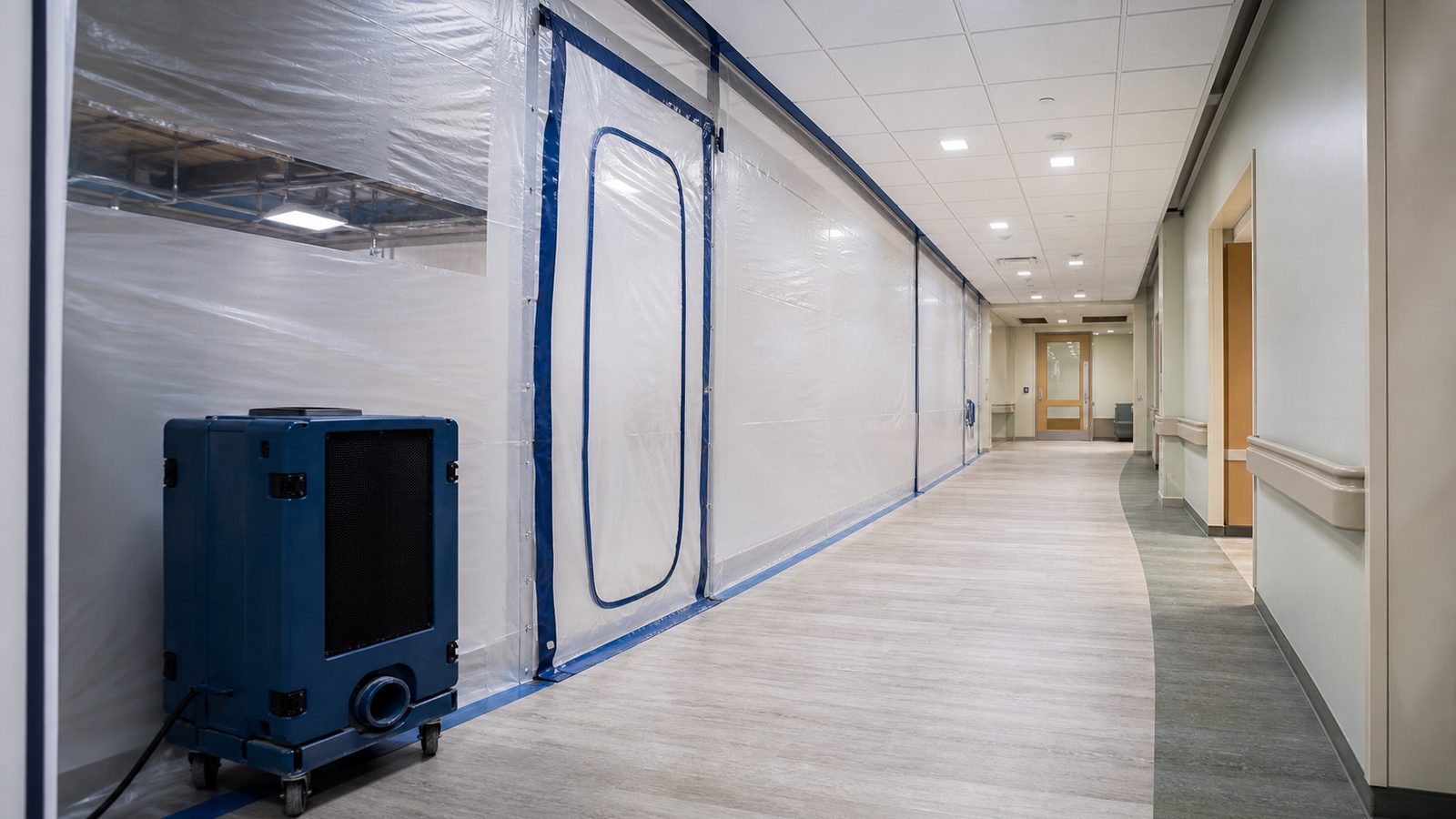
Ask: "Tell me about the last three occupied hospital renovations your superintendent personally ran. What ICRA classes were involved? Walk me through how you set up a Class IV enclosure."
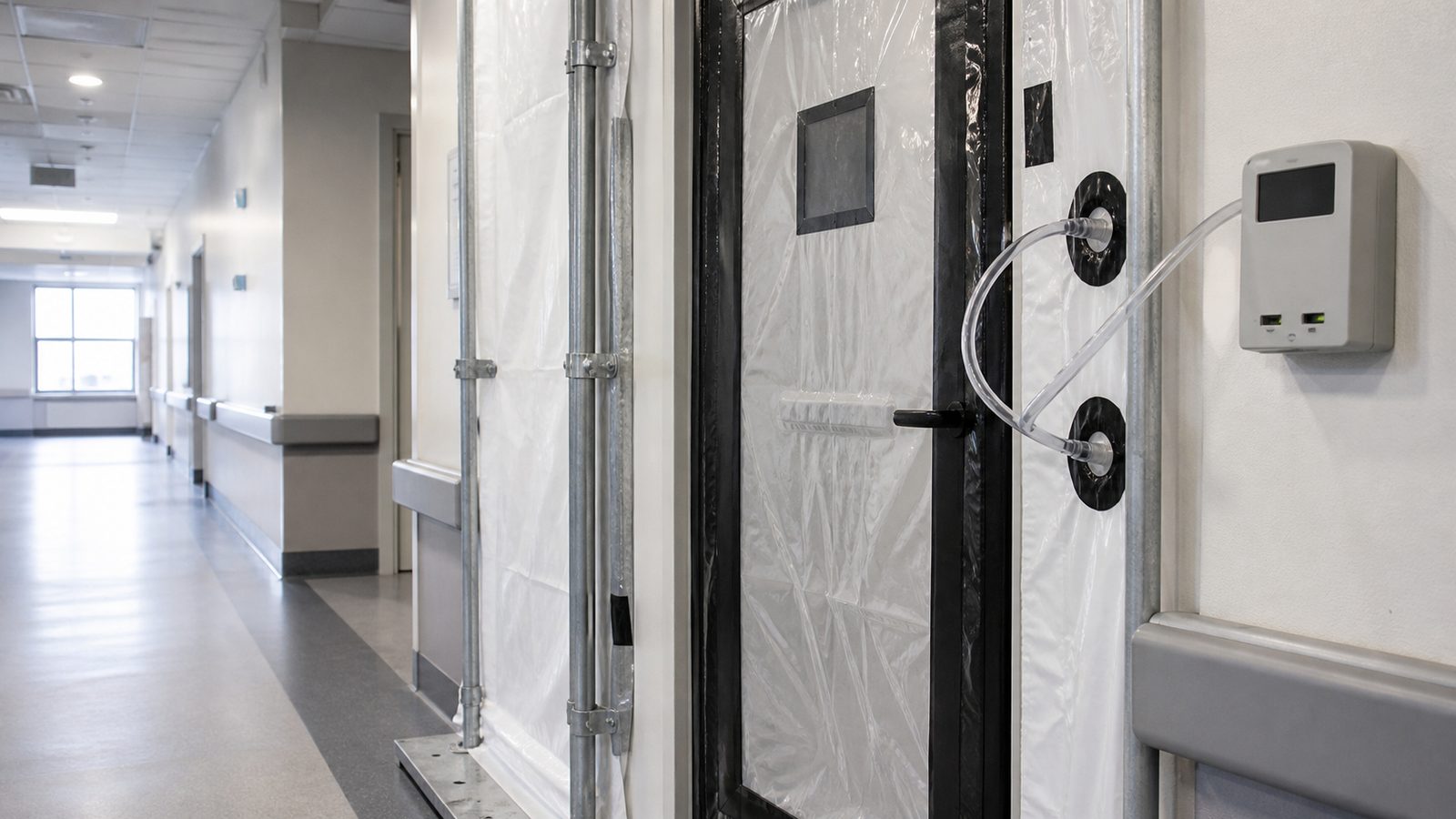
What you are listening for: specificity. The GC should be able to describe the anteroom configuration, the negative air machine placement, the pressure differential targets, and the daily logging protocol without referencing a manual. If the answer involves "we follow whatever the hospital's infection control team requires," that is a red flag. A qualified contractor leads the ICRA planning — they do not wait to be told what to do.
Also ask: "Who is the superintendent you are proposing for this project? What is their ICRA training documentation?" The superintendent is the person who runs ICRA compliance on the ground. Their experience matters more than the GC principal's.
Ask: "Have you had a hospital stop work order related to infection control? How did it happen and what changed?" Every experienced hospital contractor has navigated a compliance challenge. The answer reveals whether they learn from field problems or bury them.
2. Interim Life Safety Measures
Interim life safety measures (ILSMs) are the compensatory actions a facility must take when construction temporarily compromises a fire safety system — a sprinkler zone taken out of service, a fire-rated separation breached, an egress corridor disrupted. The Joint Commission and state health departments have specific ILSM requirements, and the GC must coordinate them with the facility's safety officer.
Ask: "Describe how you managed ILSMs on your last major OR or ICU renovation. What systems were affected? Who coordinated with the facility's safety officer? How long were systems out of service?"
What you are listening for: the GC should know that ILSMs require documented approval before work begins, that fire watches may need to be posted 24 hours per day, and that the window for system impairment must be minimized and pre-planned. If the GC's answer focuses only on notifying the facility, they are missing the planning and coordination burden.
Ask: "Who on your team is responsible for writing the ILSM plan and getting it approved before the work starts?" That person should be named. It should not be "whoever the hospital asks us to coordinate with."
3. Track Record in Live Facilities
Ask: "What percentage of your hospital project volume has been in occupied buildings versus new ground-up construction? Can you show me three references from facility directors whose departments stayed operational through a renovation?"
Volume in healthcare construction is not the same as volume in occupied-facility construction. A GC who has built four ground-up hospital towers has not necessarily run a single patient-adjacent phased renovation. These are fundamentally different project types.
Also ask: "Have you worked in active ORs — maintaining sterility while doing construction in adjacent spaces? What were the specific containment measures?" OR renovations adjacent to operating suites are among the highest-complexity hospital construction scenarios. The answer should be detailed.
4. Infection Control Protocols Beyond ICRA
ICRA covers the physical containment side. Ask separately about the GC's protocols for:
Ask: "How do you train craft workers who are entering clinical spaces? What do they know about hand hygiene, PPE requirements, and restricted zone access before they step foot inside the hospital?"
A construction crew that has not been briefed on healthcare infection control protocols will prop open doors, skip hand hygiene stations, and track construction debris into clean zones. This is not about formal certification — it is about whether the GC has a documented worker orientation protocol for healthcare jobsites.
Ask: "What is your protocol when a worker reports illness during a healthcare project?" The answer should include removal from the clinical site, not just "they go to HR."
5. Noise and Vibration Management
Noise and vibration in live hospitals affect more than patient comfort. Impact drilling adjacent to an OR during a procedure is a patient safety issue. Vibration from demolition can affect sensitive diagnostic imaging equipment, laboratory instruments, and structural monitoring systems in facilities with specialty equipment.
Ask: "Describe your noise and vibration management approach on occupied hospital projects. How do you coordinate activity with the clinical team to protect procedures and sensitive equipment?"
What you are listening for: the GC should mention pre-construction vibration baseline measurements, real-time monitoring during heavy demolition, and a protocol for notifying clinical staff of high-vibration activities in advance. "We work after hours for loud stuff" is not a complete answer.
Ask: "Have you ever had to stop work because vibration exceeded acceptable thresholds near imaging equipment or a procedure room? What did you do?" Again, experience with the problem matters. Contractors who have never faced this situation have not worked in live hospitals at the complexity level your project requires.
6. Hours Restrictions — and Schedule Compression
Most occupied hospital renovations come with work hour restrictions: no loud work between certain hours, no corridor use during shift change, no ceiling work in active patient areas without a window of nursing approval. These restrictions compress construction activity without giving the contractor more days.
Ask: "On your last phased hospital renovation with hours restrictions, how did you maintain the schedule? Walk me through the sequencing approach."
What you are listening for: the GC should describe pull planning — working backward from milestone dates to identify what must happen in restricted windows versus unrestricted windows, and how they sequence trades to maximize productivity within the allowed hours. If the answer is "we staff up and work faster," that is not a planning methodology.
Ask: "Did you use the Last Planner System or another pull planning methodology? What was your weekly PPC (Percent Plan Complete) target and what did you actually achieve?" Last Planner System (LPS) is the scheduling methodology most suited to constrained, multi-trade environments where every day's plan depends on the previous day's completions. A GC who tracks Percent Plan Complete (PPC) is managing the schedule at field level, not just at the milestone level.
What to Verify Beyond the Interview
After the interview, verify:
- ICRA training documentation for the proposed superintendent — not just a general statement that the company has ICRA-trained staff
- Three facility director references from occupied hospital renovations in the last five years — call them, and ask specifically about infection control compliance, response to problems, and superintendent availability
- Certificates of occupancy (COs) and Joint Commission survey results from projects where the GC was working during a survey cycle — a contractor whose work triggered a Joint Commission finding is a contractor who failed in a live facility
Also ask for a sample ICRA barrier plan from a previous project. A contractor who has built Class IV enclosures multiple times has drawings for them. If they cannot produce one, they have not built many.
The Questions That Reveal the Most
In practice, two questions surface the most information:
- "What is the hardest thing that went wrong on your last occupied hospital renovation, and how did you handle it?" A contractor who has worked in live healthcare has a real answer to this. A contractor who has not will give you a project management generic.
- "Can I call the hospital's infection control nurse directly from your last project?" A confident hospital renovation contractor will say yes without hesitation. That reference call, to the nurse rather than the project owner, tells you more about daily field conduct than any interview question.
The JK Prestige Approach to Phased Hospital Renovations
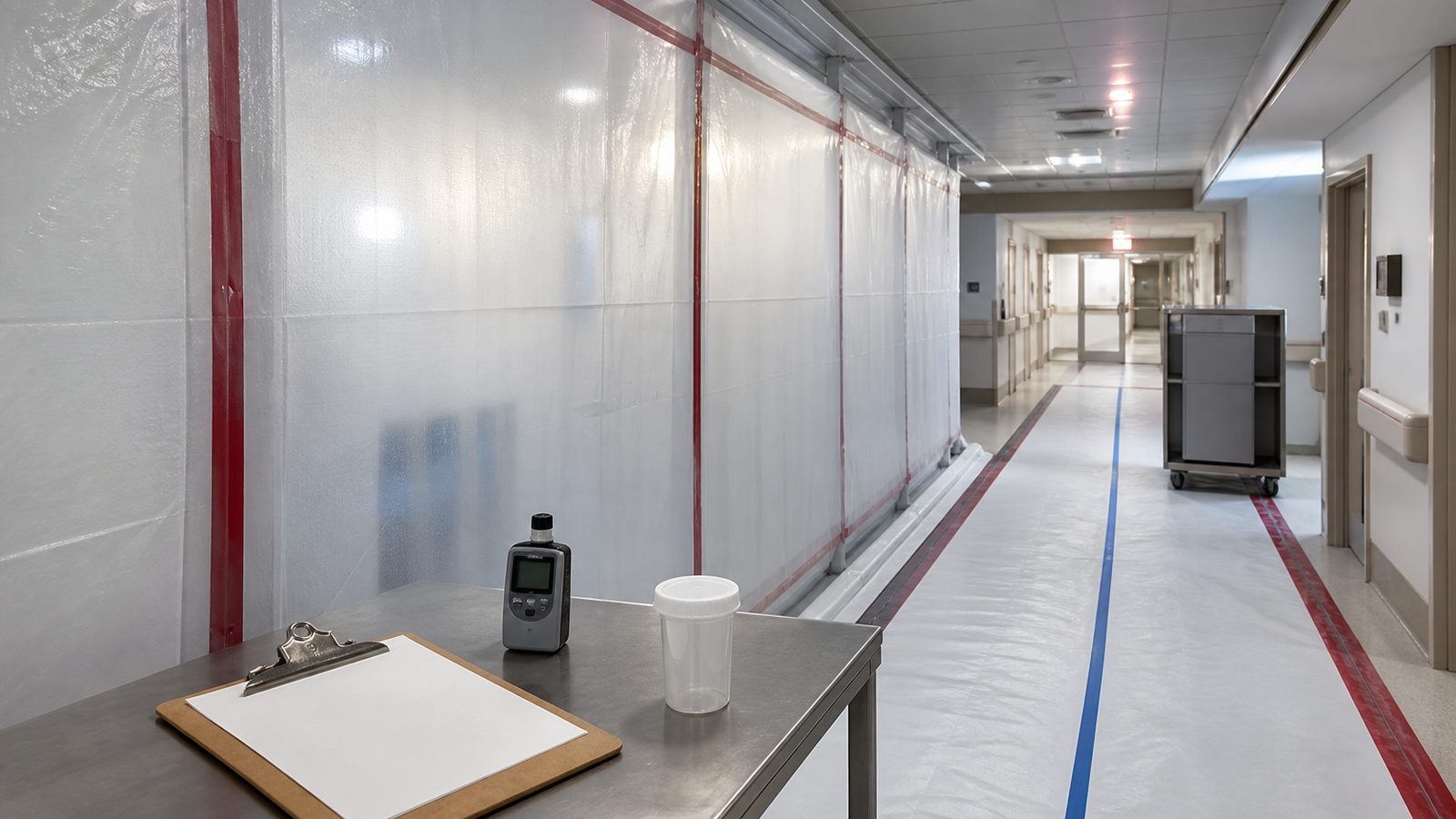
JK Prestige runs phased occupied-facility renovations with an ICRA-trained superintendent on every healthcare project. Our process integrates ICRA planning into preconstruction — barrier layouts go into the BIM model before the first board goes up, pressure testing is scheduled before mobilization, and daily log reporting is standard. We use Last Planner System scheduling on all phased healthcare work to maintain schedule integrity within hours restrictions.
No call center. No coordinator. A JK principal reviews every inquiry and replies with a real number, not a range, not a follow-up form.
Request Free Estimate →