Hiring a general contractor (GC) in Jacksonville, FL is not complicated — if you ask the right questions before you sign. Most homeowners ask the wrong ones. They compare price quotes, check Google reviews, and decide. They find out the rest six weeks into construction, when answers get slow and change orders start arriving.
This article gives you 12 specific questions to ask any GC before signing. For each question, you will see what a good answer looks like and what a red flag sounds like. Use this as a checklist in your final conversations before committing.
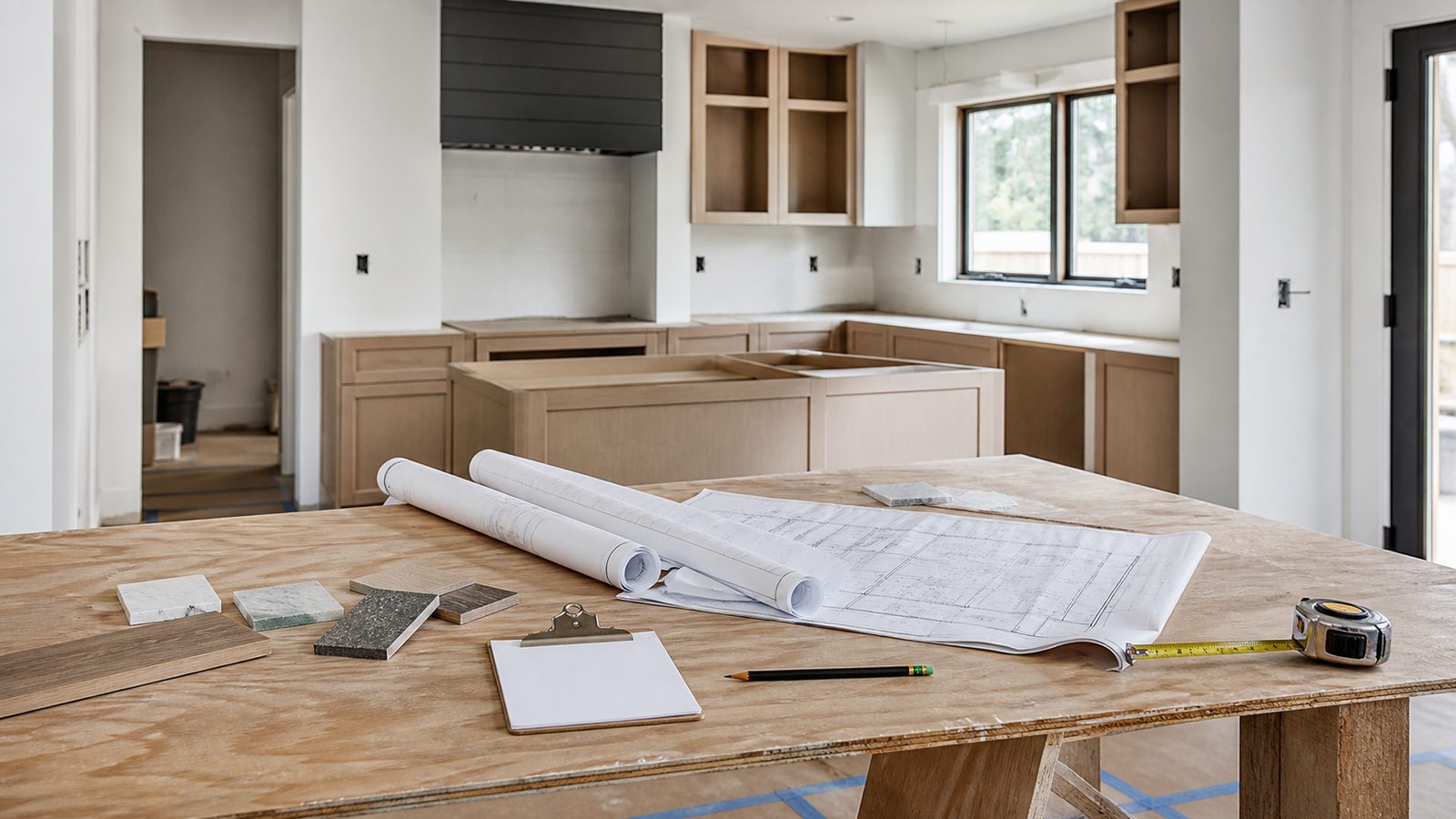
The Foundation: Licensing, Insurance, and Standing
Question 1: Are You Licensed to Contractor in Florida?
Florida requires GCs to hold a state license issued by the Department of Business and Professional Regulation (DBPR). There are two license types: Certified (valid statewide) and Registered (valid only in specific counties or municipalities).
How to verify: Go to myfloridalicense.com and search the contractor's name or license number. Takes 60 seconds. Look for license type, status (active), and any disciplinary actions.
Good answer: The contractor gives you their DBPR license number without being asked and tells you whether it is certified or registered. They may also mention their local Duval County Certificate of Competency if they operate primarily in Jacksonville.
Red flag: Vague references to "being licensed" without a license number. Asking you to trust their word rather than a public record. Any suggestion that the paperwork is "in process."
Question 2: Can You Provide a Current Certificate of Insurance?
You need two separate documents: a general liability certificate and a workers' compensation certificate. Both should name you as an additional insured, and both should have current expiration dates.
Good answer: They send you both certificates within 24 hours. The policy limits are legible, the expiration dates are in the future, and the issuing agency is a real insurer you can verify.
Red flag: Delay in producing either document. A single document covering "everything." Workers' comp coverage that lists zero payroll — which sometimes signals misclassified employees working without real coverage.
Question 3: Do You Self-Perform the Critical Trades, or Do You Subcontract Them?
This is one of the most important questions a homeowner can ask, and most never think to ask it. Self-perform means the GC's own crews do the work. Subcontracted means the GC bids the trade out to third parties, who have their own schedules, quality standards, and liability chains.
Good answer: The GC identifies specifically which trades they self-perform — framing, drywall, roofing, concrete, finish carpentry — and can describe the crew structure. JK Prestige self-performs all five of these trades with in-house crews.
Red flag: "We have a great network of trade partners" or "we coordinate all the trades." That is a broker, not a builder. It means the GC has no direct control over schedule or quality on the most critical path items.
Contract Terms: Where Most Homeowners Get Burned
Question 4: Is This a Fixed-Price or Time-and-Materials Contract?
A fixed-price contract sets a total price for a defined scope. If the scope does not change, the price does not change. A time-and-materials (T&M) contract charges you for actual hours and materials used — with no ceiling. T&M contracts are appropriate for minor repairs with unpredictable scope. They are inappropriate for full renovations or new builds.
Good answer: Fixed-price, with a clear scope document you can read before signing. If the project has genuine unknowns (major structural work, old mechanical systems), a Guaranteed Maximum Price (GMP) with open-book cost ledger is the commercial-grade equivalent.
Red flag: T&M for a project that can be fully scoped. Or a fixed price with an allowance schedule covering major items — allowances are how GCs give you a low headline number and bill you to reality later.
Question 5: Can I See the Full Scope Document Before Signing?
The scope document is the backbone of any fixed-price contract. It lists every line item of work: materials, specifications, quantities, exclusions. Without it, "fixed-price" is just a number attached to vague language — which means every gray area becomes a change order.
Good answer: Yes, and here it is. A real scope document runs 10 to 30 pages for a significant renovation. It names materials by brand and specification, not "standard grade." It identifies what is explicitly excluded. You can read it and ask questions before anything is signed.
Red flag: "We'll finalize the scope after we start." Or a short proposal with line items like "Complete renovation — $240,000" with no supporting detail. That is not a scope document. That is a placeholder.
Question 6: What Does Your Change-Order Process Look Like?
Even on a well-scoped project, genuine changes can happen. The question is whether the GC's change-order process is transparent and written, or whether it operates as a revenue mechanism.
Good answer: All change orders are in writing, signed by both parties before the work begins, with itemized costs. No verbal authorizations, no retroactive billing. The GC explains what triggers a change order versus what falls within the original scope.
Red flag: "We'll just handle it and settle up at the end." Or change orders that arrive after the work is done. Or a contract with language that allows the GC to proceed on owner direction — verbal or written — and bill later.
Personnel: Who Actually Runs Your Project
Question 7: Who Is My Primary Contact Throughout the Project?
This is where the coordinator model reveals itself. Ask directly: is the person I'm talking to now the same person I'll talk to when construction is underway?
Good answer: The principal or a named project manager with direct contact information. They confirm what the weekly communication cadence looks like — a written report, a weekly call, or both.
Red flag: "You'll be working with our team" or "our coordination office handles owner communications." That is a signal that you will be managed by a coordinator who has no authority over field decisions.
Question 8: How Often Does a Principal or Project Lead Walk My Jobsite?
Weekly superintendent oversight is standard. The question is whether someone with actual authority — who can make budget and scope decisions on the spot — ever steps on the site.
Good answer: The principal or senior project lead walks the site at a defined interval (monthly at minimum) and is accessible by direct phone between visits. JK Prestige puts a principal's direct number in every contract and commits to monthly site walks.
Red flag: "Our superintendent is on site daily." That is a dodge. Superintendents manage the daily pace of work but often cannot resolve owner questions about scope, cost, or schedule without escalating to a PM or principal who may not respond for days.
Safety and Credentials
Question 9: Do Your Supervisors Hold OSHA 30 Certification?
OSHA 30 is a 30-hour safety training course covering construction hazard recognition and regulation compliance. It is the standard credential for construction supervisors. Having OSHA 30-certified supervisors on every project is a signal that the GC invests in jobsite safety beyond the minimum.
Good answer: All supervisors hold OSHA 30. The GC can describe their toolbox talk process, their Job Safety Analysis (JSA) requirements for non-routine tasks, and their most recent Total Recordable Incident Rate (TRIR).
Red flag: "Our guys are experienced" without reference to specific certifications. Safety culture is measurable; experienced is not.
Question 10: What Is Your TRIR for the Last Three Years?
Total Recordable Incident Rate (TRIR) measures how many OSHA-recordable injuries occurred per 100 full-time workers over a year. The commercial GC industry average is roughly 3.0 to 3.5. A below-average TRIR indicates a safety culture that is working.
Good answer: A specific number below the industry average, with an explanation of what drives it (daily JSAs, third-party safety audits, crew training). JK Prestige maintains a TRIR below one-third of the commercial GC industry average.
Red flag: "We've never had a serious accident" without a specific rate. Anecdotal safety claims are not data.
References and Track Record
Question 11: Can I Have Three References From Projects Completed in the Last 12 Months?
References from two years ago do not tell you who is managing your project today. A GC's best work, crew quality, and principal involvement may have changed since then.
Good answer: Three references with names, phone numbers, and project descriptions — provided within 24 hours. When you call, ask specifically: Did the price change from the contract? Was the principal reachable when you needed them? Would you hire them again?
Red flag: References from projects completed years ago. References who are business associates, not project owners. Any hesitation in providing contact information.
Question 12: Are You a Member of NAHB, AGC, or ABC?
Membership in the National Association of Home Builders (NAHB), Associated General Contractors of America (AGC), or Associated Builders and Contractors (ABC) is not a guarantee of quality. But it signals a GC who invests in the industry — continuing education, safety programs, and professional standards — not just the minimum required to hold a license.
Good answer: Active membership in one or more associations, with specifics on what that membership involves (training hours, safety programs, regional chapters). JK Prestige holds active NAHB, AGC, and ABC memberships.
Red flag: Logos on a website without any specifics on what membership entails or how long it has been active. A GC who cannot explain what any of the associations does.
Before You Sign
Run through these 12 questions with every GC you are seriously considering. The responses will sort them quickly. Contractors who answer specifically, provide documents without prompting, and put their principal's direct number in front of you are operating a different model than contractors who are smooth on the phone and vague on paper.
You can review how The JK Way structures the estimate, scope, and communication process — or browse completed projects for reference examples.
Get a free written estimate in 48 hours. call (904) 944-0278 or submit your project details here. A principal answers.
No call center. No coordinator. A JK principal reviews every inquiry and replies with a real number, not a range, not a follow-up form.
Request Free Estimate →