Hiring the wrong general contractor for a hospital project in Florida does not just produce bad work — it produces work stoppages, AHCA (Agency for Health Care Administration) deficiency findings, and potential patient harm notifications. The stakes are categorically different from commercial or residential construction.
This guide walks through the seven verification steps every hospital developer, facilities director, or owner's representative should run before executing a contract with a GC. Each step has a specific question to ask and a specific answer to look for.
Step 1: Verify ICRA Training and Documented Project History
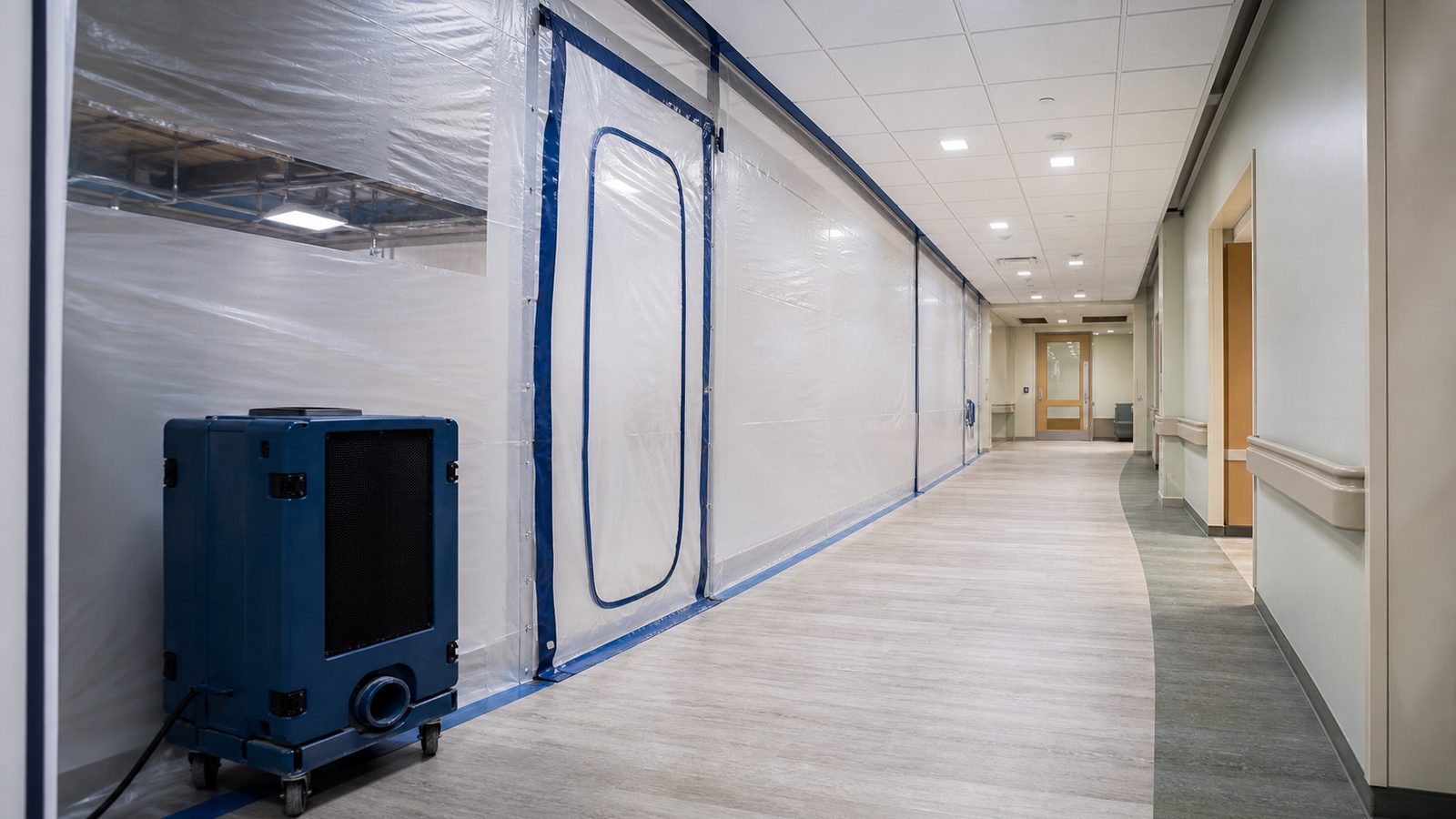
ICRA — Infection Control Risk Assessment — is the baseline competency for any GC working in an occupied healthcare facility. It is not a license; it is a training certification. Ask for the names of crew members assigned to your project and confirm each holds a current ICRA certification.
Then go further: ask for a project list that shows where those crews deployed ICRA protocols. A GC who completed one hospital project three years ago with a rotating crew is not the same as a GC with standing ICRA-trained crews and documented multi-site history.
JK Prestige Construction maintains ICRA-trained crews year-round. Our certifications are current and our project history is verifiable.
Pro tip: Ask the GC to describe a specific ICRA breach that happened on one of their past projects — not whether breaches have occurred, but how they handled one when it did. A GC who claims a perfect record without being able to describe a close call has not done enough hospital work.
Step 2: Confirm NFPA 99 Experience with Medical Gas and Electrical Systems
NFPA 99 — the Health Care Facilities Code — governs medical gas systems, electrical distribution, and life safety systems in healthcare settings. A GC managing hospital construction in Florida must understand how work in Category 1 and Category 2 spaces affects the risk classification of their work and the commissioning requirements that follow.
Ask specifically: has the GC self-performed work adjacent to or within medical gas manifold rooms, Category 1 operating suites, or electrical transfer switch gear in a hospital? Can they provide the name of the commissioning authority and inspector they worked with?
GCs without this experience will subcontract every trade and lose control of sequencing. In a hospital environment, that sequencing error triggers a regulatory finding, not just a punchlist item.
Warning: If a GC says "our electrical sub handles all NFPA 99 coordination," that is a red flag. The GC is responsible for the NFPA 99 environment even when licensed specialty contractors perform the work. The GC must understand the code, not just hire around it.

Step 3: Check AHCA Project History
In Florida, construction or renovation of licensed healthcare facilities — hospitals, ambulatory surgical centers, and long-term care facilities — must be reported to the AHCA. Projects above a certain dollar threshold require AHCA plan review and approval before construction begins.
Ask the GC for a list of AHCA project numbers from their portfolio. You can cross-reference these against AHCA's online portal to confirm completion, deficiencies, and inspection outcomes. A GC with no AHCA-listed projects has not done Florida healthcare work, regardless of what their marketing materials say.
Confirm that the GC understands the AHCA inspection sequence for your specific project type and can identify who on their team manages the AHCA submission and inspection coordination role.
Pro tip: Projects in Duval County and the Jacksonville market are subject to both AHCA review and local authority jurisdiction. Confirm the GC has navigated both simultaneously, not just one.
Step 4: Ask for a GMP Contract with Open-Book Cost Auditing
Healthcare construction projects carry complexity that makes lump-sum pricing unreliable for owners and risky for GCs who underestimate scope. A GMP — Guaranteed Maximum Price — contract protects the owner's budget ceiling while allowing the GC to manage real-world cost variability.
Open-book cost auditing means the owner has the contractual right to review actual invoices, labor hours, and subcontractor payments at any time. This is standard practice on well-run hospital projects and should be non-negotiable.
Ask the GC: do you offer GMP contracts, and will you commit to open-book auditing rights? If the answer involves any hesitation or carve-outs, that is a data point.
JK Prestige Construction provides GMP contracts on healthcare projects. Our project cost books are open to owners and their representatives throughout construction.
Warning: A fixed-price contract on a complex hospital renovation is not inherently owner-favorable. If the GC has not done thorough pre-construction investigation, a fixed price shifts the risk onto the GC — and GCs absorbing losses on hospital projects cut corners on schedule, labor, and quality.
Step 5: Review TRIR and EMR — Hospital-Grade GCs Should Show TRIR Below 1.0
TRIR — Total Recordable Incident Rate — measures the number of OSHA-recordable injuries per 100 full-time equivalent workers. EMR — Experience Modification Rate — is an insurance industry metric that reflects a contractor's historical claims relative to industry baseline. An EMR of 1.0 is average; below 1.0 is better than average.
Hospital owners should require TRIR below 1.0 and EMR below 1.0 as minimum thresholds. A GC with TRIR above 1.5 operating inside an occupied hospital is a liability exposure for the facility.
Ask for the last three years of OSHA 300 logs and the current EMR letter from the GC's insurance carrier. Both are standard pre-qualification documents. A GC who resists producing them is telling you something important.
JK Prestige Construction's crews are OSHA 30 certified. Our TRIR and EMR are below industry averages. We provide EMR documentation to pre-qualifying owners on request.
Pro tip: Cross-check the OSHA 300 logs against the projects listed in the GC's portfolio. If the logs show zero recordables on 30 projects over three years, ask how that is possible. Understated OSHA logs are a real problem in construction.
Step 6: Ask for a Specific Phased Renovation Example — Not Just a New Build
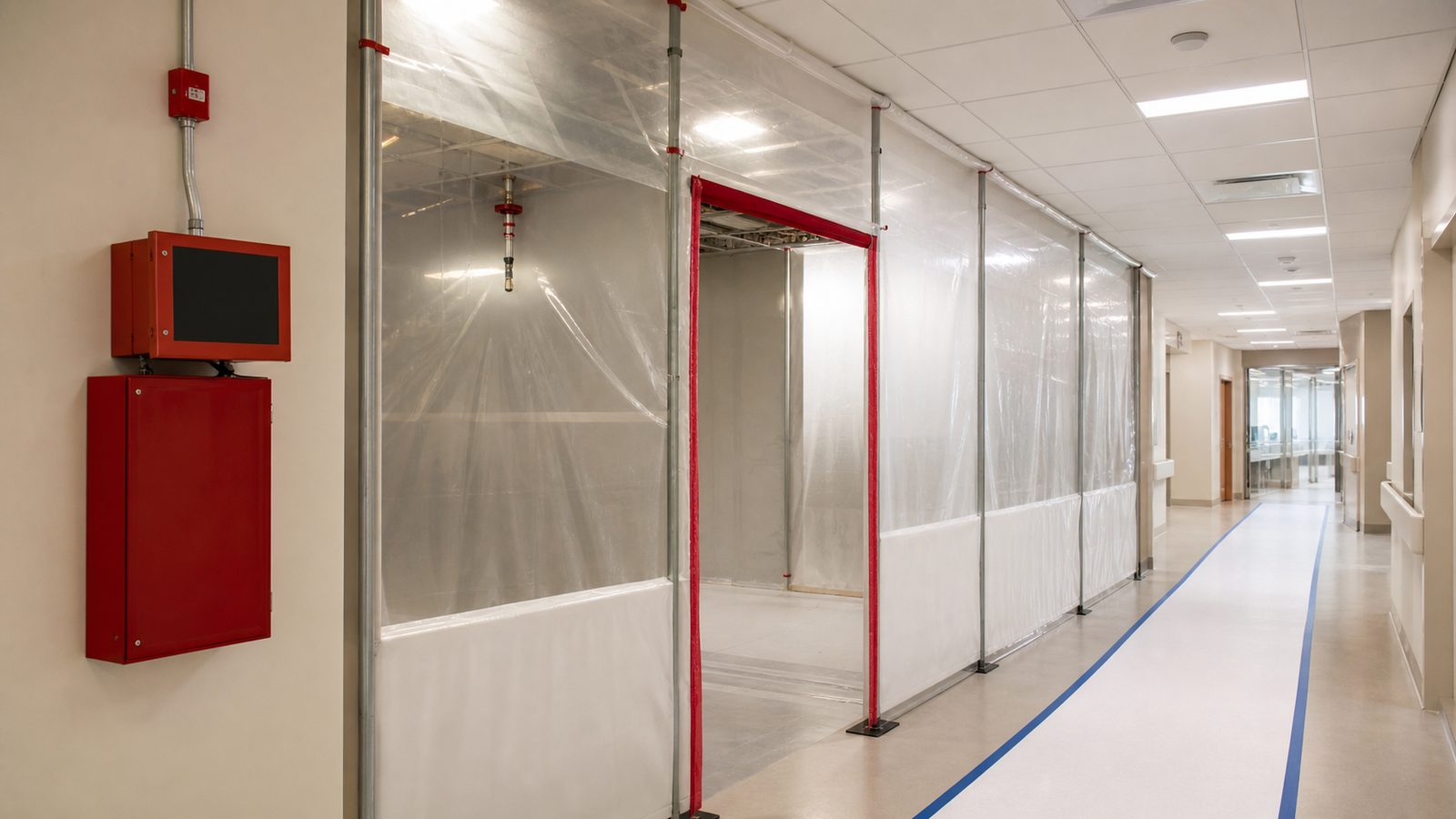
New hospital construction and phased renovation in a live facility are not the same skill set. A GC with a track record of greenfield hospital builds may have zero experience keeping an ED (emergency department) or OR (operating room) running while construction proceeds 40 feet away.
Ask the GC to walk you through a specific phased renovation they have managed: what was the facility, what was the ICRA class, how were patient flow adjacencies mapped, what was the phasing sequence, and what happened when a phase ran late?
The answer should include specifics — project names, timeline durations, specific clinical areas adjacent to the work zone, and a real example of a sequencing challenge they navigated. Generalities and buzzwords are a failing answer.
JK Prestige Construction has managed phased live-facility renovations including occupied ED and OR suite work. We can walk you through project-specific examples during pre-qualification.
Warning: "We've done hospital work" is not the same as "we've kept clinical operations running during a 14-week renovation." Make the GC prove the specific skill you are hiring.
Step 7: Confirm the Person You Meet Is the Person Who Manages the Project
Bait-and-switch is endemic in construction: a senior principal closes the deal, then hands the project to a junior PM with a thin resume and no healthcare experience. On a hospital project, this creates an experience gap that shows up as coordination failures, inspection findings, and schedule slippage.
Before signing, ask: who is the project manager on my job? Who is the superintendent? What hospital projects have each of them personally managed, and in what role?
Get the names in the contract. Require written consent before the GC can substitute key personnel.
At JK Prestige Construction, the founder answers every call and walks every site. Our principal-led model means the person you meet in the preconstruction phase is the person managing your project. That is how we operate — it is not a marketing claim. Read more about how we work at The JK Way.
Get a written estimate in 48 hours. Call (904) 944-0278 or request a consultation.
For more on our healthcare construction capabilities, visit our hospital construction expertise page.
No call center. No coordinator. A JK principal reviews every inquiry and replies with a real number, not a range, not a follow-up form.
Request Free Estimate →