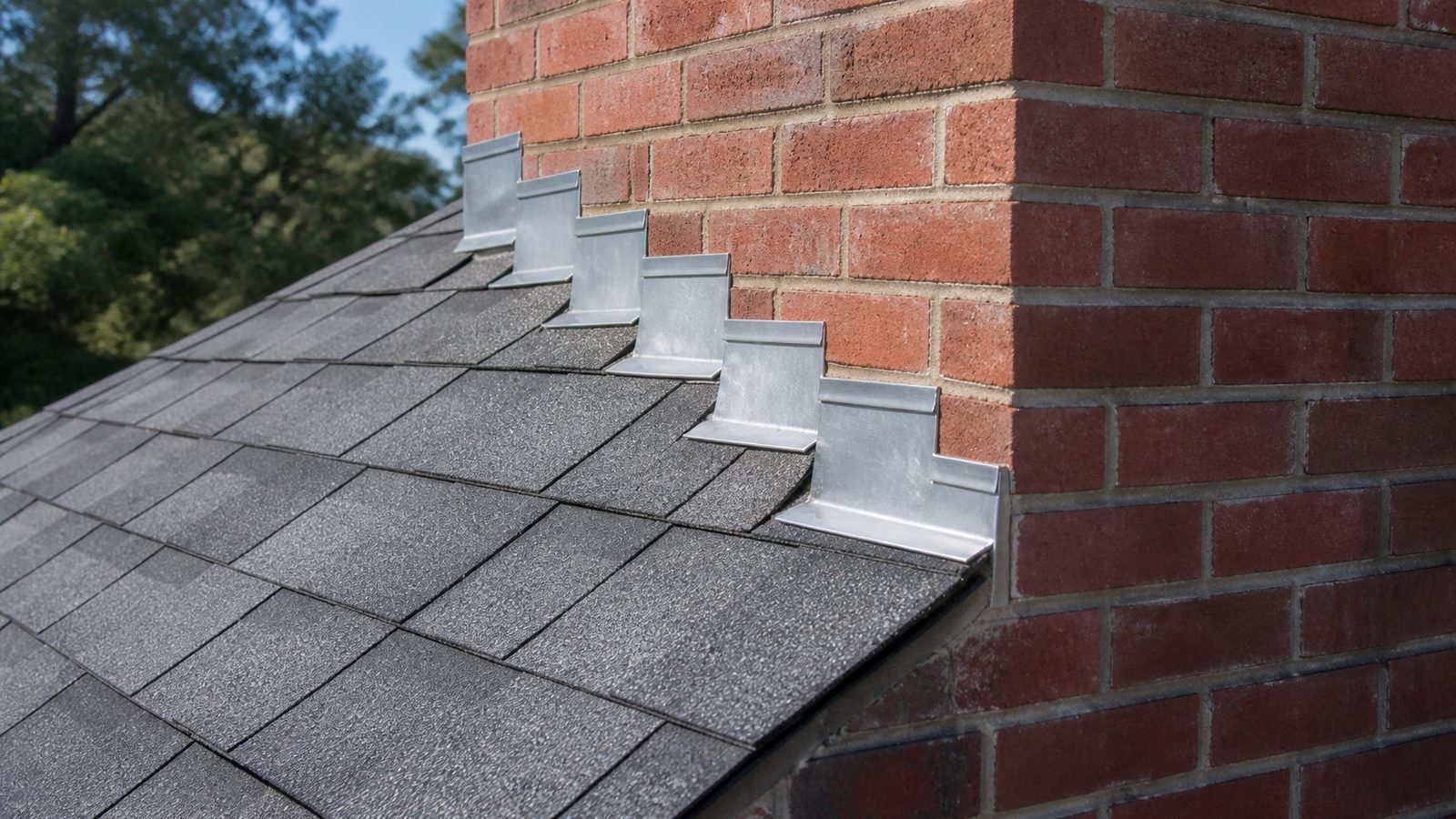
If you have a chimney poking through a sloped roof anywhere in Jacksonville, from Riverside to Mandarin to the beaches, the flashing where it meets the shingles is doing the hardest job on your roof. Step flashing is the series of small, overlapping metal pieces woven into each shingle course along the sides of the chimney, paired with counterflashing tucked into the masonry above it. When that system fails, water does not pool on the roof, it runs straight down the chase and into your attic, ceiling, or walls. This guide covers what the work involves, when the City of Jacksonville wants a permit for it, and what to expect if you hire it out.
When You Need a Permit in Jacksonville
Chimney flashing is roofing work, and roofing work in Duval County falls under the Florida Building Code and the City of Jacksonville's building permit requirements. If you are replacing step flashing as part of a full or partial reroof, that permit is not optional, the City's Building Inspection Division will require it regardless of chimney size. If you are doing an isolated flashing repair without touching the surrounding roof covering, some smaller repairs can fall under a minor-repair exemption, but the threshold and current rules change, so do not assume you are exempt. Check with the City of Jacksonville Building Inspection Division before you start, and get the answer in writing if you can.
There is a second layer to this: Florida requires a licensed roofing contractor for most roofing repair and replacement work under Chapter 489 of the Florida Statutes. A handyman without a roofing license should not be reworking flashing on your home, even for a small job. If you hire this out, confirm the contractor holds an active Florida roofing license and pulls the permit in their name, not yours.
One more trigger worth knowing: if your chimney is wide enough, roughly 30 inches or more measured across the roof slope, code generally calls for a cricket, a small peaked diverter built behind the chimney to route water around it instead of letting it pond against the back wall. Adding a cricket where one does not exist is new construction on the roof deck, not a like-for-like flashing swap, and it will need a permit and inspection.
Tools and Materials
- Step flashing pieces, aluminum or galvanized steel at minimum, sized to lap roughly 2 inches over each preceding piece
- Counterflashing (or surface-mount flashing if you cannot cut into the mortar joint)
- High-quality polyurethane roofing sealant, not standard roofing tar
- Matching roofing underlayment and shingles to tie the repair back into the existing roof
- Roofing nails or flashing-rated fasteners
- Angle grinder with masonry blade, if cutting a reglet into the mortar joint for counterflashing
- Mortar mix, if re-sealing a reglet cut
- Pry bar, roofing hammer, utility knife
- Fall protection and a properly footed ladder, this is roof work at height
Step-by-Step
- Remove the existing step flashing, counterflashing, and shingle courses immediately around the chimney, back to clean, undamaged decking.
- Inspect the exposed deck and chimney chase for rot or prior water staining. Replace any damaged sheathing before flashing goes back on, sealing over a wet deck just traps the problem.
- Install the apron flashing along the front, downslope face of the chimney, lapping it over the underlayment.
- Work up each side, weaving one piece of step flashing into every shingle course. Each piece laps over the one below it, with the shingle covering its lower half.
- If the chimney needs a cricket, or an existing one needs rebuilding, frame and flash it now, before finishing the uphill side.
- Cut a reglet joint into the mortar roughly an inch deep, insert counterflashing so it overlaps the step flashing by at least 4 inches, and re-point the joint with mortar.
- Reinstall shingles over the step flashing, seal exposed nail heads and flashing edges with polyurethane sealant, and confirm water sheets off rather than pooling.
- Run a hose test from the top down and check the attic for any sign of intrusion.
Jacksonville Climate Considerations
Northeast Florida is hard on roof flashing in a few specific ways. Humidity stays high most of the year, which accelerates corrosion on galvanized steel faster than in a drier climate, aluminum or copper hold up longer near the coast. Homes within a few miles of the Atlantic in Jacksonville Beach, Atlantic Beach, Neptune Beach, or Ponte Vedra deal with airborne salt on top of that humidity, which eats through lower-grade metal and fasteners even quicker, so use marine-grade or coated materials there.
Jacksonville also sits in a wind-borne debris region for hurricane purposes, so flashing needs to be fastened and fully sealed, not just tucked and hoped for, wind-driven rain during a tropical storm will find any gap. The intense summer sun and heat also break down cheap sealants faster than in cooler climates, which is why polyurethane sealant is worth the extra cost over asphalt roofing cement.
What It Costs in Jacksonville (DIY vs. Hiring a Pro)
| Approach | Typical Cost Range | Notes |
|---|---|---|
| DIY, materials only | $150 to $400 | Assumes a single standard-size chimney, no deck repair, no cricket |
| Licensed roofer, standard flashing repair | $600 to $1,500 | Labor, permit, disposal, matching shingle tie-in |
| Licensed roofer, full reflash with cricket or deck repair | $1,200 to $2,800+ | Larger chimneys, rotted decking, or a cricket rebuild add cost quickly |
These are general planning ranges for the Jacksonville market, not quotes. Get a written estimate before committing, and confirm whether the price includes the permit fee.
When to Call JK Prestige
If you see daylight, water stains, or crumbling mortar around your chimney, or if a home inspector flagged the flashing during a purchase, it is worth having a licensed professional look at it before it becomes an interior repair. JK Prestige Constructor Corp handles chimney flashing repair and full reroofing throughout Jacksonville and Duval County, and we pull the required permits and coordinate inspections so the work holds up to Florida's climate and code requirements. Reach out for an on-site assessment before the next heavy rain finds the gap for you.
No call center. No coordinator. A JK principal reviews every inquiry and replies with a real number, not a range, not a follow-up form.
Request Free Estimate →