If you have ever read about a deck collapsing at a party, the ledger board is almost always the reason. It is the piece of lumber bolted to the house that carries most of the deck's weight and everyone standing on it. When it is nailed on instead of bolted, or water gets behind it and rots the band joist, that connection fails without warning. In Jacksonville, where humidity, heavy rain, and termites are a year round fact of life, a poorly flashed ledger does not just risk collapse, it almost guarantees hidden rot within a few years. This guide covers what a correct ledger attachment involves, and where a Jacksonville homeowner should stop and bring in a licensed contractor instead of guessing.
When You Need a Permit in Jacksonville
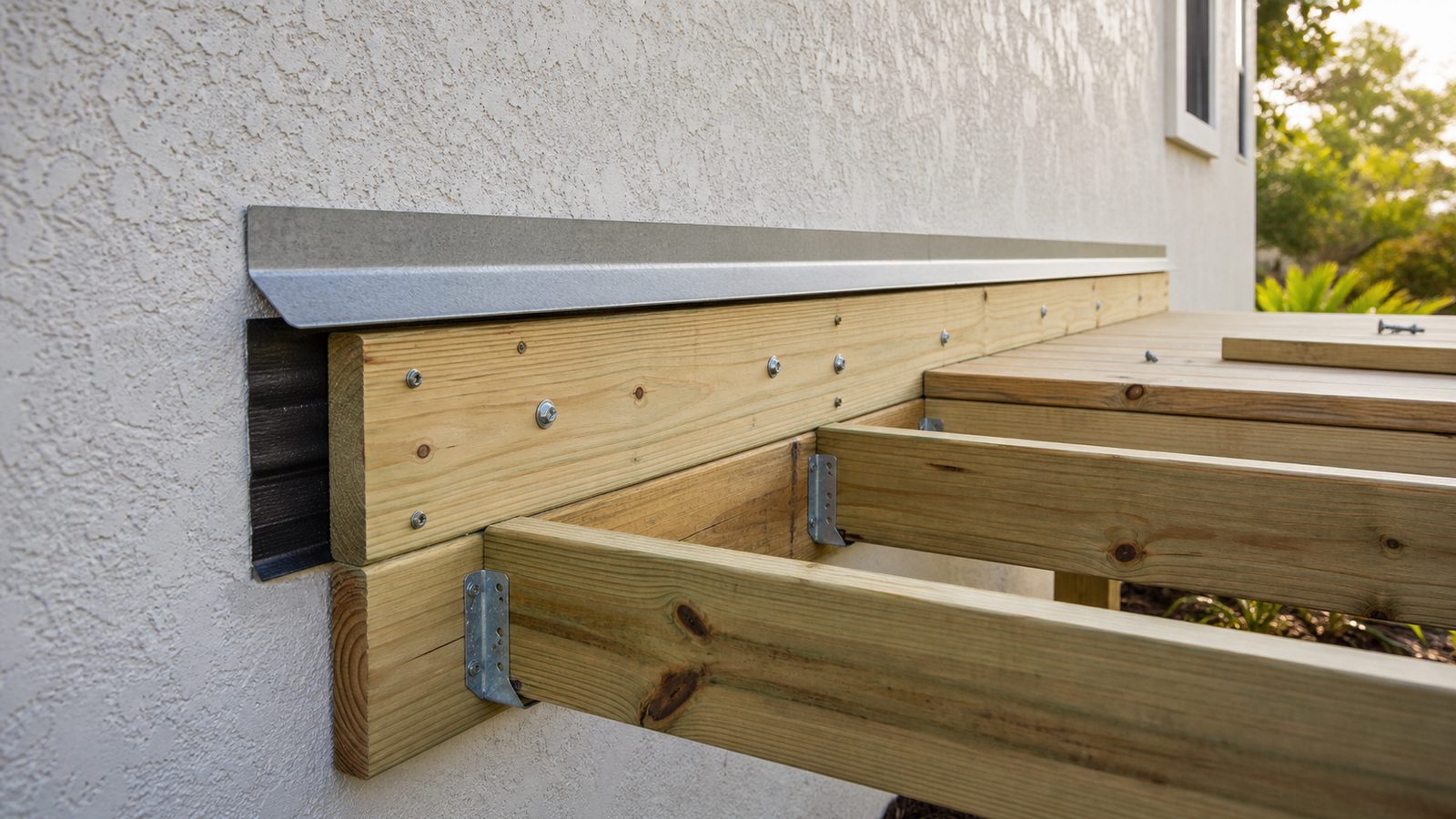
Attaching or reattaching a deck ledger to a house is structural work, and in Duval County it is permitted and inspected, full stop. This is not a gray area repair homeowners can skip. The building department wants to see the fastening pattern and flashing before the decking boards go down, because once decking is on, the inspector cannot see the connection anymore. Schedule the framing inspection before you cover anything up, not after. If your lot sits in a coastal or flood zone, which covers a meaningful share of Jacksonville from the beaches to the Intracoastal and the river, expect added requirements around elevation, connectors, and sometimes engineered plans. Skipping the permit does not make the connection safer, it just means nobody checked your work.
Tools and Materials
- Self adhered flashing membrane, wide enough to wrap over the ledger and up the wall
- Z flashing, aluminum or coated steel, sized to shed water away from the band joist
- Structural screws or through bolts rated for ledger connections, never common nails
- Washers and nuts sized to the fastener manufacturer's specification, if through bolting
- Pressure treated lumber rated for ground contact exposure, for the ledger itself
- Sealant compatible with the siding and flashing materials
- Drill, impact driver, level, flashing shears, pry bar, and a reciprocating saw for cutting into the band joist area
- Standoff hardware if the ledger needs to sit off the wall for drainage
Step-by-Step
- Remove siding above and around the ledger location so you can see the actual sheathing and band joist, not guess at what is behind it.
- Inspect the band joist for rot, delamination, or old fastener damage. Cut out and replace any soft or discolored wood first. A ledger bolted to compromised wood is not safe, no matter how good the fasteners are.
- Confirm what is behind the wall. The ledger needs full bearing on solid framing, either a continuous rim joist or matching blocking. Never lag bolt a ledger into brick veneer, a cantilevered floor overhang, or anything not engineered for that load. If you find any of those conditions, stop and bring in an engineer or your contractor.
- Install self adhered membrane flashing over the exposed sheathing, lapped so water sheds downward and outward, never uphill or into a seam.
- Set the ledger tight against the wall, on top of the membrane, and mark fastener locations. Do not eyeball a bolt pattern from memory. Spacing, fastener size, and edge distances depend on the deck's span and load, and that has to come from an engineered span table, a connector manufacturer's specification, or your local inspector, not a guess.
- Drill and install structural screws or through bolts at the marked locations, with washers backing every nut if through bolting. Nails do not belong in this connection.
- Install Z flashing above the ledger, tucked under the siding or house wrap and lapped out over the ledger's top edge, so water is thrown clear of the top fastener row. Seal the laps, patch the siding, and leave a drainage gap at the bottom rather than caulking it solid.
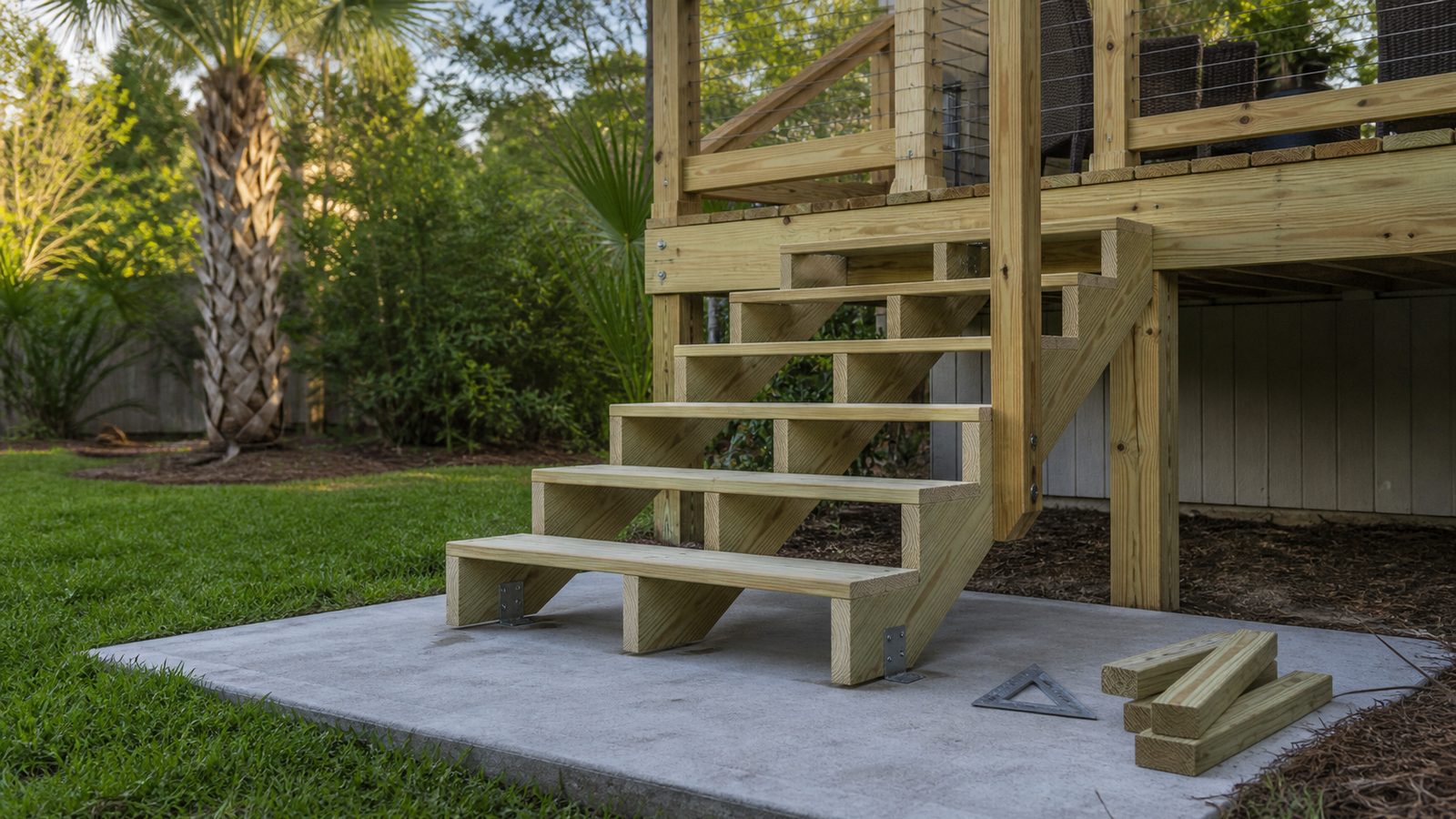
- Call for the framing inspection before installing joists, hangers, or decking, while the fastener pattern and flashing are still visible.
Jacksonville Climate Considerations
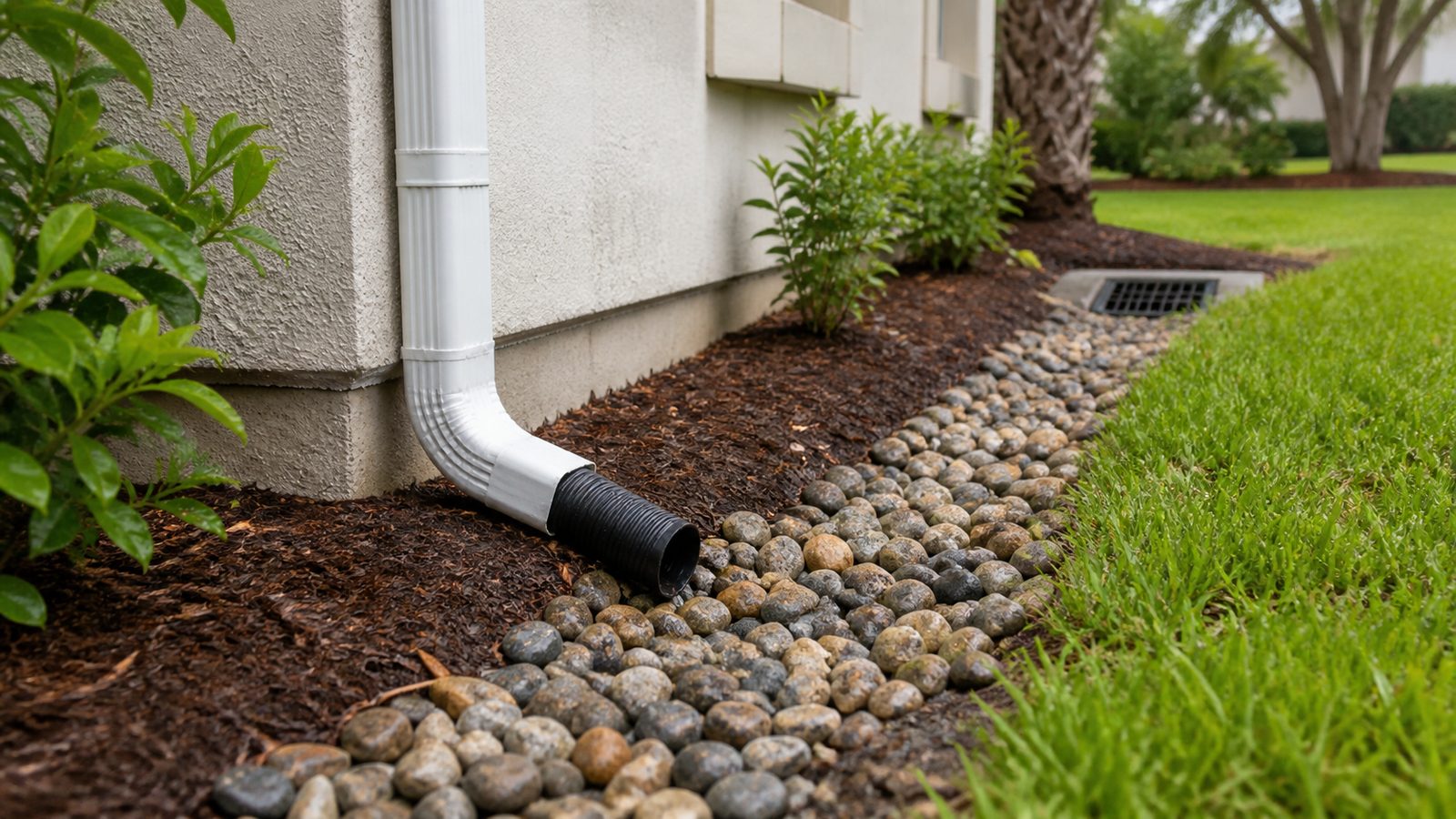
Jacksonville gets wind driven rain that pushes water sideways into wall assemblies during summer storms, exactly the condition ledger flashing is built to defeat. Humidity keeps wood from drying out quickly, so any gap in the flashing becomes a standing invitation for rot. Northeast Florida also has an active termite population, and a chronically damp band joist behind a deck ledger is one of the more common places we find termite damage in older homes here, because it stays wet and hidden behind siding for years before anyone notices. Near the beaches and along the Intracoastal, salt air accelerates corrosion on fasteners and metal flashing, so corrosion resistant or stainless hardware earns its cost quickly. And with hurricane season bringing real uplift and lateral loads, a ledger connection that was never engineered for wind is a weak point in the whole structure, not just a leak risk. This combination is why so many older Jacksonville decks hide a rotted band joist behind perfectly normal looking siding.
What It Costs in Jacksonville (DIY vs. Hiring a Pro)
These are rough planning estimates for the Jacksonville area, not quotes.
| Approach | Estimated Cost Range | Notes |
|---|---|---|
| DIY materials only (flashing, membrane, fasteners) | $150 to $400 | Assumes sound framing already exists behind the wall |
| DIY with band joist repair | $400 to $900 | Cost rises fast if rot is found and lumber has to be replaced |
| Licensed contractor, ledger reattachment | $1,200 to $3,000 | Includes permit, inspection, and correct fastener specification |
| Licensed contractor, ledger plus band joist rot repair | $2,500 to $6,000+ | Range depends heavily on how far the rot has spread |
When to Call JK Prestige
If you pull the siding back and find soft wood, staining, or a band joist that flexes when pushed, stop and call a licensed contractor. The same goes if your deck sits over a cantilevered floor, the wall behind the ledger is brick veneer, or you do not have a fastener schedule from an engineer or manufacturer to work from. JK Prestige handles ledger reattachment and full deck rebuilds throughout Jacksonville, pulls the permit, coordinates the inspection, and specifies the fastener pattern based on actual span and load rather than a guess. This is one repair where getting it wrong is not a cosmetic mistake.
No call center. No coordinator. A JK principal reviews every inquiry and replies with a real number, not a range, not a follow-up form.
Request Free Estimate →