If your deck stairs have four or more risers, Florida's residential code expects a handrail a hand can actually close around and hold in an emergency, not just a flat board screwed to the balusters. Getting the profile, height, and end returns right separates a handrail that passes inspection from one that gets red-tagged. This guide walks through the process for a typical Jacksonville deck, including how our humidity, salt air, and permitting rules affect the materials you choose.
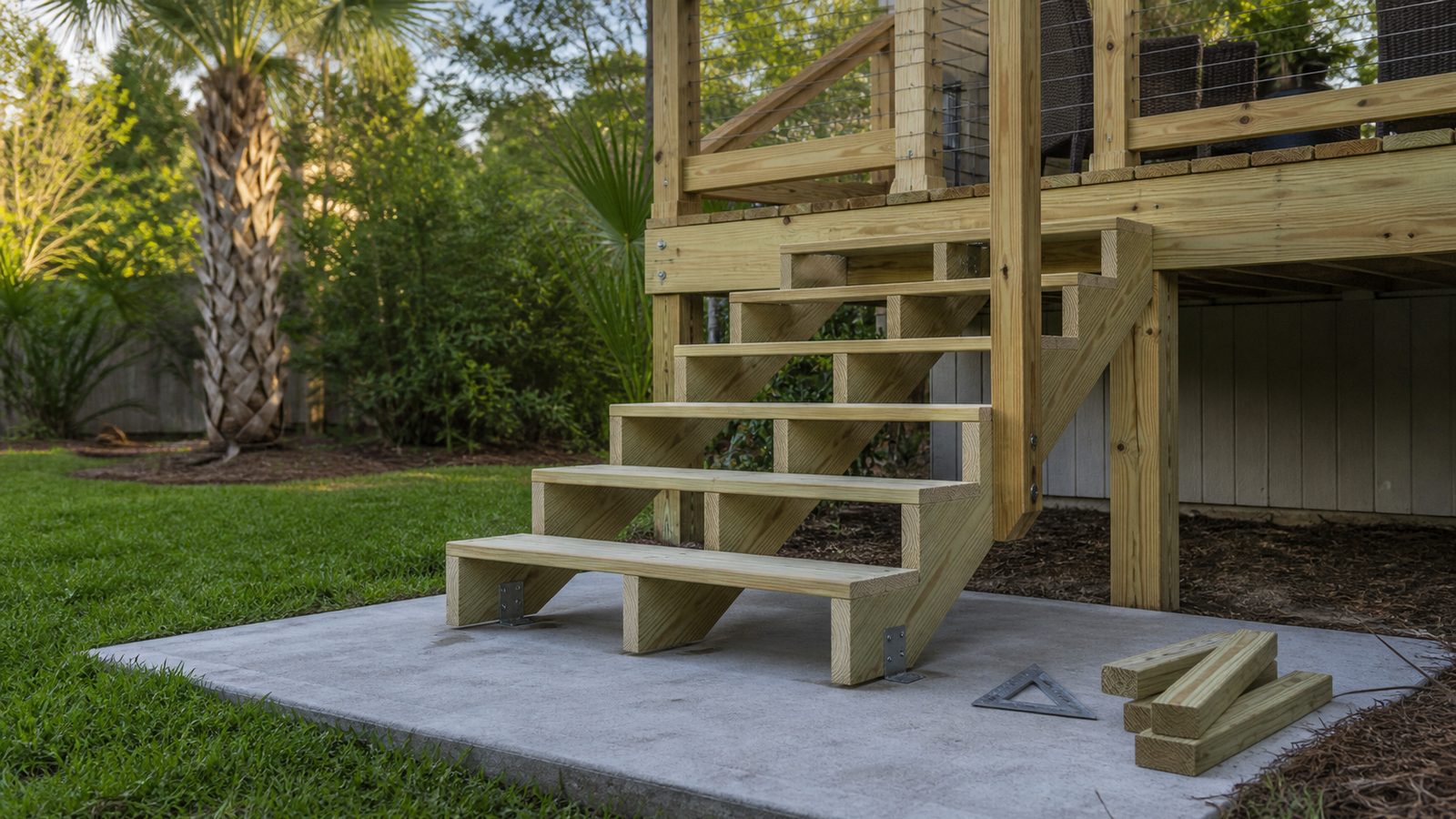
When You Need a Permit in Jacksonville
In Duval County, adding or replacing a handrail on exterior deck stairs generally requires a permit when the work involves structural changes, such as new posts, altered stringers, or a new guard system. A like-for-like replacement using the same posts and connection points is sometimes treated as maintenance, but confirm the scope with the City of Jacksonville Building Inspection Division before starting, since interpretation varies by inspector.
The general threshold under the residential code is that stairs with a certain number of risers require a graspable handrail on at least one side, and any walking surface elevated above a modest height above grade requires a guard, the taller barrier that prevents falls, as opposed to the handrail you grip while walking. An inspector will typically look at consistent grip height along the run, a graspable cross-section rather than a flat 2x4 laid on edge, solid connections into framing rather than decking or trim, and rail ends that return to the post so nothing can snag a sleeve or bag. If your project is in Nassau, Clay, or St. Johns County instead of Duval, each runs its own permitting office with its own process, so do not assume Duval's rules carry over.
Tools and Materials
- Pressure-treated 4x4 or 6x6 posts rated for ground contact, or engineered post bases for concrete landings
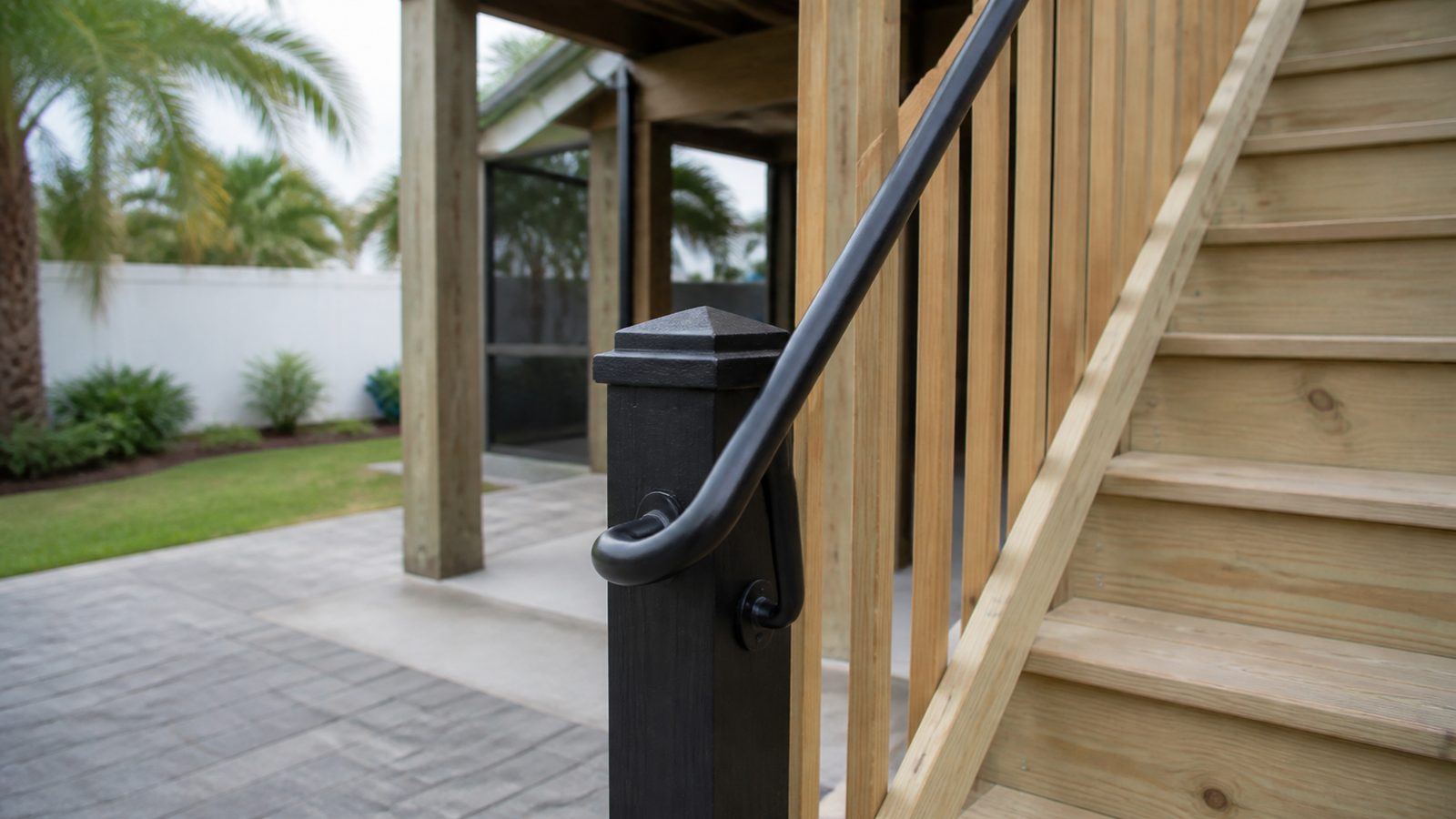
- 1-1/4 to 2 inch diameter graspable handrail: treated round stock, a milled graspable profile, or a composite/aluminum rail system
- Stainless or hot-dip galvanized structural screws and 1/2 inch lag bolts for post-to-framing connections
- Handrail brackets rated for exterior use, spaced per the rail manufacturer's span table
- Post base connectors or through-bolts for attaching posts to the stair stringer
- Cordless drill/driver, bits for bracket mounting, torque wrench for lag bolts
- 4-foot level, tape measure, speed square, string line for consistent slope
- Exterior wood preservative for field-cut pressure-treated ends
- Caulk or flashing tape for fastener penetrations into the stringer top
Step-by-Step
- Measure the total rise and confirm the number of risers to verify a graspable handrail is required.
- Mark the top and bottom termination points, keeping grip height, measured vertically from each tread nose, consistent along the run.
- Locate the stair stringers and identify solid framing for post attachment. Never mount a post to decking or riser trim alone.
- Set posts plumb using through-bolts or a rated post base connector into the stringer, brace temporarily, and torque lag bolts to spec.
- Dry-fit the handrail between posts to confirm the graspable profile clears any wall or baluster enough for a hand to wrap fully around it.
- Cut the rail to length, sealing field-cut ends of pressure-treated stock with wood preservative before installation.
- Install handrail brackets at the spacing called out in the rail system's span table, typically no more than 4 feet on center.
- Fasten the rail into the brackets, confirming a continuous, unbroken grip surface top to bottom.
- Fabricate a return at the top and bottom, turning the end back into the post so nothing projects outward to snag clothing.
- Check the finished rail height at several points to confirm it stays within range end to end, then caulk or flash any new fastener penetrations into the stringer top.
- Test the assembly with firm lateral and downward pressure at the midpoint and each end to confirm no movement at the post connections, and photograph the connections before post caps or skirting go on.
Common Mistakes to Avoid
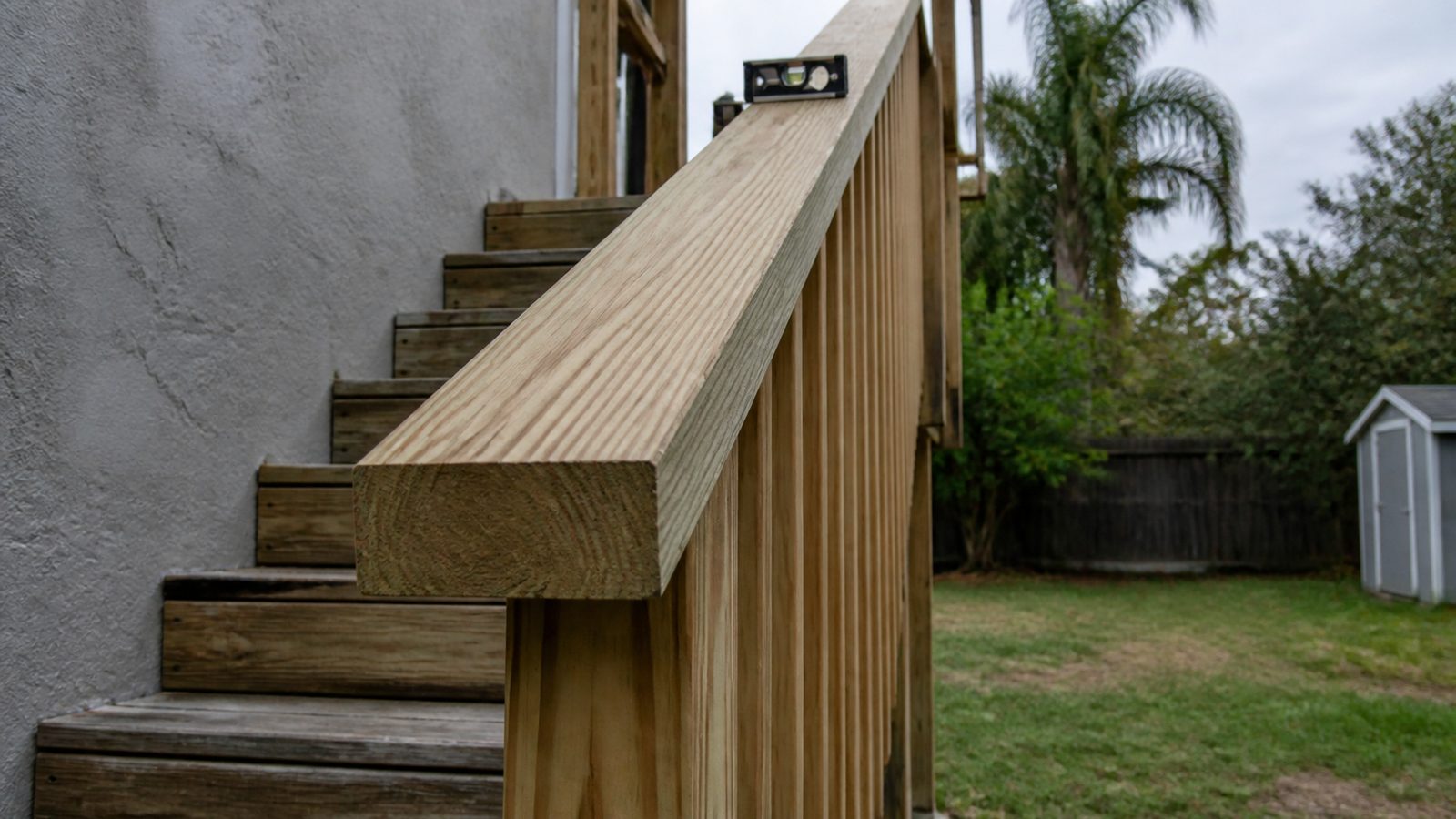
- Using a flat 2x4 or 2x6 laid on edge as the rail. It is not graspable, and it is one of the most common reasons a deck fails inspection.
- Leaving the rail ends open instead of returning them to the post, creating a snag hazard.
- Screwing posts into decking or riser trim instead of the stringer, letting the rail rack loose under load.
- Letting grip height drift as the stair descends, so the rail feels too high at top and too low at bottom.
- Mixing standard carbon steel screws with treated lumber, which corrodes fast in our humidity.
- Skipping the load test, so a weak connection is not caught until someone leans on the rail.
Jacksonville Climate Considerations
Northeast Florida's humidity keeps exterior wood damp longer after every rain, accelerating rot wherever a fastener penetrates the stringer or post top, so seal field cuts and flash penetrations rather than leaving bare wood exposed. Near the beaches or the Intracoastal, standard zinc-plated hardware corrodes noticeably faster than stainless steel or hot-dip galvanized fasteners, worth the upcharge on every bolt. Painted or stained wood rails need a maintenance schedule to stay ahead of UV breakdown, and composite rail systems still need coastal-rated brackets, since the metal hardware fails first. Wind is also a factor on open, elevated decks, so a system that only marginally passes a hand-push test in calm conditions is worth over-building.
What It Costs in Jacksonville (DIY vs. Hiring a Pro)
| Scope | DIY Cost Estimate | Professional Install Estimate |
|---|---|---|
| Simple straight-run rail, existing posts reused | $150 to $400 (materials) | $600 to $1,200 |
| Full rail and post replacement, one stair run | $300 to $700 (materials) | $1,200 to $2,500 |
| Composite or aluminum rail system upgrade | $400 to $900 (materials) | $1,800 to $3,500 |
These ranges assume a single stair run of typical residential scale and exclude permit fees, which vary by jurisdiction.
When to Call JK Prestige
If your stairs need new posts anchored into structural framing, if the stringers show any rot or movement, or if you would rather have a licensed contractor pull the permit and stand behind the inspection, JK Prestige handles the full scope from post connections to final rail finish. We work across Duval, Clay, St. Johns, and Nassau counties and know each office's submittal process.
No call center. No coordinator. A JK principal reviews every inquiry and replies with a real number, not a range, not a follow-up form.
Request Free Estimate →