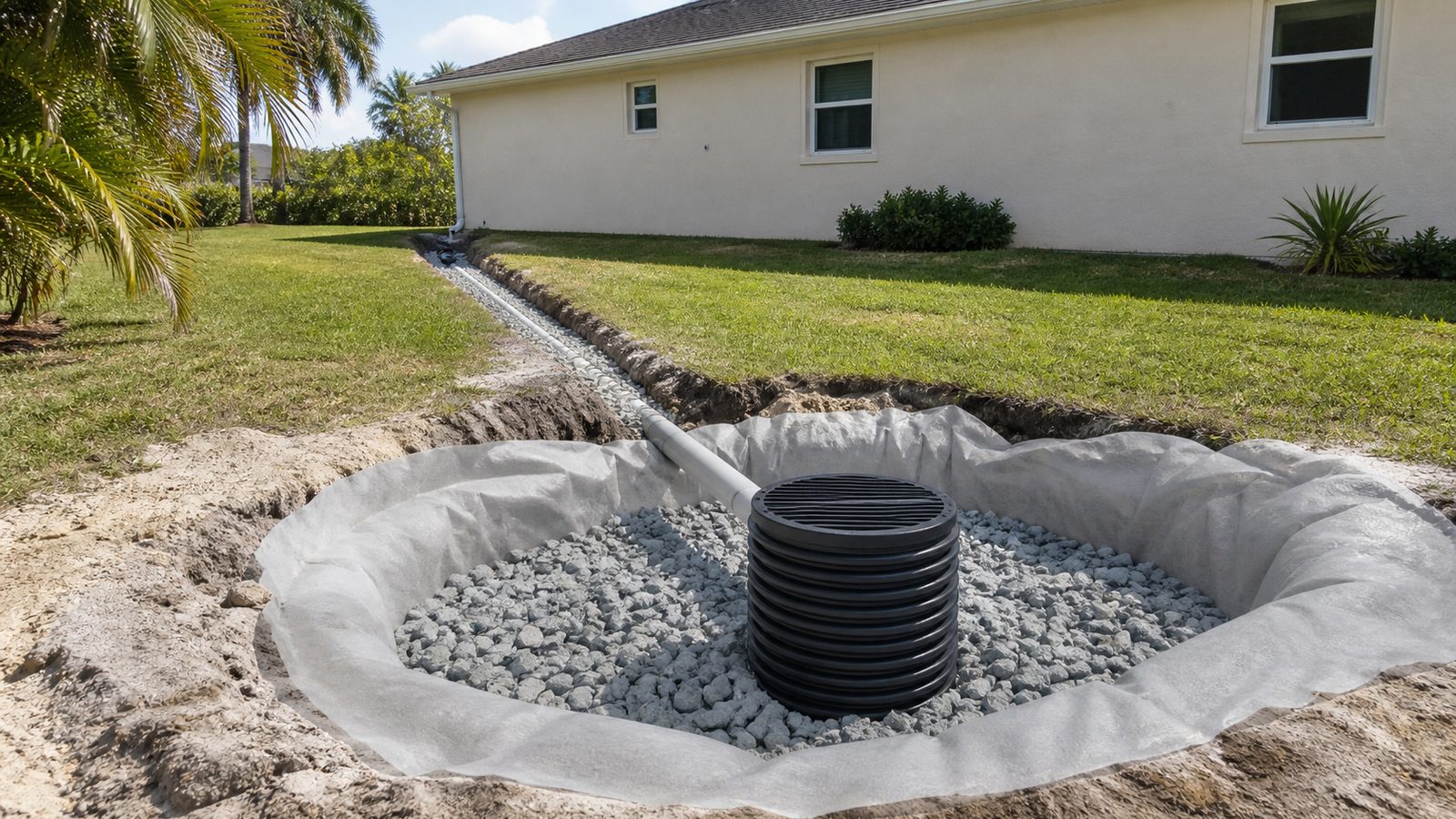
A dry well is a buried gravel pit that catches concentrated runoff, usually from a downspout or a low spot, and lets it soak into the soil instead of sheeting across the lawn or pooling against the foundation. On the right Jacksonville lot it's a cheap, low-maintenance fix. On the wrong lot, one with a shallow water table or dense clay a few feet down, it becomes an underground bathtub that stays full for days. This guide covers testing your soil, sizing the pit, and installing it correctly, and flags the water table problem before you dig.
When You Need a Permit in Jacksonville
Small residential dry wells handling a single downspout or a modest low spot typically fall under routine yard work and don't require a separate permit in Duval County, but any grading or drainage change that alters where water leaves your lot, or sends it onto a neighboring property, can trigger review. The rule everywhere in Florida is that you cannot direct concentrated stormwater onto an adjacent lot. If your project ties into a larger regrading job or sits near a wetland, pond, or drainage easement, check with the City of Jacksonville's building and development review before you dig. Larger alterations affecting a stormwater pond, ditch, or wetland buffer can also fall under St. Johns River Water Management District jurisdiction, separate from city permitting.
If your property has a recorded drainage or utility easement, don't place a dry well inside it without checking the terms first, and check your HOA rules too, since many restrict where drainage structures can sit relative to a property line. Before digging, call 811 (Sunshine 811) at least two business days ahead. Florida law requires this utility locate for any excavation, and it's free. Homeowners in Nassau, Clay, and St. Johns counties should check with their own county building department, since each runs its own office with its own thresholds.
Tools and Materials
- Post hole digger or rented gas auger, for pits deeper than 2 feet
- 5-gallon bucket and garden hose, for the perc test
- Non-woven, permeable landscape fabric
- Washed drainage stone, 3/4 to 1.5 inch, clean and angular (skip pea gravel)
- Perforated corrugated pipe or solid PVC
- Optional pre-formed plastic dry well chamber
- Level, tape measure, marking flags
- Shovel, wheelbarrow, tamper
- Sod or seed for patching
Step-by-Step
- Locate the site: at least 10 feet from the foundation and 10 feet from any property line, septic drainfield, or well.
- Call 811 and wait for utility locates before digging.
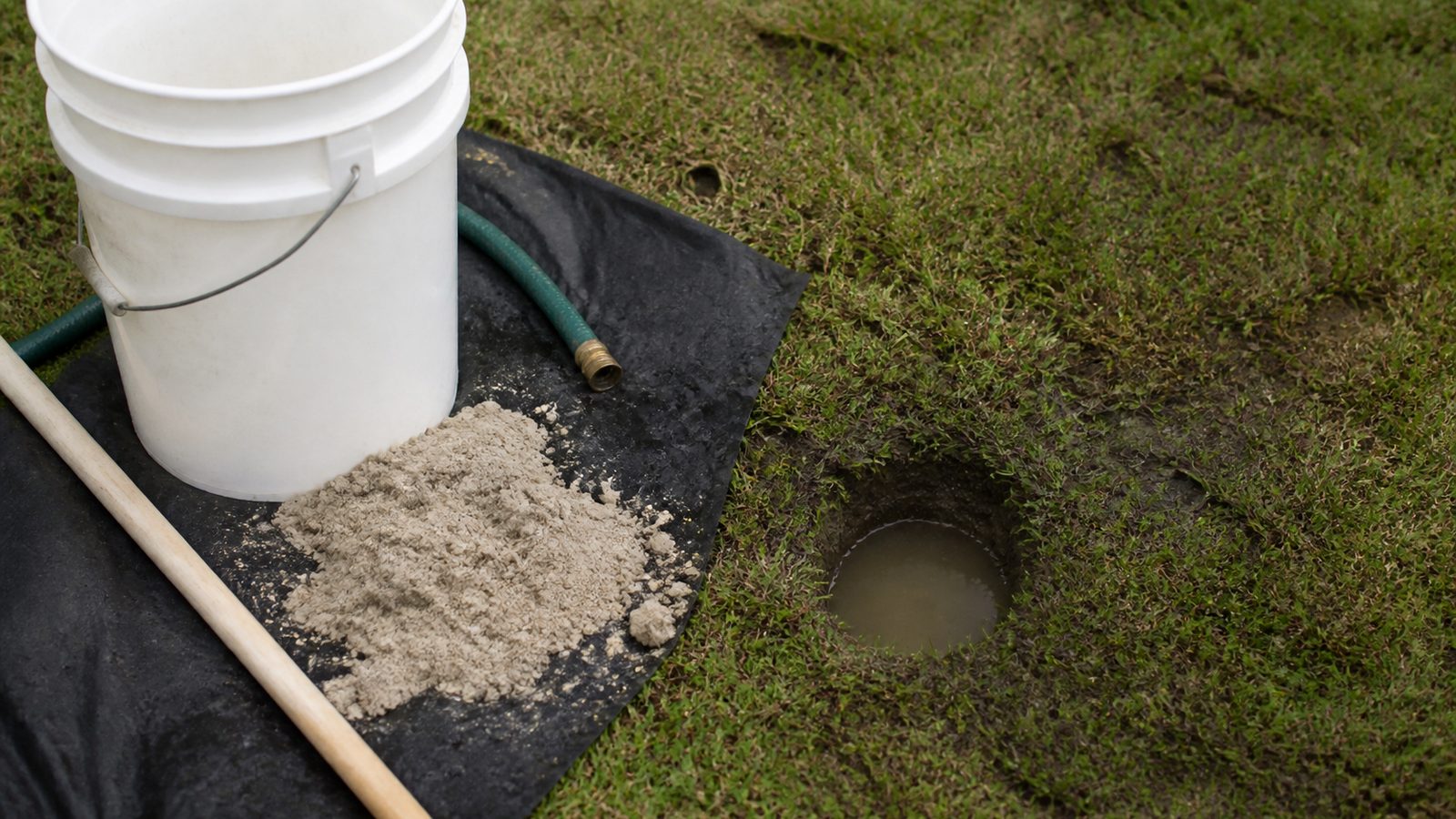
- Run a percolation test: dig a hole 12 inches deep and 6 inches wide, fill with water, let it drain fully, then fill again and time how long it takes to drop one inch. Under 30 minutes per inch is a good candidate; over an hour means a dry well is the wrong fix.
- While the test soaks, check the seasonal high water table. If groundwater sits within a couple feet of the surface part of the year, common near creeks, marshes, and the St. Johns River, a dry well will sit submerged and won't drain.
- Size the pit to the drainage area feeding it. A downspout serving 500 to 800 square feet of roof typically needs a pit about 3 to 4 feet across and deep, adjusted for perc results; slower soil needs more volume, not more depth.
- Dig with straight sides, keeping excavated soil on a tarp for backfill and grading, then line the walls and base with landscape fabric, leaving overlap to wrap the stone once filled.
- Add a few inches of stone at the base and set the inlet pipe to discharge into the middle, sloped at least 1/8 inch per foot away from the house.
- Fill with clean stone in lifts, settling each layer, to within 8 to 12 inches of grade, then fold the fabric over the top to keep soil and roots from washing into the void space.
- Cover with topsoil, crowning slightly for settling, then finish with sod or seed.
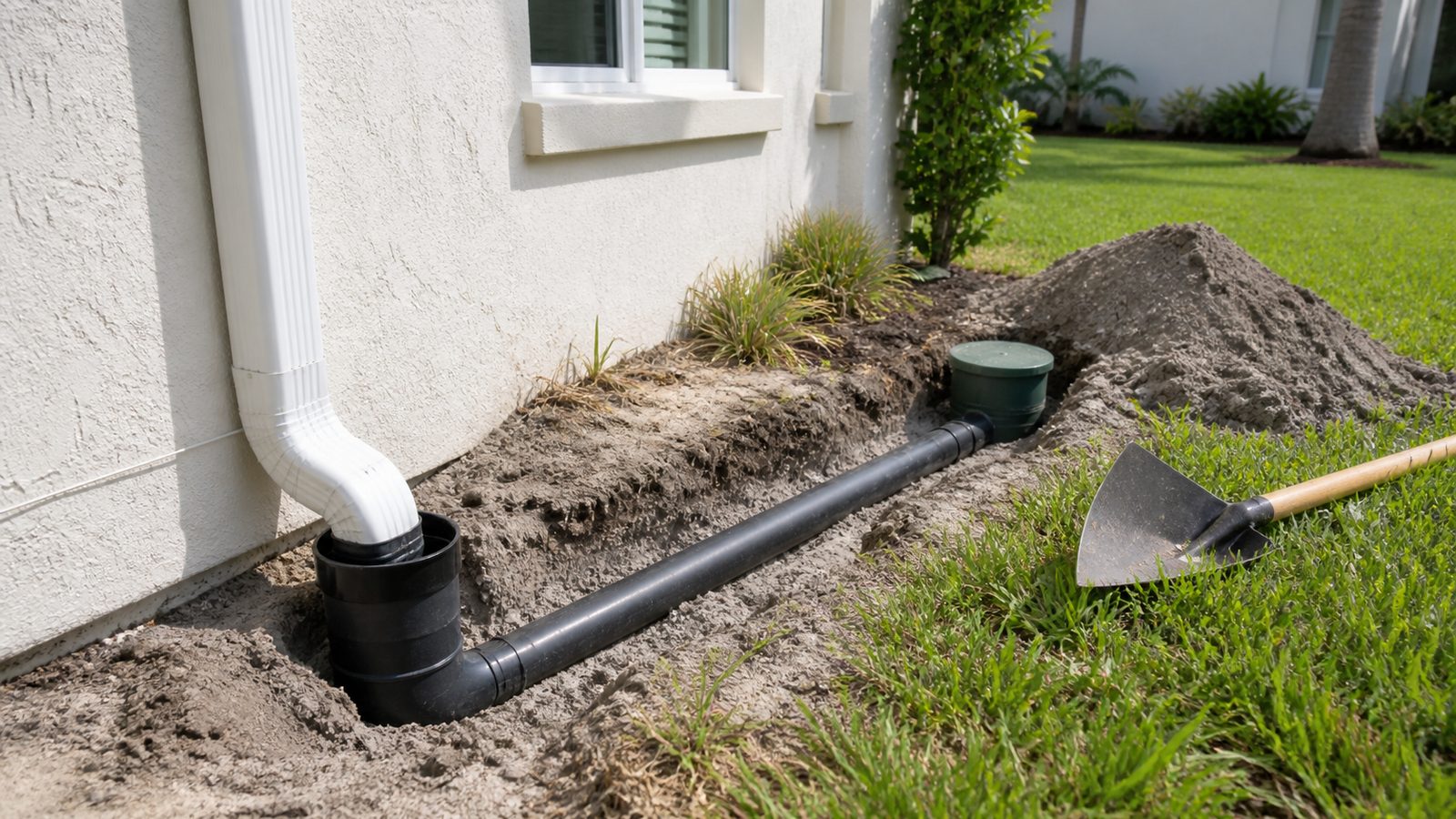
- Connect the downspout or swale to the inlet pipe and confirm a watertight fit, then test with a hose for 10 to 15 minutes; water should disappear without backing up or surfacing nearby.
- Recheck after the next heavy rain to confirm the pit isn't holding standing water more than a day or two.
Common Mistakes to Avoid
- Skipping the perc test, the top reason dry wells fail
- Placing the well too close to the foundation, pushing water back at the house
- Using pea gravel instead of clean, angular stone, which clogs faster
- Ignoring the high water table and installing where it floods every summer
- Skipping the 811 locate and hitting a buried line
- Undersizing the pit, so it overflows in the first hard downpour
Jacksonville Climate Considerations
Soil in Jacksonville varies block to block. Neighborhoods on higher, sandier ground drain fast and make good dry well candidates. Others sit on clay-heavy hardpan a foot or two down that barely percolates, which is what the perc test catches before you commit. Northeast Florida also has a seasonally high water table that rises in the wet months, so a site that percs fine in April can be waterlogged by August. Summer brings frequent afternoon downpours that can drop an inch or more of rain in under an hour, and hurricane season from June through November can saturate the ground for days. Size any dry well for those short, intense bursts, not average annual rainfall.
What It Costs in Jacksonville (DIY vs. Hiring a Pro)
| Approach | Cost Range | Notes |
|---|---|---|
| DIY, single downspout | $150 to $400 | Materials only |
| DIY, pre-formed chamber | $400 to $900 | Chamber adds cost, simplifies install |
| Pro, standard residential | $1,200 to $3,500 | Site evaluation, excavation, grading |
| Pro, complex site | $3,500 to $8,000+ | Poor soil or multiple wells |
When to Call JK Prestige
If your perc test comes back slow, your yard sits on a high water table, or you're unsure whether a dry well, a French drain, or regrading fits your lot, that's worth getting right before you dig. JK Prestige evaluates the site and installs drainage sized to how your property behaves in a real storm, not a dry afternoon.
No call center. No coordinator. A JK principal reviews every inquiry and replies with a real number, not a range, not a follow-up form.
Request Free Estimate →