Exterior French doors are one of the more rewarding upgrades a Jacksonville homeowner can make — they open up a back patio, let in natural light, and add genuine resale value. But installing them here is not the same as installing them in, say, North Carolina. Florida's wind-load requirements, Duval County permitting rules, and the coastal humidity all add steps that skip-it-and-regret-it contractors routinely overlook. This guide walks through the full process: permits, tools, installation sequence, and the climate realities that make this a more involved job than the YouTube tutorials suggest.
When You Need a Permit in Jacksonville
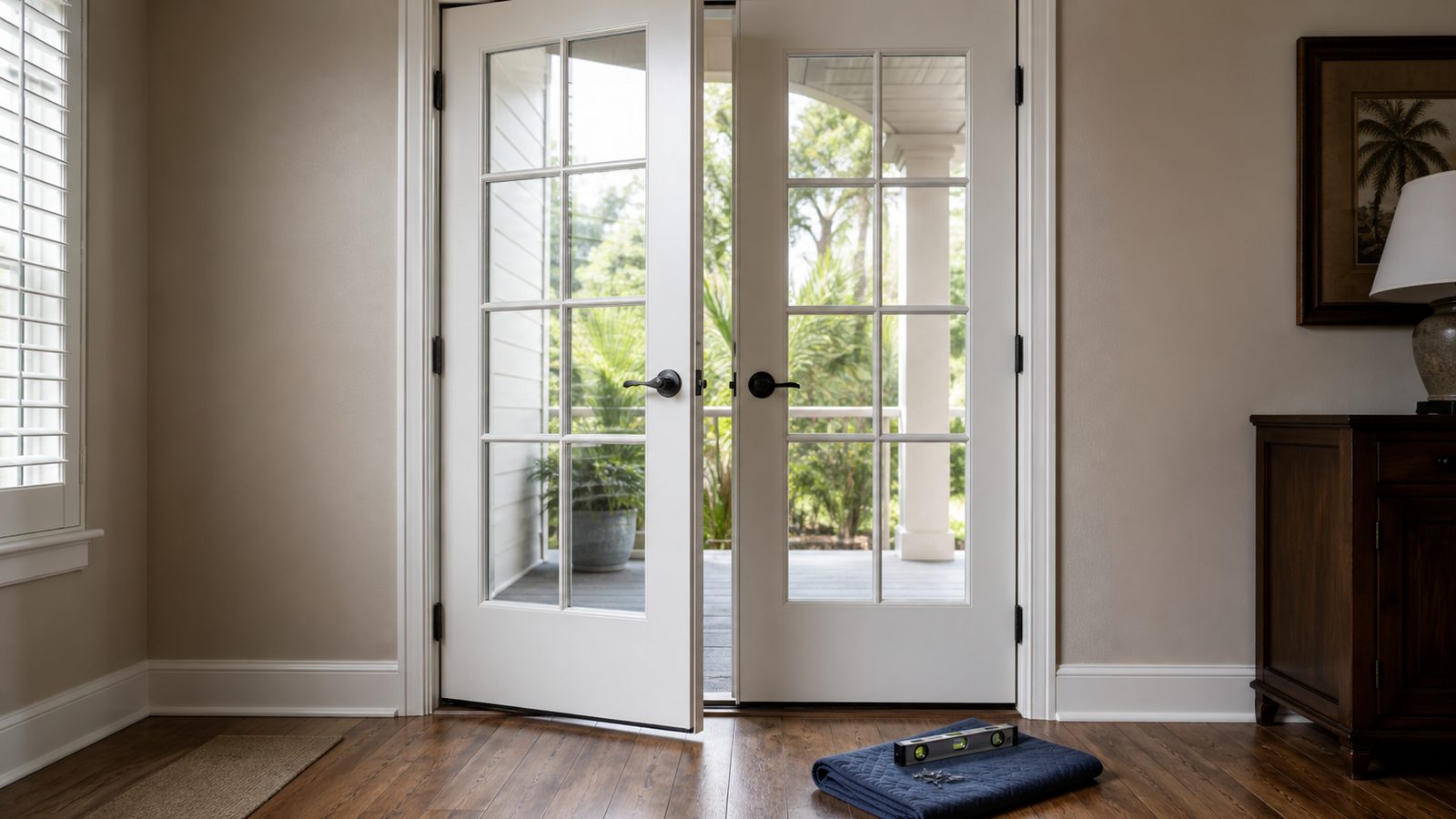
In Jacksonville (Duval County), swapping an exterior door — including French doors — almost always triggers a building permit. The Florida Building Code treats any exterior opening replacement as a structural matter because the door and its frame are part of the building envelope that must resist wind pressure.
A few specifics to know:
- Wind-load compliance: Duval County is not in the High-Velocity Hurricane Zone (HVHZ), which covers Miami-Dade and Broward. However, the 2023 Florida Building Code still requires exterior doors to meet design wind pressures based on your specific location, building height, and exposure category. You cannot simply buy any door and install it — the product must carry a Florida Product Approval (FPA) number issued by the Florida Department of Business and Professional Regulation.
- Notice of Acceptance (NOA): If you are sourcing doors with Miami-Dade NOAs, those exceed Jacksonville's requirements and are always acceptable. Many Jacksonville contractors specify NOA-rated doors as a matter of habit.
- Egress compliance: If the French doors serve a bedroom or are the primary means of egress from a habitable space, the combined clear opening width must meet egress requirements under the residential code. Two standard 30-inch panels typically clear this, but verify against your rough opening.
- Inspection: After installation, a city inspector will check the flashing, product approval label, and threshold seal. Do not cover the frame until after inspection.
Pull your permit through the City of Jacksonville Building Inspection Division. Fees are modest relative to the cost of an unpermitted door discovered at resale.
Tools and Materials
- Pry bar and reciprocating saw (for old door removal)
- Circular saw (rough opening adjustment if needed)
- Drill/driver and bit set
- Level (48-inch minimum), tape measure, speed square
- Shims (composite preferred over wood in Florida humidity)
- Pan flashing (pre-formed or liquid-applied membrane)
- Self-adhering flexible flashing tape (minimum 6-inch width)
- Backer rod and low-expansion polyurethane foam
- Exterior-grade silicone caulk (paintable)
- Stainless steel or hot-dipped galvanized screws (corrosion resistance matters here)
- Impact-rated exterior French door unit with Florida Product Approval
- Threshold with integral sill pan or separate sill pan assembly
- Astragal (if not pre-hung on the active panel)
- Safety glasses and hearing protection
Step-by-Step
- Remove the existing door and frame. Cut through any exterior caulk lines, then pull the interior casing. Score the exterior trim carefully. Remove the old frame in sections — do not force it and crack the surrounding framing.
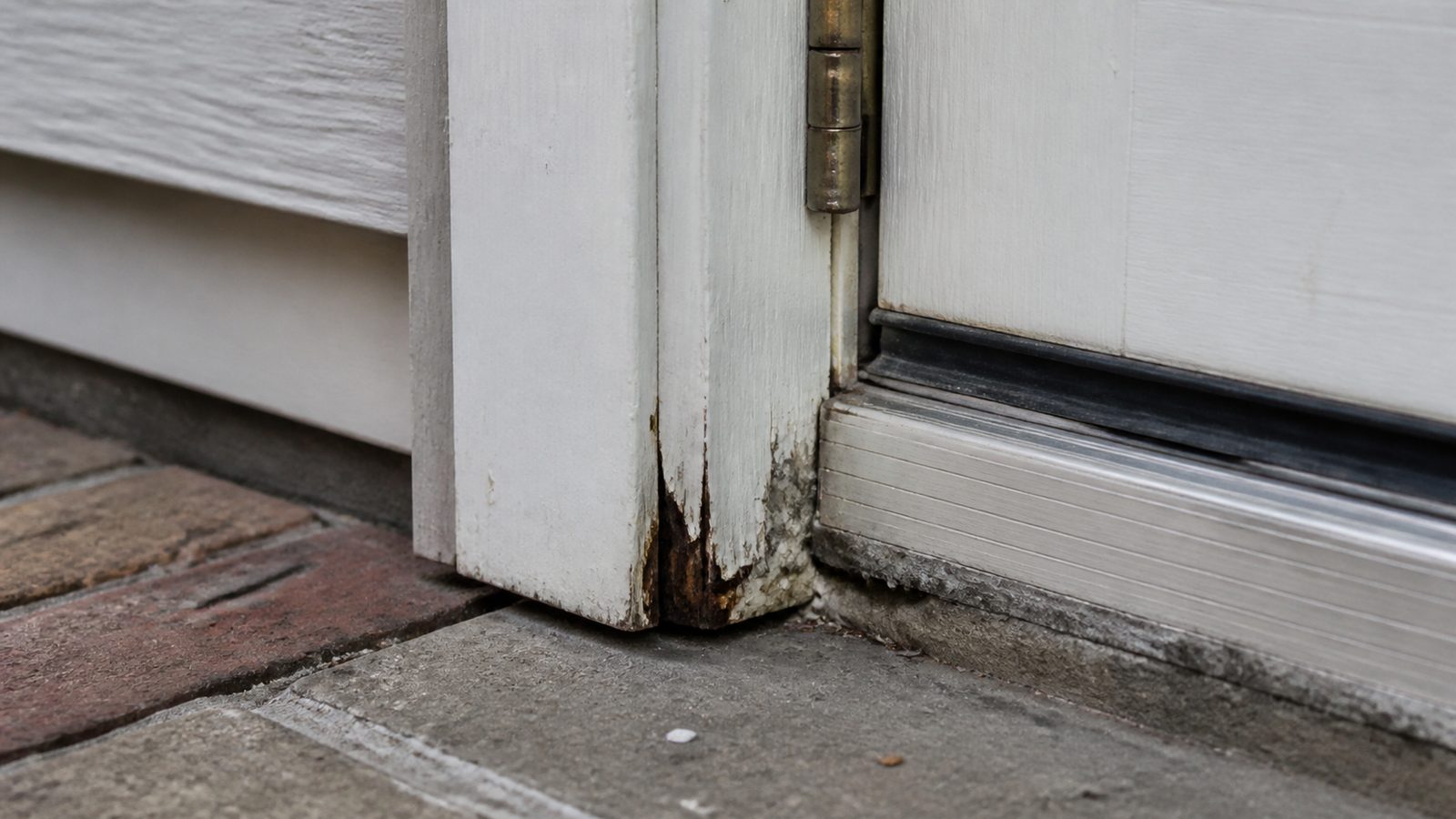
- Inspect and prepare the rough opening. Check for rot at the sill and king studs. Replace any damaged lumber before proceeding — this is the step that separates a good installation from a callback. The rough opening should be approximately 2 inches wider and 1 inch taller than the door unit's nominal size, but confirm against the manufacturer's rough opening spec for your specific unit.
- Install the sill pan. Florida's rain-driven wind loads make a proper sill pan non-negotiable. Use a pre-formed vinyl or aluminum pan, or build one with self-adhering membrane sloped outward. The pan must drain to the exterior, not into the wall cavity.
- Apply flexible flashing to the rough opening. Run flashing up both side jambs and across the head, lapping in shingle fashion — sill first, then sides, then head. Overlap seams by at least 2 inches.
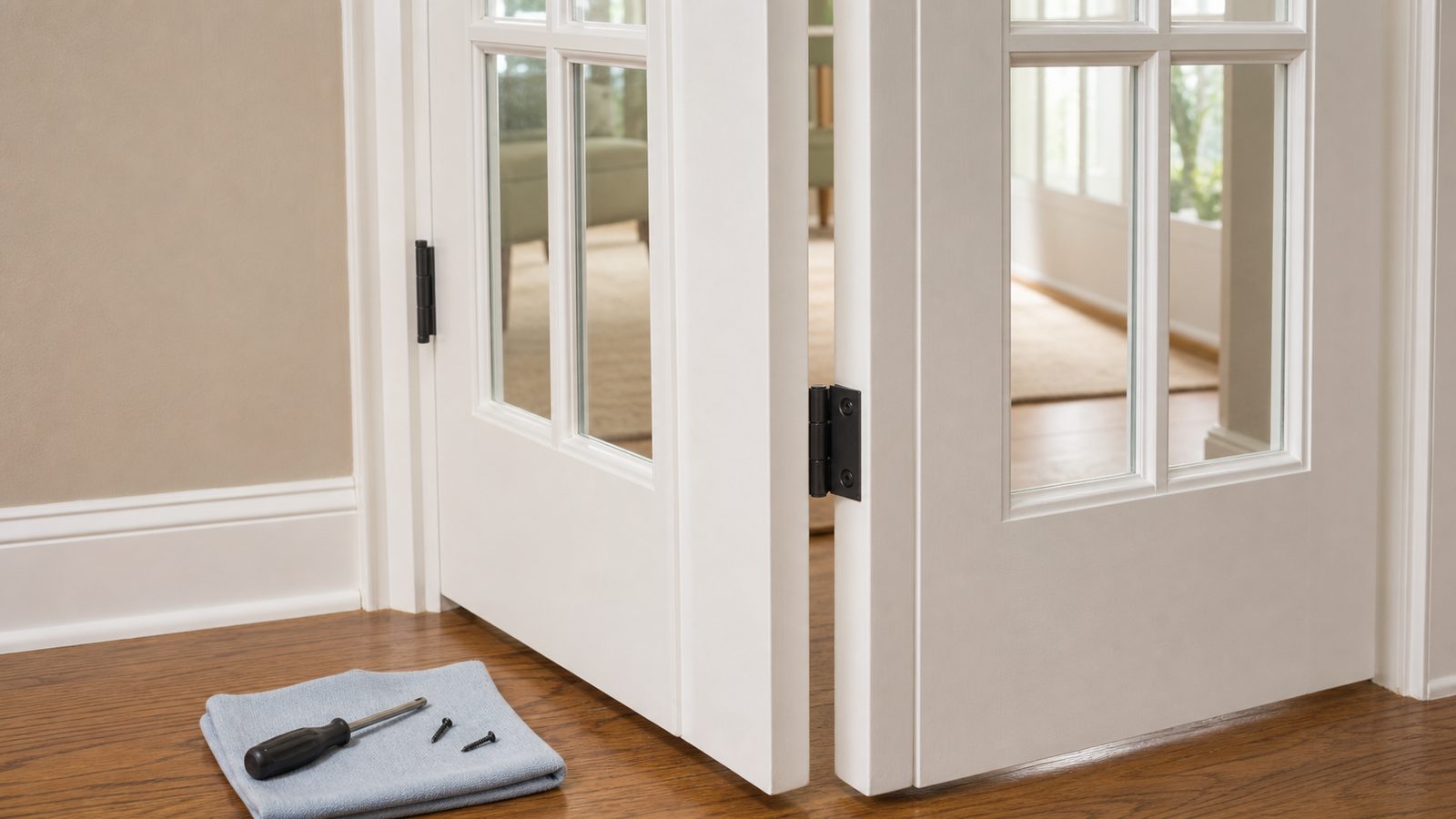
- Set the door unit in the opening. With a helper, tilt the pre-hung unit into the opening. Check for plumb and level immediately — a French door that is not perfectly plumb will sag and misalign over time. Use composite shims at the hinge locations and latch side. Do not rely on foam to hold alignment.
- Fasten the frame. Drive screws through the hinge-side jamb first, checking plumb after each. Then fasten the latch side, adjusting shims until the door swings freely and the gap is even. For impact-rated units, follow the manufacturer's fastener schedule exactly — the FPA approval is void if you deviate.
- Flash the exterior. Lap the exterior trim flashing over the flexible flashing on the jambs. Caulk the head trim, not the sill — the sill must drain.
- Install the threshold. The threshold must sit tight to the finished floor and compress the door sweep. Adjust the threshold height so the sweep creates a weathertight seal without dragging.
- Hang and adjust the astragal. The astragal seals the gap between the two active panels. Adjust the magnetic or compression astragal so it seals evenly top to bottom.
- Air seal the interior. Fill the gap between frame and rough opening with low-expansion foam. Pack backer rod into larger gaps first. Trim flush when cured, then install interior casing.
Jacksonville Climate Considerations
Jacksonville sits in a mixed-humid climate with a legitimate hurricane exposure, and that shapes every product decision you make.
Hurricane wind and debris: Duval County regularly sees tropical storm and Category 1 conditions. An impact-rated French door — laminated glass bonded to a structural interlayer — eliminates the need for shutters on that opening and provides continuous protection. If you opt for non-impact glass, you are obligated to cover the opening with approved shutters before every named storm. For a French door that opens to a patio or pool, impact glass is the practical choice.
Salt air and hardware: Within roughly 15 miles of the coast, salt air accelerates corrosion on door hardware. Specify marine-grade stainless steel hinges, handles, and multi-point lock hardware. Standard zinc-plated hardware will show rust within two to three years in coastal Jax neighborhoods like Atlantic Beach, Neptune Beach, or San Marco.
Humidity and air sealing: Jacksonville averages over 50 inches of rainfall per year and summer humidity routinely exceeds 85 percent. A poorly air-sealed door frame becomes a mold incubation site. The foam and sill pan steps above are not optional niceties — they are the difference between a door that lasts 20 years and one that rots in 7.
Energy performance: Look for a unit with a low Solar Heat Gain Coefficient (SHGC). Florida summers mean the glazing faces west or south in many homes, and a high SHGC turns your living room into a greenhouse. A Low-E coating with an SHGC of 0.25 or below will meaningfully reduce cooling loads.
What It Costs in Jacksonville (DIY vs. Hiring a Pro)
| Scenario | Typical Range |
|---|---|
| Door unit only (impact-rated, standard size) | $1,200 – $3,500 |
| DIY install (materials, permit, no labor) | $1,500 – $4,200 total |
| Pro installation, door supplied by homeowner | $800 – $1,800 labor |
| Full pro turnkey (door + install + permit) | $2,800 – $6,500 |
| Custom or oversized unit, full turnkey | $6,000 – $12,000+ |
Prices vary based on door size, glass package, hardware grade, and whether the rough opening needs structural modification. Obtain at least two itemized bids — a reputable contractor will specify the FPA approval number on the quote.
When to Call JK Prestige
The permit requirement and impact-rating specifications make exterior French door installation a job where the details matter beyond DIY comfort level. If your opening needs structural modification, if your home is in a flood zone that adds elevated threshold requirements, or if you simply want the door to be permitted and inspected correctly the first time, JK Prestige handles the full scope — product selection, permit pulling, installation, and inspection coordination. We work in Jacksonville and surrounding Duval County and build to Florida code on every project.
No call center. No coordinator. A JK principal reviews every inquiry and replies with a real number, not a range, not a follow-up form.
Request Free Estimate →