Every June, Jacksonville homeowners start thinking about their windows again, and many land on window film as a quick, affordable fix. It is a reasonable product for the right job, but it is also widely misunderstood. Before you spend a weekend applying film, you should know what it actually does, what it does not do, and whether it fits your goal.
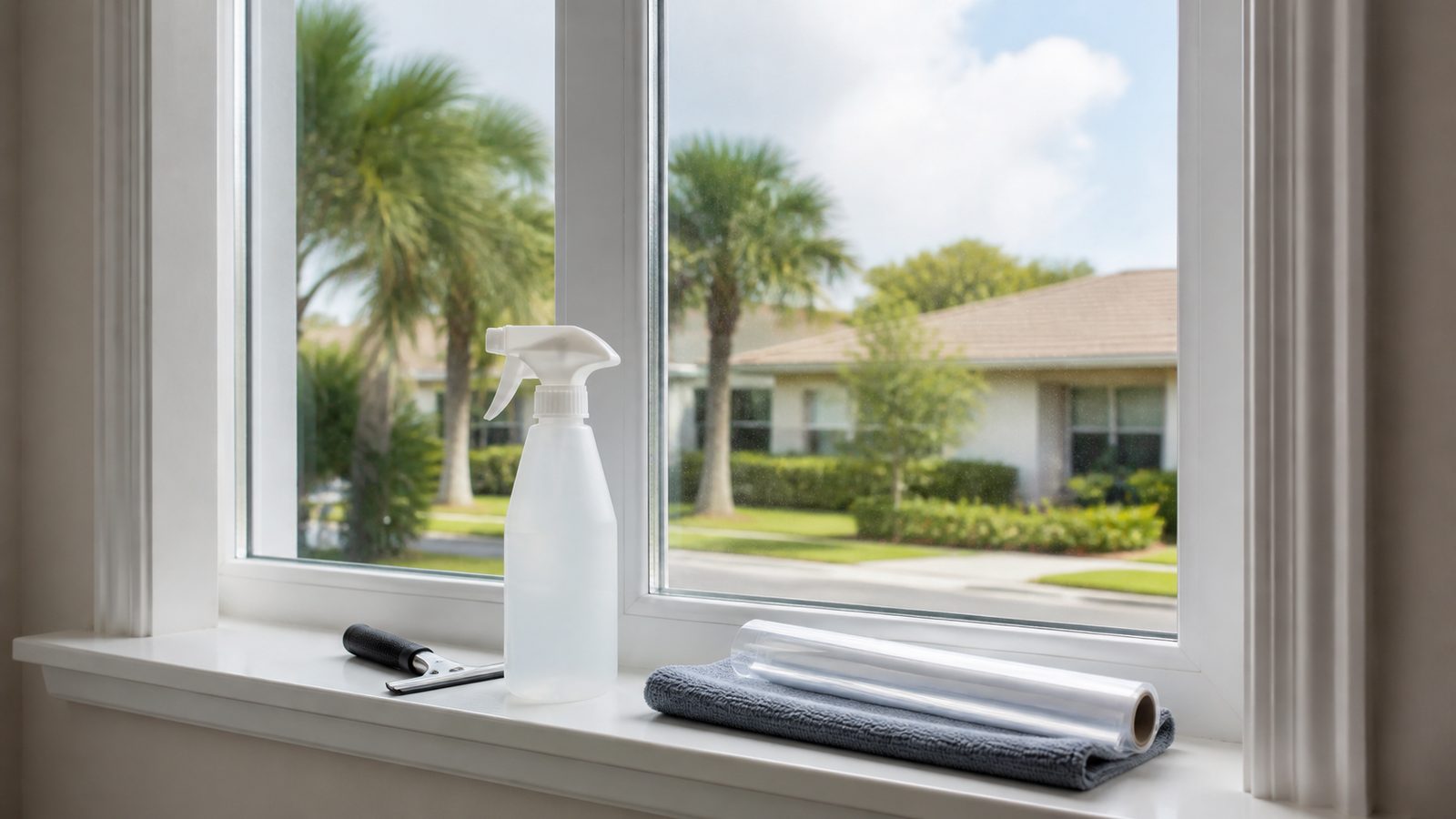
When You Need a Permit in Jacksonville
Applying adhesive security or solar window film to existing glass is generally a cosmetic, non-structural improvement and does not require a permit from the City of Jacksonville or Duval County building department. You are not altering the window assembly, the framing, or the opening itself. That said, confirm with Duval County Development Services if this is part of a larger renovation, since combined scopes of work sometimes trigger a review a standalone film job would not.
Here is the part that matters more than the permit question. Security window film, even professionally installed, does not satisfy Florida Building Code impact and opening protection requirements the way code-rated shutters, panels, or impact-rated windows do. Duval County sits in a wind-borne debris region, and current code calls for tested and labeled opening protection systems, meaning products that have passed large missile impact and cyclic pressure testing as an assembly, not a film applied after the fact to standard glass. Adhesive film alone will not get you credit on your wind mitigation inspection form or lower your windstorm insurance premium the way approved shutters or impact windows can. If your goal is code compliance or an insurance discount, film is not the tool. If your goal is reducing injury from flying glass, deterring smash-and-grab break-ins, or cutting UV heat gain, film can genuinely help.
Tools and Materials
- Security or solar control window film, thickness and warranty rated for your climate
- Application (slip) solution: a few drops of baby shampoo in a spray bottle of clean water
- Hard-card squeegee and a felt-edge or soft squeegee
- Sharp utility knife with extra blades
- Microfiber cloths and lint-free towels
- Razor scraper for old adhesive or paint on the glass
- Straightedge and tape measure
- Heat gun for corners and curved edges (optional)
- Optional edge attachment or mechanical retention system to anchor film into the frame
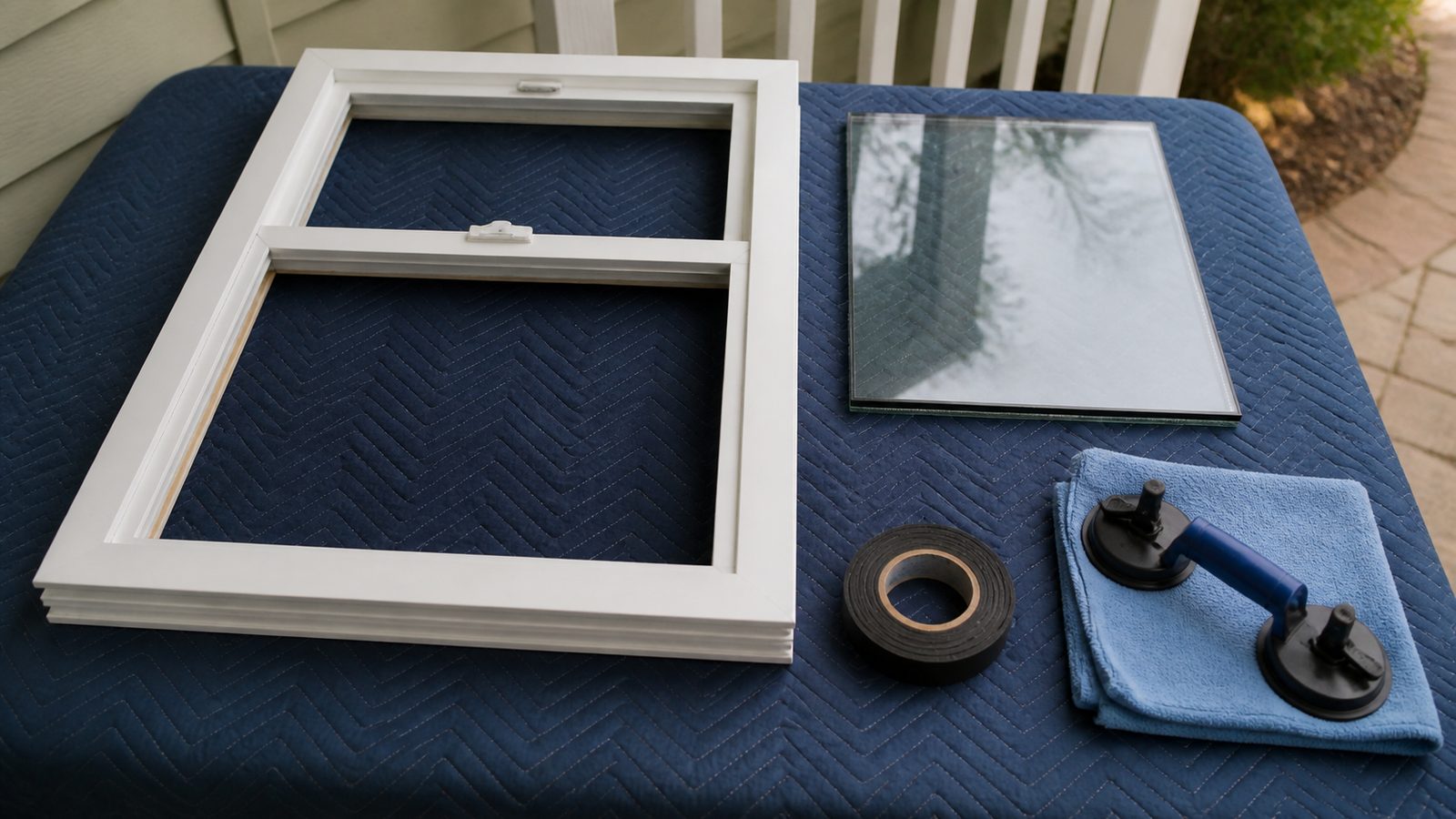
Step-by-Step
- Measure each window individually, even if they look identical. Older Jacksonville homes in neighborhoods like Riverside and Avondale often have windows that vary by a quarter inch or more from opening to opening.
- Clean the glass thoroughly. Scrape off old caulk, paint overspray, and stickers, then wash with the slip solution and squeegee dry. Any debris left behind shows up as a bubble under the film.
- Cut the film an inch or two larger than the glass on all sides, using the straightedge and utility knife on a clean, flat surface.
- Wet the glass and the film's adhesive side generously with the slip solution. This lets you slide the film into position before it grabs.
- Apply the film to the glass, adhesive side down, and slide it into alignment while both surfaces are still wet.
- Squeegee from the center outward, working in overlapping strokes to push water and air bubbles toward the edges.
- Trim the excess film at the edge of the glass with a fresh blade, holding the knife flat against the frame.
- Final squeegee pass with a hard card, wrapped in a soft cloth, pressing firmly to force out remaining moisture pockets.
- Optional: install an edge attachment system, a mechanical batten or track that anchors the film into the frame so the glass and film stay in the opening under wind load rather than relying on adhesive bond alone. This is the closest a film system gets to anchored protection, and it is still not a substitute for a tested, labeled opening protection product.
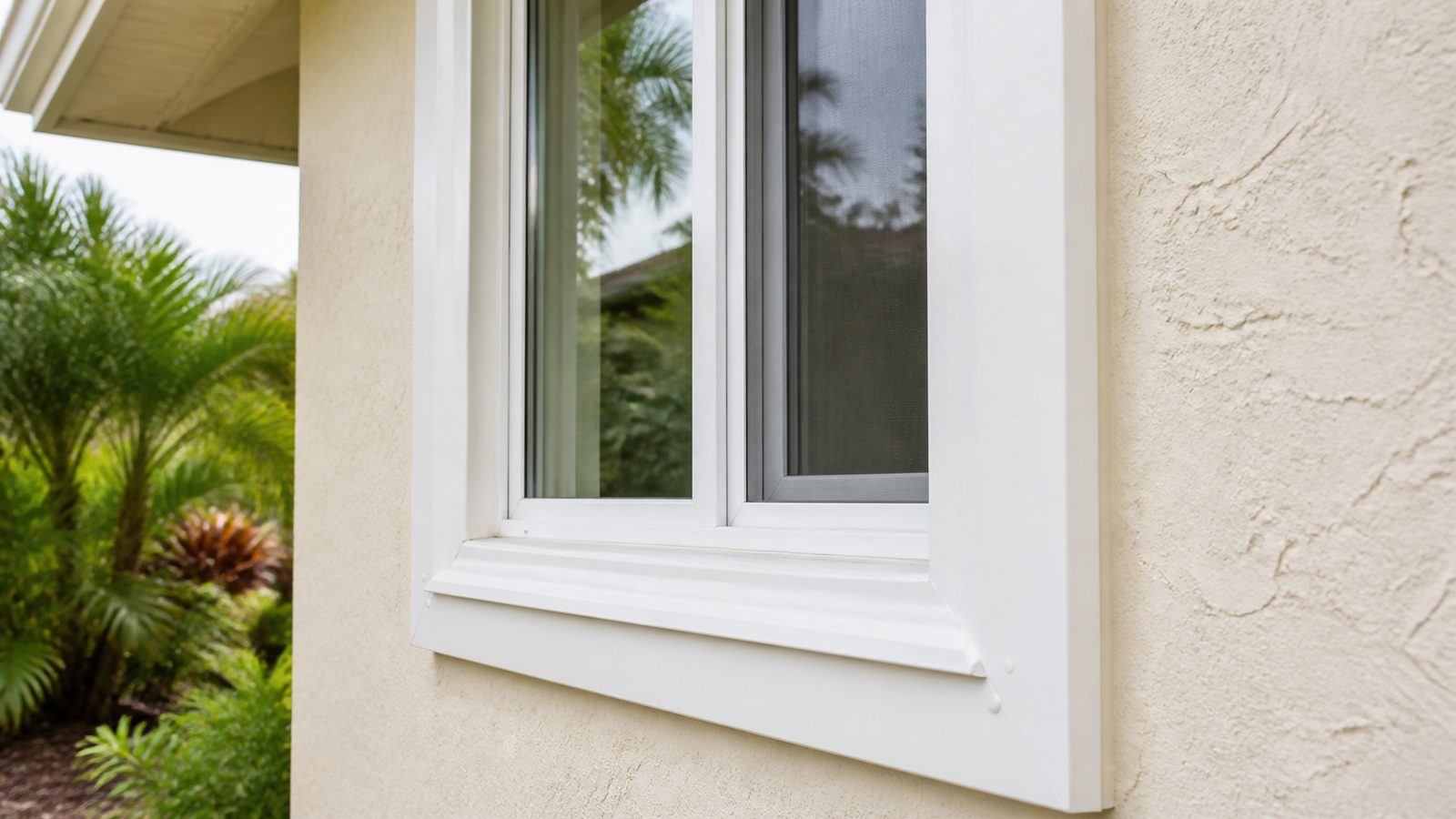
Jacksonville Climate Considerations
Jacksonville sits in an active hurricane corridor, and even storms that stay offshore routinely bring gusts capable of turning yard debris, palm fronds, and loose roofing material into projectiles. Security film's main benefit in a wind event is holding shattered glass together so it does not spray into the room, which reduces injury risk even though it does not stop the impact itself. Outside of storm season, our intense year-round sun makes UV and solar heat gain a daily issue, and a good solar control film can noticeably cut glare and heat load on west and south facing windows, which is reason enough to install film even if hurricanes were not a factor. One install note specific to our climate: humidity slows the cure time for the water trapped under the film. Expect a hazy appearance for one to two weeks, sometimes longer in the muggier summer months, as the moisture evaporates through the film.
What It Costs in Jacksonville (DIY vs. Hiring a Pro)
| Approach | Typical Cost | Notes |
|---|---|---|
| DIY film, materials only | $3 to $8 per square foot | Wide range depending on film grade and thickness |
| Professional install, security film | $10 to $20 per square foot | Includes labor, warranty, and cleanup |
| Professional install, premium security/solar combo film | $18 to $28 per square foot | Higher-end products with longer warranties |
| Impact-rated window replacement (for comparison) | $40 to $80+ per square foot installed | Actual code-compliant opening protection |
A typical Jacksonville home with 12 to 15 standard windows might run $600 to $1,800 DIY in materials, or $2,500 to $6,000 professionally installed, depending on window size and film grade. That is a meaningful gap from impact windows or engineered shutters, which is why film gets marketed so heavily as a budget alternative, even though it serves a different purpose.
When to Call JK Prestige
If you are weighing window film against real opening protection, or you are not sure what your current windows and insurance policy actually require, it is worth a conversation before you spend money on either. JK Prestige can walk your home, look at your window assemblies, and give you a straight answer on whether film, impact windows, or shutters make sense for your budget and risk. We would rather tell you film is enough than sell you something you do not need.
No call center. No coordinator. A JK principal reviews every inquiry and replies with a real number, not a range, not a follow-up form.
Request Free Estimate →