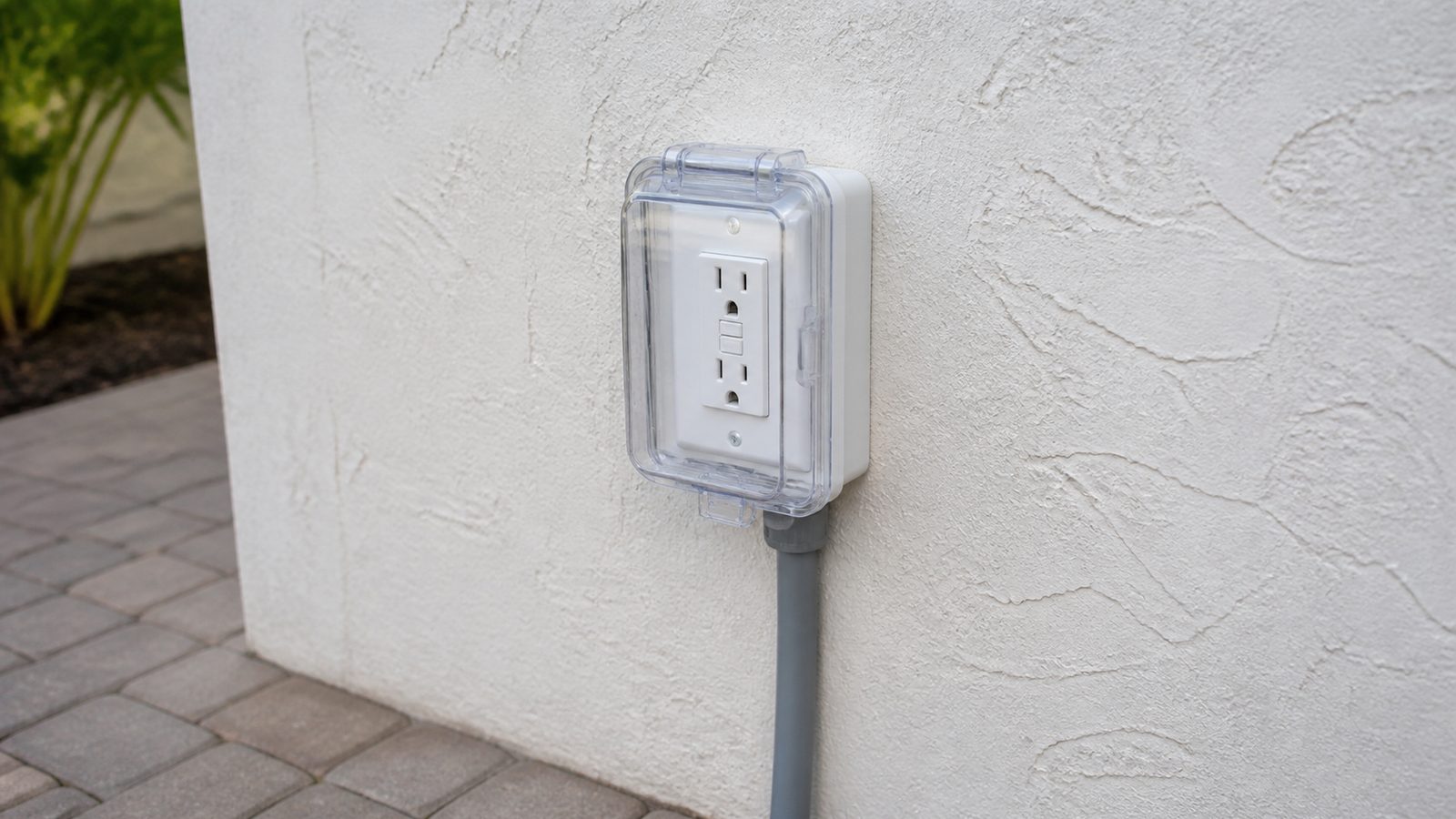
If you have ever plugged a pressure washer or pool pump into an outdoor outlet that popped a breaker or shocked you, you already understand why outdoor receptacles need ground fault protection. A GFCI, or ground fault circuit interrupter, cuts power in a fraction of a second if it senses current leaking somewhere it should not, which is exactly the protection you want on a Jacksonville porch, lanai, or dock where moisture is part of daily life. This guide covers what the job involves, what Florida law says about who can do it, and what it tends to cost around Duval County.
When You Need a Permit in Jacksonville
This is the part homeowners skip and regret. In Florida, electrical work falls under the Florida Building Code, which incorporates the National Electrical Code by reference, and it also falls under Chapter 489 of the Florida Statutes, which governs who is legally allowed to perform electrical contracting. In the City of Jacksonville, permits for this kind of work are issued and inspected through the City's Building Inspection Division, since Duval County operates under consolidated city-county government with no separate county permitting office for most residential trades.
A straightforward like-for-like swap, replacing an existing outdoor outlet with a new GFCI receptacle at the same location and circuit with no new wiring, is the kind of minor repair some jurisdictions treat differently than new electrical work. But rules get interpreted differently by inspector and scope, so before you touch anything, call the City of Jacksonville Building Inspection Division and ask directly whether your job needs a permit. If the work involves running new wire, adding a circuit, extending conduit outdoors, or tying into your panel, it almost certainly needs a permit pulled by a licensed electrical contractor, not a homeowner.
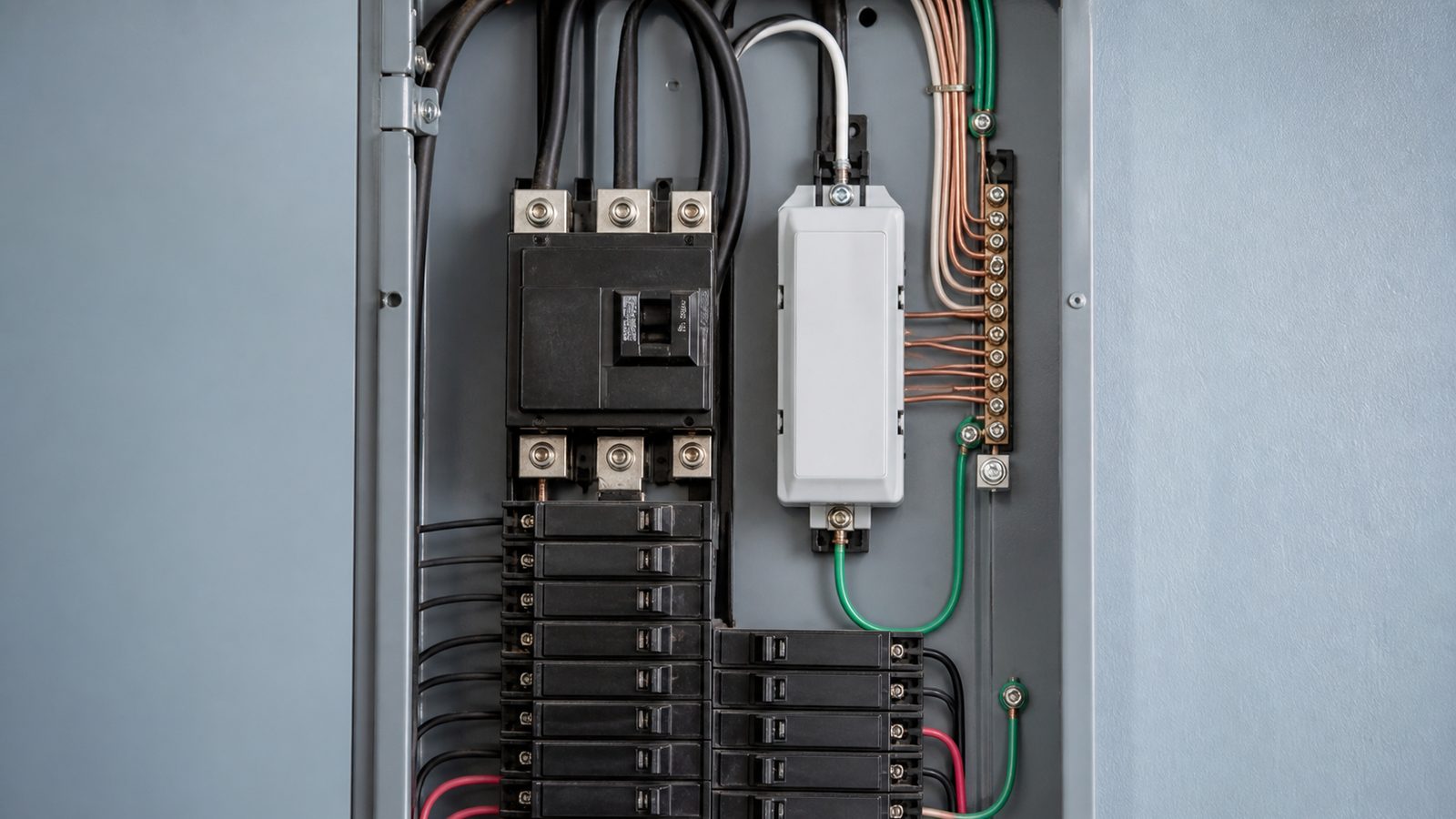
On the DIY question, Florida law does allow an owner of a residence to act as their own contractor on their own homestead property in some circumstances, but that path has real restrictions, including occupying the home and taking on full liability for code compliance and safety. Electrical work is also a category where insurers, home inspectors, and future buyers pay close attention, and a botched outdoor circuit near water is a genuine safety hazard, not just a paperwork issue. Our honest advice: pulling and terminating wire outdoors, especially anything touching your panel, is worth having a licensed electrician handle, permitted and inspected, so there is a clean paper trail when you sell the house.
Tools and Materials
- Weatherproof, in-use GFCI receptacle rated for outdoor/wet locations
- Weatherproof "bubble cover" that closes over a plugged-in cord
- Non-contact voltage tester
- Screwdrivers (flathead and Phillips)
- Wire strippers and needle-nose pliers
- Voltage-rated gloves and eye protection
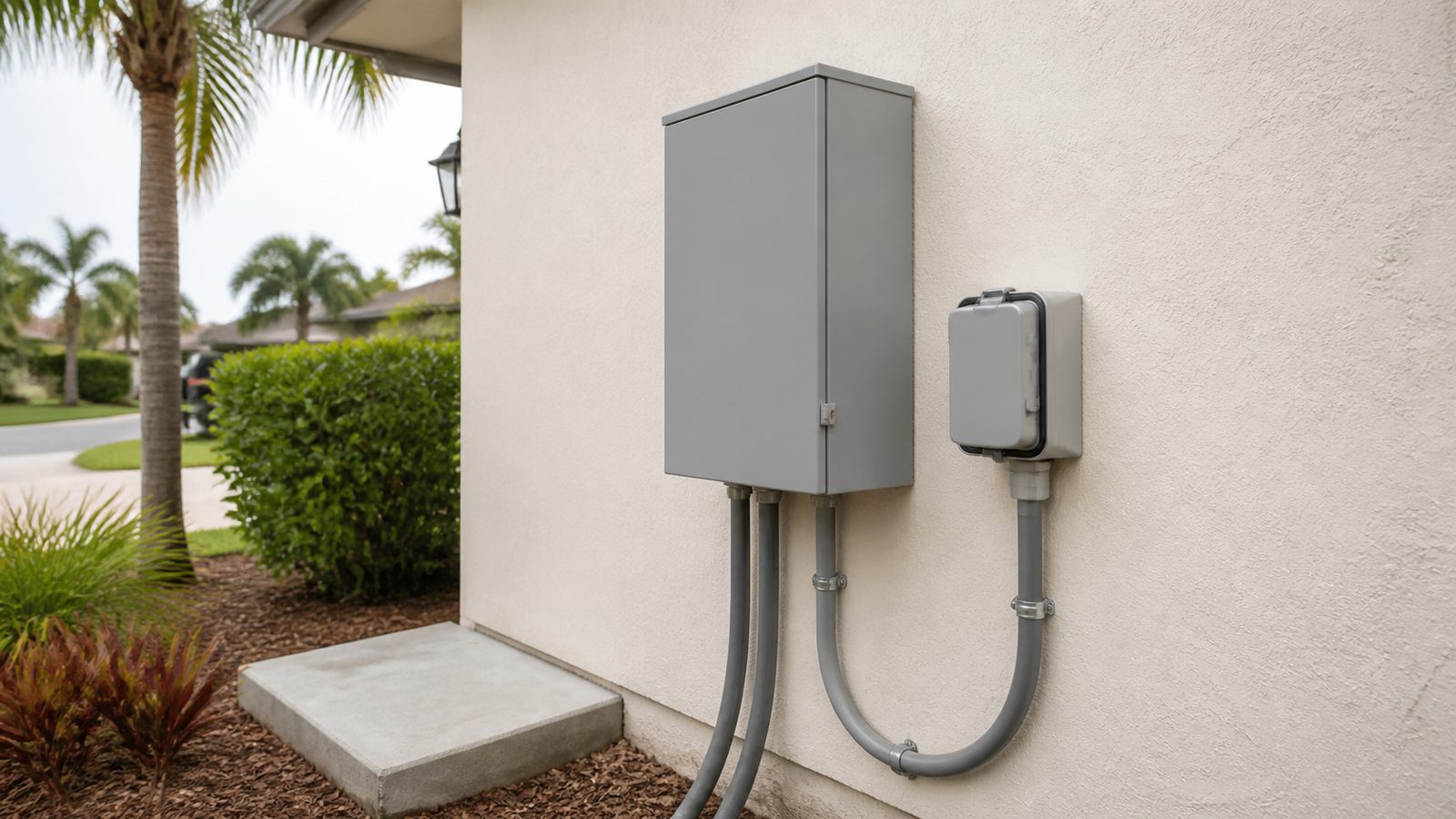
- Weatherproof outdoor-rated electrical box, if replacing the box
- Silicone caulk rated for exterior use
Step-by-Step
- Identify the correct breaker and turn it off. Do not rely on the panel label alone; confirm with a non-contact voltage tester at the outlet before touching any wires.
- Remove the existing cover plate and receptacle, and photograph the wiring before disconnecting anything so you can match it later.
- Inspect the electrical box. If it is not rated for wet or damp locations, or is cracked, corroded, or gapped where water can enter, replace the box, not just the receptacle.
- Connect the new GFCI receptacle, matching hot (black), neutral (white), and ground (bare or green) to the correct terminals. If it protects downstream outlets, use LINE for incoming power and LOAD for anything downstream.
- Seat the receptacle in the box and attach an in-use, weatherproof cover so it seals even when something is plugged in.
- Caulk any gaps between the box and the exterior wall surface to keep water from tracking behind the siding or stucco.
- Restore power and test the GFCI using its built-in TEST and RESET buttons to confirm it trips and resets correctly.
- If this work required a permit, schedule the City of Jacksonville inspection before you consider the job finished.
Jacksonville Climate Considerations
Northeast Florida is hard on outdoor electrical components in ways that drier climates are not. Humidity sits high most of the year, and that moisture works into any gap in a cover or box seal over time, which is why an in-use weatherproof cover matters more here than in a dry climate. If your property is near the St. Johns River, the Intracoastal, or the beaches, salt-laden air accelerates corrosion on metal boxes, screws, and terminals, so corrosion-resistant hardware is worth the small upcharge. Jacksonville also sits in a hurricane-exposed wind zone, so any exterior box or cover should be securely fastened, not just clipped on, since wind-driven rain during a storm will find any weak seal. And with our intense summer sun, plastic covers and gaskets that are not UV-rated will crack and fail years before a UV-stabilized product would.
What It Costs in Jacksonville (DIY vs. Hiring a Pro)
| Scope of Work | Estimated Cost Range |
|---|---|
| DIY materials only (GFCI outlet, weatherproof cover, box if needed) | $30 to $80 |
| Licensed electrician, simple like-for-like GFCI swap | $150 to $300 |
| Licensed electrician, new outdoor circuit or relocated outlet | $350 to $900+ |
| City of Jacksonville electrical permit fee (if required) | Varies by scope; confirm current fee with the Building Inspection Division |
These ranges are estimates based on typical Northeast Florida residential pricing and will vary with the age of your home's wiring, panel condition, and how much access work is needed to reach the outlet.
When to Call JK Prestige
If your outdoor outlet needs new wiring, a new circuit, or work near your panel, or if you are not confident your existing box and wiring are even up to current code, that is a job worth handing to a licensed professional. JK Prestige Constructor Corp works throughout Jacksonville on this kind of electrical and exterior renovation work, and we can pull the permit, do the work correctly, and get it inspected so it is documented when you sell the home. Reach out and we will walk the site with you before anything gets opened up.
No call center. No coordinator. A JK principal reviews every inquiry and replies with a real number, not a range, not a follow-up form.
Request Free Estimate →