A paver patio is one of the most popular backyard upgrades we get asked about in Jacksonville. Done right, it holds up to our heat, rain, and sandy soil for decades with almost no maintenance. Done wrong, pavers heave, sink, and shift within a year or two, usually because the base was rushed. Whether you're hiring it out or taking it on yourself, here is what actually matters, starting with the paperwork and ending with what it costs around here.
When You Need a Permit in Jacksonville
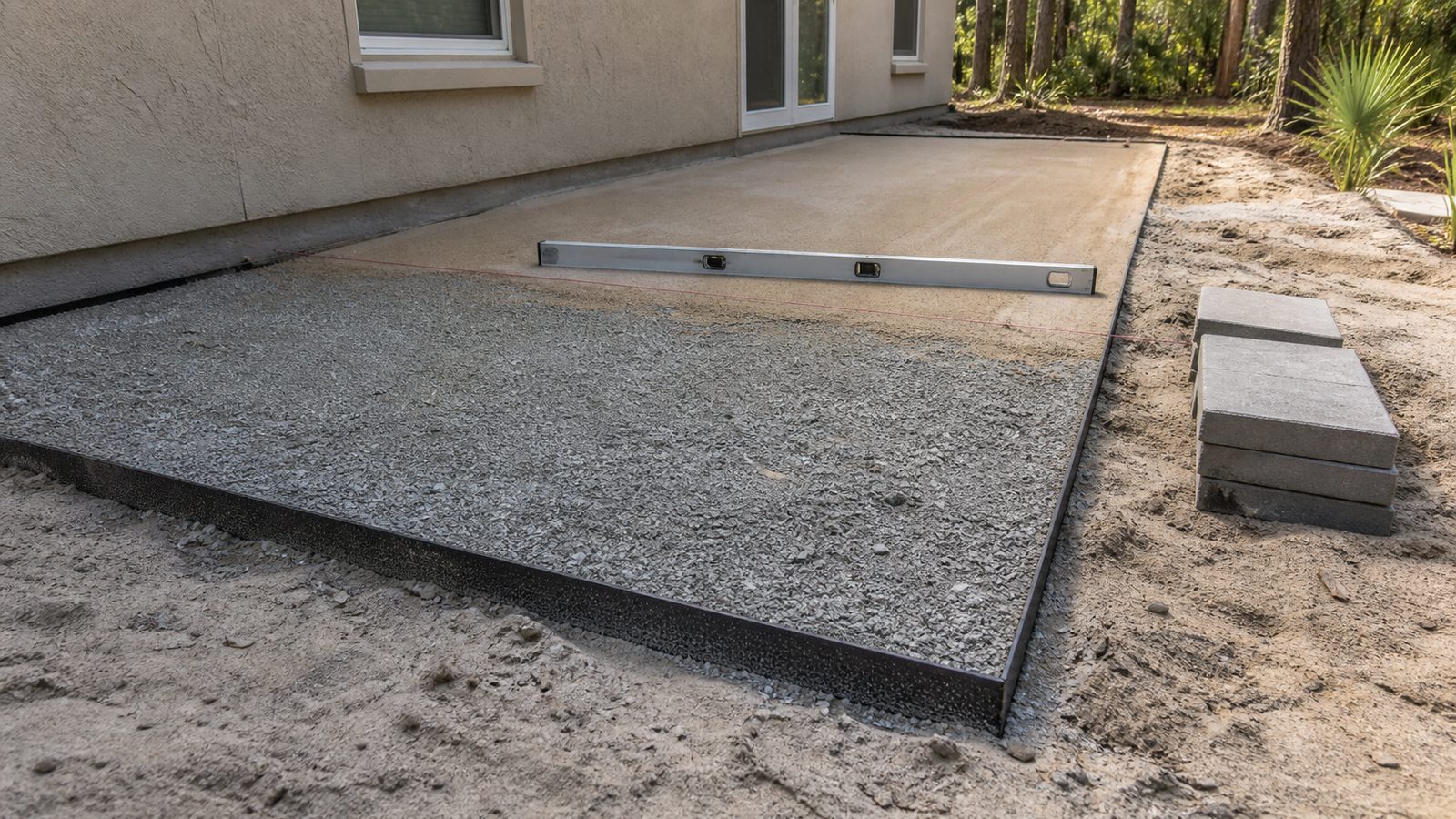
The City of Jacksonville handles building permits for all of Duval County, since city and county government are consolidated here. Your project goes through the City's Building Inspection Division, not a separate county office.
Whether a paver patio needs a permit depends on size, height above grade, and whether it's attached to the house or covered by a roof. Small, unroofed, at-grade patios are often exempt in Florida, but exemption thresholds vary, so don't assume based on what a neighbor did. Call the Building Inspection Division or check the current exemption list before you dig. Pairing the patio with an outdoor kitchen, fire pit, or cover often triggers a permit even if the pavers alone wouldn't.
A few other things to check first:
- Impervious surface and lot coverage. Jacksonville's zoning code limits how much of a lot can be covered by impervious surfaces, and the allowable percentage depends on your zoning district. If your lot is close to its limit, a large patio can push you over. Confirm with the City rather than assuming.
- Setbacks. Patios still must respect side and rear yard setback requirements, especially near a property line or fence.
- Drainage. Jacksonville gets heavy, fast summer rain, and a patio graded toward your house or a neighbor's yard is a real problem. The City reviews drainage during permitting, and it matters even when a permit isn't required.
- HOA review. In a deed-restricted community, most HOAs require architectural approval before you touch backyard hardscape, separate from any city permit.
- 811 utility locates. Before digging, call Sunshine 811 (dial 811) to get utilities marked. It's free, it's the law, and our sandy soil makes it easy to dig deeper than intended.
Tools and Materials
- Pavers (concrete or clay, plus 5 to 10 percent overage for cuts)
- Crushed stone base material (compacted graded aggregate)
- Bedding sand (coarse concrete sand, not play sand)
- Paver edge restraints and spikes
- Polymeric sand for joints
- Plate compactor (rentable from most Jacksonville equipment yards)
- Landscape fabric, hand tampers, rubber mallet
- String line, stakes, and a line level or laser level
- Paver saw or wet saw for cuts
- Shovels, rakes, wheelbarrow
- 4-foot level and a screed board or pipe for the sand layer
Step-by-Step
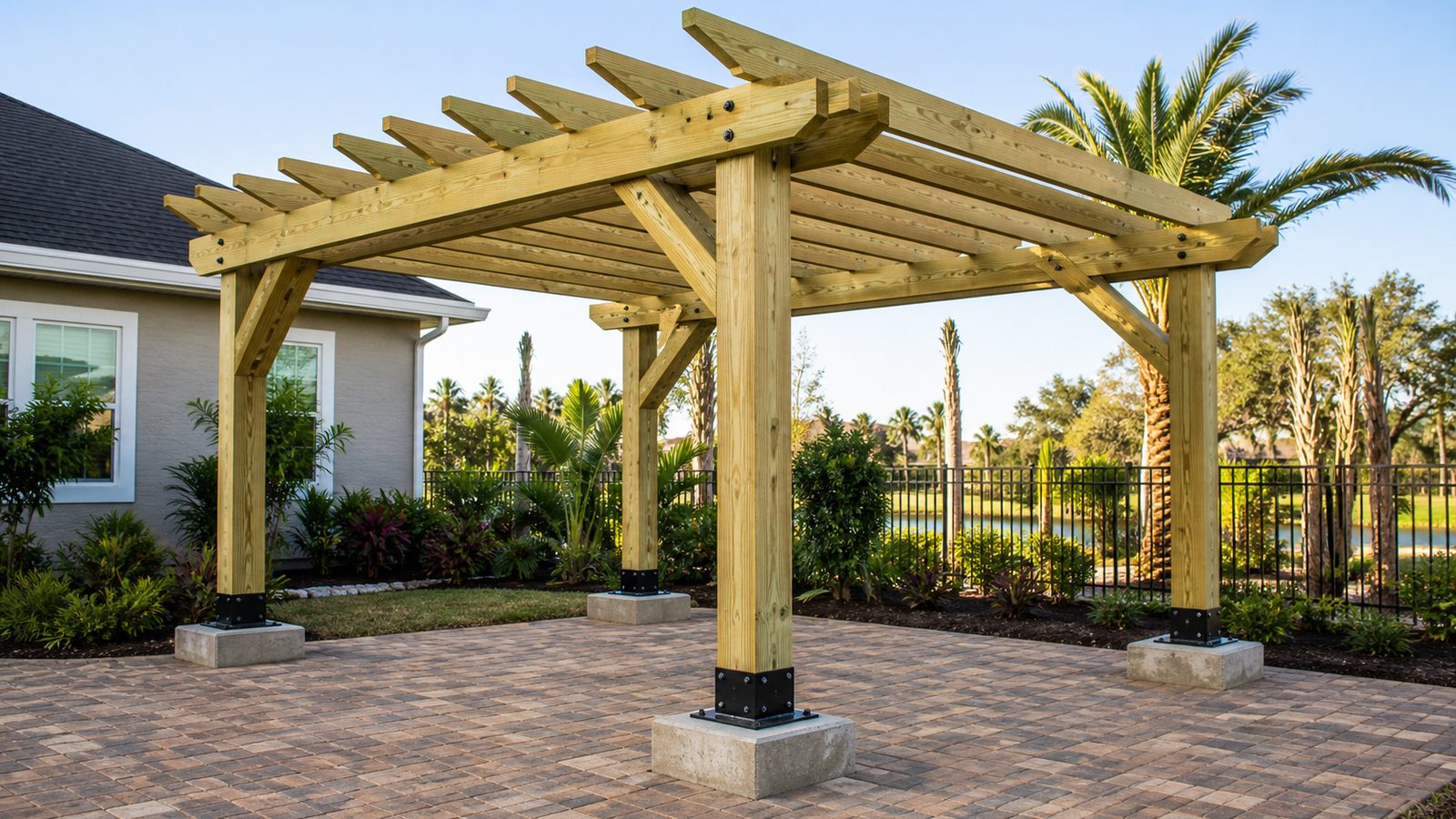
- Lay out the patio. Mark the perimeter with stakes and string, and check it against setback and lot coverage numbers before breaking ground.
- Call 811 and wait for clearance before any excavation.
- Excavate to a depth that accounts for base, sand, and paver thickness, typically 7 to 9 inches total given our sandy soil, but confirm for your spec.
- Grade for drainage, sloping the excavated area away from the house so water sheets off rather than pooling.
- Install landscape fabric across the subgrade to limit weeds and keep base material from mixing into native soil.
- Add and compact base material in lifts, compacting each thin layer before adding the next. This is the single biggest factor in whether a patio stays flat over time.
- Screed the bedding sand to a level layer just before laying pavers. Don't compact this layer, or pavers won't settle in properly.
- Lay the pavers in your chosen pattern, working from a fixed edge and checking lines frequently.
- Cut border pavers as needed with a wet saw for a clean edge fit.
- Install edge restraints, anchored with spikes so the field can't creep outward.
- Compact the pavers with the plate compactor, using a protective pad, to seat them into the sand.
- Sweep in polymeric sand, compact again, and activate it with water per the manufacturer's instructions.
Jacksonville Climate Considerations
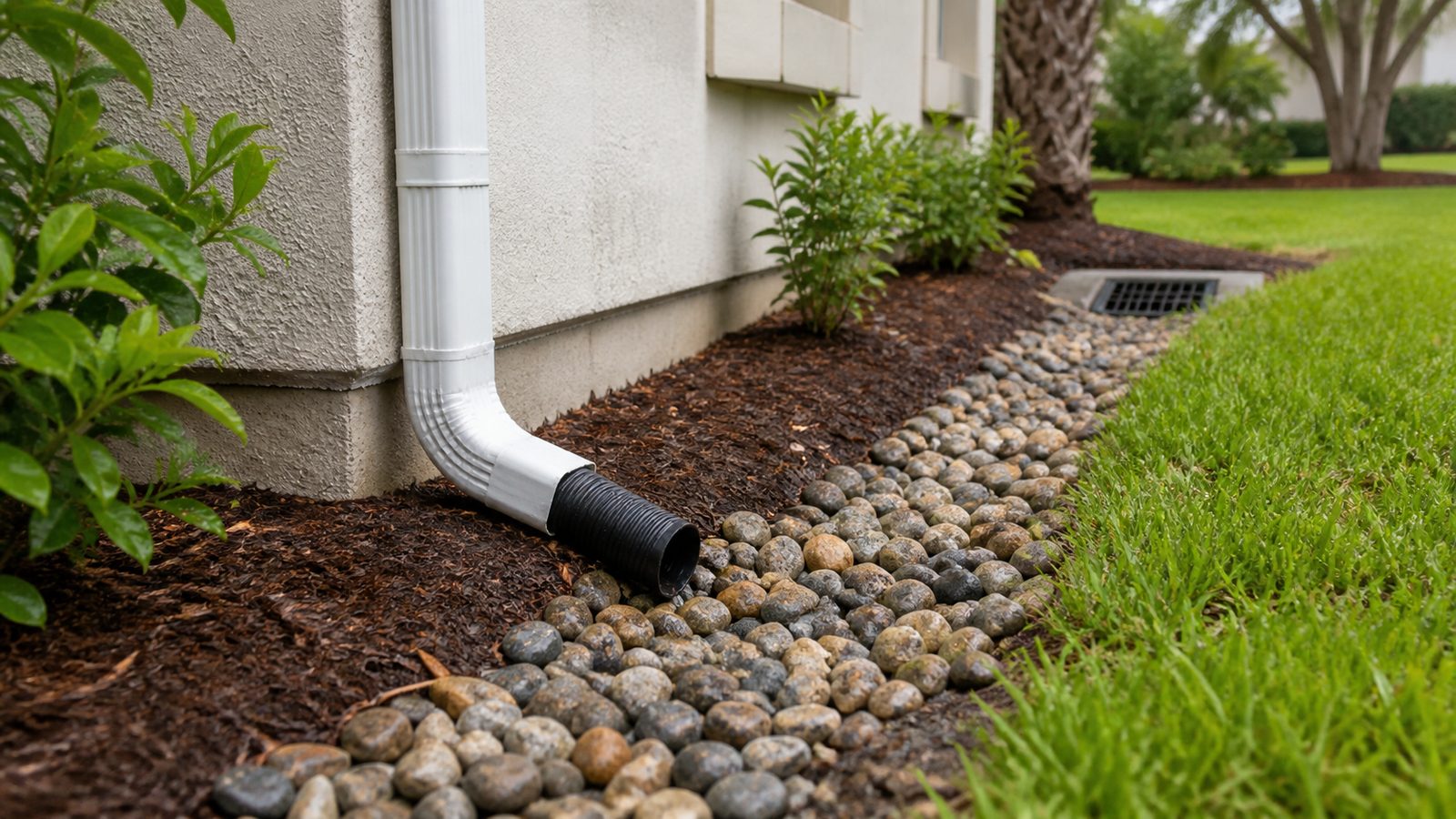
Our climate shapes this project more than people expect. Summer downpours are intense and frequent, so proper grading and a well-compacted base aren't optional, they're what keeps pavers from sinking or shifting after a few rainy seasons. Sandy soil drains well, which helps, but loose or poorly compacted fill can still wash out or settle unevenly. A high water table in parts of Duval County, especially near the river and marsh areas, can affect excavation depth and drainage planning.
Salt air is a factor closer to the coast or the river, accelerating wear on lower-quality pavers or metal edge restraints, so material selection matters more the closer you are to the water. Intense UV exposure will fade paver color over time regardless of brand, and sealing can slow that down. Hurricane wind load isn't much of an issue for a flat, at-grade patio, but a pergola or cover built on top of one needs to meet Florida Building Code wind requirements, a separate and more involved permitting conversation.
What It Costs in Jacksonville (DIY vs. Hiring a Pro)
These are general planning ranges for the Jacksonville market. Get written quotes for your project, since paver selection, size, site access, and drainage complexity all move the number.
| Approach | Estimated Cost per Sq Ft | Typical 300 Sq Ft Patio |
|---|---|---|
| DIY (materials only) | $6 to $12 | $1,800 to $3,600 |
| Professional installation | $15 to $28 | $4,500 to $8,400 |
DIY saves on labor, but base compaction is the step most first-timers underdo, and it's expensive to fix later. A pro costs more up front but brings grading know-how and equipment most homeowners don't want to rent for a one-time job.
When to Call JK Prestige
If your project involves permitting questions, drainage near your foundation, or you're combining the patio with an outdoor kitchen or covered structure, have a licensed contractor scope it before you commit. JK Prestige handles permit review, grading, and the build as one process, so you're not troubleshooting a drainage issue after the fact. Reach out for a site visit and a written estimate before you order materials.
No call center. No coordinator. A JK principal reviews every inquiry and replies with a real number, not a range, not a follow-up form.
Request Free Estimate →