A pocket door looks like a weekend project on YouTube. In practice, it's a wall demolition project with a door hung at the end of it, and the demolition is where people get into trouble. Before anyone touches a stud, you need to know two things: whether that wall is holding up the house, and what's routed through it. Get those wrong in a 1920s Springfield bungalow or a slab Mandarin ranch and you're looking at a sagging header or a nicked wire, not just a door that sticks.
This guide walks through what actually needs to happen, in order, to install a pocket door correctly in a Jacksonville home.
When You Need a Permit in Jacksonville
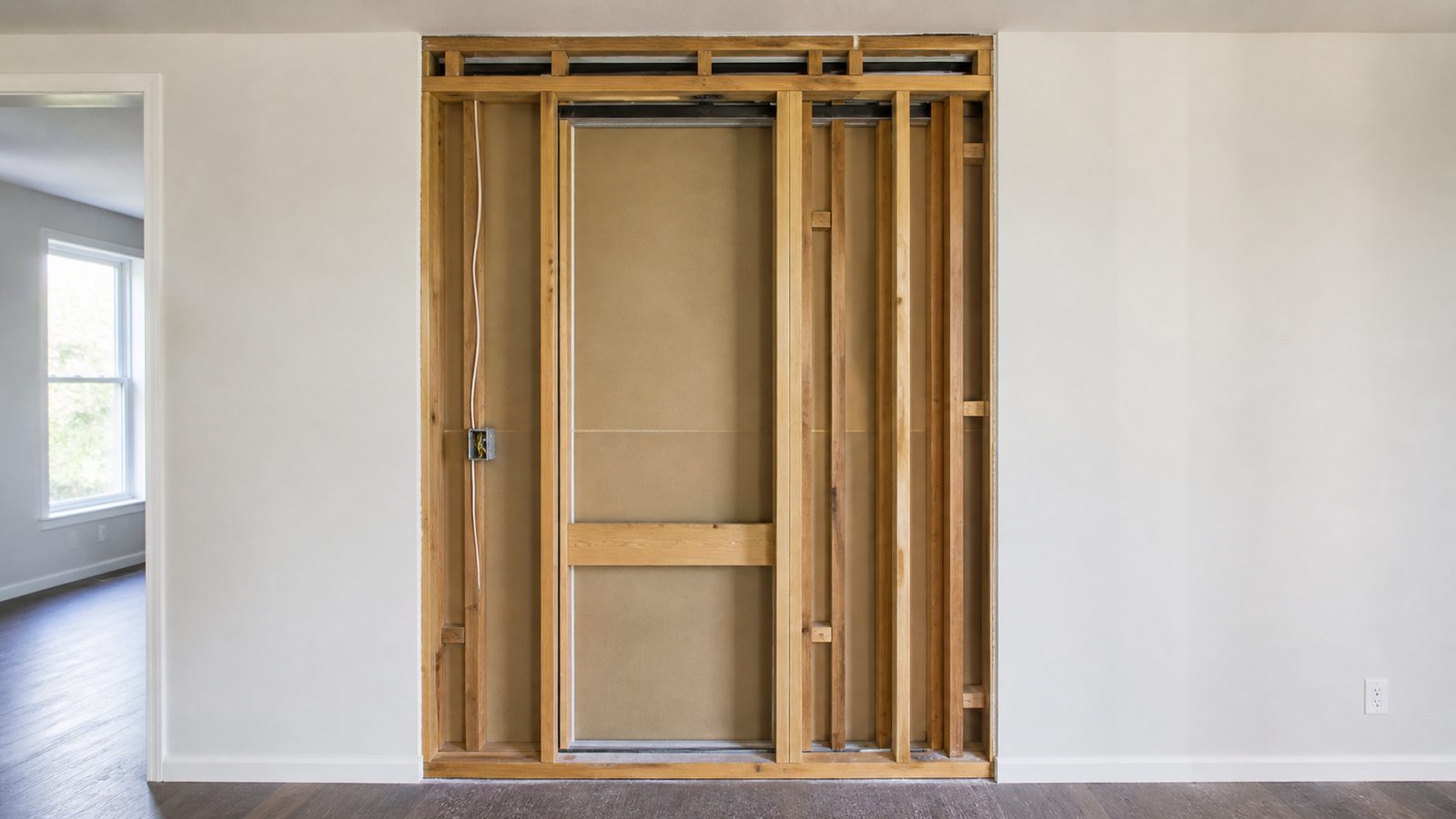
Cutting open an interior wall to install a pocket door frame is a structural and cosmetic alteration, and in Duval County that generally requires a building permit through the City of Jacksonville Building Inspection Division, even for interior work that doesn't touch the exterior envelope. The permit question hinges on a few things: is the wall load-bearing, are you relocating any electrical, and are you disturbing plumbing.
Determining load-bearing status isn't a guess you make by tapping the wall. Exterior walls and most walls that run perpendicular to your ceiling joists or roof trusses are suspect until proven otherwise. In older homes in Springfield and Riverside, center hallway walls were often built to carry the second floor or the roof structure, even though they don't look structural from the room side. If there's any doubt, get a licensed contractor or a structural engineer to confirm before you cut. If the wall is load-bearing, a pocket door install becomes a header and framing project that needs engineering and inspection, not a weekend job.
A pocket door wall also cannot carry plumbing. There is no way to run a two-by-four pocket frame around a supply line or a drain stack, so if the wall has plumbing in it, either pick a different wall or budget for a licensed plumber to reroute the line, permitted, before framing starts. The same goes for electrical. If there's a switch, outlet, or a run of Romex passing through that wall, moving it is licensed electrical work in Florida. Don't cap a hot wire and drywall over it. Have a licensed electrician relocate it and pull the permit that covers it.
Tools and Materials
- Pocket door frame kit, sized to your rough opening (kits are typically sold for 2'0" through 3'0" doors)
- Hollow-core or solid-core interior door, pre-hung or slab depending on the kit
- Pocket door hardware set: track, rollers, floor guide, and edge pull (skip cheap stamped-steel kits, see below)
- Stud finder and a small inspection camera or flashlight for looking inside the wall cavity
- Reciprocating saw or oscillating multi-tool for opening drywall or plaster
- Level, framing square, and a laser level for the header and track
- Shims, construction adhesive, 2x4 or 2x6 framing lumber to match existing studs
- Drywall, joint compound, tape, and matching baseboard and casing for the finish
- Screws, finish nails, and a pry bar for careful demo
Step-by-Step
1. Confirm load-bearing status and locate what's inside the wall. Before any cutting, check the framing direction against your joists or trusses in the attic, and if there's any ambiguity, bring in a contractor or engineer. Cut a small inspection hole and use a camera or flashlight to check for wiring, plumbing, ductwork, and old knob-and-tube in houses built before the 1950s.
2. Pull the permit. Once you know the scope, whether it's a straightforward non-load-bearing opening or a header job with electrical relocation, file with the City of Jacksonville Building Inspection Division before demo begins.
3. Remove drywall or plaster on both sides of the wall bay. In Springfield and Riverside bungalows this is often true lath-and-plaster over true-dimension lumber, which behaves differently than modern drywall over 2x4s and takes more patience to open cleanly.
4. Relocate any electrical or plumbing found in step one. This is licensed trade work. Do not proceed with framing until those lines are clear of the pocket cavity.
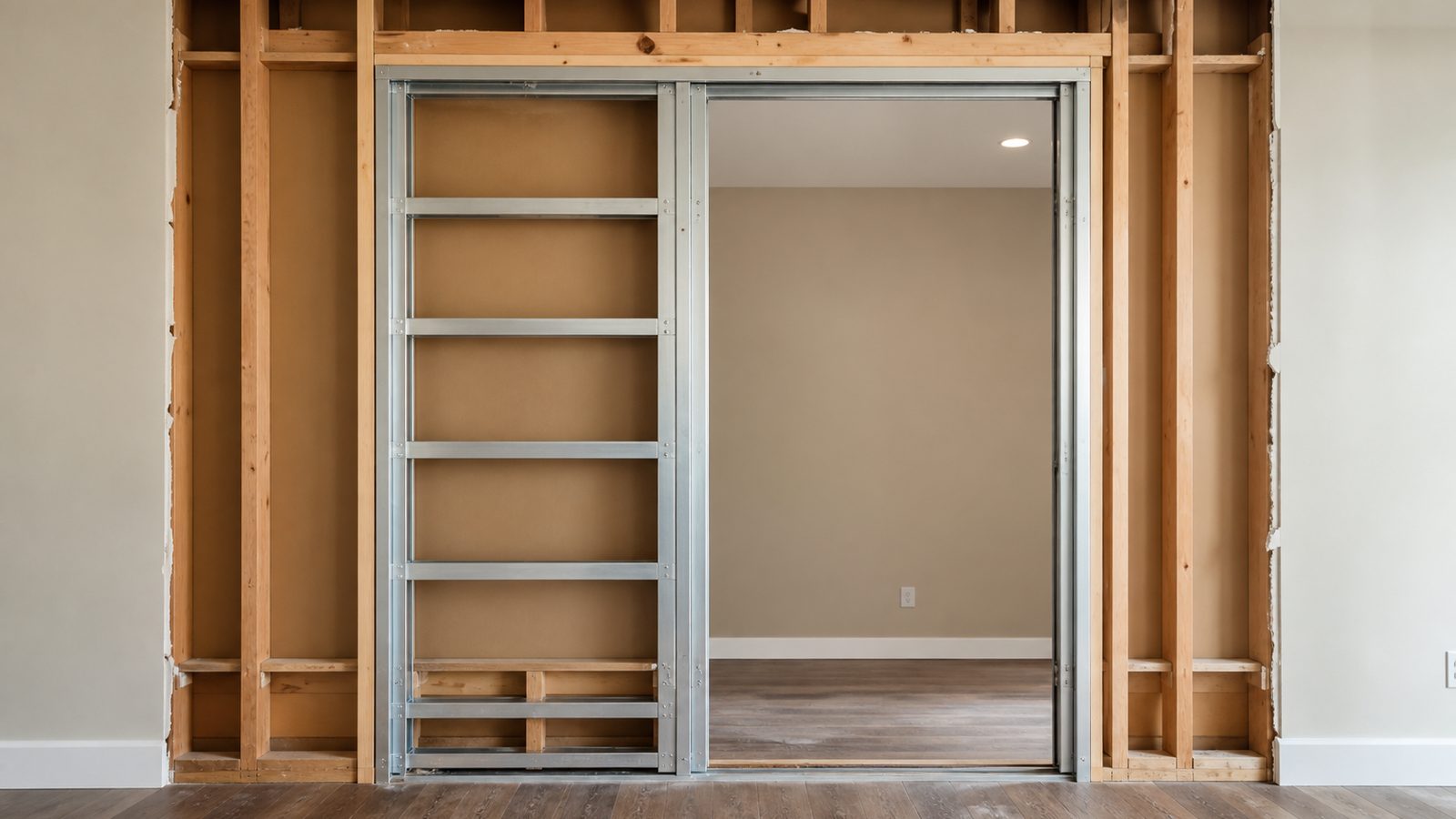
5. Frame the split-stud pocket using the kit's pre-built frame. Set the frame plumb and level, verify the rough opening matches the kit spec exactly, and anchor the split studs to the existing top and bottom plates.
6. Install the header. On a non-load-bearing wall this is mostly about supporting the track and trim. On a load-bearing wall, the header sizing comes from your engineer or the permit plan set, not a rule of thumb.
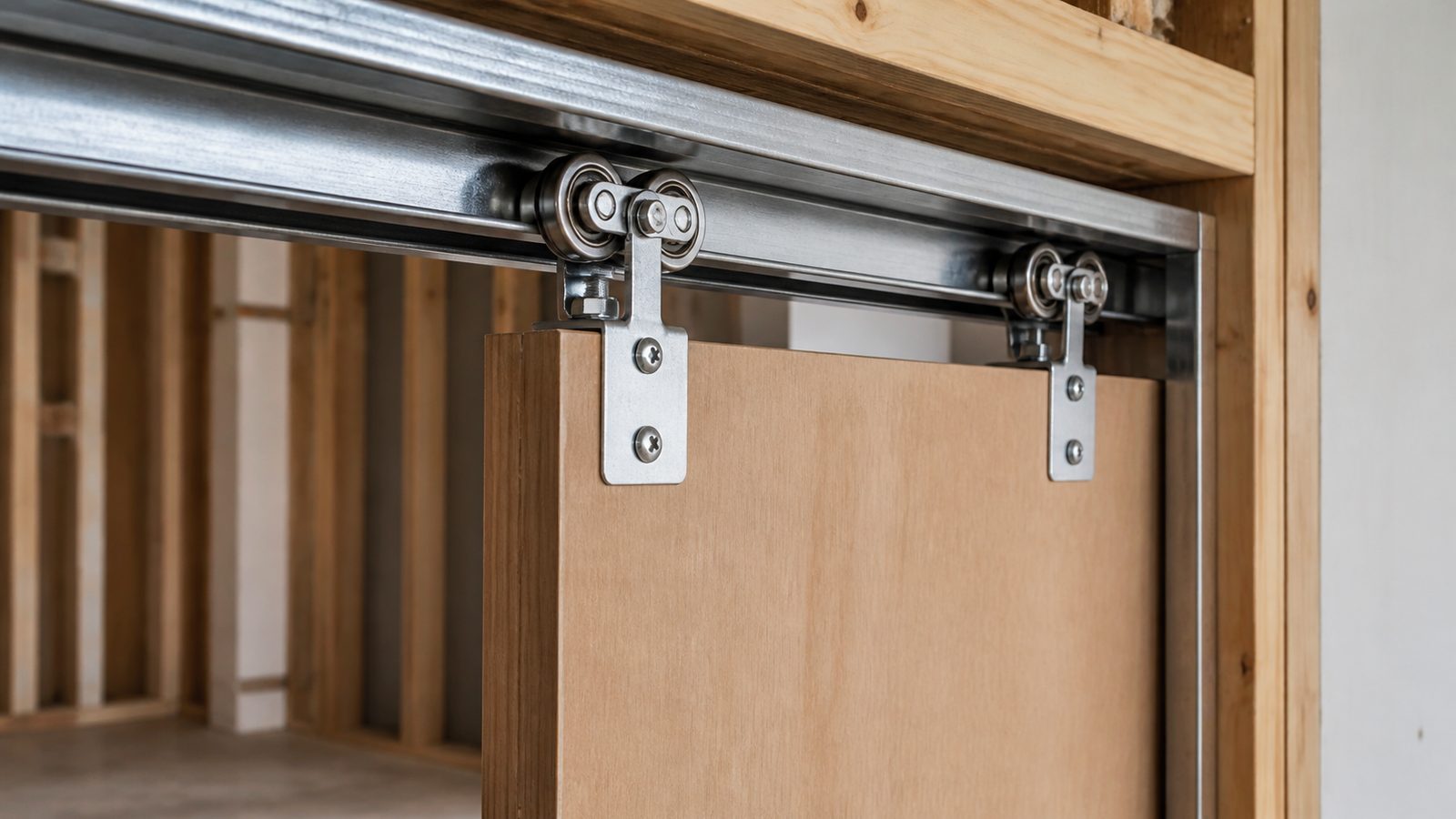
7. Hang the track and door, then test the roll before closing up any drywall. Adjust rollers so the door glides without dragging on the floor guide.
8. Close up drywall, tape and mud the seams, then prime and paint to match the surrounding wall.
9. Install trim, casing, and the finish hardware, including the edge pull and any floor guide cover plate.
Jacksonville Climate Considerations
Northeast Florida humidity is hard on doors that live inside a wall cavity with less airflow than a standard hinged door. Hollow-core doors can develop a faint hollow drum sound and are more prone to warping at the bottom rail over years of humidity swings between a closed-up house in summer and drier winter stretches. A solid-core or engineered stile-and-rail door costs more but holds its shape and sound-deadening far better in a coastal Florida climate, and it's worth the upgrade on a bedroom or bathroom pocket door.
Older homes in Springfield and Riverside bring their own wrinkles. True-dimension lumber (actual 2x4s, not today's 1.5x3.5) doesn't match modern pocket door kits without shimming, and irregular original framing means almost nothing is plumb by today's standards. Budget extra time for fitting. It's also worth checking exposed studs for termite damage before you frame anything new against them. Subterranean termites are common in Jacksonville, and a stud that looks solid from the paint side can be soft underneath. Replace anything questionable before it becomes part of a wall you can no longer see into.
What It Costs in Jacksonville (DIY vs. Hiring a Pro)
| Scope | DIY (materials only) | Hiring a Licensed Contractor |
|---|---|---|
| Non-load-bearing wall, no utilities to move | $400 to $900 | $1,800 to $3,500 |
| Non-load-bearing wall, electrical relocation | $600 to $1,200 (plus electrician) | $2,800 to $4,500 |
| Load-bearing wall, header and engineering | Not recommended DIY | $4,500 to $8,500+ |
These are rough 2026 Jacksonville-area ranges. Actual cost depends on wall condition, whether plaster or drywall is involved, door and hardware quality, and whether utilities need to be relocated.
When to Call JK Prestige
If there's any question about whether your wall is load-bearing, if you find plumbing or wiring inside it, or if you're working in an older Springfield, Riverside, or Avondale home with plaster and irregular original framing, that's the point to bring in a licensed contractor rather than push forward. JK Prestige handles the load determination, the permit filing with the City of Jacksonville, and coordination with licensed electrical or plumbing trades when a wall needs to be cleared before framing.
No call center. No coordinator. A JK principal reviews every inquiry and replies with a real number, not a range, not a follow-up form.
Request Free Estimate →