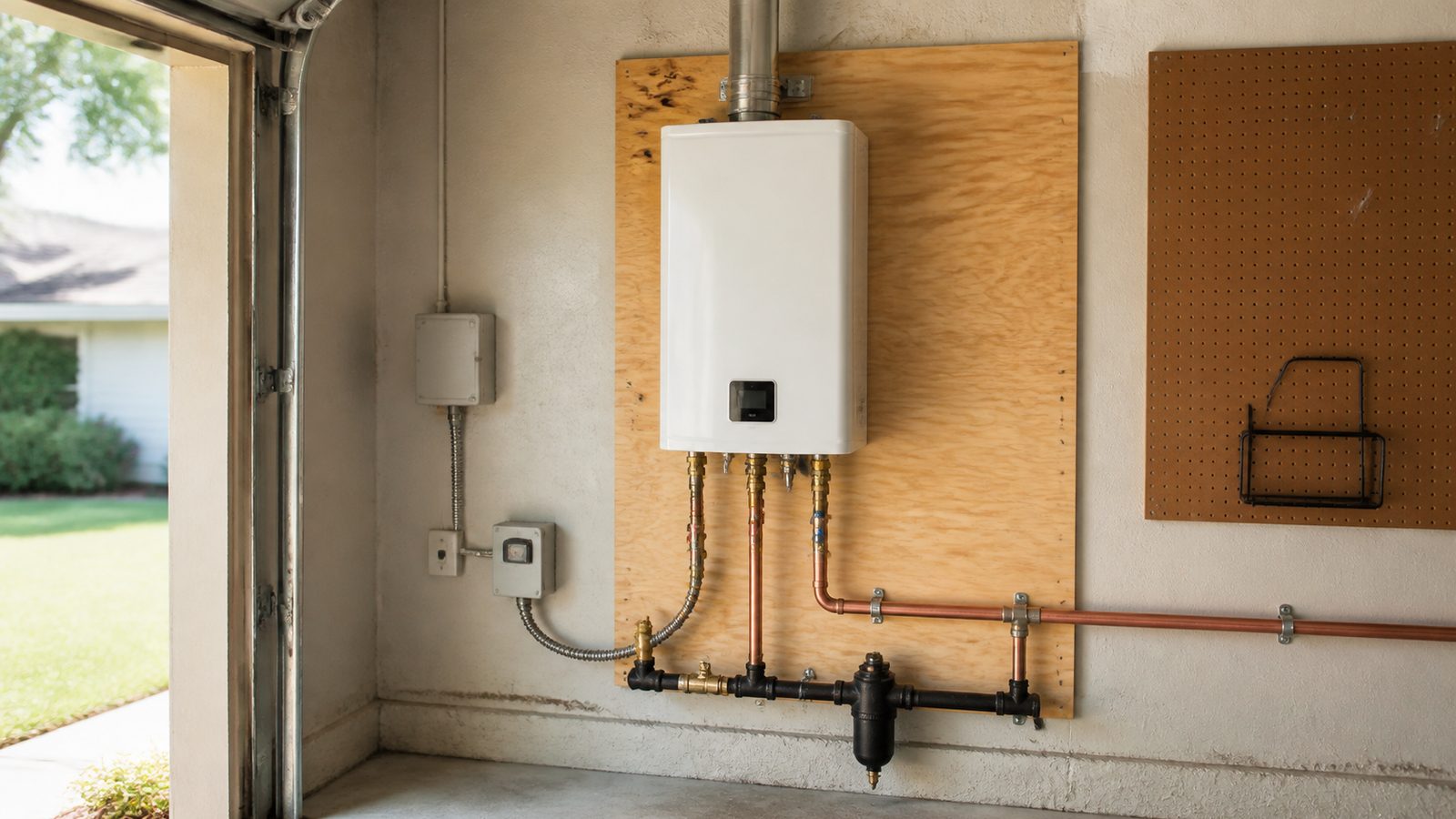
Swapping a failing tank water heater for another tank is mostly a like-for-like job. Converting to a tankless unit is not. The new unit pulls more fuel faster, may need a bigger electrical circuit or gas line, needs isolation valves the old tank never had, and vents differently. This post covers what changes in a Jacksonville home when you go tankless, not the basic swap covered in our tank water heater replacement guide.
When You Need a Permit in Jacksonville
A tankless conversion is not a simple fixture swap under the code. It is plumbing work, and depending on the unit, also gas or electrical work, and Florida requires a licensed contractor for all three when the work is sold to a homeowner. In Duval County, the City of Jacksonville's building inspection division issues and inspects these permits, checking gas line sizing and shutoff, vent material and termination clearance, relief valve routing, condensate drain on a condensing unit, and electrical disconnect and breaker sizing on an electric model. Outside Duval, Nassau, Clay, and St. Johns counties each run their own permit offices, and requirements shift at the county line. JEA serves most of Duval County for water, sewer, and in many areas electric, so JEA account information often comes up during permitting even when gas comes from a separate provider.
Given the number of trades involved, this is a job most homeowners hire out. Sizing a gas line wrong or skipping a required isolation valve does not just fail an inspection, it can leave the house without hot water or a code violation on record at resale.
Tools and Materials
- Tankless water heater sized to household peak flow rate (gas or electric)
- Isolation valve kit with hose bib drain ports, for descaling
- Gas line and fittings sized to BTU input, or a dedicated electrical circuit and breaker
- Category III stainless vent pipe and termination kit, for gas units
- Condensate neutralizer and drain line, for condensing gas units
- Pipe wrench, tubing cutter, and Teflon tape or pipe dope
- Wall mounting bracket rated for the unit's weight
- Pressure-temperature relief valve and discharge tube
- Flush pump and 5-gallon bucket for future descaling
Step-by-Step
- Calculate peak hot water demand in gallons per minute, based on fixtures likely to run at once.
- Choose gas or electric based on existing service, since electric units typically need a much larger dedicated circuit than the outgoing tank did.
- For a gas unit, calculate required BTU input and confirm the existing gas line, meter, and regulator can supply it.
- Pull the plumbing permit and the gas or electrical permit that applies before ordering equipment.
- Shut off water, gas, and power to the old unit, then drain and disconnect the tank.
- Remove the old tank and cap or repurpose the existing gas line and vent.
- Mount the new unit on the wall using the manufacturer's bracket, at the specified height and clearance.
- Run and size the gas line to the unit, or run the dedicated electrical circuit sized to its amperage draw.
- Install a dedicated Category III stainless vent run, sloped and terminated to manufacturer clearances.
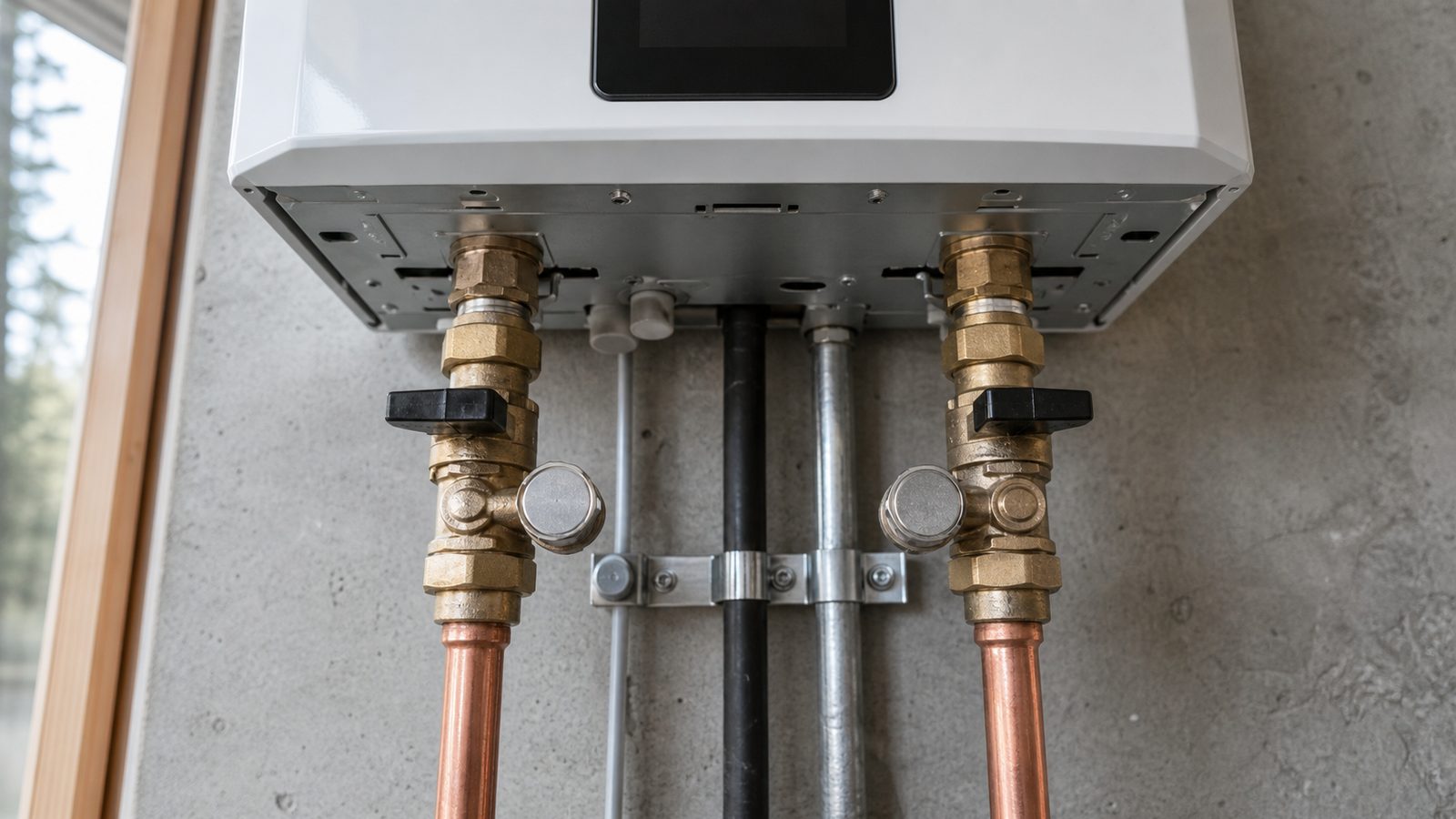
- Install isolation valves with drain ports on both hot and cold lines, so a flush pump can connect later without disconnecting plumbing.
- Connect water lines, install the relief valve, and route the condensate drain on a condensing model.
- Turn on gas or power, purge air from the line if applicable, and start the unit per the manufacturer's sequence.
- Test every new gas fitting for leaks, or test electrical connections before running the unit under load.
- Schedule the county inspection before closing any wall or covering the unit's access.
Common Mistakes to Avoid
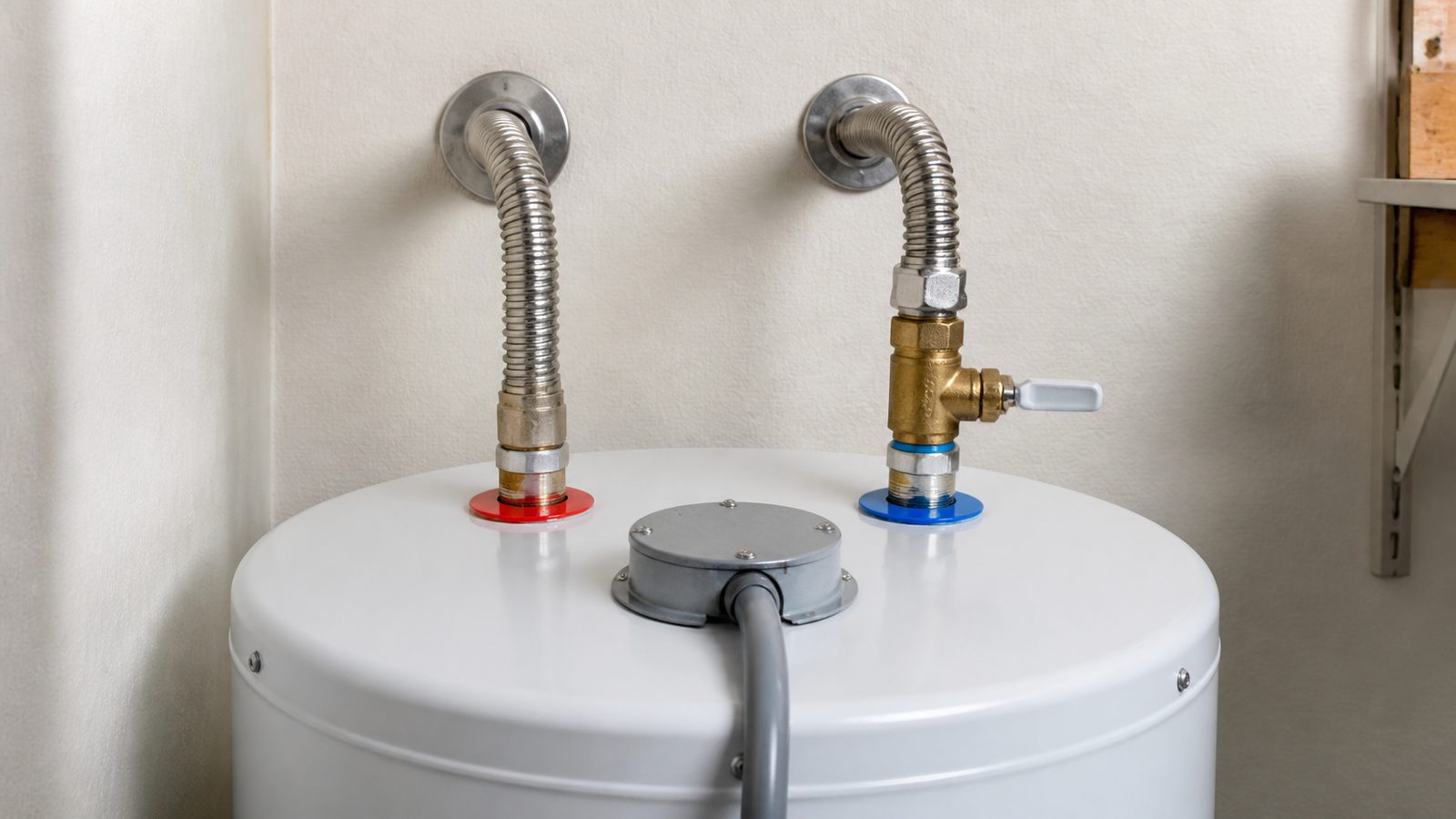
- Undersized gas line. Reusing the old tank's gas line without recalculating for the tankless unit's higher BTU draw starves the unit.
- No isolation valves. Skipping the valve kit means every future descaling requires disconnecting plumbing.
- Wrong vent material. Using standard water heater vent instead of the Category III stainless the unit calls for.
- Ignoring peak flow rate. Sizing to average use instead of worst-case simultaneous fixture demand.
- Undersized electrical circuit. Assuming an electric unit can reuse the tank heater's old breaker.
- Skipping the permit. Treating this as an appliance swap when it requires a licensed contractor and inspection.
Jacksonville Climate Considerations
Northeast Florida's incoming groundwater temperature works in your favor. A tankless unit raises incoming water to target temperature on the fly, and the colder that water is, the harder the unit works and the lower its effective flow rate. Jacksonville's groundwater runs warmer than in a northern state, so the same unit delivers a higher usable flow rate here, which matters when sizing for multiple fixtures at once.
The tradeoff is water hardness. Florida groundwater carries mineral content that scales the heat exchanger over time, so annual descaling through the isolation valves prevents premature failure. Garage installations are common here and rarely see a hard freeze, but confirm the model has built-in freeze protection if it will not sit in conditioned space. In a closed closet, size the combustion air intake correctly, since a starved air supply affects combustion regardless of humidity. And because a hurricane season outage takes down an electric unit's ability to heat water, some homeowners weigh that against a gas unit's continued operation on outage.
What It Costs in Jacksonville (DIY vs. Hiring a Pro)
| Item | DIY (materials only) | Hiring a Licensed Pro |
|---|---|---|
| Gas tankless unit, venting and gas line work | $600 to $1,200 (unit only) | $3,000 to $5,500 installed |
| Electric tankless unit and circuit work | $400 to $900 (unit only) | $2,000 to $4,000 installed |
| Permit and inspection fees | Varies by county | Typically included in quote |
| Annual descaling service | $30 to $60 (DIY flush kit) | $150 to $250 per visit |
When to Call JK Prestige
If your home needs a larger gas line, a new dedicated electrical circuit, or a new vent run to make a tankless conversion work, that is multi-trade work best coordinated by one licensed contractor rather than three separate ones. JK Prestige can evaluate your existing gas and electrical service, size the right unit for your household, and pull and pass the Duval County permits so the conversion is done right the first time.
No call center. No coordinator. A JK principal reviews every inquiry and replies with a real number, not a range, not a follow-up form.
Request Free Estimate →