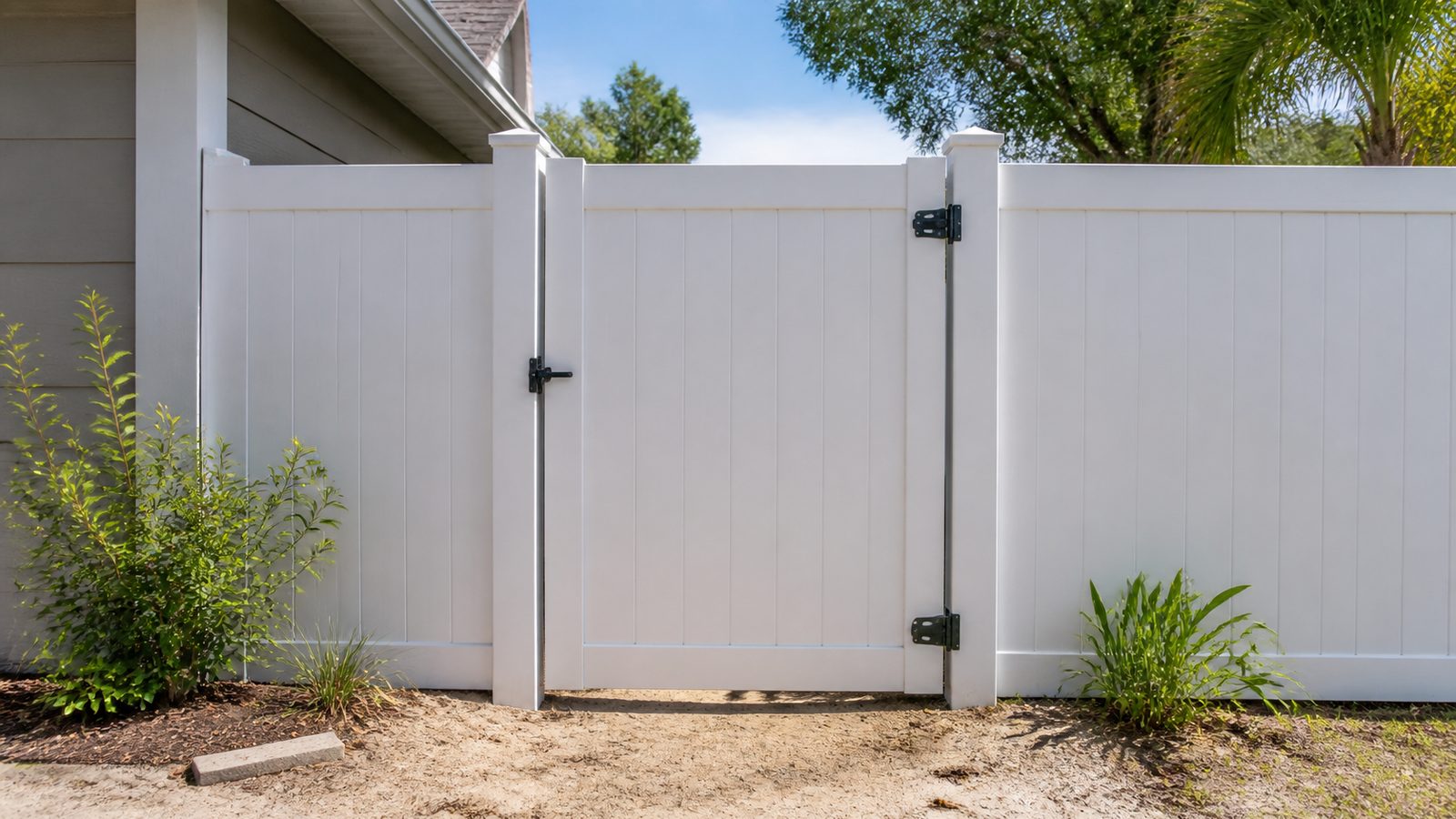
If your vinyl fence gate has started sagging, dragging on the ground, or popping off its hinges, you don't necessarily need a full fence replacement. In most Jacksonville yards, swapping out or rehanging a single gate is a manageable weekend project, as long as you understand the local permit rules, know how sandy soil and hurricane winds affect post stability, and follow Florida's pool barrier requirements if your gate sits anywhere near a pool. Here is what actually goes into doing this job right in Duval County.
When You Need a Permit in Jacksonville
For most homeowners, replacing a single gate on an existing fence, using the same posts and the same general footprint, does not require a permit from the City of Jacksonville. You're generally repairing an existing structure, not creating a new one.
That changes in a few situations. If you're installing a brand new fence (not just a gate) or building a fence taller than 6 feet, Duval County typically requires a permit. And if the gate is part of a fence enclosing a swimming pool, Florida Building Code pool barrier rules apply no matter what, since these are safety requirements, not just zoning rules. Under Florida's pool safety statute, any gate that serves as part of a pool barrier must be self-closing and self-latching, with the latch release positioned high enough (generally at least 54 inches from the bottom, on the pool side) that young children can't easily reach it. If you're replacing a pool gate, don't skip this, code enforcement and, more importantly, your insurance carrier will care.
Before you dig any post holes, call 811 (Sunshine 811 in Florida) at least two full business days ahead. It's free, and it's the only way to know what's buried in your yard, irrigation lines, gas, or utility conduits, before you start digging.
Tools and Materials
- Vinyl gate kit or gate panel sized to your opening (measure twice)
- Self-closing hinges (required for pool barrier gates, smart choice everywhere else)
- Gravity or spring-loaded latch, ideally with a child-safety release for pool areas
- Post level (a torpedo level works, but a post level saves time)
- Concrete mix (if resetting or adding posts)
- Post hole digger or auger
- Tape measure, drill/driver, socket set for hinge hardware
- Gate stop or drop rod if the gate needs to hold in an open or closed position
Step-by-Step
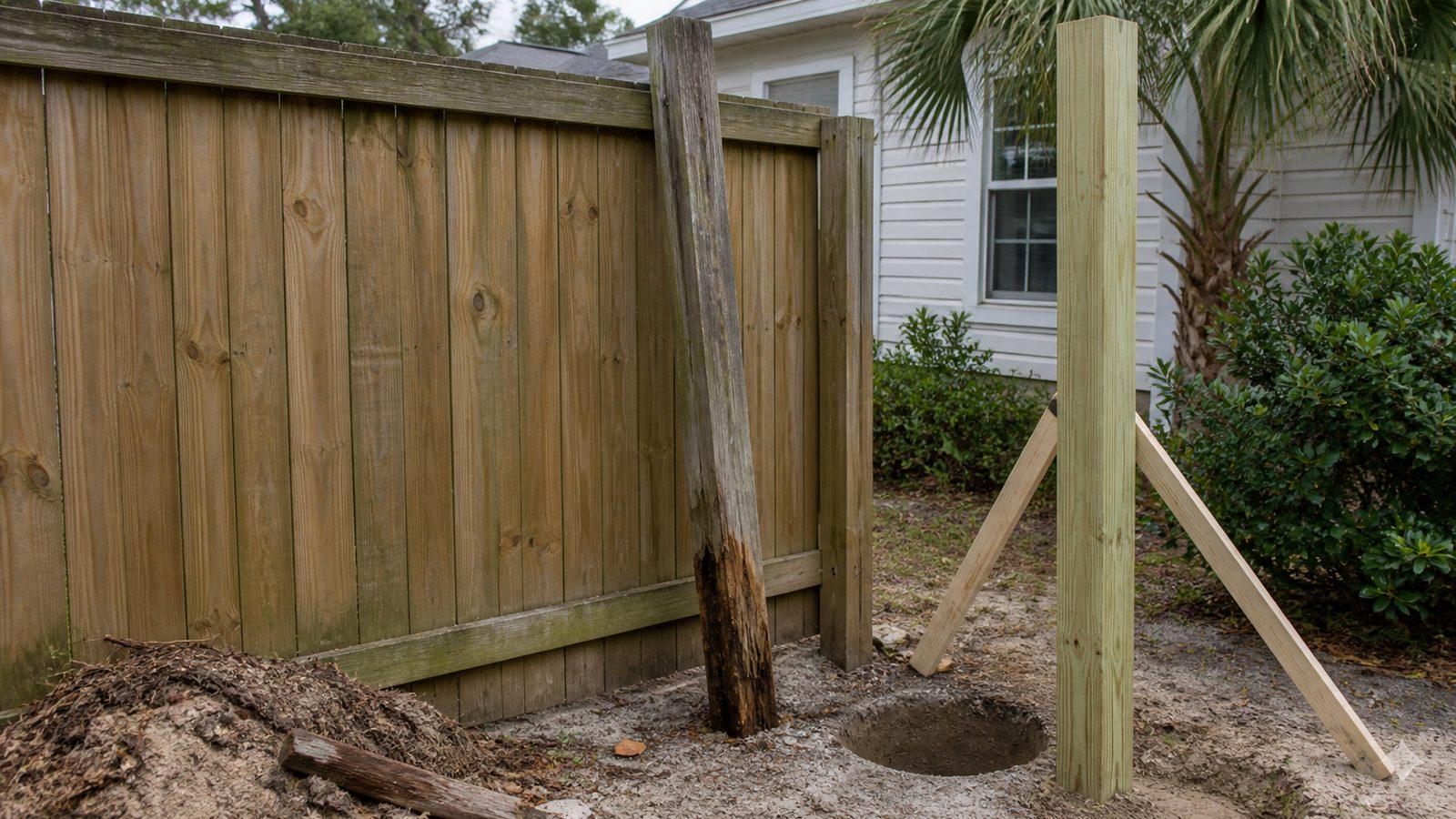
- Inspect and verify your existing posts. Push and pull on both gate posts. If they wobble, shift in the ground, or show cracking at the base, they need to be reset or replaced before you hang anything new. A gate is only as good as the posts it hangs from.
- Reset or set posts if needed. Dig out the loose post, extend the hole to at least 24 to 30 inches deep (deeper is better in Jacksonville's sandy soils, which don't hold posts as firmly as clay), and set in fresh concrete. Use a post level on two adjacent sides to keep it plumb while the concrete cures, typically 24 to 48 hours before loading it with gate weight.
- Measure your opening. Confirm the gap between posts matches your gate kit's width, and account for hinge and latch hardware clearance on each side, usually a half inch to an inch per side.
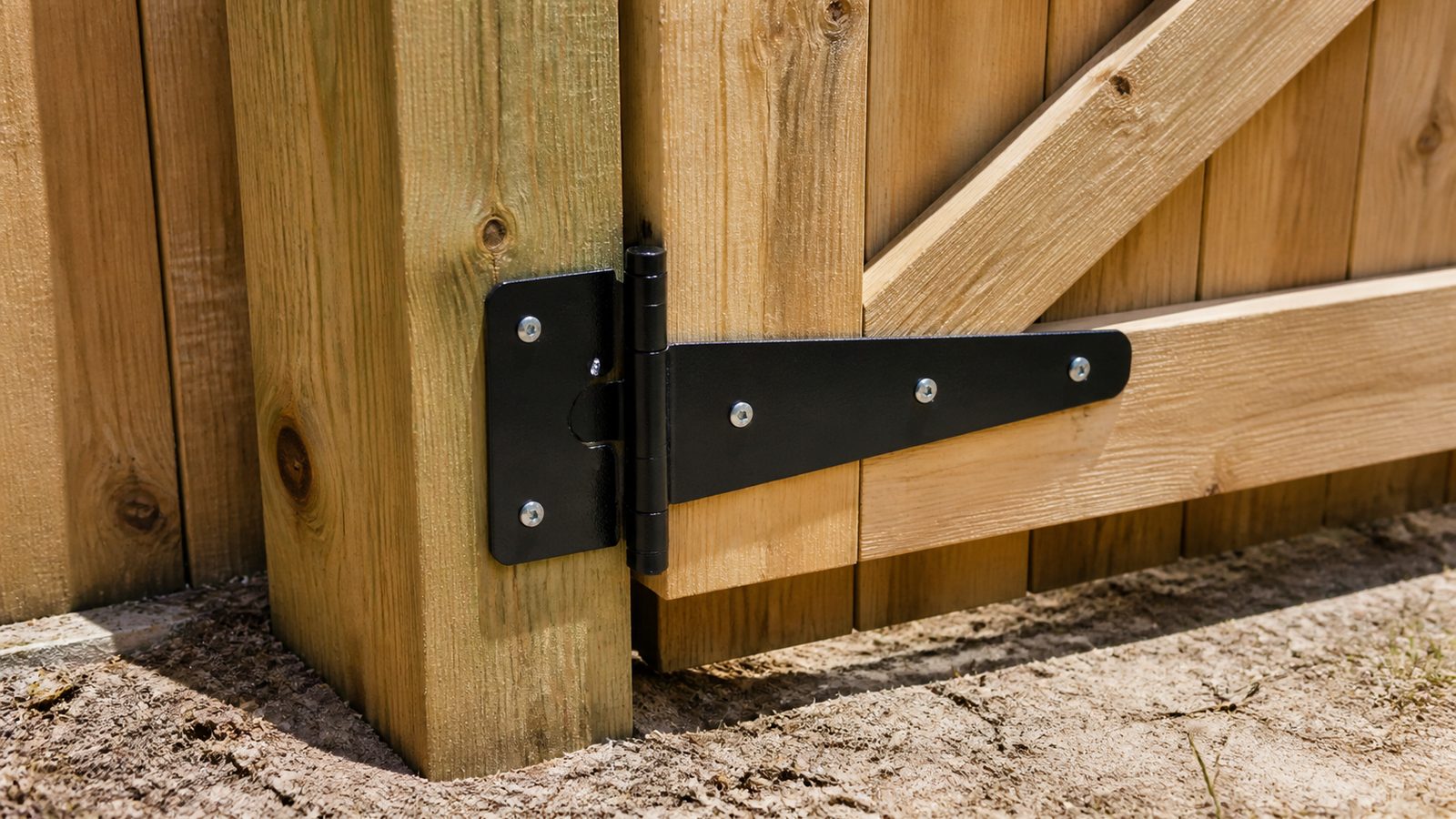
- Attach hinges to the gate frame first. Most vinyl gate kits have hinge brackets that bolt through the vinyl into an internal aluminum or steel reinforcement channel. Don't overtighten into bare vinyl, it can crack.
- Hang the gate. With a helper (or temporary shims/blocks to hold the gate at the right height), attach the hinge brackets to the post. Leave about a 1-inch gap between the bottom of the gate and the ground to prevent dragging, more if you expect ground shifting.
- Adjust the hinges. Most self-closing vinyl gate hinges have a tension adjustment. Set it so the gate swings closed firmly enough to latch every time, but not so hard it slams and stresses the frame.
- Install the latch. Mount the latch and strike plate so they engage cleanly when the gate swings shut. For pool barrier gates, double-check the release mechanism height against Florida's pool code requirement.
- Test the full swing. Open and close the gate a dozen times. It should swing freely, close on its own from any open position, and latch securely without needing a slam.
Jacksonville Climate Considerations
Jacksonville's sandy soil is one of the most common reasons vinyl gates fail early. Sand doesn't grip a post the way denser soils do, so posts that aren't set deep enough or without enough concrete tend to lean over time, throwing off the gate's alignment and causing dragging or latch misalignment. Setting posts deeper and using a full concrete collar matters more here than in a lot of other regions.
Wind load is the other big factor. Jacksonville sits in a hurricane-prone area, and a solid vinyl gate panel catches wind like a sail. Make sure your posts are rated for the panel size, and never leave a wide vinyl gate unsecured (unlatched or propped open) ahead of a storm.
Vinyl also fares well in Florida humidity compared to wood, it won't rot or warp from moisture. But UV exposure over years of intense Florida sun can cause yellowing, especially on white vinyl facing south or west. Buying UV-stabilized vinyl products helps slow this.
Finally, if your yard has a pool, which is common across Jacksonville neighborhoods, remember that pool barrier gate rules aren't optional or just a suggestion for enforcement, they're state law under Florida Statute 515, and insurance claims after a drowning incident have turned on exactly this kind of gate compliance.
What It Costs in Jacksonville (DIY vs. Hiring a Pro)
| Approach | Typical Cost Range | Notes |
|---|---|---|
| DIY gate hardware only (existing posts fine) | $75 to $250 | Hinges, latch, minor hardware |
| DIY full gate kit + hardware | $200 to $600 | Depends on width and vinyl quality |
| Professional gate replacement (existing posts) | $300 to $700 | Labor plus materials |
| Professional gate + post reset/replacement | $600 to $1,500 | Includes concrete, disposal of old post |
Costs vary based on gate width, style (single vs. double swing), and whether posts need full replacement.
When to Call JK Prestige
If your posts are leaning, cracked, or set in failing concrete, or if the gate is part of a pool barrier and you want it done to code the first time, it's worth having a professional handle it. JK Prestige Construction works throughout Jacksonville and can assess whether your existing posts are salvageable, handle permit questions when they apply, and make sure pool barrier gates meet Florida Building Code requirements. Reach out if you'd rather not gamble on a gate that's supposed to keep a pool area secure.
No call center. No coordinator. A JK principal reviews every inquiry and replies with a real number, not a range, not a follow-up form.
Request Free Estimate →