Most homes inside Jacksonville and the rest of Duval County get their water from JEA, while many homes further out in the county, and in neighboring counties, pull from a private well. Either way, a whole house filter goes in one place: on the main supply line, after the shutoff and before the water enters the water heater or splits off to fixtures. Getting that placement, the valve work around it, and the pressure testing right is the difference between a filter that runs quietly for years and one that turns into a slow leak behind drywall.
When You Need a Permit in Jacksonville
Cutting into the potable water main is plumbing work, and the City of Jacksonville and Duval County require a permit and inspection for alterations of this kind. In Florida, that work generally must be performed or supervised by a licensed plumbing contractor when sold as a service to a homeowner. Florida's narrower owner-builder exemption lets a homeowner do plumbing work on their own single-family residence without a state license, but it does not remove the local permit and inspection step, and it does not extend to a paid, unlicensed contractor.
JEA and most other regional providers also require an approved backflow prevention device where a hazard exists, and a homeowner should never open, bypass, or otherwise touch the water meter or anything upstream of it. If your installation is anywhere near the meter, stop at the customer side of the shutoff valve.
Homes served by Nassau, Clay, or St. Johns County utilities fall under those counties' own permitting departments rather than Duval's, so confirm requirements before you cut any pipe.
Tools and Materials
- Whole house filter housing sized for your fixture count and peak flow, typically 1 inch inlet/outlet
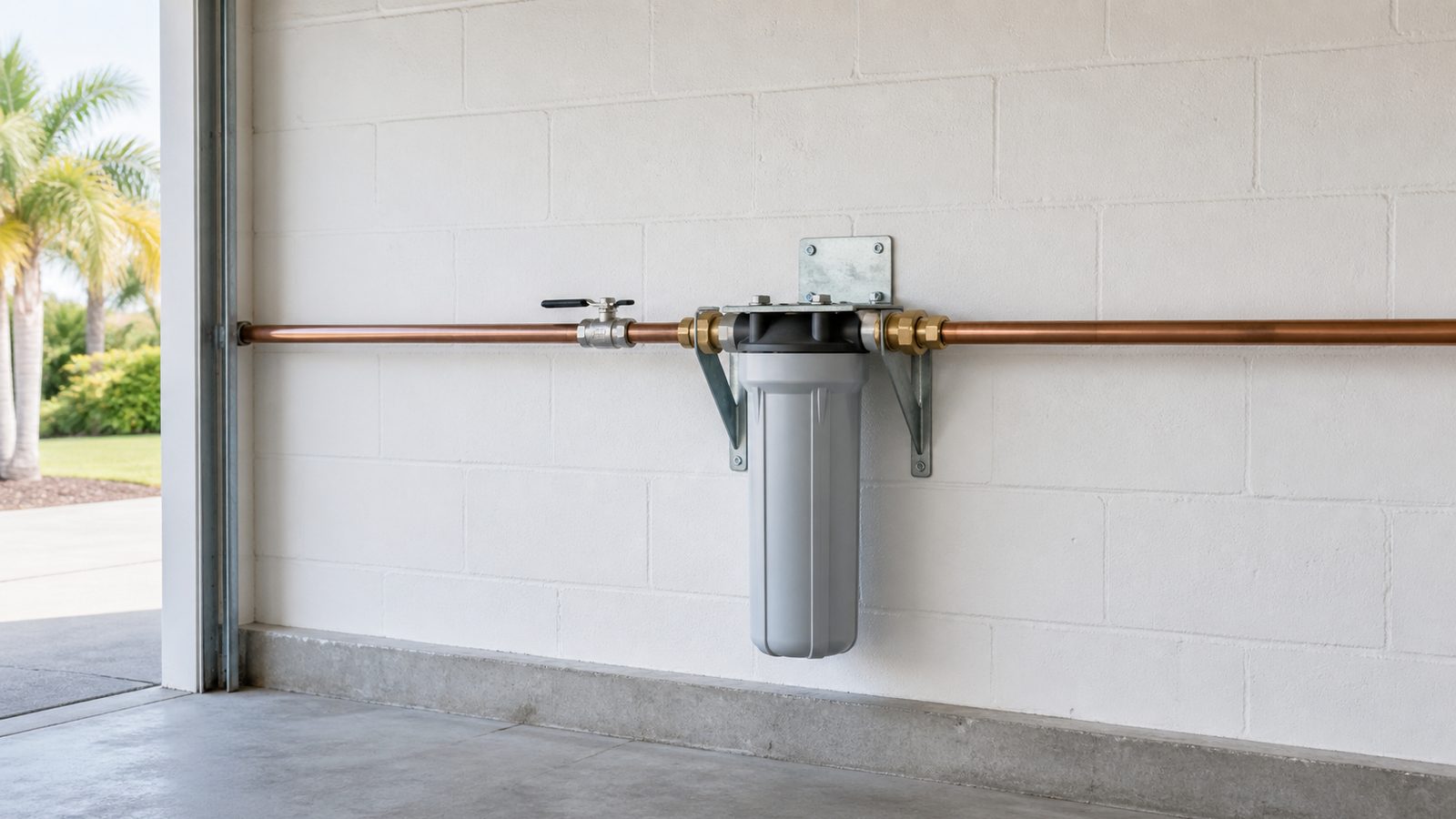
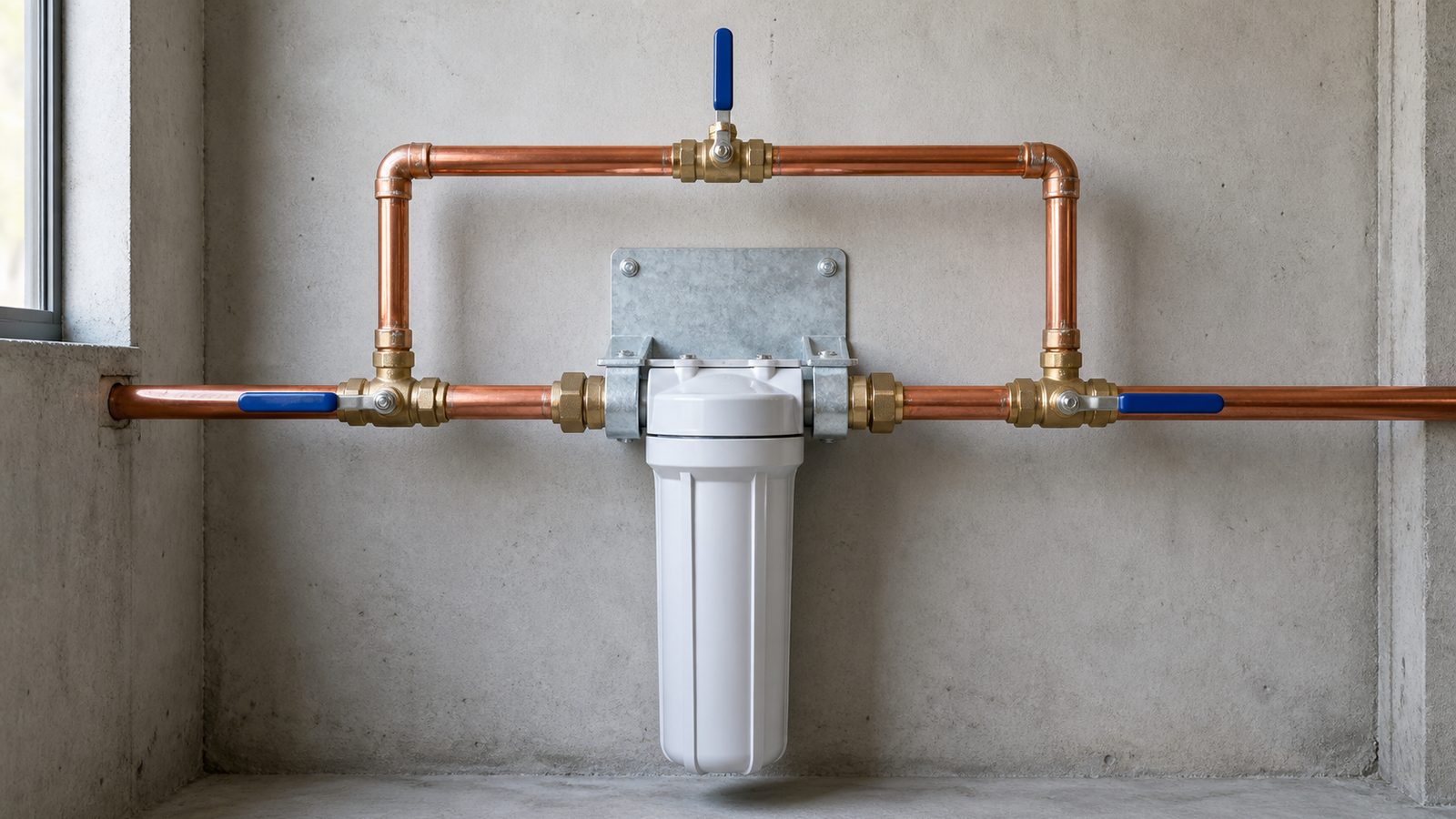
- Two full-port ball valves for isolation on either side of the filter
- One additional ball valve and fittings for a bypass loop
- Pipe or tubing cutter matched to your pipe material (copper, CPVC, or PEX)
- Union or push-to-connect fittings on both sides of the housing for future servicing
- Teflon tape and pipe joint compound rated for potable water
- Pressure gauge with a hose bib adapter
- Bucket, towels, and a shop vac for cleanup during the cut
- Pipe support strap or bracket to carry the housing's weight
- Filter cartridge matched to your source: sediment and carbon for city water, iron and sulfur media for well systems
Step-by-Step
- Confirm the filter's rated flow and pressure drop match your fixture count so you are not undersizing the unit.
- Locate the main shutoff valve, either at the meter connection outside or where the line enters the home.
- Choose a mounting point after the main shutoff and before the line reaches the water heater, so both hot and cold fixtures get filtered water.
- Shut off the main valve and open the lowest fixture to relieve pressure and drain the line.
- Cut into the main line at the chosen point using a cutter sized for the pipe material.
- Install the first isolation ball valve on the upstream side of the planned filter location.
- Install the second isolation ball valve on the downstream side of the filter location.
- Plumb a bypass line with its own ball valve connecting the two sides, so water can route around the filter during service.
- Mount the filter housing between the isolation valves using union or push-to-connect fittings so it can be removed without cutting pipe again.
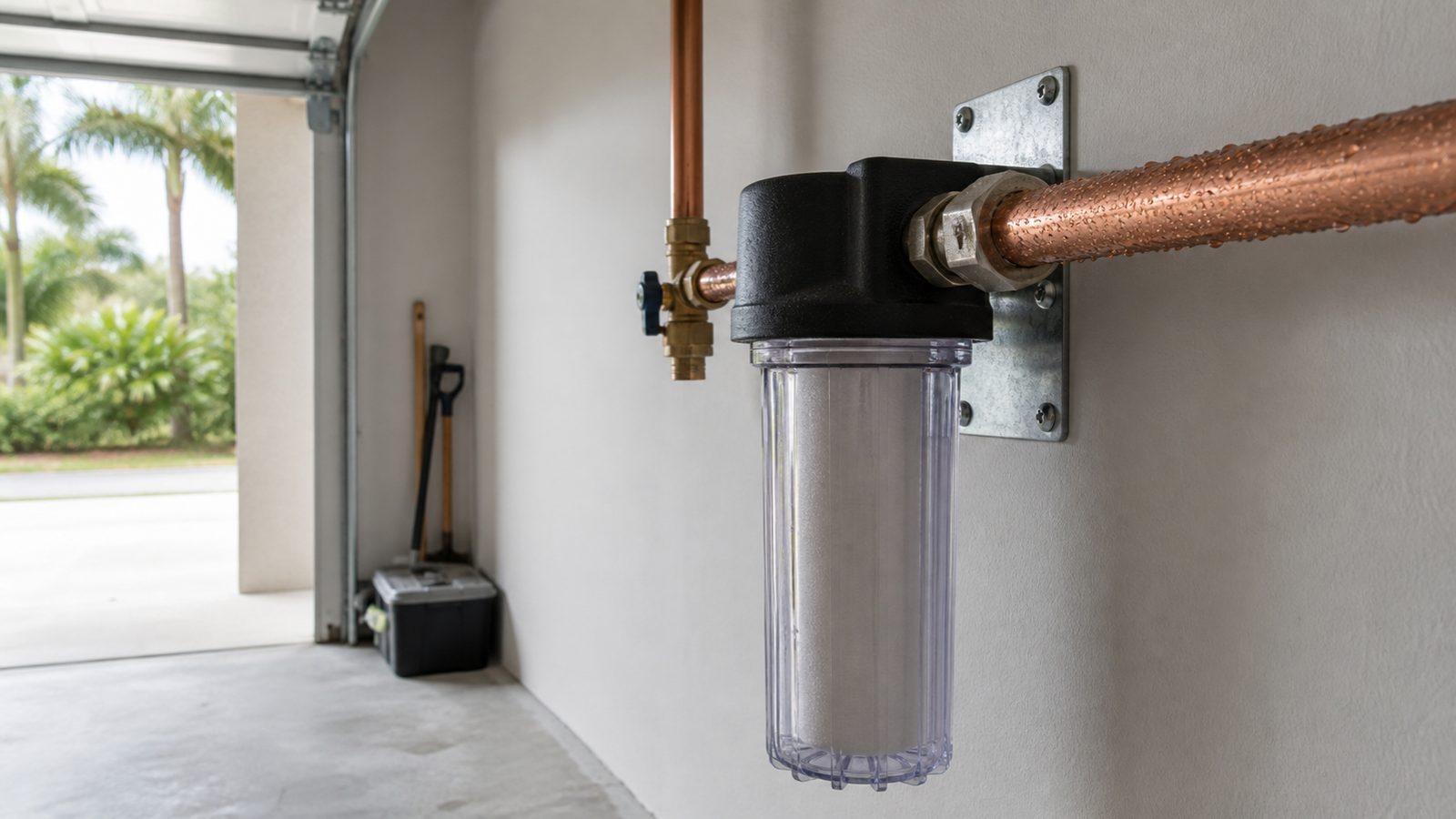
- Support the housing's weight with a bracket or strap rather than letting the fittings carry the load.
- Apply Teflon tape or joint compound to threaded connections and tighten to manufacturer specifications.
- Close the bypass valve, open both isolation valves, and slowly open the main shutoff to repressurize the line.
- Check every joint, union, and threaded connection for drips or seepage under pressure.
- Run water at a fixture for several minutes, then recheck connections and confirm steady pressure before closing up any wall or ceiling access.
Common Mistakes to Avoid
- Skipping the bypass loop, which forces a full house shutdown for every service call or cartridge change
- Undersizing the housing or cartridge for the home's flow rate, dropping pressure when multiple fixtures run at once
- Installing the filter after the water heater instead of before it, leaving the heater and hot side unfiltered
- Using non-potable-rated tape, compound, or fittings on a drinking water line
- Mounting the housing without proper support, letting weight pull on the inlet and outlet fittings over time
- Failing to relieve line pressure before cutting, sending water into the work area unexpectedly
Jacksonville Climate Considerations
Northeast Florida groundwater tends to run harder than water in many other parts of the country, and well water homes often notice mineral scale building up over time, one of the more common reasons homeowners here add a filter or softener. Well systems in this region also sometimes carry a sulfur odor from naturally occurring compounds in the aquifer, which a properly matched filter media can reduce.
After a main break, a hurricane-related pressure loss, or a boil water notice, sediment can get pushed into household plumbing, and a whole house filter is one of the more effective ways to catch that grit before it reaches fixtures. If the housing sits outside, in a garage, or in another unconditioned space, give it basic freeze protection ahead of the occasional hard freeze this area sees, since a housing full of standing water can crack if it freezes solid. In a humid garage, the cold line can also collect condensation, so keep it away from anything moisture would damage.
What It Costs in Jacksonville (DIY vs. Hiring a Pro)
| Approach | Typical Cost Range | What It Includes |
|---|---|---|
| DIY, filter only | $150 to $500 | Housing and cartridge, homeowner labor, no permit fee under the owner-builder exemption |
| DIY, filter plus valves and bypass | $300 to $700 | Housing, cartridge, isolation valves, bypass fittings, materials only |
| Licensed plumber, standard install | $600 to $1,500 | Labor, materials, permit and inspection, workmanship warranty |
| Licensed plumber, well system with sulfur or iron media | $1,000 to $2,500+ | Specialty media, larger housing, sometimes a pre-filter stage |
When to Call JK Prestige
If the installation involves cutting into a main line you are not comfortable working on, sizing a system for a well with iron or sulfur issues, or you would rather have the permit, inspection, and warranty handled by a licensed team, JK Prestige can scope and install a whole house filtration system correctly the first time.
No call center. No coordinator. A JK principal reviews every inquiry and replies with a real number, not a range, not a follow-up form.
Request Free Estimate →