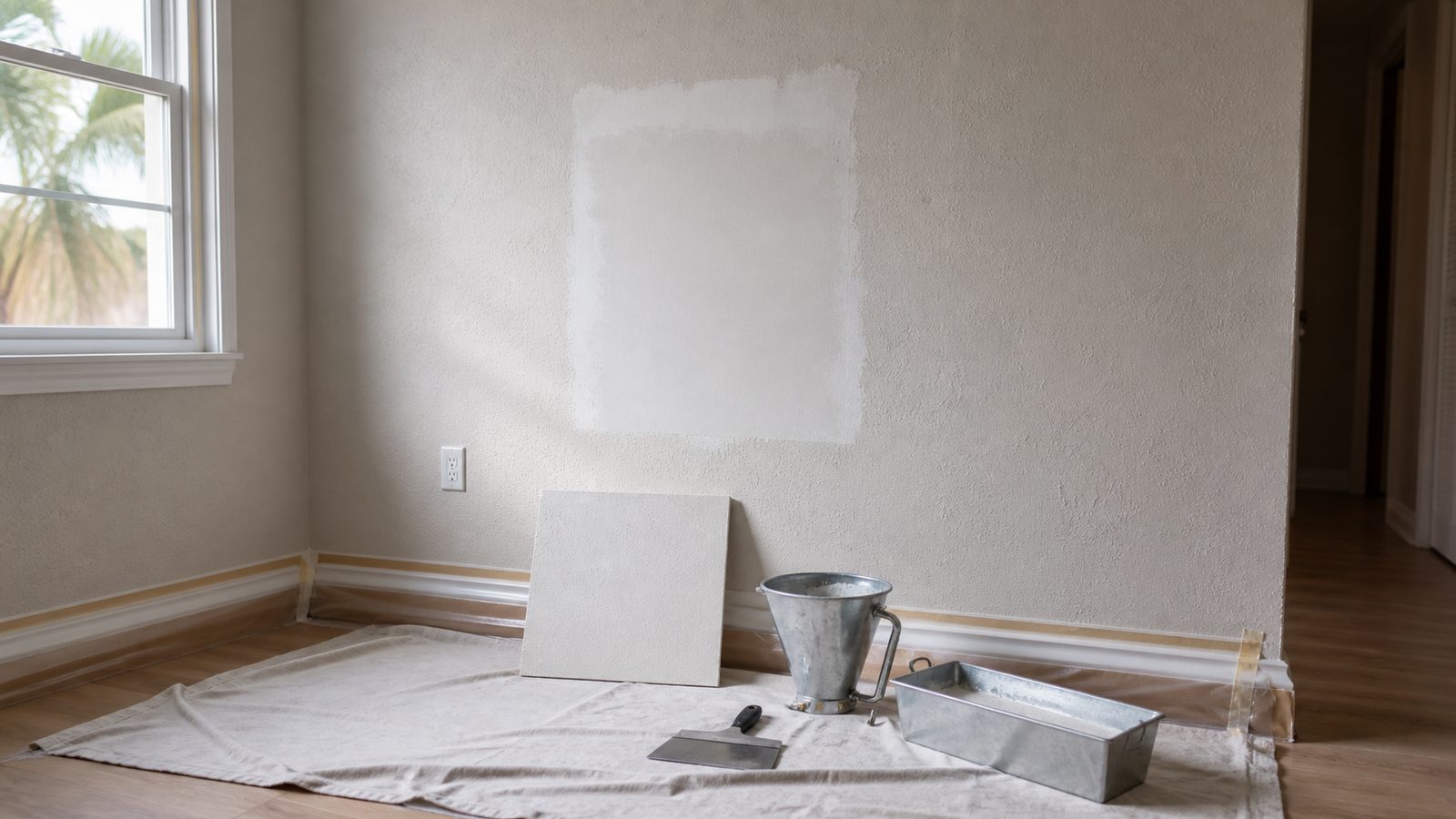
The patch itself is rarely the hard part. Any homeowner with patience can cut out damaged drywall, screw in a backer, and float a coat of mud over a seam. What separates an invisible repair from a wall with a permanent ghost mark is the texture pass, matching the surrounding knockdown or orange peel finish closely enough that paint and light do not give it away. In Jacksonville, where most homes built from the 1970s onward carry one of these finishes, getting that step wrong is the most common reason a repair still looks like a repair months later.
When You Need a Permit in Jacksonville
Patching and texturing drywall is cosmetic work and does not normally require a permit from the City of Jacksonville or Duval County. You are replacing a section of gypsum board and matching a surface finish, not altering structure or building systems.
That changes if the drywall work is tied to something bigger. Opening a wall for new electrical or plumbing, removing a load-bearing wall, or rebuilding drywall after a permitted water or fire damage repair all trigger their own permit requirements, and the closing drywall is swept into that scope. If your repair started with a leak, check with your contractor or the county building department first, since the cause may need inspection before you patch. Nassau, Clay, and St. Johns counties each run their own permit offices, so confirm locally if you live outside Duval County.
Tools and Materials
- Hopper gun with a compressor (3 to 4 quart hopper), or an aerosol texture can for repairs under about 2 square feet
- Pre-mixed joint compound, or setting-type compound for a faster cure
- Water, plus a mixing paddle and drill
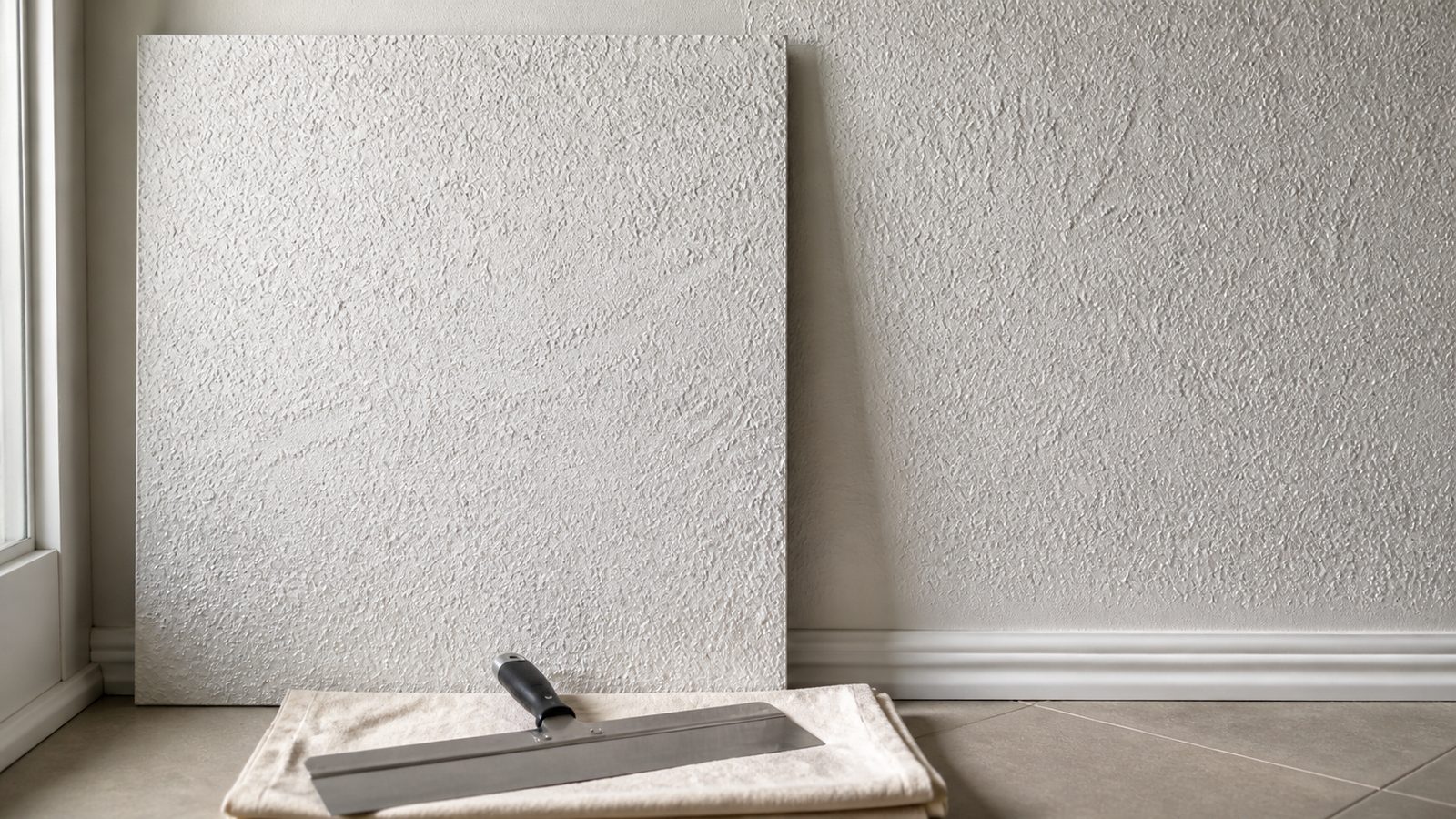
- A scrap drywall practice board, at least 2 by 2 feet
- 6-inch and 12-inch drywall knives
- A wide knife or trowel for the knockdown pass (10 to 14 inch)
- 150 and 220 grit sanding sponges
- Painter's plastic and tape to mask surrounding surfaces
- PVA or stain-blocking drywall primer
- Matching wall paint, same sheen as the surrounding surface
Step-by-Step
- Confirm the texture type. Orange peel is a fine, stippled spray with no flattened high points. Knockdown gets the same base spray, then a wide-knife pass that flattens the peaks into irregular flat patches.
- Let the finishing coat of mud on the patch fully dry and cure before texturing, since damp mud traps moisture and cracks later.
- Sand the patch smooth and wipe away dust with a slightly damp cloth.
- Mask adjacent walls, baseboards, outlets, and flooring, since spray texture travels farther than expected.
- Mix joint compound with water to a pancake-batter consistency for a hopper gun, or use an aerosol can straight from the nozzle for small spots.
- Set the hopper gun's air pressure, typically 20 to 40 psi, and nozzle opening to match your home's texture coarseness. Spray a test pattern on the practice board from 18 to 24 inches away, compare it to the wall in the same light, and adjust until they match.
- Spray the actual patch, feathering the pattern several inches past the repair edges so there is no hard line where old and new texture meet.
- For orange peel, stop and let it dry. For knockdown, watch the sprayed mud closely as it begins to set.
- Once the texture has flashed off enough to hold a shape but is still soft, pass a wide, lightly loaded drywall knife over it at a shallow angle to flatten the peaks, wiping the knife clean between passes. Timing this pass is where most homeowners go wrong.
- Let the textured patch dry fully, generally overnight.
- Prime the patched area, feathering the primer beyond the repair so it does not create a sheen difference under the topcoat.
- Paint with the same sheen and, ideally, the same paint originally used on that wall, rolling past the patch edges to blend into the field.
Common Mistakes to Avoid
- Spraying the wall before testing pattern and consistency on a practice board
- Knocking down the texture too early, which smears it flat, or too late, which leaves it too hard to flatten
- Skipping primer, which usually shows as a flat or dull spot under angled light
- Using a texture size that is close but not matched, so the patch reads as a different grain after painting
- Not feathering the spray pattern wide enough, leaving a visible ring around the repair
- Painting with a different sheen than the rest of the wall, which shows the patch outline anyway
Jacksonville Climate Considerations
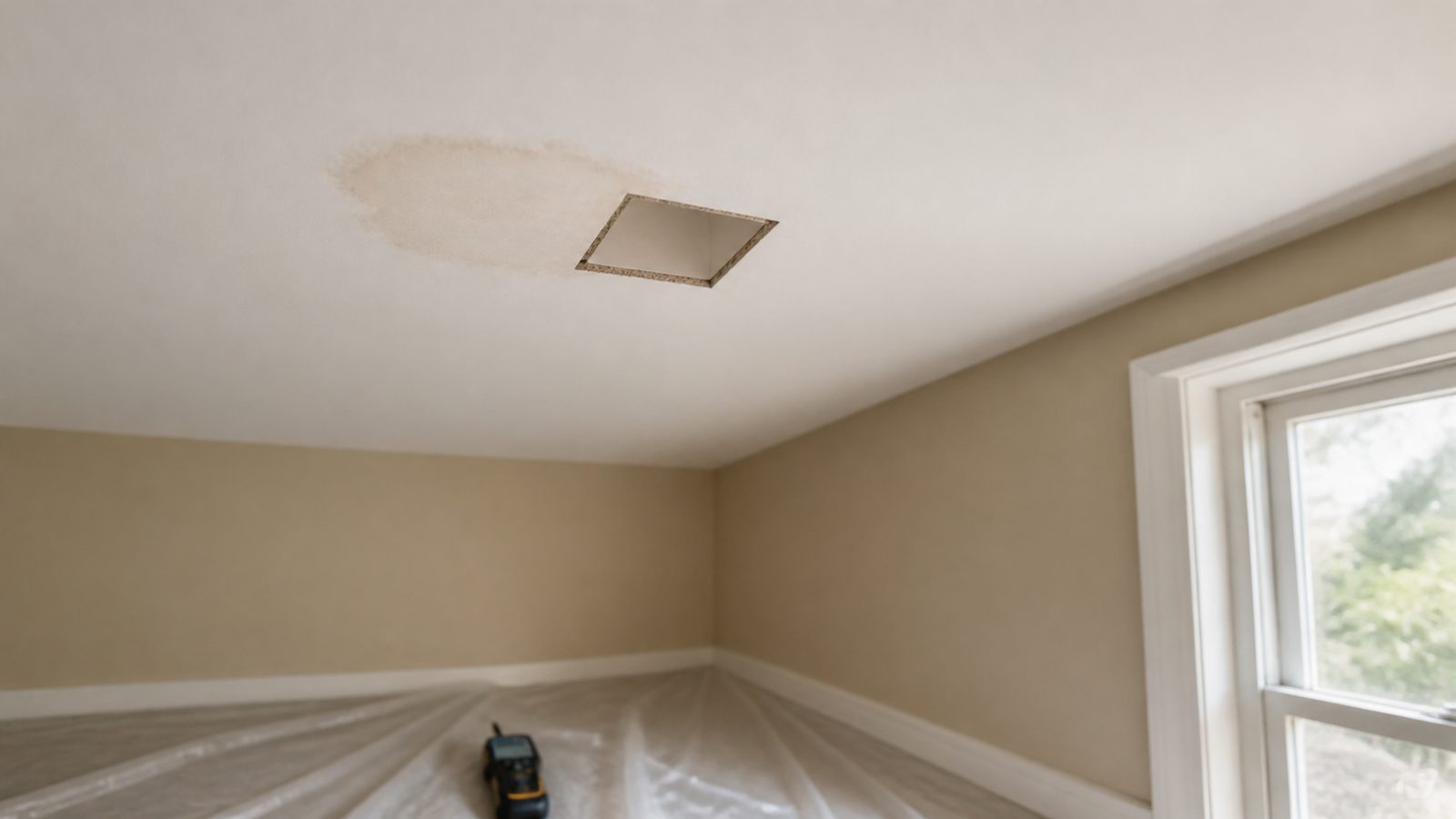
Northeast Florida's humidity trips up most DIY texture matches. Joint compound cures by evaporation, and on a humid Jacksonville afternoon that process slows, stretching the window before the mud is ready to knock down. Rushing that pass because a patch feels dry to the touch, when it is only surface-dry, is a common cause of a smeared pattern. Running the air conditioning, rather than opening windows, pulls moisture out of the room and keeps cure times closer to the product label.
Never texture over a spot still damp from a roof or plumbing leak, even if it looks dry on the surface. Trapped moisture behind new mud leads to bubbling, poor adhesion, and in this climate, mold risk inside the wall cavity. If drywall was wet for any length of time, let it dry completely and have it checked before closing the wall back up.
What It Costs in Jacksonville (DIY vs. Hiring a Pro)
| Scope | DIY Materials Cost | Professional Cost (Jacksonville area) |
|---|---|---|
| Small patch, single spot (1-4 sq ft) | $40 to $80 | $150 to $350 |
| Medium repair, one wall section (up to 20 sq ft) | $80 to $150 | $350 to $700 |
| Full-room texture blend or ceiling repair | $150 to $300 | $700 to $1,800+ |
Pricing varies with texture complexity, ceiling height, and how much of the room needs re-texturing to blend seamlessly, so treat these as planning ranges rather than quotes.
When to Call JK Prestige
If a patch is tied to a larger repair, involves a ceiling or vaulted wall, or a texture pattern you cannot identify with confidence, bring in a professional before you spray. JK Prestige handles drywall repair and texture matching throughout the Jacksonville area, and we can also spot when a patch is masking a moisture or structural issue that needs attention first.
No call center. No coordinator. A JK principal reviews every inquiry and replies with a real number, not a range, not a follow-up form.
Request Free Estimate →