June 1 is the official start of Atlantic hurricane season. By the time a named storm is within five days of Jacksonville, roofing contractors in Duval County have no available slots — existing repair bookings, storm-prep calls, and insurance assessments fill the schedule within hours of a forecast track becoming clear. The work that needs to happen to keep your roof intact through a storm has to happen in March, April, or May. That is not a preference; it is a scheduling reality.
Step 1: Schedule a Professional Inspection Between March and May
Book a roofing inspection for March, April, or May — before contractor schedules fill with summer renovation work and storm-prep calls. A qualified inspector will walk the roof, probe the decking for soft spots, check flashing adhesion, and look for any condition that a 130-mph gust could exploit. In Jacksonville, roofs with deferred maintenance going into June often sustain damage that would not have occurred on a properly maintained roof — not because the storm is stronger, but because existing weak points act as failure initiation sites. The inspection itself typically takes 45 to 90 minutes for a standard residential roof.
Step 2: Check Ridge and Hip Cap Adhesion
Ridge cap shingles and hip cap shingles are the highest-exposure elements on any asphalt shingle roof. They are small, individually installed pieces at the peak and hips of the roof, held down by a single exposed fastener plus sealant. Over time, the sealant strip under each cap degrades in Florida's heat, and caps become progressively easier for wind to lift. During the inspection, have every accessible ridge and hip cap pressed firmly — any cap that flexes upward significantly is inadequately adhered. Resealing or replacing loose caps with a roofing adhesive rated for Florida conditions (Karnak 19 or equivalent) is inexpensive and eliminates one of the most common storm damage initiation points.
Step 3: Inspect Pipe Boot Flashings
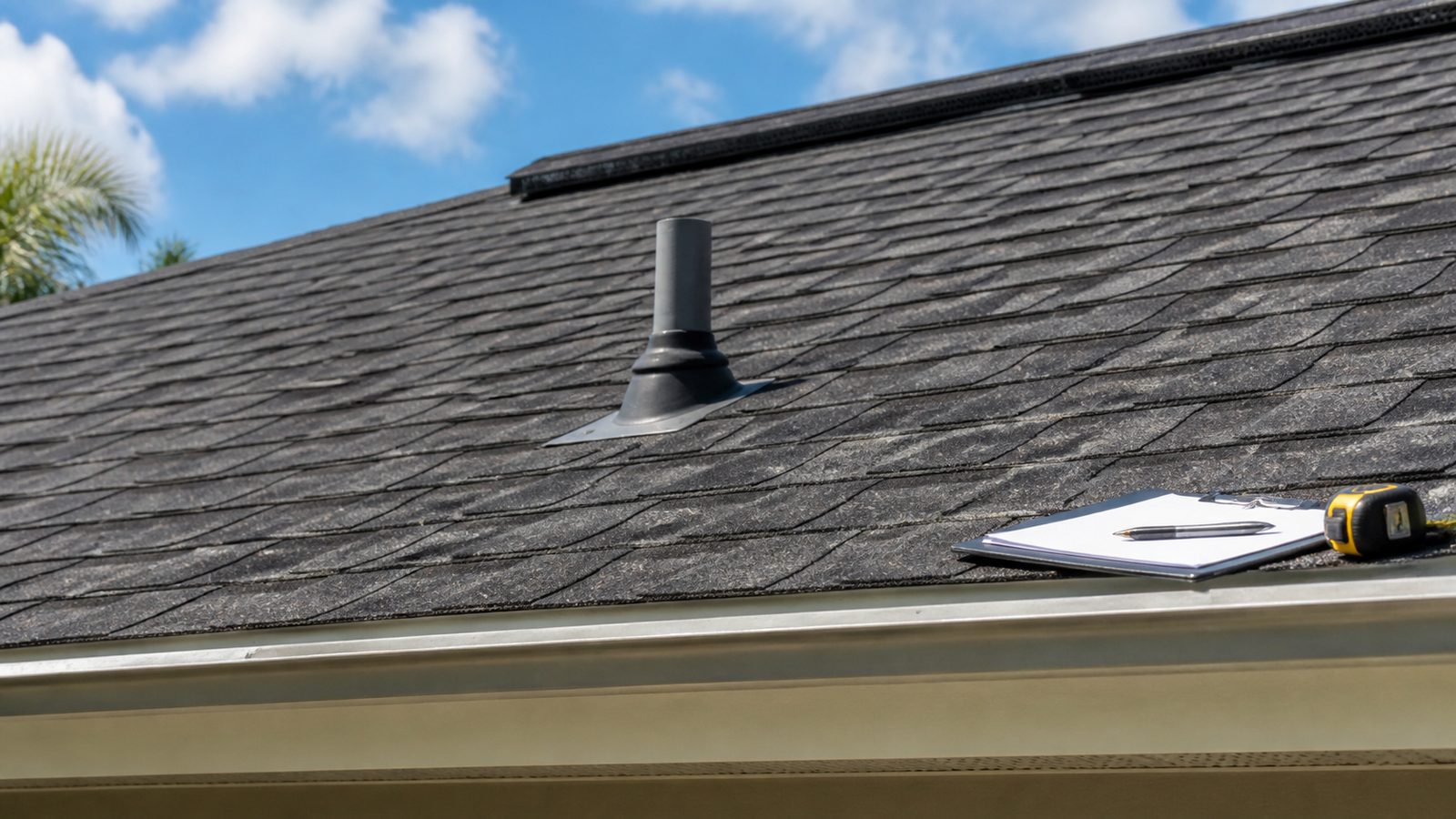
Pipe boot flashings — the rubber or metal boots where plumbing vents, HVAC exhaust lines, and other penetrations exit the roof — are among the most common failure points on Florida roofs. The rubber collar on a pipe boot degrades in direct UV exposure, typically cracking and separating from the pipe after 10 to 12 years even if the surrounding shingles are in good condition. A failed boot flashing is an open water intrusion path directly into the attic. Have every boot inspected for cracking, separation, and sealant condition. Replace any boot that shows UV cracking across more than 25% of its circumference — new universal pipe boots cost $25 to $50 in materials and take less than an hour to install.
Step 4: Examine Drip Edge and Gutter Attachment
Drip edge is the metal flashing installed at the eave and rake edges of the roof that directs water into the gutter and protects the fascia. It is also a wind-lift vulnerability if not correctly fastened. During a wind event, water can be driven upward under a lifted drip edge and into the roof deck. Check for drip edge sections that have pulled away from the fascia, are bent outward, or have gaps at corners. Simultaneously, check gutter hangers — gutters filled with debris during a storm act as wind scoops and the hanger load can pull drip edge with them. Refasten any loose drip edge with roofing nails at 6-inch spacing and clear gutter debris before June.
Step 5: Look for Loose or Lifted Shingles
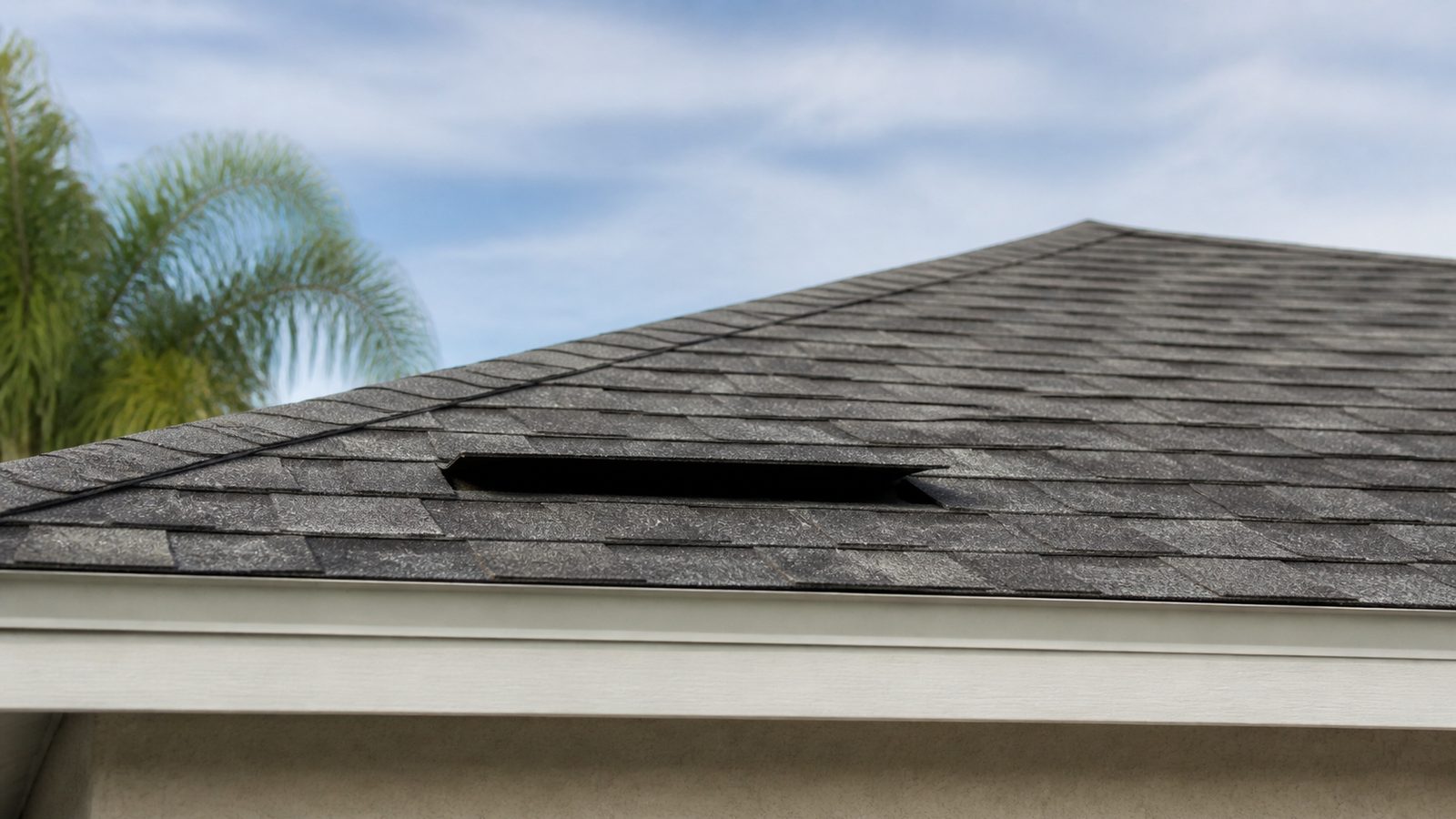
Binocular inspection from the ground is sufficient for most shingle condition assessment without going onto the roof. Look for: shingles with raised corners or tabs, any shingle that has shifted out of alignment with surrounding courses, discolored patches (indicating granule loss or moisture damage below), and any area where the pattern of shingles is irregular. A single lifted shingle during a storm event can initiate progressive delamination of an entire roof section as wind gets under it. Any lifted or loose shingles found during the inspection should be re-nailed and sealed before June 1.
Step 6: Clear Gutters and Downspouts
Gutters serve a structural function during a storm: they direct large volumes of rainwater away from the foundation and prevent roof overflow that can drive water under the eave. A gutter blocked with debris and standing water weighs significantly more than a clear gutter — 12 feet of a 5-inch gutter full of water and debris can hold 30 to 40 pounds. That load stresses the hanger attachment and the fascia. Clear gutters and flush downspouts in May, after the last significant spring pollen and seed drop in Jacksonville. Check that downspout extensions discharge at least 4 feet from the foundation.
Step 7: Check Attic Ventilation
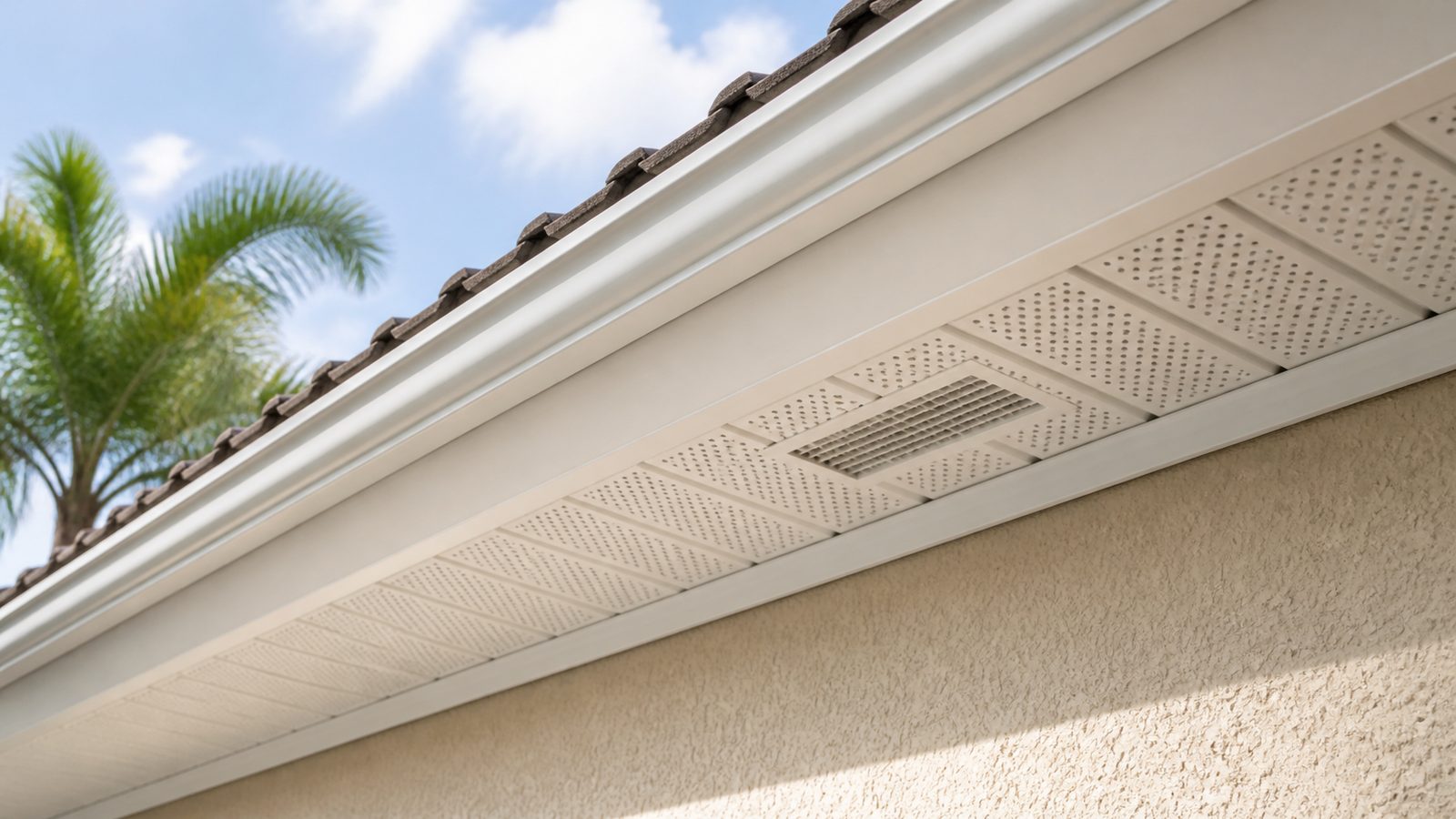
Adequate attic ventilation is a wind performance factor, not just a thermal comfort issue. During a storm, pressure differentials between the exterior and interior of the attic can create uplift forces on the roof deck from below. Ridge vents and soffit vents that are blocked — by insulation pushed against soffits, by debris in ridge caps, or by animal nesting — reduce attic pressure equalization. During the pre-season inspection, verify that soffit vents are open and unobstructed and that ridge ventilation is clear. The net free ventilation area for most Florida attics is calculated at 1 square foot of ventilation per 150 square feet of attic floor area.
Step 8: Document Current Condition Before June
After completing the inspection and any repairs, photograph the entire roof from all four sides and photograph the attic interior. Date-stamp the photos and save them to cloud storage with the date in the file name. This pre-season documentation establishes the condition of the roof before any storm event — it is the baseline that proves any damage that occurs during a storm was not pre-existing. If your roof is in good condition going into June, those photos protect that claim.
Pro Tips
- Book repairs in April, not May. By mid-May, roofing contractors in Jacksonville are running at capacity on residential renovation work and pre-season calls. April is the best window for repair scheduling.
- If your roof is 12 or more years old and you have not had a wind mitigation inspection, schedule one. The insurance premium reduction from an updated report often more than pays for the inspection cost.
- Do not defer repairs because a storm may not hit Jacksonville. Statistically, a direct hit is unlikely in any given year — but deferred maintenance on a 15-year-old roof during a moderate tropical event can cause damage that a properly maintained roof would have survived.
Get a written estimate in 48 hours. Call (904) 944-0278 or request a free inspection.
JK Prestige Construction is GAF Master Elite certified and performs pre-season roofing inspections throughout Jacksonville, Duval County, and St. Johns County. We provide written inspection reports with photo documentation and fixed-price repair estimates within 48 hours. See our roofing services for more.
No call center. No coordinator. A JK principal reviews every inquiry and replies with a real number, not a range, not a follow-up form.
Request Free Estimate →