If you've got standing water in your yard after every summer storm, or water pooling against your foundation, regrading is usually the first fix worth trying before you spend money on French drains, sump pumps, or a redesigned landscape. Regrading means reshaping the soil so it sheds water away from your house instead of collecting in low spots or against your slab. The concept is simple, but in Jacksonville the execution runs into local wrinkles: flat lots, sandy topsoil over compacted hardpan, a high water table in many neighborhoods, and rules about where that water is allowed to go once you move it. Here's how to do it right, and what to check first.
When You Need a Permit in Jacksonville
Small-scale regrading, a few inches of soil moved by hand around a foundation with no fill brought in from offsite, generally does not trigger a permit. Once a project involves importing or exporting a meaningful volume of fill, changing grade over a larger area, or altering how stormwater moves across the lot, the City of Jacksonville's Building Inspection Division may require a grading or land-disturbance permit. Duval County is consolidated with the City, so building and zoning review runs through one office. Thresholds are enforced project-by-project, so confirm with the Building Inspection Division what applies to your address before ordering fill or bringing in equipment.
Two rules matter more than any permit form. First, Florida law does not let you solve your drainage problem by dumping it on your neighbor. You cannot concentrate water that used to spread out naturally and channel it onto an adjoining lot, or block water that was naturally flowing onto your property so it backs up on someone else. Second, check your plat and survey for drainage or utility easements before regrading near a property line, swale, or retention area. Many Jacksonville subdivisions have platted easements that cannot be filled or re-contoured, even on your own lot.
If your property touches a wetland or tributary, or sits near the St. Johns River, the St. Johns River Water Management District (SJRWMD) may also have jurisdiction, particularly for larger land-disturbing activities. And if your lot sits in a mapped Special Flood Hazard Area, common in low-lying parts of Duval County near the river and its creeks, City floodplain rules can affect how much you're allowed to raise or lower grade. Pull your FEMA flood zone designation before you plan the work.
Tools and Materials
- Line level or laser level (a garden hose level works for short runs)
- Stakes and mason's string
- Tape measure
- Flat shovel and steel rake
- Sod cutter (rental), if removing existing turf
- Plate compactor (rental) for fill areas
- Clean, compactable fill dirt (not muck or organic topsoil)
- Topsoil for the finish layer
- Sod or grass seed
- Wheelbarrow
Step-by-Step
- Map the problem first. Watch your yard during and right after a real rain, not a light sprinkle. Note where water pools, how long it sits, and where it's trying to go.
- Establish the fall away from the foundation. The generally accepted standard is a minimum 6-inch drop in the first 10 feet, about a 5 percent slope. In tight side yards, get the steepest slope the space allows and route the rest through a swale.
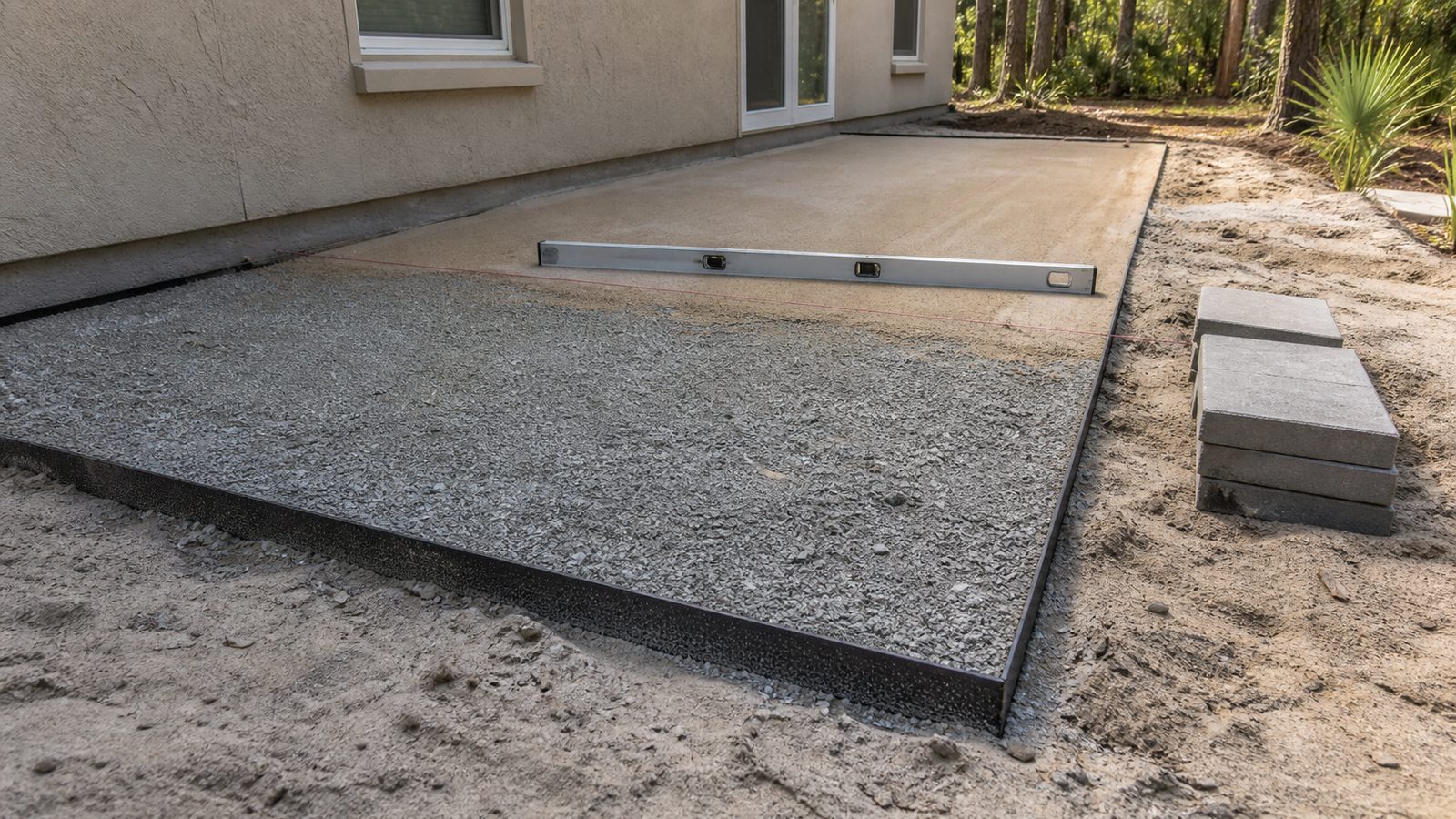
- Set grade stakes and string lines. Drive stakes at the foundation and at 10-foot intervals outward, then run a string and line level to confirm the slope, not just eyeball it.
- Strip and stockpile sod in areas you'll be reworking so you can reset it later instead of buying new sod.
- Add or remove soil to hit your grade, compacting fill in layers rather than all at once, which matters more in Jacksonville's loose sandy soil than in denser clay.
- Rake to a smooth, even slope, checking string lines as you go, and eliminate any secondary low spots.
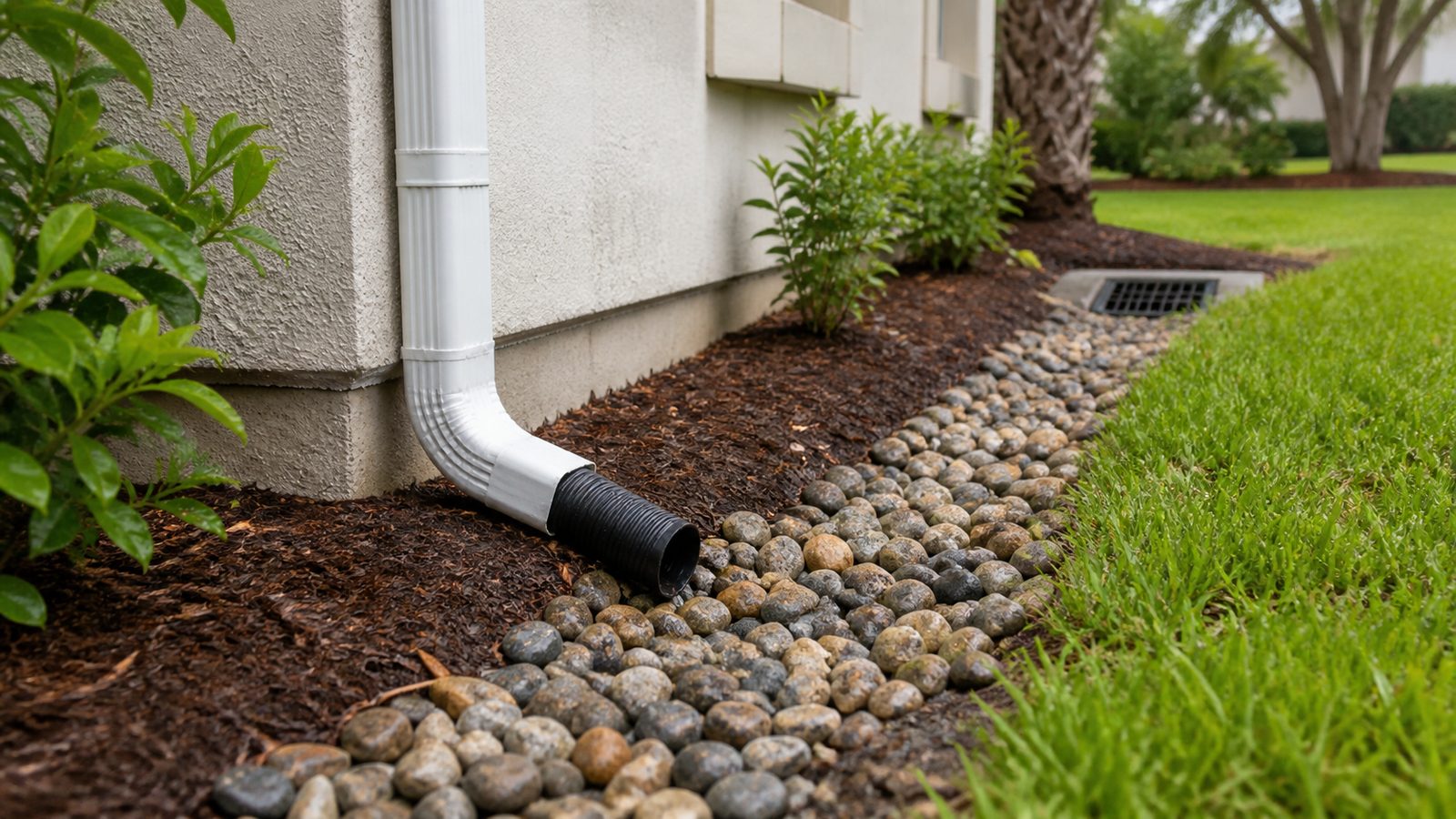
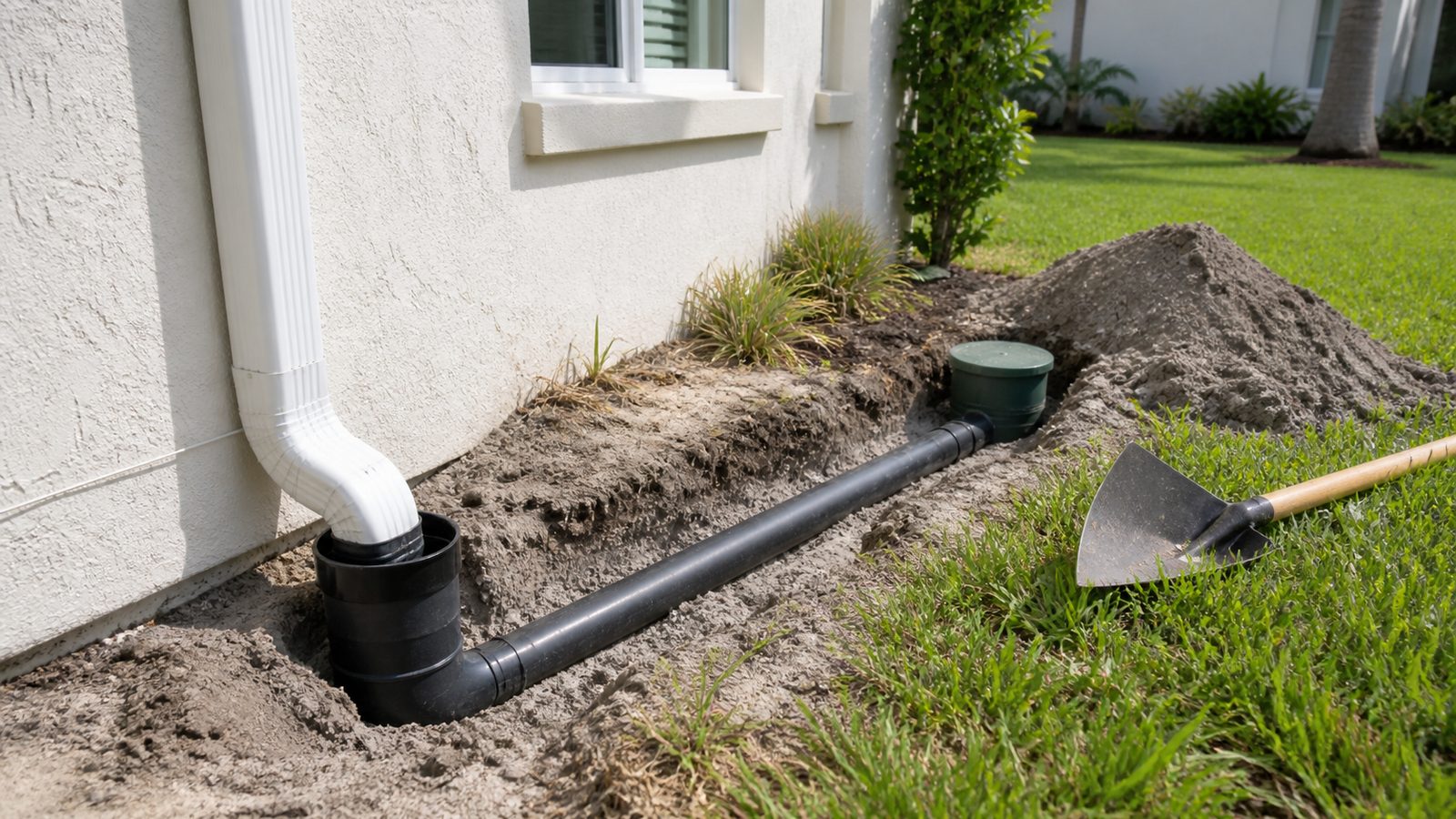
- Direct water to a swale, storm drain, or landscaped area, never toward a neighboring lot or a platted drainage easement.
- Compact the new grade with a plate compactor in fill areas to reduce future settling.
- Replace sod or seed and water it in before the next heavy rain.
- Recheck after the first real storm and touch up any spot still holding water.
Jacksonville Climate Considerations
Northeast Florida's summer thunderstorms are short but intense, often dropping an inch or more of rain in under an hour, a very different load than a slow, steady rain that exposes weak spots in your grading fast. Hurricane season adds sustained, heavy rainfall on top of that, even from storms that stay offshore. Jacksonville's native soil is mostly sand, which drains quickly at the surface, but many lots have a compacted or naturally cemented hardpan layer not far below grade that slows vertical drainage and pushes water sideways instead of letting it soak straight down. Combine that with a water table close to the surface in many Duval County neighborhoods, especially near creeks, marshes, and the river, and surface grading has to do more of the work than it would with better vertical drainage.
What It Costs in Jacksonville (DIY vs. Hiring a Pro)
These are rough planning ranges for the Jacksonville market, not quotes. Cost depends on lot size, fill needed, and equipment access.
| Approach | Typical Range | Notes |
|---|---|---|
| DIY, small area (near foundation only) | $200 to $600 | Mostly fill dirt, rental equipment, and sod |
| DIY, full yard | $800 to $2,500 | Multiple loads of fill, more rental time |
| Professional, small area | $1,500 to $4,000 | Includes labor, equipment, and grading expertise |
| Professional, full yard with drainage plan | $4,000 to $12,000+ | May include swales, drains, or catch basins |
When to Call JK Prestige
If water is standing near your foundation, a DIY regrade hasn't held up after a season of storms, or your project needs a City permit or SJRWMD review, it's worth having a licensed contractor look before you move more dirt. We handle the grading, the permitting conversation with the City, and the tie-in to swales or drainage structures when a simple regrade isn't enough.
No call center. No coordinator. A JK principal reviews every inquiry and replies with a real number, not a range, not a follow-up form.
Request Free Estimate →