If your toilet rocks a little when you sit down, or you have noticed a musty smell or a soft spot in the floor around the base, you are probably not dealing with a bad wax ring. Nine times out of ten, the real problem is the flange underneath it, the plastic or cast iron collar that anchors the toilet to the drain pipe and holds it level with the floor. Ignore it long enough and a small leak under a Jacksonville toilet turns into a rotted subfloor, and in older homes on piers, a much bigger repair than the one you started with. Here is what is actually going on down there and how to fix it correctly.
When You Need a Permit in Jacksonville
Replacing a wax ring or securing a rocking toilet on an intact flange is routine maintenance and does not require a permit in Duval County. Once the work moves past that, the rules change. Cutting into a concrete slab to access or replace a flange, replacing the closet bend below the floor, or repairing structural subfloor damage are all work that typically requires a permit under the City of Jacksonville Building Inspection Division. If your flange sits in a slab-on-grade home in areas like Mandarin, Southside, or Arlington, assume any repair below the finished floor level needs a permit pulled before work starts. When in doubt, call the Building Inspection Division and ask before you cut anything, not after.
Tools and Materials
- Adjustable wrench and a flathead screwdriver
- New closet bolts (brass or stainless, never reuse bent ones)
- Wax ring or wax-free foam gasket, sized to your flange height
- Repair ring or a full replacement flange (PVC or cast iron, matched to your drain)
- Flange spacer shims if the flange sits below the finished floor
- Corrosion-resistant screws rated for the subfloor material
- Utility knife, putty knife, and a shop vac
- Flashlight for crawl space or under-slab inspection
- Silicone caulk for the base perimeter, front and sides only
- Replacement plywood or pressure-treated lumber if the subfloor is compromised
Step-by-Step
- Shut off the water and drain the tank. Turn the supply valve clockwise, flush to empty the tank, then sponge out what remains.
- Disconnect and remove the toilet. Pull the caps off the closet bolts, remove the nuts, and rock the toilet gently to break the wax seal. Set it on an old towel.
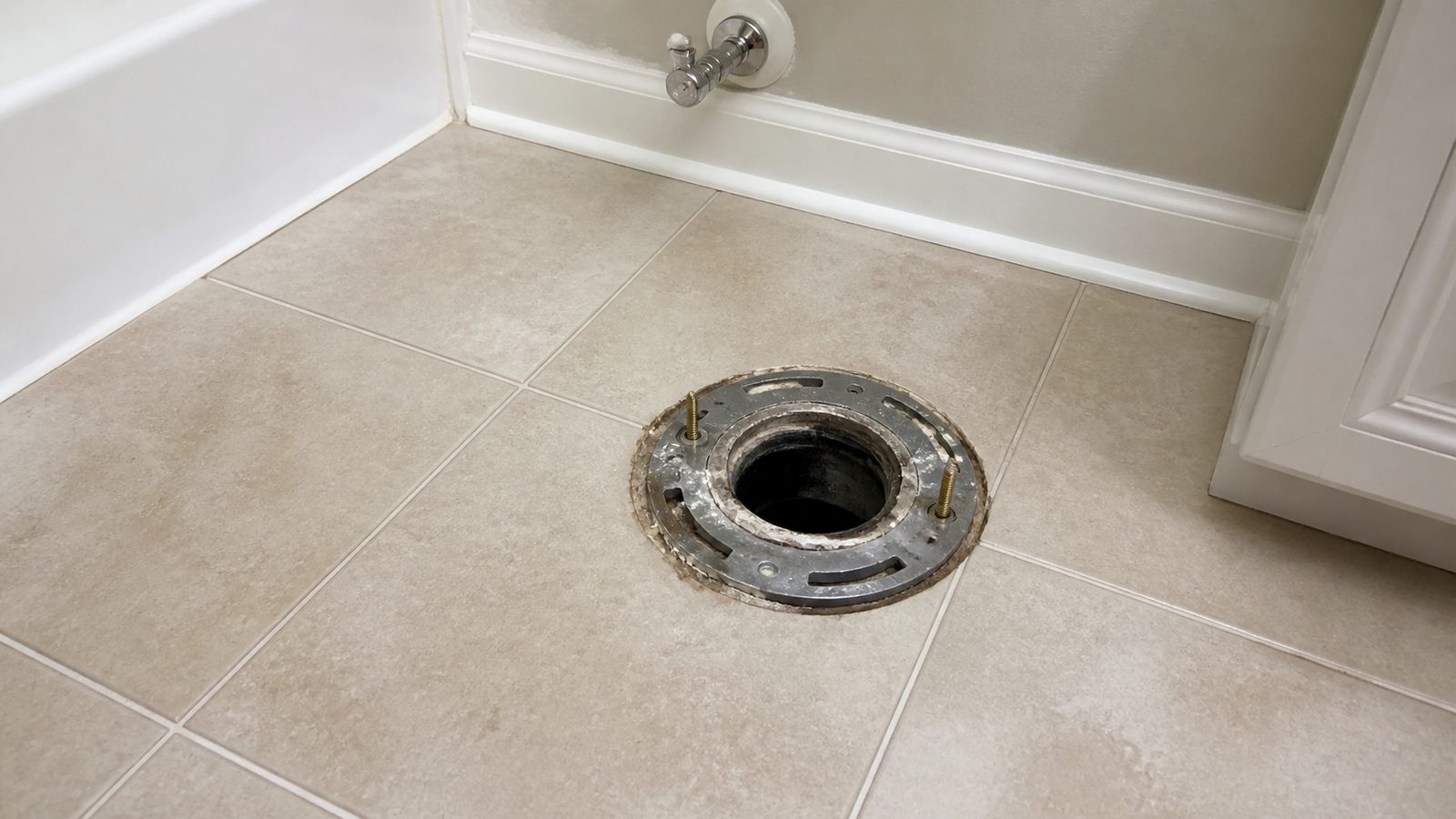
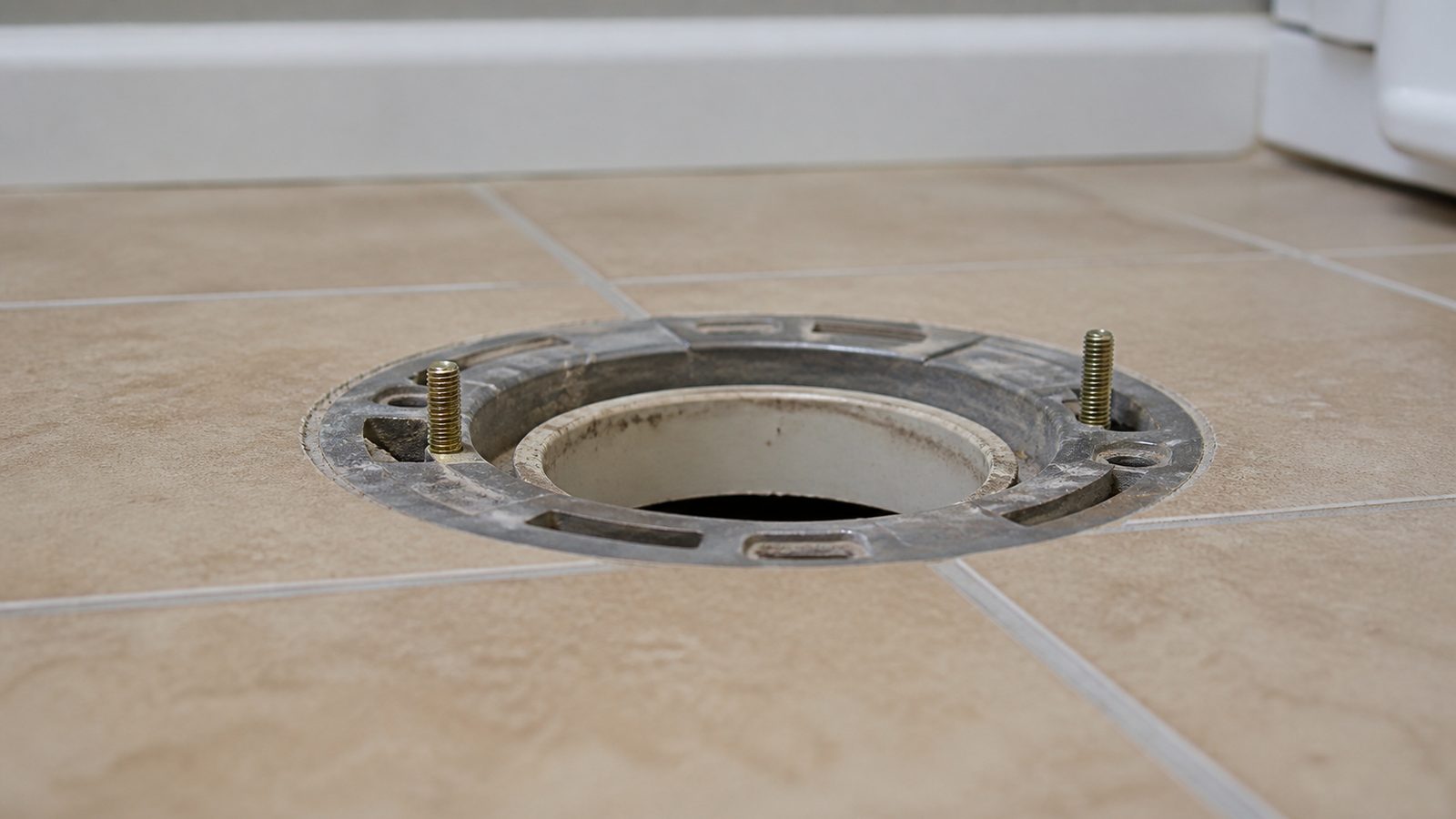
- Inspect the flange closely. Look for cracked plastic, snapped or missing bolt ears (the tabs the closet bolts hook into), rust-through on cast iron, or a flange sitting noticeably below the surrounding tile or vinyl. A flange sunk more than about a quarter inch below the finished floor will not seal reliably no matter how thick a wax ring you use.
- Check the subfloor around the drain. Press on the wood with a screwdriver. If it is soft, spongy, or dark and damp, you have rot, not just a bad flange. Sealing a new flange onto rotted plywood just relocates the failure a few months out.
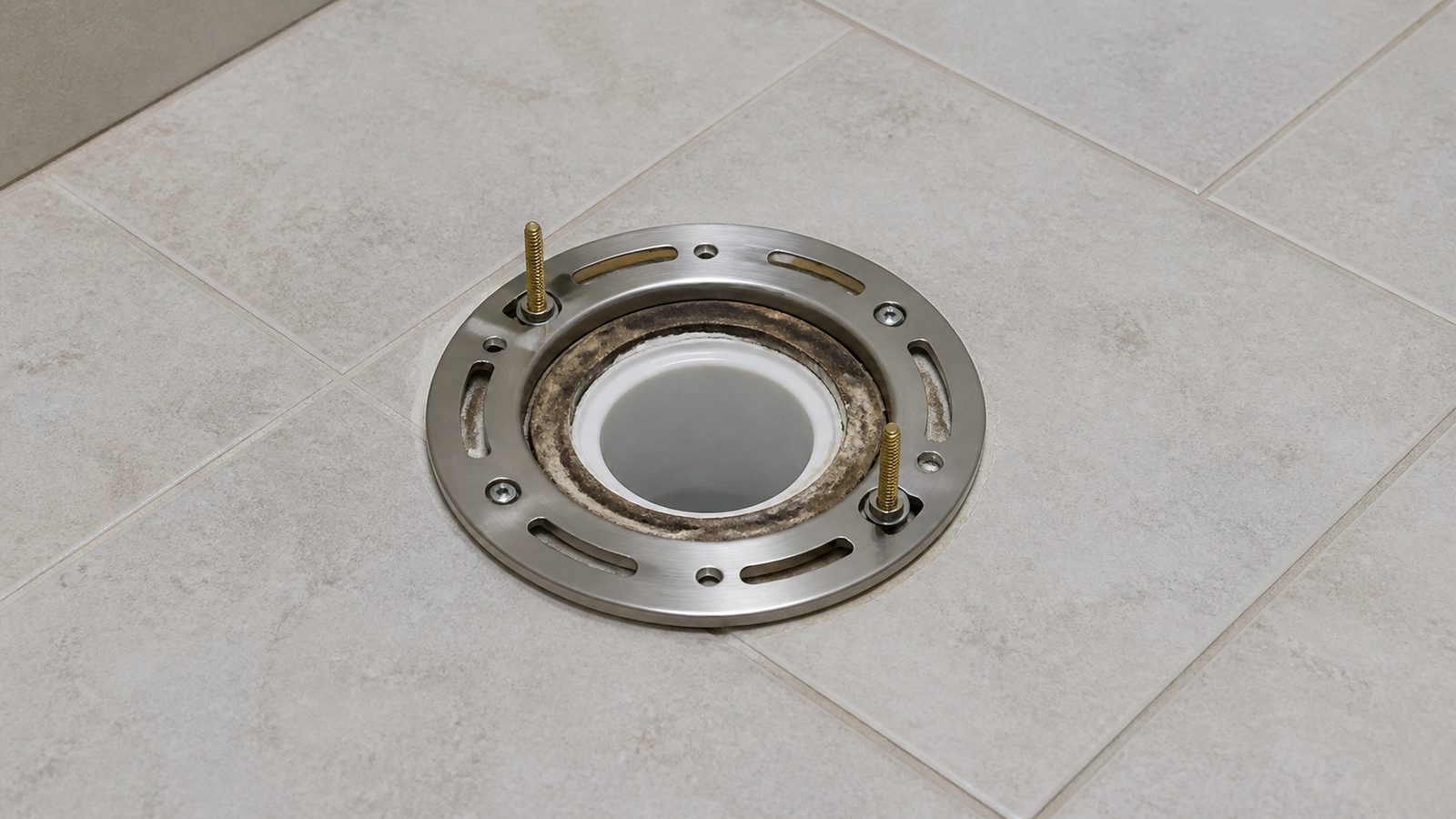
- If bolt ears are broken but the flange body is sound, install a repair ring. These stainless steel rings bolt or screw over the existing flange and give you fresh, solid ears to anchor the closet bolts to. Fastest fix, and it works well when the flange itself is not cracked or corroded.
- If the flange is cracked, badly corroded, or sitting too low, replace it. Cut out the damaged section, remove the old flange, and set the new one on the drain pipe. Match materials where you can, PVC for PVC, cast iron hardware for original cast iron pipe common in older Jacksonville homes. The flange should sit on top of the finished floor, never flush with the subfloor. If tile was added after the original install, add a spacer so the lip rests above the tile, not below it.
- Address any rotted subfloor before setting the new flange. Cut back the damaged plywood to solid wood, fit a patch, and screw it down flush. This is structural work. If rot extends under load-bearing framing, stop and call a professional.
- Set a new wax ring or wax-free gasket and reset the toilet. Press straight down evenly, do not rock it side to side. Snug the closet bolt nuts hand tight plus a quarter turn, alternating sides. Overtightening cracks the porcelain base.
- Caulk the front and sides of the base, never the back. Leaving the back open lets you spot a future leak before it soaks into the floor again. A fully caulked perimeter just hides a leak until the damage is already extensive.
- Reconnect the water and test. Fill the tank, flush several times, and check the base and the ceiling below over the next 24 to 48 hours for any sign of moisture.
Jacksonville Climate Considerations
Duval County's humidity does not cause a flange leak, but it accelerates what a leak does once it starts. A slow drip that would evaporate in a dry climate stays wet longer here, speeding up subfloor rot and giving mold and termites more time to get established. In older neighborhoods like Springfield and Riverside, many homes still have original cast iron flanges, and cast iron corrodes from the inside out, so a flange can look fine on top while the metal underneath is thin and cracking. Those same raised-pier homes have an accessible crawl space, which makes it easier to inspect the subfloor and catch damage early. Slab-on-grade construction, common in newer Mandarin, Southside, and Arlington subdivisions, does not offer that visibility. A broken flange set in concrete means breaking out slab to reach the drain line, turning a half-day repair into a multi-day job with concrete patching and, often, a permit.
What It Costs in Jacksonville (DIY vs. Hiring a Pro)
| Repair Type | DIY Materials | Professional (Labor + Materials) |
|---|---|---|
| Wax ring reset only | $15 to $30 | $150 to $250 |
| Flange repair ring | $25 to $50 | $250 to $400 |
| Full flange replacement (raised floor, accessible) | $40 to $90 | $350 to $600 |
| Flange replacement through concrete slab | Not recommended DIY | $800 to $2,000+ |
| Subfloor repair (localized rot) | $60 to $150 | $500 to $1,200 |
These ranges assume a typical single-toilet repair. Cast iron drain work, extensive rot, or multiple bathrooms will run higher.
When to Call JK Prestige
If you have found a broken flange sitting over rotted plywood, if the drain runs through a slab and needs to be opened up, or if you are simply not comfortable working around an active drain line, that is where it makes sense to bring in a licensed contractor. JK Prestige handles flange repair, subfloor replacement, and the tile or flooring restoration that follows, as one job instead of three separate calls. We will tell you honestly whether you are looking at a repair ring or a full flange replacement before any tile gets cut.
No call center. No coordinator. A JK principal reviews every inquiry and replies with a real number, not a range, not a follow-up form.
Request Free Estimate →