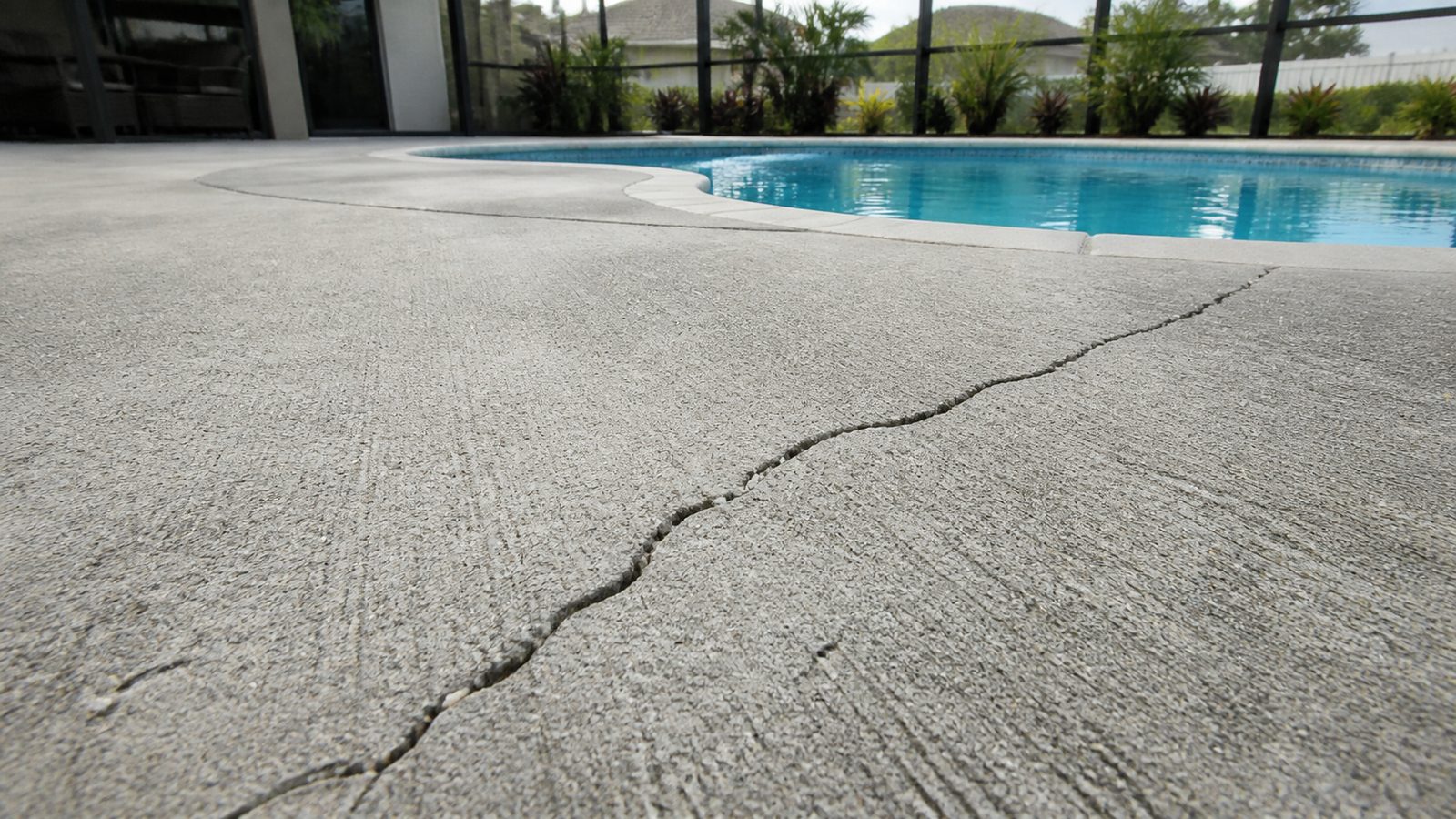
Almost every concrete pool deck in Duval County develops a crack sooner or later. That's not a defect, it's concrete doing what concrete does. The part homeowners get wrong is treating every crack the same way. A hairline crack in a broom-finished deck poured five years ago is nothing to lose sleep over. A crack that's widening, a slab corner that's sinking, or a patch of deck that stays wet no matter how hot and dry it's been, that's a different animal, and caulking over it just buys you a bigger repair later. Here's how to tell them apart and what actually fixes each one.
When You Need a Permit in Jacksonville
Filling a hairline crack or resurfacing an existing deck is routine maintenance and generally doesn't require a permit in Duval County. Once you get into pouring a new deck slab, extending or replacing sections, or doing structural repair that involves the pool's bond beam or the deck's connection to the pool shell, that's permitted work through the City of Jacksonville Building Inspection Division. If your repair touches the pool safety barrier in any way, gates, fencing, self-latching hardware, or the deck surface the barrier is anchored to, Florida's pool safety barrier requirements come into play and any changes need to keep the barrier compliant. When in doubt, call the Building Inspection Division before you start. It's a five-minute phone call against a stop-work order.
Tools and Materials
- Concrete saw or grinder with diamond blade, for cutting out and V-grooving cracks
- Wire brush and shop vacuum, for cleaning debris out of the crack
- Self-leveling polyurethane crack filler (for moving, hairline cracks)
- Semi-rigid epoxy filler (for cracks that have stopped moving)
- Backer rod, for wider cracks
- Cool deck or knockdown texture coating, if resurfacing
- Concrete bonding agent and patching compound, for spalled or chipped edges
- Pressure washer
- Foam injection kit or mudjacking equipment, for settled slabs (usually pro-only)
- Moisture meter or simple plastic-sheet test, for checking for hidden water
Step-by-Step
- Diagnose the crack before you touch it. Hairline shrinkage cracks are thin, usually under 1/8 inch, run in fairly straight lines, and don't have any vertical offset between the two sides. They show up within the first year or two as the concrete cures and are cosmetic. Settlement cracks have a step where one side of the slab sits lower than the other, usually near a corner or where the deck meets the pool coping. Structural cracks are wide, often over 1/4 inch, may run through control joints instead of around them, and keep growing. If you're not sure which one you're looking at, measure it and photograph it monthly for a few weeks before deciding on a repair.
- Rule out a leak or soil washout first. Before filling anything, check whether the deck stays damp in one spot when the rest of the yard is bone dry, whether your water bill has spiked, or whether you hear water running when the pool pump is off. Tap around the suspect area with a hammer, a hollow, drum-like sound under the slab usually means there's a void underneath, not solid soil. Any of these signs means the crack is a symptom, not the problem, and you need a leak detection company or a geotechnical-minded contractor before you spend money on cosmetic repair.
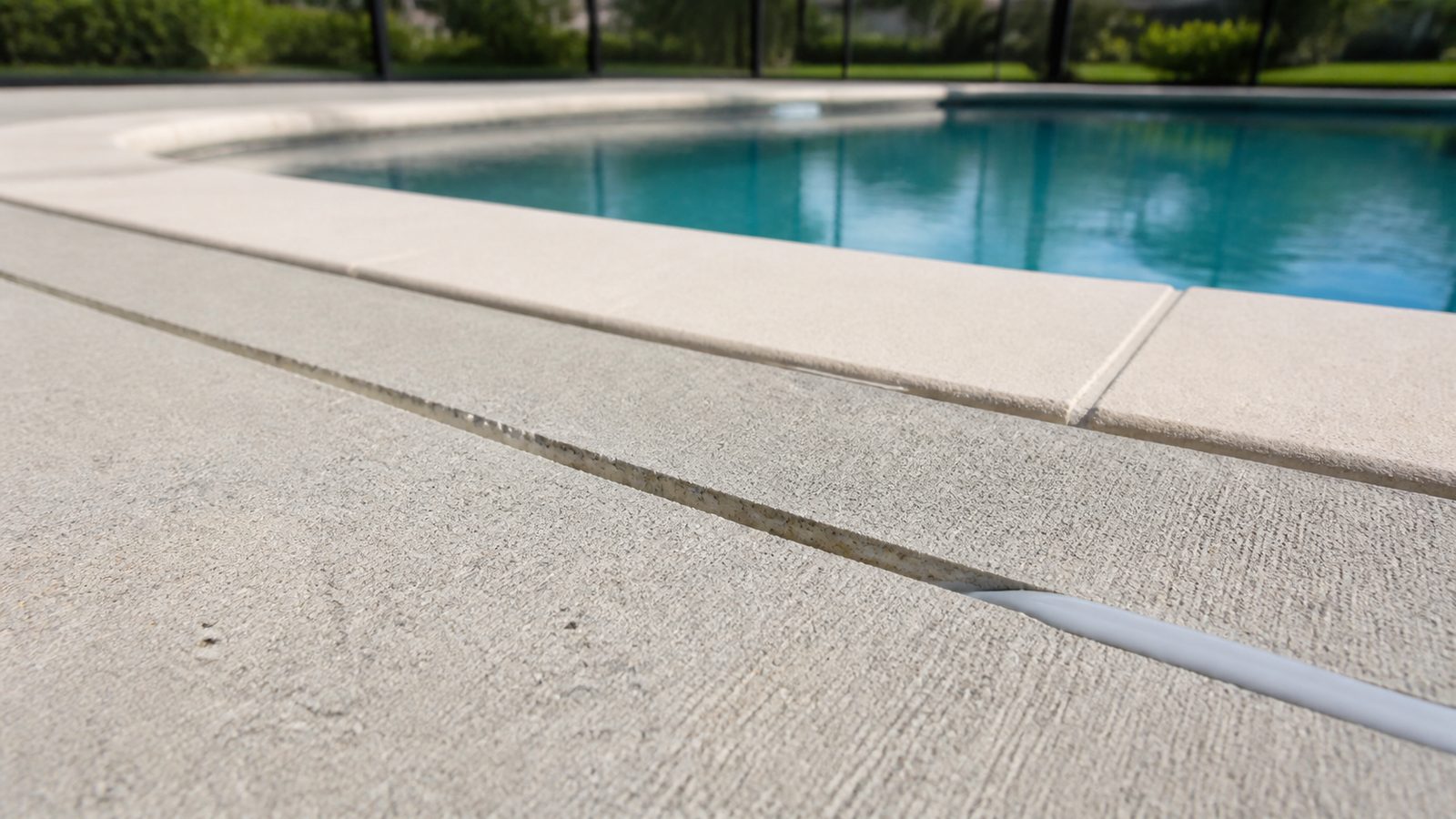
- Clean out the crack. Grind or saw a shallow V-groove along the crack, about 1/4 to 1/2 inch wide and deep, then vacuum out all dust and loose material. Filler doesn't bond to dirt.
- Fill hairline and moving cracks with polyurethane. Self-leveling polyurethane stays flexible after it cures, so it moves with the slab through Florida's seasonal expansion and contraction instead of cracking again next to the old repair. Epoxy is stronger but rigid, so it's better saved for cracks that have genuinely stopped moving.
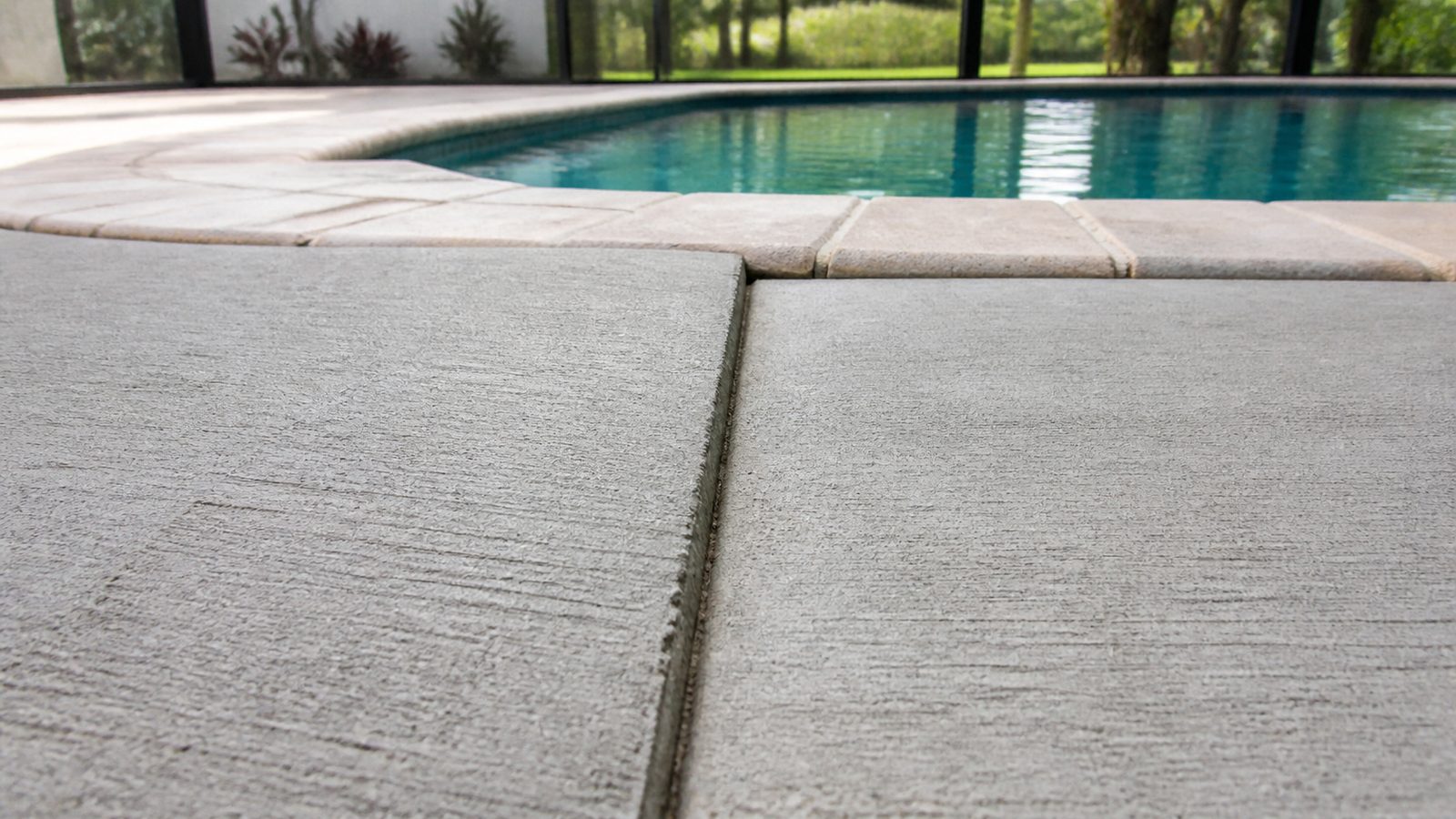
- Address settlement with mudjacking or foam injection. If a section of deck has sunk because the sandy fill underneath compacted or washed out, the fix is lifting that slab back to level, not just filling the crack on top. Traditional mudjacking pumps a cement slurry under the slab through drilled holes. Polyurethane foam injection does the same job with a lighter, faster-curing foam that's become the more common choice for pool decks because it puts less weight back onto already-questionable soil. Either way, this is a job for a contractor with the right pump equipment, not a DIY afternoon.
- Resurface for a uniform look and better grip. Once cracks are filled and any settlement corrected, a cool deck or knockdown texture spray coating hides patch lines, restores slip resistance, and gives you a fresh, even color. Cool deck systems use a lighter-reflectance finish that runs noticeably cooler underfoot than bare gray concrete.
- Seal and maintain. A breathable concrete sealer, reapplied every two to three years in this climate, slows water intrusion into new hairline cracks and keeps a resurfaced coating from chalking under the sun.
Jacksonville Climate Considerations
Duval County sits on sandy, well-draining soil, which sounds like a good thing until heavy rain moves that sand out from under a slab a little at a time. Homes on the Westside and near the St. Johns River see a higher water table, so soil saturates faster and stays wet longer after our summer thunderstorms, which is exactly the condition that causes voids and settlement. Screen-enclosed lanai decks in Mandarin, Southside, Nocatee, and Orange Park trap humidity under the enclosure, which can slow drying and mask a slow leak longer than an open deck would. Out at the Beaches, salt air accelerates coating breakdown and corrodes any exposed rebar in a crack faster than it would inland. And on a deck you're walking barefoot on in August, color matters as much as structure, a dark gray or dark tinted resurface can get hot enough to burn feet by midday, which is the whole reason cool deck coatings exist here.
What It Costs in Jacksonville (DIY vs. Hiring a Pro)
| Repair | DIY Cost | Professional Cost |
|---|---|---|
| Hairline crack filler (per crack) | $15 to $40 in materials | $150 to $350 |
| Full deck resurfacing (cool deck/knockdown, per sq ft) | $2 to $4 in materials, uneven results likely | $4 to $8 per sq ft |
| Mudjacking / foam injection (per slab section) | Not recommended DIY | $500 to $1,800 per section |
| Leak detection | Not DIY | $300 to $600 |
| Full crack repair + resurface, average residential deck | N/A | $2,500 to $7,000 |
When to Call JK Prestige
If the crack is widening, a section of your deck has dropped, or the area stays wet for reasons you can't explain, stop guessing and get it looked at. JK Prestige Constructor Corp handles pool deck diagnosis, mudjacking and foam leveling, and full cool deck resurfacing for homes across Jacksonville, from the Beaches to Mandarin and Orange Park, and we'll tell you honestly if the fix is a $200 crack filler job or something bigger.
No call center. No coordinator. A JK principal reviews every inquiry and replies with a real number, not a range, not a follow-up form.
Request Free Estimate →