If you have ever leaned on a deck railing in Jacksonville and felt it give more than it should, you already know why this repair matters. A deck railing is a life safety guard, not just trim, and Northeast Florida's humidity, salt air, and storms are hard on the wood, hardware, and connections that hold it together. Whether you have a loose post, a cracked baluster, or a section pulled away from the frame, the fix has to be structurally sound and code compliant. Here is how an experienced Jacksonville contractor approaches the job.
When You Need a Permit in Jacksonville
In the City of Jacksonville, consolidated with Duval County, building permits are handled through the city's Building Inspection Division under the Planning and Development Department. Simple cosmetic work, like sanding and refinishing a railing that is otherwise sound, generally does not require a permit. But replacing structural components such as posts, the top or bottom rails, or the connections anchoring the guard to the deck framing typically does, because a failed guard is a fall hazard. Before starting any repair beyond cosmetic touch-up, call the Building Inspection Division or check the city's permitting portal to confirm whether your scope needs a permit and what the current fee schedule looks like. Do not guess on this one.
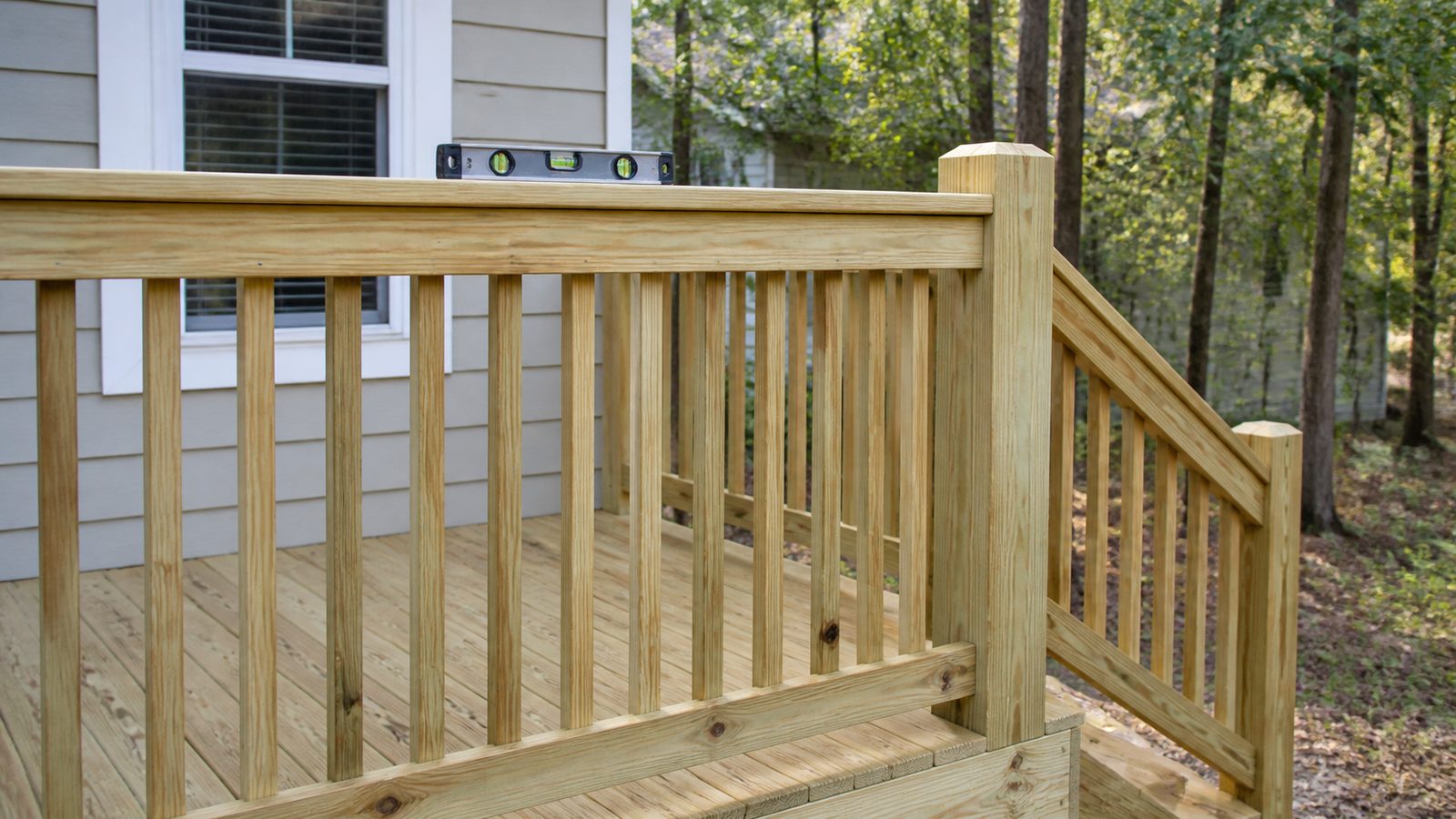
Florida Building Code, Residential (which Jacksonville enforces, based on the International Residential Code) sets the performance standards your railing has to meet regardless of permit status. For a one or two family home, any walking surface more than 30 inches above grade needs a guard, and that guard must be at least 36 inches tall measured from the deck surface to the top of the rail. The infill, meaning the balusters or other material between the top and bottom rails, cannot have openings large enough to let a 4-inch sphere pass through, the standard rule for keeping a small child from slipping through. Guards also have to resist a 200-pound concentrated load applied at any point along the top rail, in any direction, and the infill has to resist a lateral load of its own. This is not a rule you can eyeball. If your existing railing was built to older, looser spacing or a shorter height, a repair is a good chance to bring it up to current code, and the city will often require it once you touch the structure.
Tools and Materials
- Cordless drill and driver bits
- Stainless steel or hot-dip galvanized deck screws (never use standard zinc-coated screws outdoors here)
- Post level and a 4-foot level
- Reciprocating saw or circular saw for cutting out damaged sections
- Pry bar and cat's paw for removing old fasteners
- Pressure-treated lumber or composite rail components matching the existing system
- Structural post connectors or brackets rated for guard loads
- Exterior wood glue (if repairing, not replacing, a cracked component)
- Wood epoxy filler for minor surface repairs
- Caulk and paintable exterior sealant
- Safety glasses and gloves
Step-by-Step
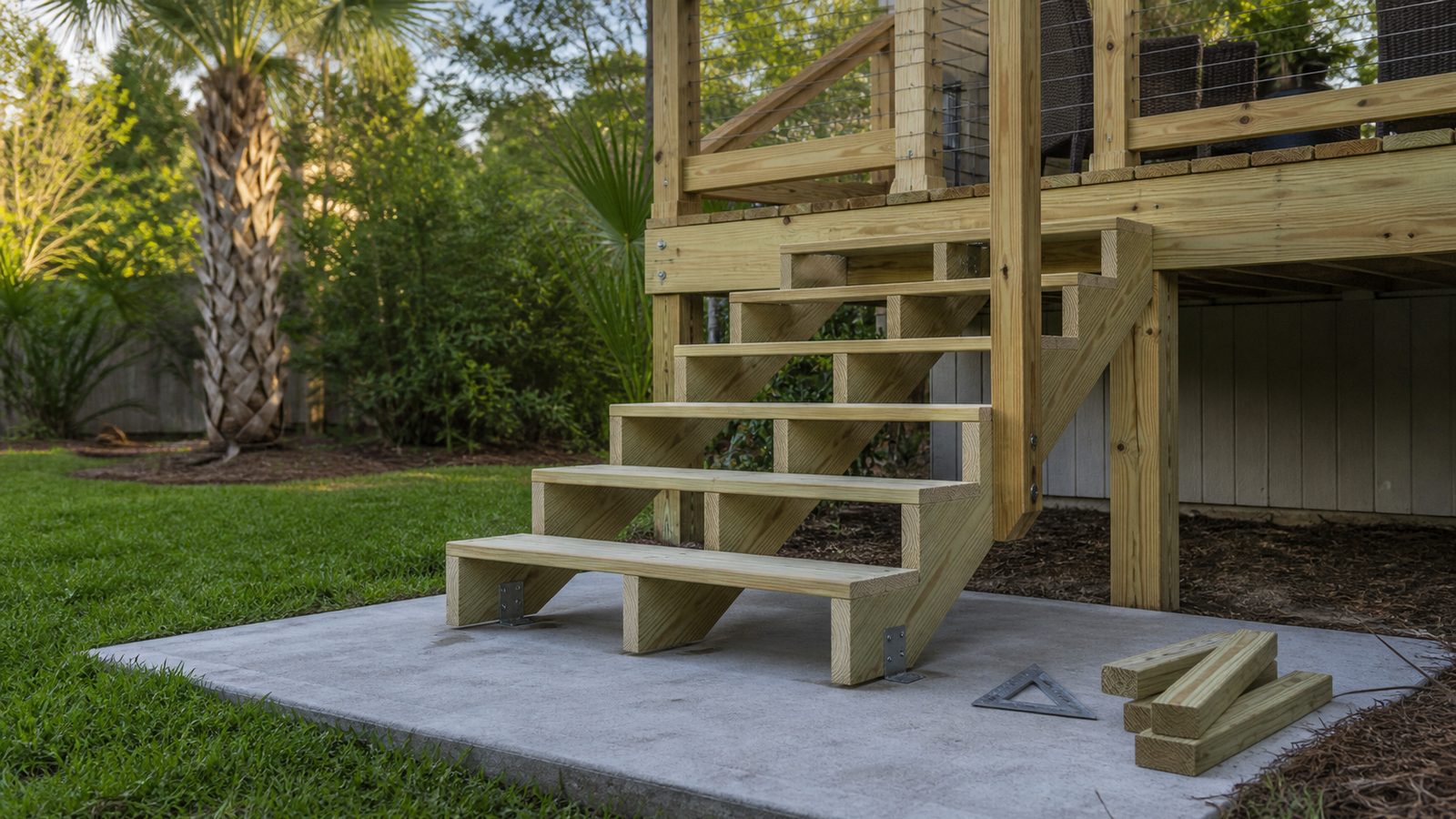
- Inspect the whole railing system, not just the obvious problem spot. Push and pull on every post and section to find hidden soft spots, rot, or loose connections.
- Identify the failure point. Most Jacksonville railing problems trace back to a post never properly through-bolted to the rim joist, wood rotted by years of humidity and standing water at the base, or corroded fasteners that have lost their grip.
- Remove the damaged section. Cut out rotted wood back to solid material, or unbolt the failed post entirely. Do not patch around rot, it will come back.
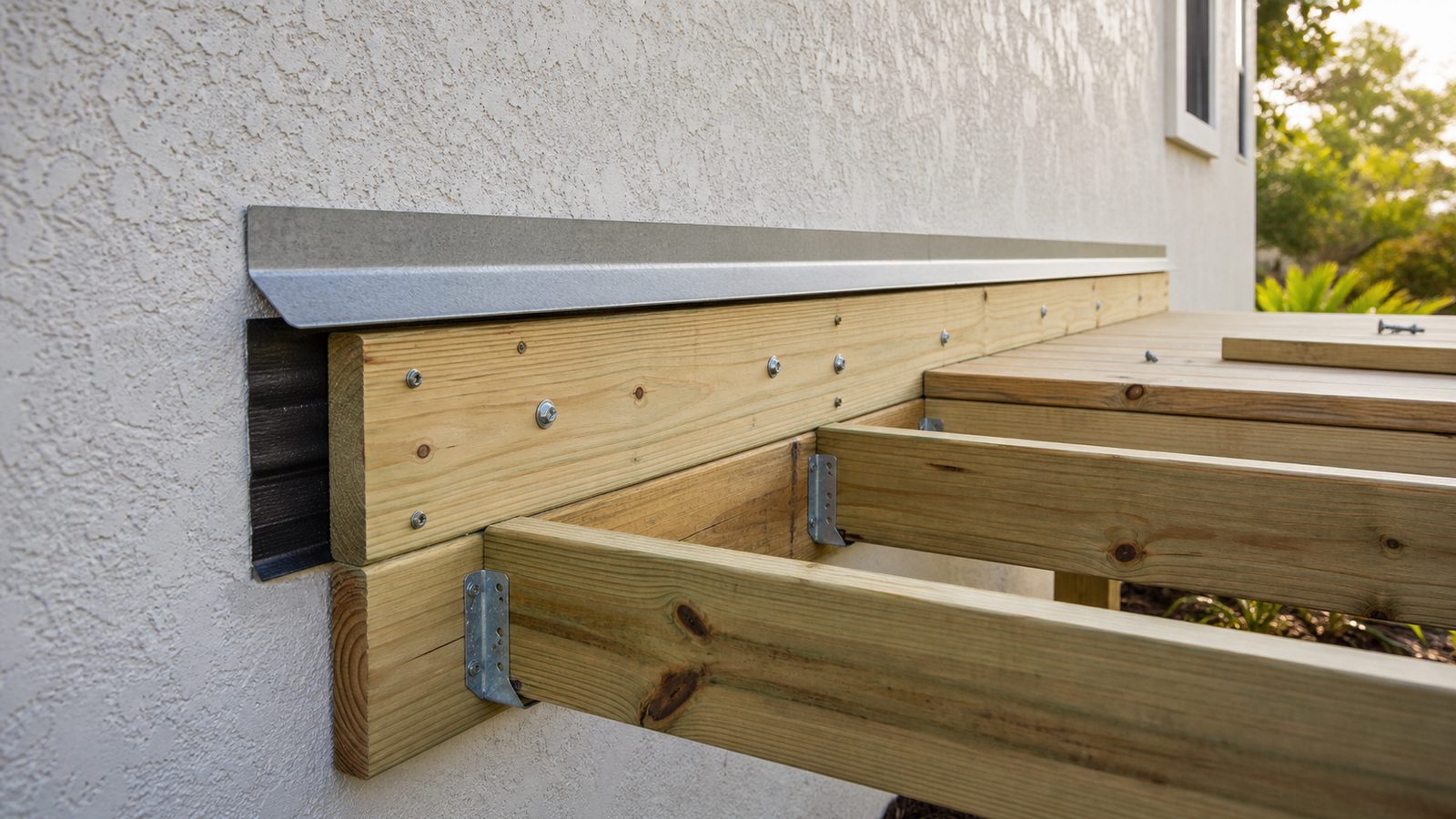
- For a loose post, do not just add more screws. Install a structural post-to-rim-joist connector and through-bolt it with stainless or galvanized hardware rated for exterior use.
- Replace rotted or cracked balusters and rail sections with matching pressure-treated lumber or composite material, keeping spacing under the 4-inch sphere rule.
- Set posts plumb with a post level, and confirm the top rail sits at 36 inches or higher from the deck surface.
- Fasten everything with stainless or hot-dip galvanized screws or bolts. This is not optional in a coastal climate, standard fasteners corrode and fail within a couple of years.
- Test the repair with firm lateral pressure at the top rail and at the midpoint of any replaced infill. It should not flex noticeably.
- Seal all cut ends of pressure-treated lumber and apply exterior sealant or paint to protect against sun and moisture.
- If the repair involved structural components, schedule your city inspection before closing anything up or painting over connections the inspector needs to see.
Jacksonville Climate Considerations
Jacksonville's humidity and heat accelerate wood decay faster than in drier climates, especially at post bases where water pools and doesn't evaporate quickly. Near the coast, the Intracoastal, or the St. Johns River, salt air corrodes standard hardware in a season or two, so stainless steel or hot-dip galvanized fasteners are worth the extra cost. Northeast Florida also sits in a hurricane-prone wind region, so connections need to hold up to real lateral loads during storms, not just casual leaning. Intense summer sun breaks down sealants and finishes quickly too, so plan on refreshing exterior coatings more often than typical.
What It Costs in Jacksonville (DIY vs. Hiring a Pro)
| Scope | DIY Materials | Hiring a Pro (Labor + Materials) |
|---|---|---|
| Minor repair (a few balusters, one post) | $75 to $250 | $350 to $800 |
| Moderate repair (multiple posts, partial rail replacement) | $250 to $600 | $800 to $2,000 |
| Full railing replacement (single deck run) | $600 to $1,800 | $2,000 to $5,000+ |
These are rough estimate ranges for the Jacksonville market and will vary based on material choice (pressure-treated versus composite), deck height, linear footage, and whether permitting and inspection fees apply.
When to Call JK Prestige
If the damage involves structural posts, you are unsure whether your railing meets current Florida Building Code guard requirements, or the repair needs a permit and inspection, it is worth having a licensed general contractor handle it. JK Prestige Constructor Corp works on residential projects throughout Jacksonville and can evaluate whether a repair is enough or whether the safer, more cost-effective move is a full railing replacement. A quick consultation can save you from redoing the work twice.
No call center. No coordinator. A JK principal reviews every inquiry and replies with a real number, not a range, not a follow-up form.
Request Free Estimate →