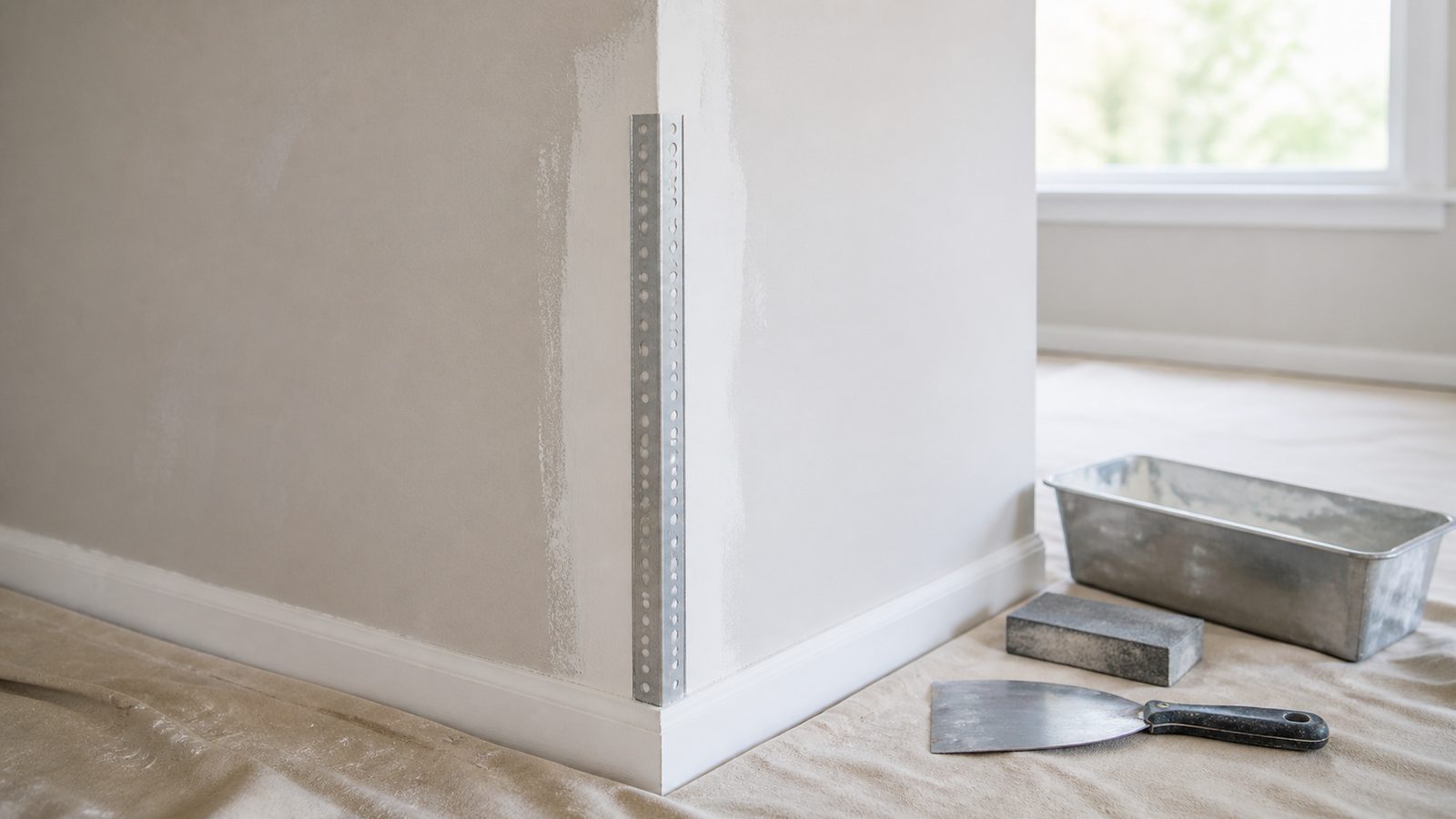
Every outside corner in a house takes a beating. A vacuum bumps it, a box catches it, and after a few years the bead under the paint is dented, cracked, or freckled with rust. In a Jacksonville home this is one of the most common drywall repairs there is, and it is a doable weekend project if you cut out the damage properly, pick the right bead, and match the wall's texture instead of leaving a flat patch that catches light differently than the rest of the wall.
When You Need a Permit in Jacksonville
Cosmetic drywall patching, including cutting out and replacing a damaged section of corner bead, is routine maintenance in Duval County and does not require a permit. You are repairing a finish surface, not altering the structure of the home.
Permits come into play once the work goes past the finish layer. Removing or altering a wall, even a short section, generally requires one. So does drywall work tied to a larger repair after a water or fire loss where the framing itself was damaged, since that touches structural and sometimes electrical elements inspectors want to see. Skimming out a corner and repainting does not trigger any of that.
One thing worth flagging: if the same corner keeps cracking, more than once in the same spot, that is often not a drywall problem at all. It can point to foundation settlement, truss uplift, or framing movement stressing the joint faster than the mud can hold, and a cosmetic patch will not fix a structural cause. When in doubt, confirm with the City of Jacksonville Building Inspection Division before starting.
Tools and Materials
- Utility knife, drywall keyhole saw or oscillating multi-tool, and a straightedge
- Tin snips (metal bead) or a utility knife (vinyl bead)
- New corner bead, sized to match or exceed the damaged run
- Drywall screws, staples, or a crimping tool depending on bead type
- Setting-type joint compound for the first coat, all-purpose for finish coats
- 6-inch and 10-12 inch drywall knives, a mud pan, sanding sponge
- Primer, matching paint, and texture spray or a hopper gun for knockdown
Step-by-Step
- Assess the damage. Press along the corner to find where the bead is actually bent, cracked, or rusted, versus just cosmetic paint damage. Mark the full length to remove, a few inches past the visible damage.
- Cut out the damaged section. Score the marked lines with a utility knife, then cut through the drywall on both sides of the corner, about 2 inches back from the bead. Remove the damaged strip along with the surrounding paper and compound.
- Choose the replacement bead. Metal (galvanized steel) is standard and holds up well to impact, but can rust if the finish coat is thin or moisture gets behind it. Vinyl will not rust, which is why it shows up so often in coastal Jacksonville homes, especially bathrooms and beach-area properties. Paper-faced bead is easiest for a DIYer to feather smoothly since the flanges embed into the mud, but it holds up to less abuse, so it suits low-traffic corners better.
- Cut and set the new bead. Cut to length, dry-fit against the corner, and fasten with screws every 8-9 inches (metal), adhesive plus staples (paper-faced), or the manufacturer's method for vinyl. Check with a level that the corner is straight before fasteners are fully set.
- Mud in three coats. Use setting-type compound for the first coat since it dries harder and shrinks less on a corner that takes daily wear. Feather each following coat 2-3 inches wider than the last, typically 8-10 inches of total spread by the third coat. That gradual widening is what makes the repair disappear into the wall instead of reading as a hump. Let each coat dry fully and sand lightly between coats.
- Match the texture. Once the final coat is sanded and primed, match the surrounding texture. Light orange peel can usually be matched with a canned texture spray, tested on scrap cardboard first. Knockdown texture goes on wetter, then gets gently flattened with a wide knife before it sets. Prime and paint once dry.
Jacksonville Climate Considerations
Humidity is the biggest variable here. Joint compound cures by evaporation, so on a muggy August day with the AC fighting outdoor humidity, a coat that would dry in a few hours in a drier climate can take most of a day. Rushing the next coat over damp mud is a common reason a corner patch cracks or bubbles later, so budget extra drying time and run a fan or dehumidifier in summer.
Rust bleeding through paint on metal corner bead is familiar in older Jacksonville homes, especially near bathrooms and close to the coast. Galvanized steel resists rust, but the coating is thin, and years of humid coastal air plus a hairline crack in the paint film is enough to start surface rust that shows through. This is part of why vinyl bead has become common in bathrooms and beach-area homes here.
Seasonal humidity swings also make the house move slightly through the year as moisture content in the framing changes, a normal contributor to hairline cracking over time. If a corner feels soft or spongy rather than just dented, stop and check for a moisture source before patching. A slow plumbing leak, roof issue, or AC line is the real cause far more often than simple wear, and mudding over wet drywall will not hold.
What It Costs in Jacksonville (DIY vs. Hiring a Pro)
These are rough estimated ranges for planning purposes, not quotes.
| Approach | Estimated Cost | Notes |
|---|---|---|
| DIY, single corner (materials only) | $25-60 | Bead, compound, texture spray, sandpaper |
| DIY, multiple corners or a full room | $75-150 | Add primer, paint, extra bead runs |
| Hiring a pro, single corner | $150-350 | Labor plus materials, trip charges may apply |
| Hiring a pro, multiple corners | $350-800+ | Varies with texture matching and paint |
When to Call JK Prestige
A single dented corner in a low-traffic room is a reasonable DIY project. Call in a pro when the damage is extensive, a corner has cracked repeatedly, the wall texture is a heavy or hand-applied pattern hard to match by eye, or the repair is part of a larger scope like a bathroom remodel or storm damage cleanup. JK Prestige handles drywall repair throughout Jacksonville, standalone or as part of larger renovation work, and can tell you quickly whether what you are looking at is cosmetic or a sign of something else behind the wall.
No call center. No coordinator. A JK principal reviews every inquiry and replies with a real number, not a range, not a follow-up form.
Request Free Estimate →