A stained ceiling under a skylight is one of the most common calls we get after a wet Jacksonville summer. The tricky part isn't patching the leak, it's figuring out where the water is actually getting in. Skylights leak for three different reasons, each with a different fix. Get the diagnosis wrong and you'll caulk a symptom instead of solving the problem, then be back on the roof in six months. This guide covers telling flashing failure from a bad seal from condensation, why curb-mounted versus deck-mounted matters, and when a repair is enough versus when you're better off replacing the unit.
When You Need a Permit in Jacksonville
Any work that involves cutting into roof decking, replacing flashing tied into the roof system, or swapping out a skylight unit is roof-penetration work under the Florida Building Code, requiring a permit through the City of Jacksonville Building Inspection Division (or the relevant municipal department in unincorporated Duval County, such as parts of Mandarin or the Westside). Simple re-caulking or resealing an existing gasket generally does not require a permit, but replacing flashing, re-decking, or installing a new curb does. Licensed contractors pull these permits as routine, since inspectors check flashing laps and fastening patterns, and an uninspected roof penetration tends to surface as a defect at resale. If you're unsure whether your repair crosses that line, call the Building Inspection Division first. Homes in historic districts like Springfield, Riverside, and Avondale can carry additional review, so build in extra lead time.
Tools and Materials
- Ladder rated for roof access, plus fall protection on steep pitches
- Flashlight and a moisture meter
- Garden hose for water testing
- Utility knife and flat pry bar
- Roofing cement or polyurethane sealant matched to your roofing material
- Replacement step flashing and/or head flashing, matched to material
- Butyl tape or self-adhered flashing membrane
- Replacement gasket kit if the leak is at the glazing seal
- Caulk gun and exterior-grade sealant
- Insulation and vapor barrier material if condensation is the culprit
- Roofing nails or screws appropriate to the deck
Step-by-Step
- Confirm it's a leak, not condensation. Check inside first. Moisture that shows up on cool mornings, especially after a cold front, concentrated right at the frame with no tie to rain, is likely condensation. Jacksonville's humidity makes this common over bathrooms and kitchens.
- Trace the water path. Water rarely drips straight down from its entry point. Follow staining back toward the highest point and note if it tracks along one side, pointing to a localized flashing problem rather than a seal failure all around.
- Inspect the glazing seal. Safely on the roof, or hired out, check the gasket where the glass or acrylic dome meets the frame. Cracked or pulled-away sealant is a seal failure, common past 10 to 12 years as Florida's intense sun degrades sealants faster than in milder climates.
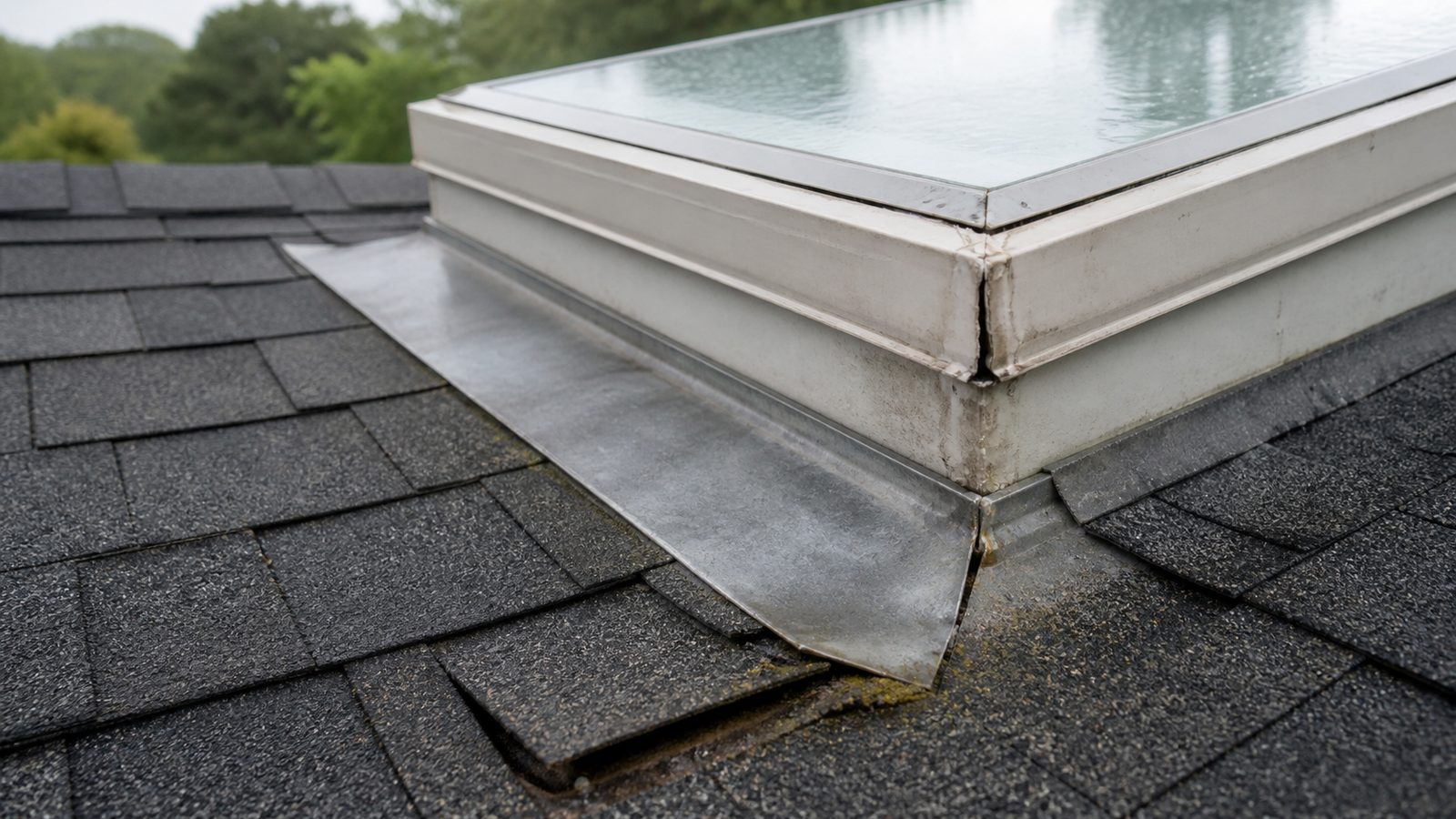
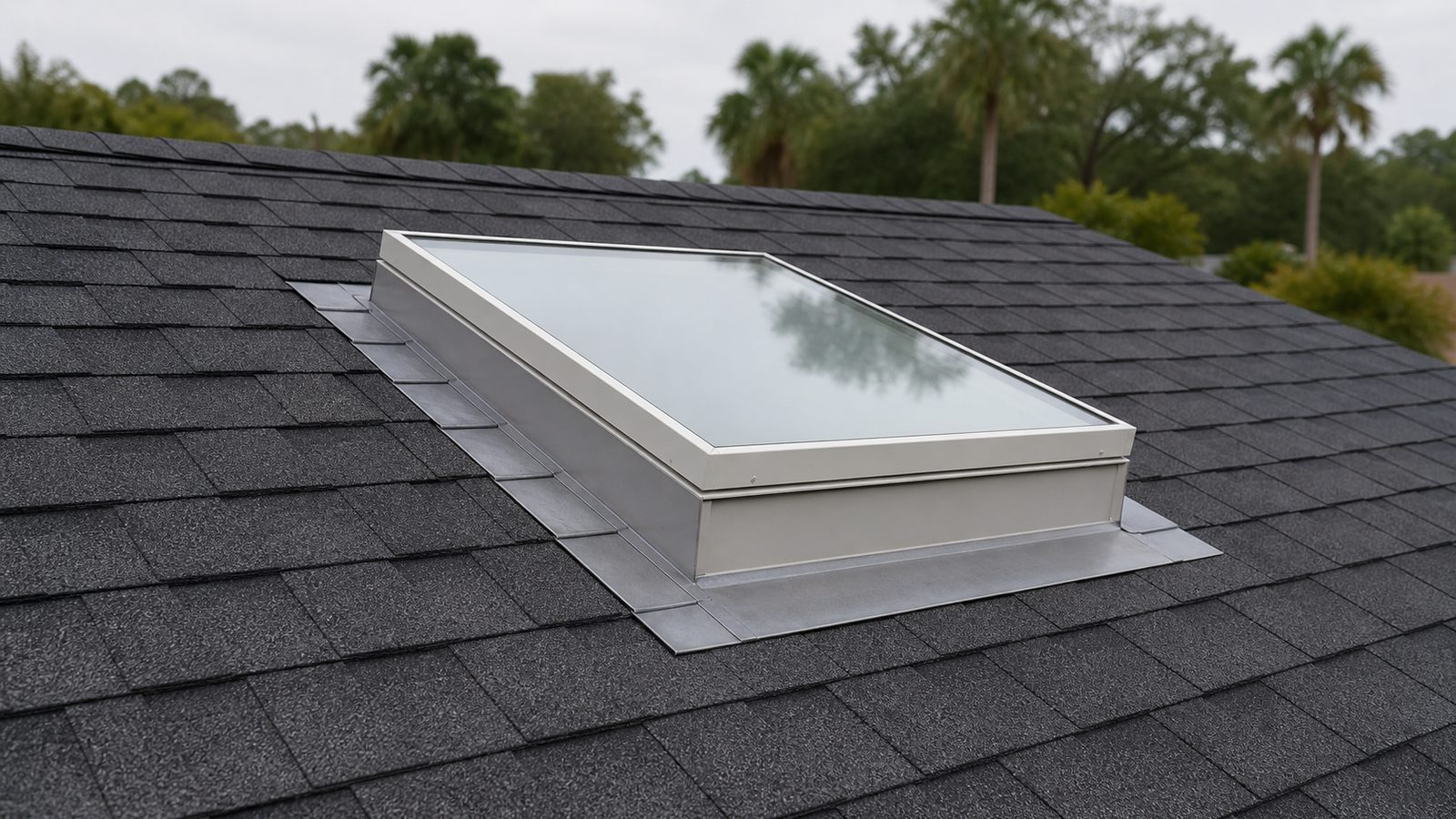
- Inspect the flashing. Check the metal flashing at the base, especially the uphill side where it meets shingles or tile. Lifted step flashing, gapped corners, or flashing repeatedly caulked over usually means someone chased the leak with sealant instead of fixing it. Curb-mounted skylights, common on flatter roofs, fail most at the curb corners. Deck-mounted skylights, common on steeper pitches, fail most along the side step flashing.
- Water test to confirm. With someone watching inside, run a hose starting low and working up, holding each section a few minutes before moving higher, to isolate exactly where water gets through.
- Reseal for a seal failure. Remove the old sealant completely, clean the surface, and apply a new bead rated for the frame material. Caulking over old caulk won't bond, and the leak returns.
- Reflash if the flashing failed but the frame is sound. Lift the shingles or tiles around the section, remove the compromised flashing, and install new step or head flashing with proper overlap, bottom to top. This is permitted roof-penetration work.
- Replace the unit if the frame, curb, or deck is compromised. Rotted curb wood, a warped frame, or soft decking underneath means sealing or reflashing is only temporary. That's a full skylight replacement, structural work requiring a licensed roofer and a permit.
- Address condensation separately. If step 1 points to condensation, fix it with better insulation and ventilation around the skylight shaft, not roof sealant.
Jacksonville Climate Considerations
Jacksonville's mix of high humidity, intense summer sun, and frequent afternoon thunderstorms is hard on skylight seals and flashing. UV exposure breaks down sealants and gaskets faster than in cooler, cloudier climates, so a seal that lasts 15 years elsewhere might need attention in 10 here. Near the coast, in Atlantic Beach, Neptune Beach, and Ponte Vedra, salt air accelerates corrosion on metal flashing and fasteners, so lower-grade flashing tends to fail sooner than it would further inland in Mandarin or Orange Park. June through November hurricane season brings wind-driven rain that can force water past a marginal seal even when the same skylight handles a normal shower fine, so a leak that only shows up during a named storm or a hard east wind still counts as real, not a fluke. Florida Building Code wind zone requirements matter most on a full replacement, since the new unit and its attachment need to meet the wind-load rating for your zone, especially closer to the coast.
What It Costs in Jacksonville (DIY vs. Hiring a Pro)
| Repair Type | DIY Cost | Professional Cost |
|---|---|---|
| Reseal glazing gasket | $30 to $75 in materials | $250 to $500 |
| Reflash (partial, one section) | $75 to $150 in materials, high risk if done wrong | $600 to $1,200 |
| Full reflash (curb or deck) | Not recommended as DIY | $1,200 to $2,500 |
| Skylight replacement, standard size | Not recommended as DIY | $1,800 to $4,500 depending on unit and roof access |
General 2026 Jacksonville-area ranges, varying with roof pitch, material, and access.
When to Call JK Prestige
If the leak traces to flashing rather than a simple seal, the skylight sits over a vaulted ceiling with tricky access, or you find soft decking once you open things up, that's licensed-contractor territory. We handle the permit, the tie-in with your existing roofing material, and the inspection, so the repair holds through the next hurricane season instead of becoming next year's callback.
No call center. No coordinator. A JK principal reviews every inquiry and replies with a real number, not a range, not a follow-up form.
Request Free Estimate →