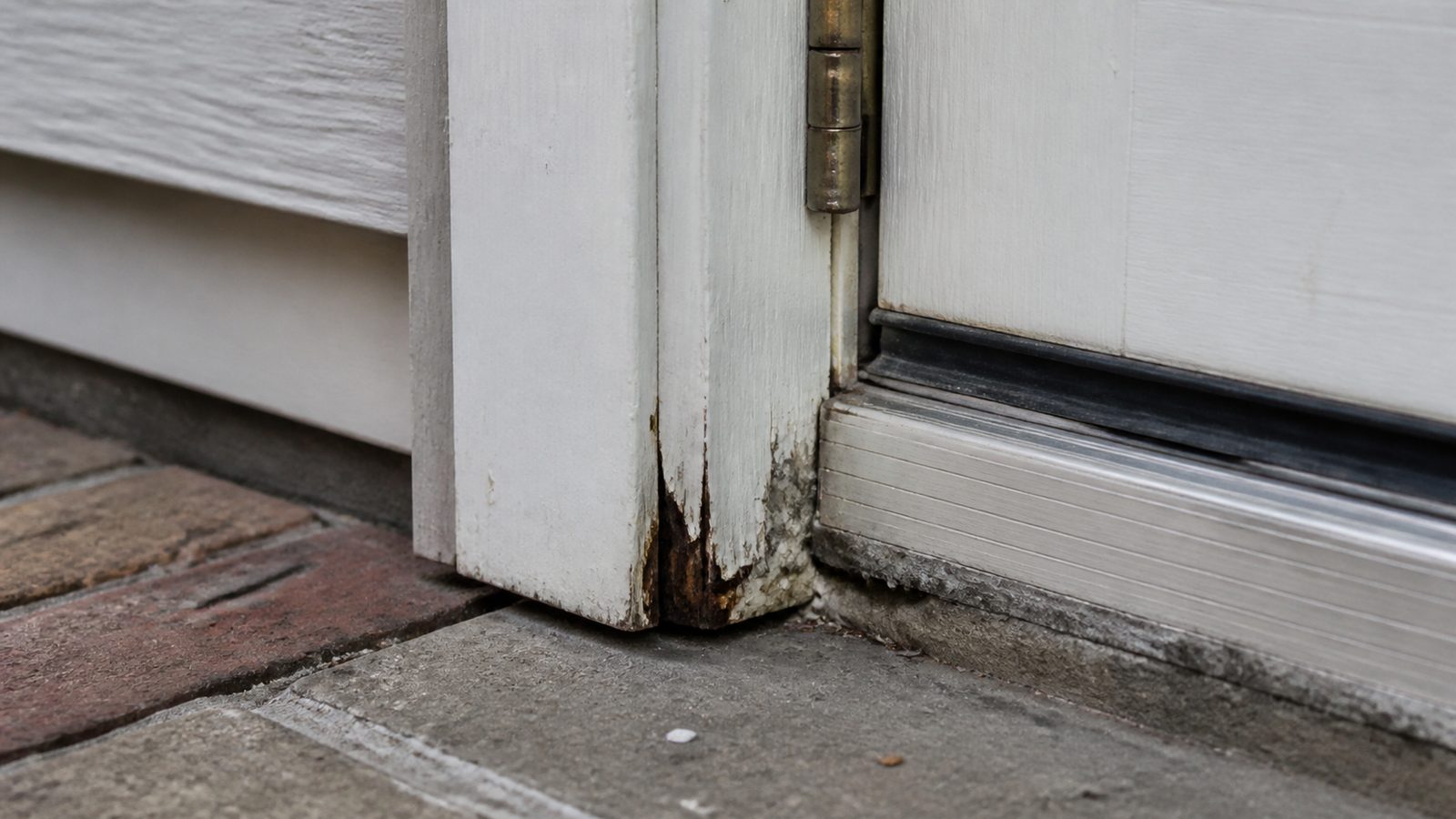
If you have ever pressed a screwdriver into the bottom corner of an exterior door frame and watched it sink in like the wood was cork, you already know the problem. In Jacksonville, the bottom six inches of a door jamb is one of the most common rot locations in the house, and it rarely means the whole door needs replacing. This guide covers when a patch repair is enough, when the jamb leg has to come out, and what has to happen at the sill and flashing so the rot does not come back.
When You Need a Permit in Jacksonville
Cutting out a rotted jamb leg section and splicing in new wood, sometimes called a Dutchman repair, along with re-caulking and repainting, is generally treated as routine maintenance and typically does not require a permit. That changes once you replace the entire door unit, including jamb, threshold, and brickmould, as one assembly. In Duval County a new exterior door is a permitted job, and the replacement unit has to carry Florida Product Approval or, in some cases, a Miami-Dade Notice of Acceptance label showing it meets the applicable wind load rating. If the rot goes far enough that you are also enlarging or reframing the rough opening, that is structural work and also requires a permit. The line between patch and full replacement is not always obvious until the trim is off, so confirm scope with the City of Jacksonville Building Inspection Division before cutting.
Tools and Materials
- Flat bar, oscillating multi-tool, chisel, and reciprocating saw
- Pin-type moisture meter to find the rot boundary
- Two-part epoxy wood consolidant and epoxy filler
- PVC trim stock matched to the existing jamb profile
- Treated lumber for any framing splice
- Self-adhering flashing tape and sill pan flashing
- Polyurethane or hybrid exterior sealant, not latex caulk
- Stainless exterior screws, wood glue, primer, level
Step-by-Step
- Diagnose the rot. Probe with a screwdriver or awl along both jamb legs and the sill. Use the moisture meter to find where wood reads dry again, since fungus travels ahead of visible damage.
- Remove trim. Pull the interior casing and exterior brickmould carefully so they serve as a template, or set aside if replacing in PVC.
- Cut out the damaged section. If rot is confined to the bottom six to twelve inches, cut a clean line above sound wood for a Dutchman splice. If damage reaches the hinge or strike area, or the wood crumbles across most of the leg, replace the full jamb leg instead, since a patch above a weak hinge screw will not hold.
- Inspect the framing. Once open, check the king stud, sill plate, and subfloor for softness or staining. This is the step people skip, and the one that matters most.
- Treat marginal wood. For wood that is soft but sound, saturate it with epoxy consolidant, cure, then fill voids with epoxy filler and sand flush.
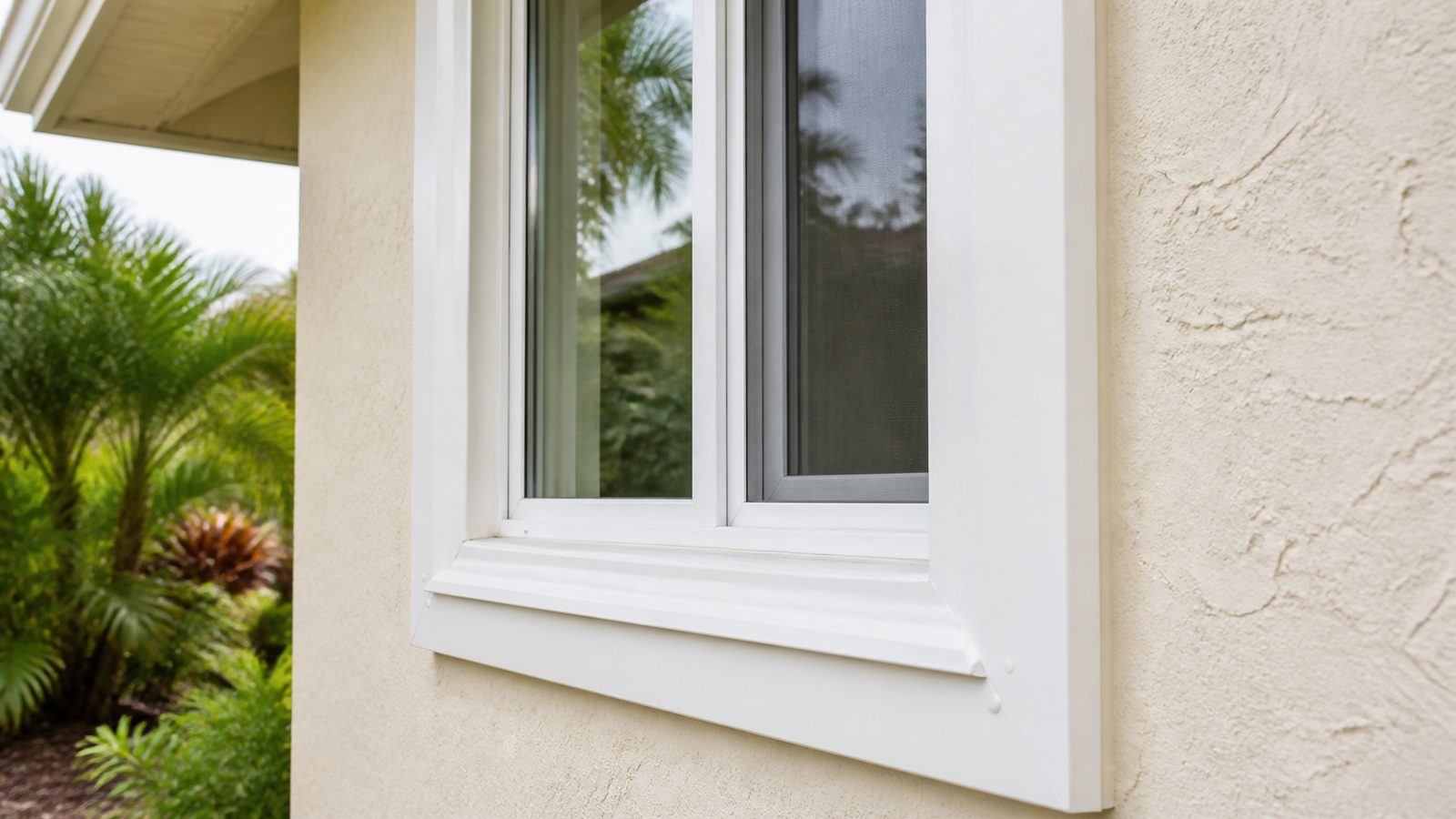
- Splice in new material and rebuild the sill. Cut the new section to match the profile, glue and screw it in place, backed by treated lumber at any framing tie-in. Slope the sill pan outward and lap flashing tape shingle-style so each layer sheds water down and out, running it up the jamb legs above the threshold.
- Reinstall trim, bedding it in sealant rather than caulking over it afterward, with fasteners set to avoid trapping water behind the trim.
- Seal, paint, and test. Prime bare wood, caulk the trim-to-siding joint, paint with exterior trim paint, then cycle the door and hose down the sill to confirm no leaks.
Jacksonville Climate Considerations
Jacksonville's exterior doors take a beating inland climates do not see. Summer thunderstorms bring driving rain that hits horizontally in a gust, and any entry with a shallow overhang gets soaked directly at the threshold and jamb base, which is why that bottom section fails first. Year-round humidity keeps wood moisture elevated even without an active leak, slowing drying and giving fungus time to establish. Northeast Florida is also active termite territory, so a soft jamb should be checked for insect activity, not just water damage, before you patch it. Homes near the river or coast deal with salt-laden air that accelerates fastener corrosion and breaks down caulk and paint faster than expected. Add strong year-round UV, which cracks sealant and paint film early, and you get a combination that consistently attacks the bottom few inches of the jamb, where water collects, dries slowly, and gets the least sun.
What It Costs in Jacksonville (DIY vs. Hiring a Pro)
These are rough planning estimates only, not quoted prices. Actual cost depends on rot extent, door size, and whether framing repair is needed.
| Scope of Work | DIY Materials Cost (est.) | Professional Cost (est.) |
|---|---|---|
| Small Dutchman patch, one jamb leg | $60 to $150 | $350 to $700 |
| Full jamb leg replacement, PVC stock | $150 to $350 | $700 to $1,400 |
| Full jamb replacement plus sill re-flashing | $250 to $500 | $1,200 to $2,500 |
| Full door unit replacement, permitted | $600 to $2,000+ (unit only) | $2,500 to $5,000+ |
When to Call JK Prestige
A Dutchman patch on a single soft spot is a reasonable weekend project for a confident DIYer with the right tools. Call a licensed contractor when damage runs above the lower third of the jamb, when you see or smell rot in the framing behind it, when the subfloor near the threshold feels spongy, or when the repair means pulling the whole door unit and dealing with permitting and wind-load approval. JK Prestige handles these repairs regularly across Jacksonville and can tell you honestly, before any wall is opened, whether you need a patch, a jamb leg, or a full unit replacement, and what that means for permitting.
No call center. No coordinator. A JK principal reviews every inquiry and replies with a real number, not a range, not a follow-up form.
Request Free Estimate →