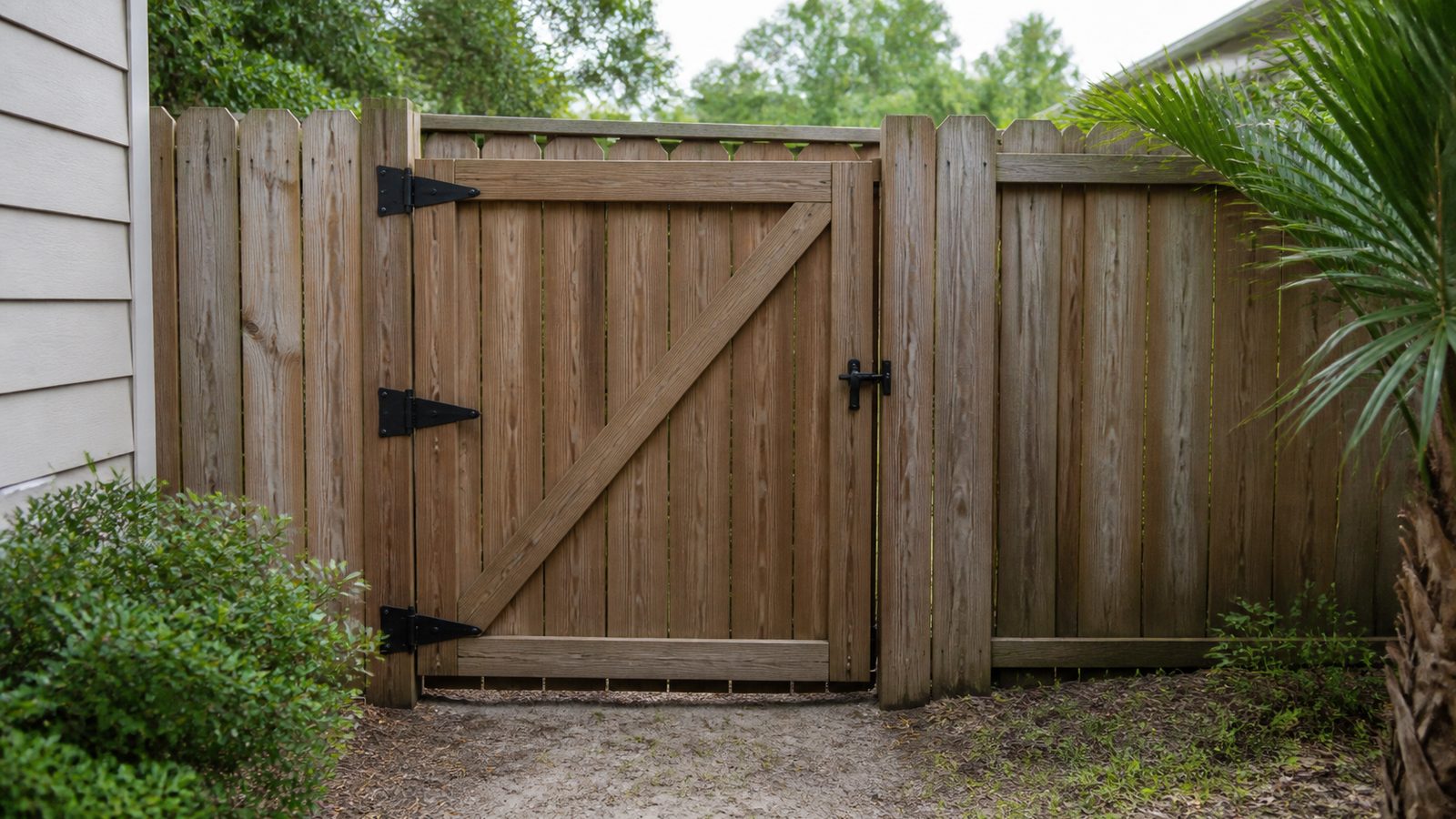
If your wood fence gate has started dragging on the ground, catching on the latch, or hanging at a visible angle, you are not alone. It is one of the most common repair calls we get around Jacksonville, and it is usually fixable in an afternoon without replacing the whole gate. The culprits are almost always the same three things: a hinge post loosened in our sandy soil, hardware corroded by salt air, or a frame never braced against racking. This guide covers diagnosing the cause, choosing between an anti-sag cable kit and a diagonal brace, resetting a wobbly hinge post, and picking hardware that will hold up here.
When You Need a Permit in Jacksonville
Repairing an existing gate, meaning tightening hinges, replacing hardware, adding a brace or turnbuckle, resetting the same post in the same hole, or swapping rotted pickets, is routine maintenance and does not typically require a permit from the City of Jacksonville. Permitting comes into play with new fence construction: building a new fence or replacing most of an existing one generally requires a Duval County permit, plus height limits and setback rules that depend on the yard the fence sits in. If your gate is part of a fence enclosing a pool, Florida's pool safety law requires it to be self-closing and self-latching, with the latch out of a small child's reach, whether repairing or replacing. Permit thresholds and pool barrier specifics are set and enforced locally, so confirm your situation with the City of Jacksonville Building Inspection Division before you start, especially if the repair grows into more than fixing what is already there.
Tools and Materials
- Tape measure, level, speed square
- Drill/driver with exterior-rated bits
- Socket wrench set for lag bolts
- Post level or a helper to plumb the post
- Shovel or post hole digger, if resetting a post
- Fast-setting concrete mix, if the footing has failed
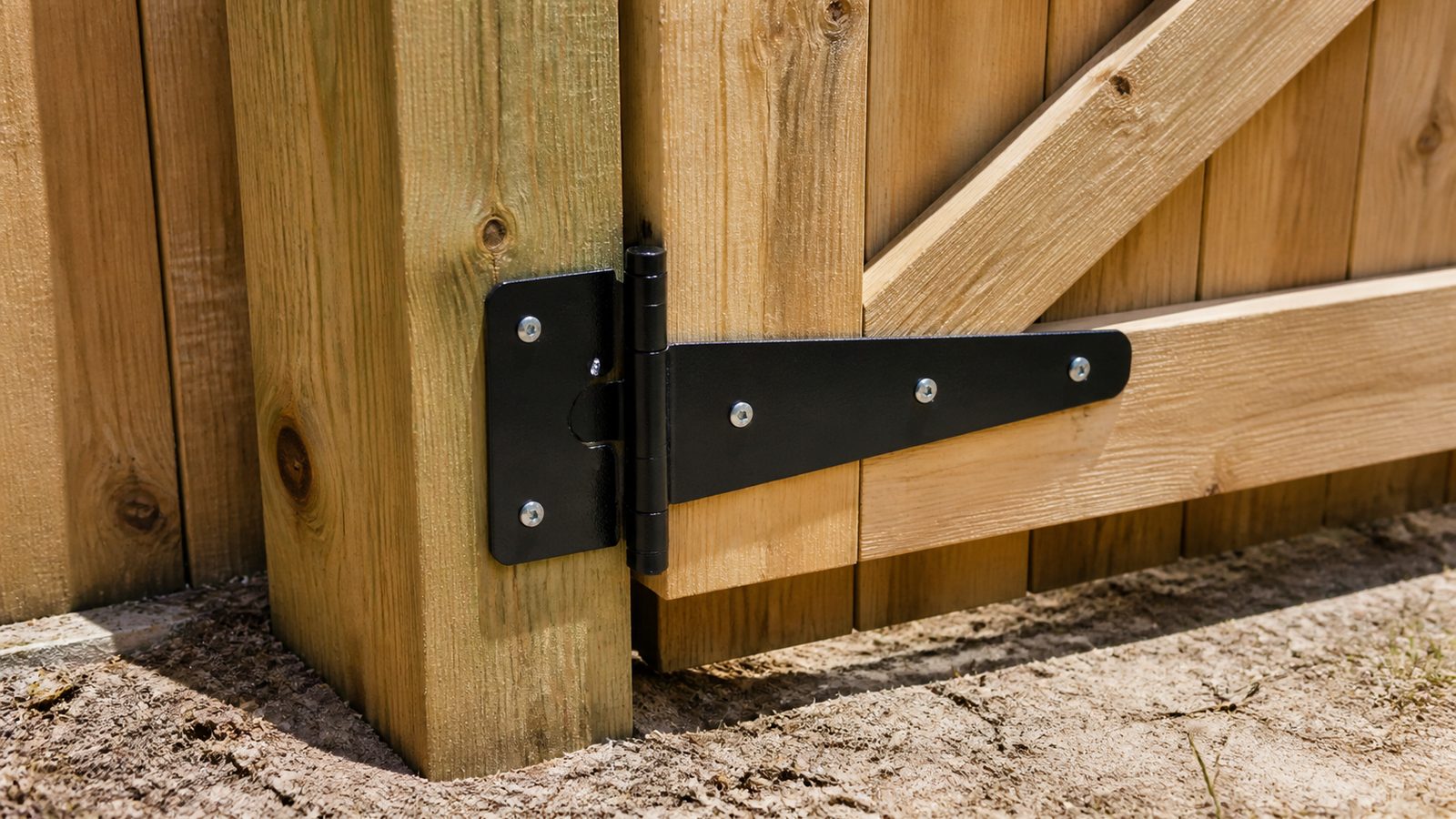
- Stainless steel or hot-dip galvanized hinges, screws, and lag bolts
- Anti-sag cable and turnbuckle kit, or pressure-treated 2x4 for a diagonal brace
- Exterior wood glue and deck screws for frame joints
- Wood filler or epoxy consolidant for minor rot
Step-by-Step
- Diagnose the problem. Open and close the gate slowly and watch where the movement comes from. If the whole post leans when pushed, the footing has failed. If the post is solid but the frame has gone parallelogram-shaped, it has racked and needs bracing, not a new post.
- Check and tighten hardware first. Loose hinge screws are the single most common cause of a dragging gate. Remove rusted screws, fill stripped holes with wood glue and toothpicks or a golf tee, let dry, and re-drive with longer stainless screws.
- Reset the hinge post if it is leaning. Dig out the base, remove cracked or crumbled concrete, plumb the post, and repour with fast-setting concrete, crowned so water sheds away. Let it cure fully, typically 24 to 48 hours, before rehanging.
- Choose your anti-sag fix. A cable kit runs a turnbuckle-tensioned cable corner to corner and is the easiest retrofit on a gate already hung, since you tighten it as the frame settles. A diagonal wood brace, run bottom hinge-side to top latch-side, is more permanent and handles heavier gates and wind better, but means partly disassembling the frame to install.
- Rehang, adjust, and seal. Reattach the gate, check that it swings freely, adjust the latch if the post shifted, and seal any new cuts or joints against moisture.
Jacksonville Climate Considerations
Jacksonville's coastal air is hard on fence hardware. Near the beaches or the Intracoastal, standard zinc-plated screws and hinges can start rusting within a year, which is why stainless or true hot-dip galvanized hardware is worth the cost metro-wide, not just near the water. Humidity also swells untreated wood in the wet season and lets it shrink back in drier stretches, and that movement loosens hinge screws and opens frame joints over time. Sandy soil, common across Duval County, does not hold a post as firmly as denser clay, so a shallow footing is a frequent cause of a leaning post. Check the post base and bottom rail for termite damage or rot, where moisture sits longest. If rebuilding rather than repairing, size bracing for hurricane-season wind, since a gate without a brace or cable is one of the first things to rack or blow off in a storm.
What It Costs in Jacksonville (DIY vs. Hiring a Pro)
These are rough estimates based on typical Jacksonville materials and labor costs, not official pricing.
| Repair | DIY Cost (materials) | Hiring a Pro |
|---|---|---|
| Hardware tune-up (hinges, screws, latch) | $20 to $50 | $100 to $175 |
| Anti-sag cable kit install | $25 to $40 | $125 to $200 |
| Diagonal brace install | $30 to $60 | $150 to $250 |
| Hinge post reset (footing repair) | $40 to $90 | $250 to $450 |
| Full gate rebuild | $150 to $300 | $400 to $700 |
When to Call JK Prestige
A hardware tune-up or cable install is a reasonable weekend project for most homeowners. It is worth calling a contractor when the hinge post is rotted below grade, the fence itself needs more than a repair, the gate is a required pool barrier and must meet self-closing and self-latching standards with certainty, or you would rather have it done right the first time with hardware rated for coastal conditions. As a Jacksonville-based, principal-led general contractor, JK Prestige handles both the small fix and a larger fence or post replacement if the repair turns out more involved than expected.
No call center. No coordinator. A JK principal reviews every inquiry and replies with a real number, not a range, not a follow-up form.
Request Free Estimate →