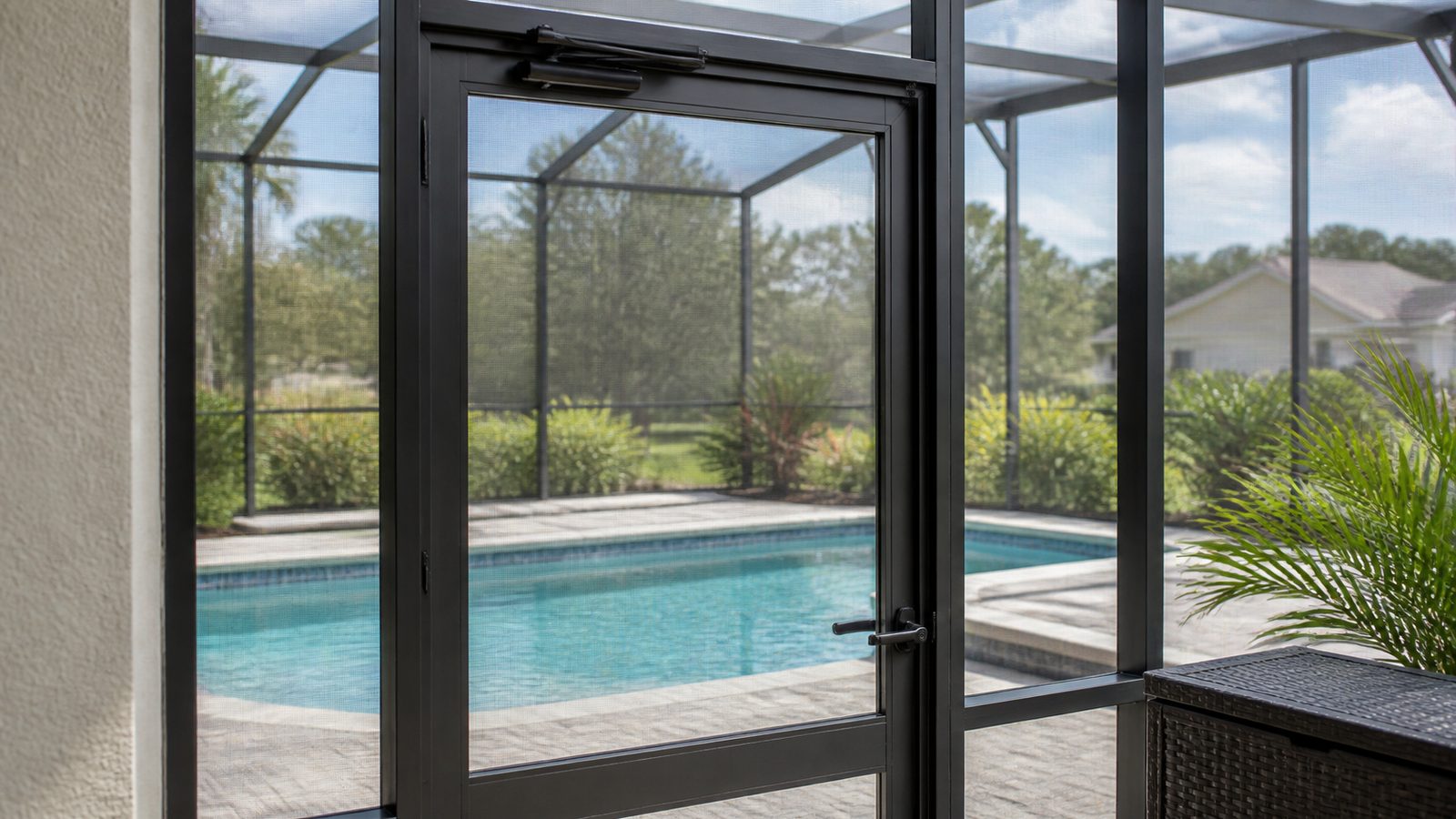
If your pool or lanai screen door sags at the corner, drags on the track, or the torn mesh is letting in every no-see-um in the yard, you don't need to replace the whole enclosure. Most screen enclosure door problems in Jacksonville come down to a handful of worn parts: rollers, spline, hinges, or the door closer. This guide walks through diagnosing the issue and fixing it yourself, along with what to expect if you'd rather hand it to a contractor.
When You Need a Permit in Jacksonville
Repairing an existing screen door, replacing rollers, re-spanning a torn screen panel, swapping a closer or hinges, or straightening a sagging frame is routine maintenance. The City of Jacksonville and Duval County do not require a permit for this kind of like-for-like repair.
The line gets crossed if you're building a new screen enclosure or rebuilding one from the ground up, including replacing the aluminum frame structure itself. That work falls under the Florida Building Code's requirements for aluminum screen enclosures, which include wind-load engineering specific to our coastal wind zone, and it needs a permit through the City of Jacksonville Building Inspection Division before work starts.
There's a second issue that matters even for a simple door repair: if the screen door is part of your pool's required safety barrier, Florida's pool safety law (the Residential Swimming Pool Safety Act) requires the door to be self-closing and self-latching, with the latch release out of a small child's reach. If you're repairing or replacing the closer or latch hardware on a pool-barrier door, make sure the replacement parts still meet that self-closing, self-latching standard. This isn't a permit issue, it's a safety and liability one, especially if you have young kids or grandkids in and out of the house.
Tools and Materials
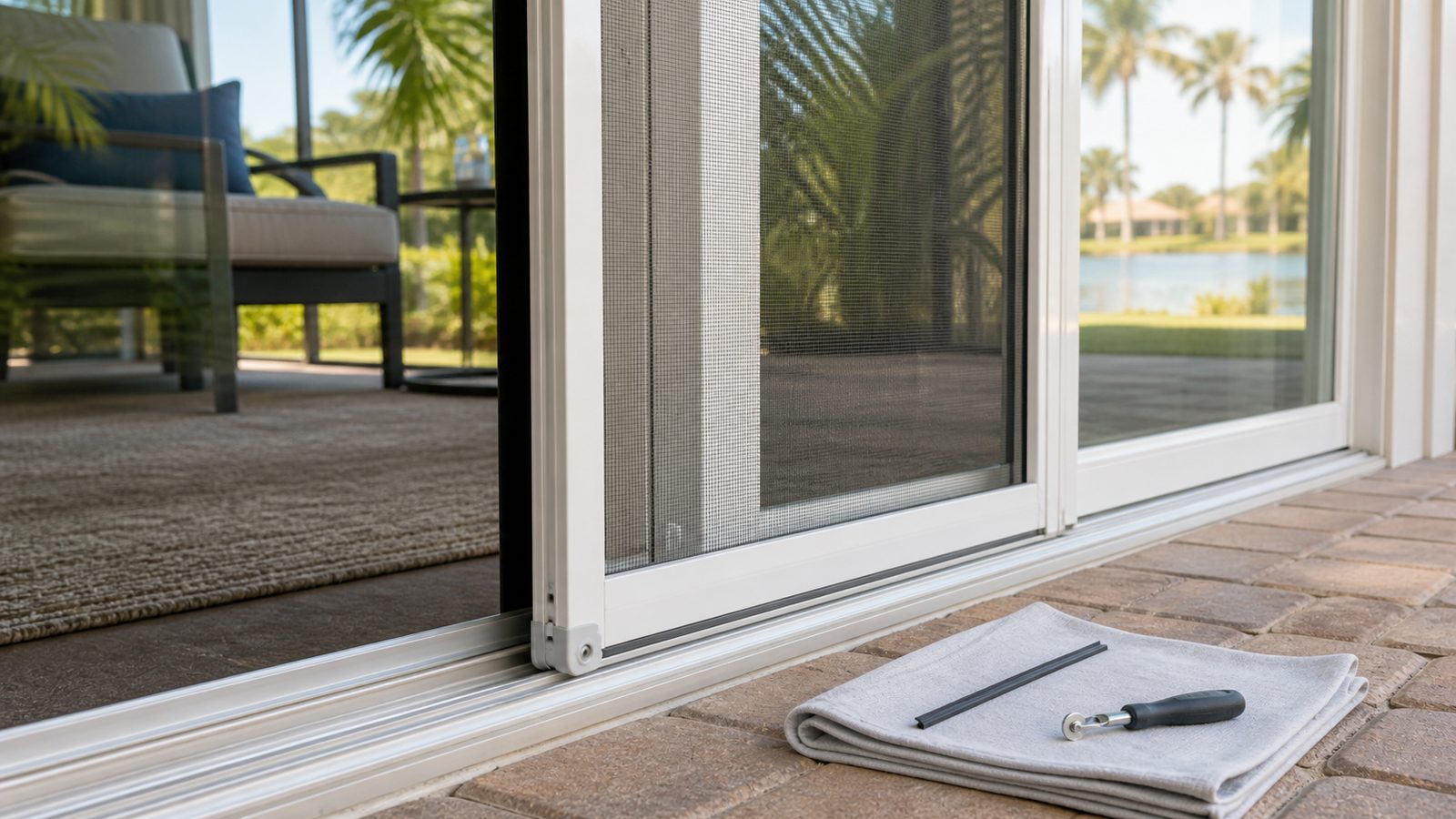
- Replacement door rollers (top and bottom, sized to your track)
- Spline (rubber cord) and a spline roller tool
- New screen mesh (fiberglass or pet-resistant, cut to size)
- Door closer (pneumatic or spring-hinge style)
- Replacement hinges and door handle/latch
- Hacksaw or aluminum-cutting blade
- Flathead screwdriver and a cordless drill
- Tape measure and utility knife
- Small level
Step-by-Step
- Diagnose the actual problem. Lift and push the door through its swing. A door that drags on the bottom track usually has worn or flat-spotted rollers. A door that won't latch or bounces back open usually has a bad closer or misaligned strike plate. A door that sags at the outer corner, away from the hinges, often has a stretched or loose corner and needs the frame re-squared, not just new rollers.
- Remove the door from the frame. Most screen doors lift out of the track once you tilt the top corner free of the header. Set it on a flat surface like sawhorses or a table so you can work on it without it racking out of square.
- Replace worn rollers. Rollers are usually held by a single screw at each corner. Back the screw out, pull the old roller, and match the new one for wheel diameter and offset before installing. Adjust the roller's height screw so the door sits level and rolls freely without scraping the track.
- Re-spline a torn or loose screen. Pry the old spline out of the frame's spline channel with a flathead screwdriver and pull the old screen. Lay new mesh over the frame with a couple inches of overhang, then use the spline roller to press new spline into the channel, pulling the screen taut as you go. Trim the excess mesh with a utility knife after the spline is fully seated.
- Adjust or replace the door closer. If the door slams, closes too slowly, or won't latch, the closer's tension screw usually needs adjusting first, it's a small screw on the end cap. If adjusting doesn't fix it, the closer itself is likely worn out and a direct replacement, matched to your door's weight, solves it.
- Rehang and realign the door. Set the door back in the track, check it with a level, and confirm it swings, latches, and self-closes properly. Tighten all hinge screws and confirm the latch catches from a light push, this matters most if the door is part of your pool barrier.
Jacksonville Climate Considerations
Jacksonville's intense UV exposure breaks down screen mesh and plastic roller components faster than in milder climates, so screens here often need replacing every several years rather than lasting indefinitely. High humidity swells wood-framed doors and can cause hinges to bind. If your home is anywhere near the St. Johns River, the Intracoastal, or the beaches, salt air accelerates corrosion on aluminum frames, screws, and door closers, so it's worth using stainless or coated hardware when you replace parts. Enclosures also take real wind load during Jacksonville's hurricane season, so a door that's already loose or poorly latched is more likely to rack or blow open in a storm. And a tight, properly spanned screen isn't just cosmetic, it's what keeps the no-see-ums and mosquitoes that Northeast Florida is known for out of your lanai in the evenings.
What It Costs in Jacksonville (DIY vs. Hiring a Pro)
| Repair | DIY Cost | Pro Cost (Jacksonville area) |
|---|---|---|
| Roller replacement (pair) | $15 to $40 in parts | $100 to $200 |
| Re-spline one screen panel | $20 to $50 in materials | $75 to $150 per panel |
| Door closer replacement | $25 to $60 | $100 to $175 |
| Full door rebuild (frame, screen, hardware) | $80 to $150 in materials | $250 to $450 |
Prices vary by door size, screen type, and whether a service call minimum applies. Most Jacksonville screen and enclosure companies charge a trip fee that gets rolled into the job if you bundle several repairs at once.
When to Call JK Prestige
If the frame itself is bent, corroded, or out of square, or if the door repair is really symptom of a bigger enclosure problem like storm damage or failing fasteners, it's worth having a licensed contractor take a look before you spend money on parts that won't fix the underlying issue. JK Prestige Construction handles enclosure and structural repairs across Jacksonville and can tell you honestly whether a door fix will hold or whether the enclosure needs more attention. Reach out for an on-site assessment if you're not sure which category your problem falls into.
No call center. No coordinator. A JK principal reviews every inquiry and replies with a real number, not a range, not a follow-up form.
Request Free Estimate →