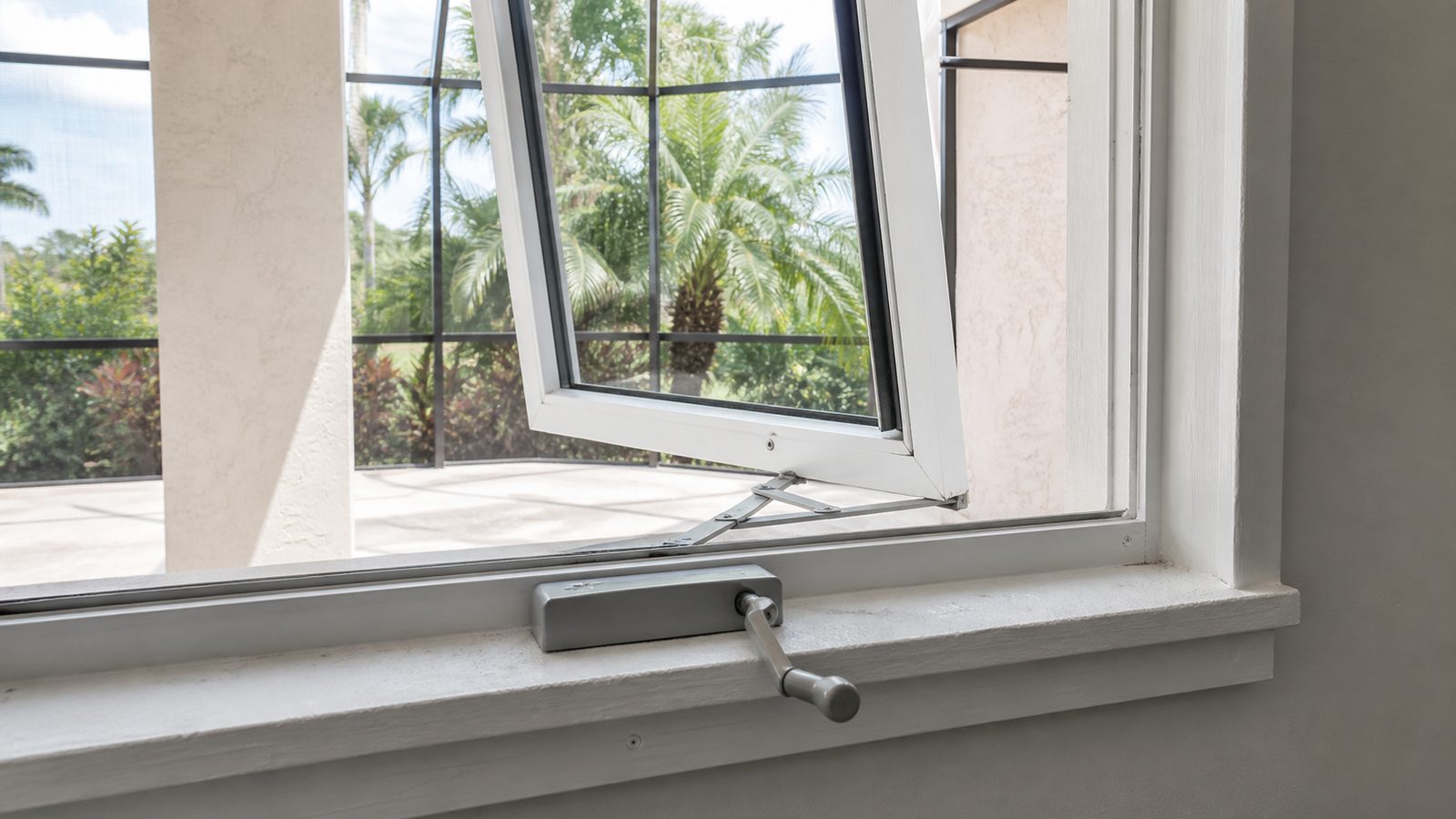
When a casement window cranks with no resistance, grinds instead of turning smoothly, or will not open at all, the operator, the geared mechanism behind the handle, is almost always the culprit. Jacksonville homes see this repair often, because heat, humidity, and salt air work against the small steel gears and hinge arms inside the frame. This guide covers identifying what you have, ordering a replacement that matches the brand and handing, and managing the corrosion behind most failures.
When You Need a Permit in Jacksonville
Replacing a worn or broken crank operator is hardware repair, not window replacement. You are swapping a mechanism for one that fits the same opening, without touching the frame, glazing, or structural attachment, so it falls under routine maintenance and does not trigger a permit from the City of Jacksonville.
The line gets crossed if the failure is a symptom of something bigger, such as a rotted frame around the mounting screws or a decision to replace the whole window. Full window replacement in Duval County generally does require a permit, since it affects impact resistance and energy compliance, and in the wind-borne debris region covering most of Jacksonville, replacements need to meet impact rating requirements or be paired with approved shutter protection. If your project has moved from repair into replacement, call the City of Jacksonville Building Inspection Division before starting. Nassau, Clay, and St. Johns counties run their own permitting offices, so homeowners in Fernandina Beach, Orange Park, or St. Augustine should confirm requirements with that county rather than assuming Duval's rules apply.
Tools and Materials
- Replacement casement operator matched to your window's brand and handing (left or right)
- Phillips and stubby screwdrivers
- Small flathead screwdriver to release the sash track shoe
- Penetrating oil for seized screws or corroded arms
- Wire brush or fine steel wool for corrosion
- Silicone-based lubricant, not household oil
- Replacement mounting screws, ideally stainless steel
- Painter's tape to protect the sill and sash finish
- Flashlight for inspecting the housing and track
- Camera or phone for photographing the old part
Step-by-Step
- Open the window as far as the failing operator allows to access the hinge arm and track shoe without fighting a closed sash.
- Locate the manufacturer's name or logo, usually stamped on the cover plate or gearbox housing. Truth Hardware, Amesbury, Ashland, Roto, and Wright Products are common in this region. If the stamp is worn away, check the window's jamb sticker, which often lists the hardware maker even after the window brand is gone.
- Determine the handing before ordering. Stand outside facing the closed window. Hinges on the left with the sash swinging right means a left-hand operator; hinges on the right means right-hand. This is the single most common ordering mistake.
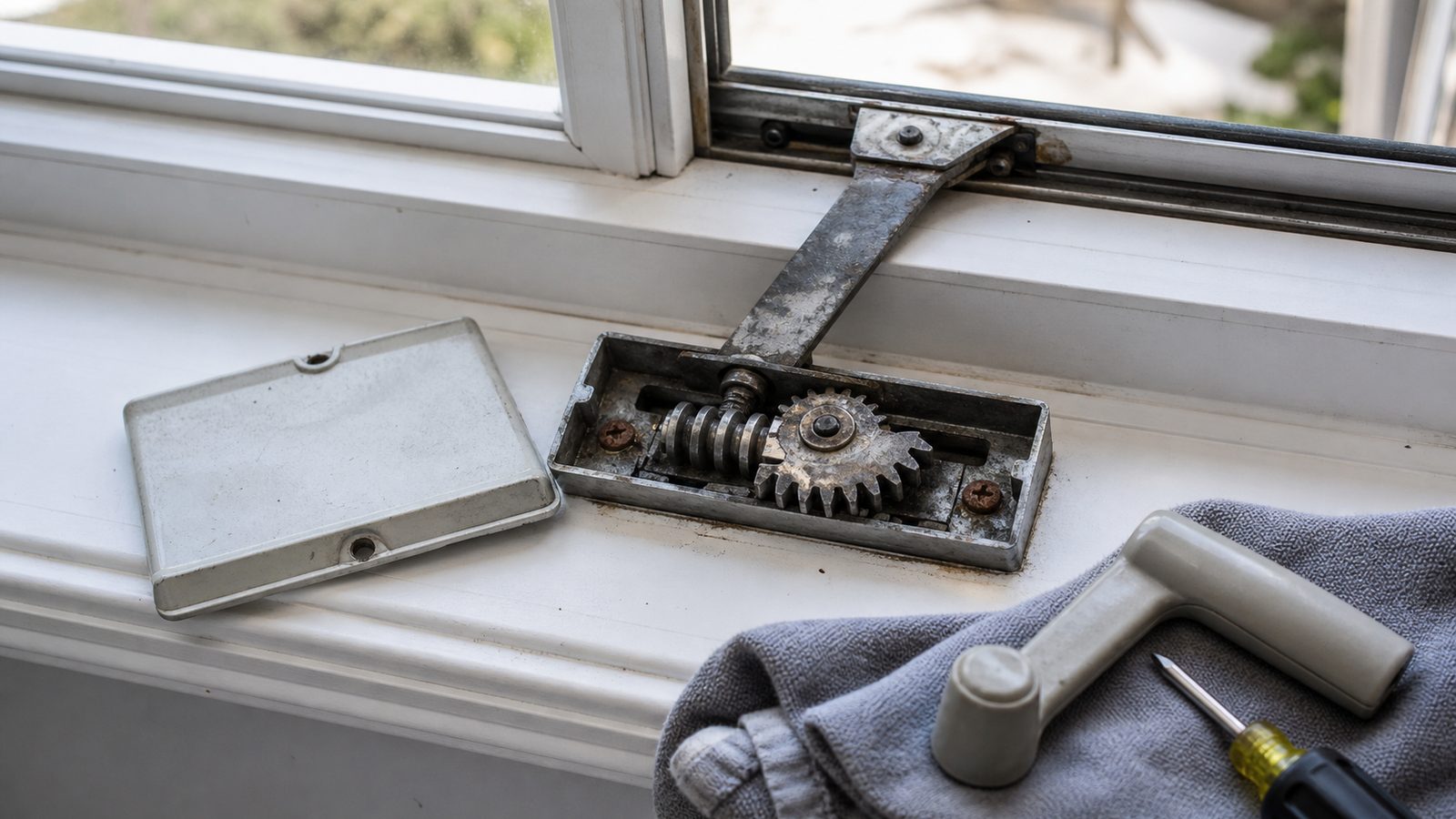
- Remove the interior cover plate to expose the gearbox mounting screws.
- Disengage the arm from the sash track shoe. Crank until the roller reaches the end of the track, then pop it free with a small flathead. Forcing this can bend the arm or crack the track.
- Remove the mounting screws and lift out the old operator. Corroded screws often need penetrating oil and a soak before they back out without stripping.
- Photograph the old unit and measure the mounting hole spacing. A clear photo with a ruler in frame is what a supplier uses to confirm an exact match.
- Clean the mounting surface and track with a wire brush, removing rust, corrosion, and old caulk residue.
- Position the new operator, hand-thread the screws, and engage the arm into the track shoe. Test the full cycle before final tightening. Binding usually means misalignment or debris in the track.
- Tighten the screws, lubricate the gears and track with silicone spray, and reinstall the cover plate. Confirm the handle turns freely and the window seals fully when closed.
Common Mistakes to Avoid
- Ordering by window brand alone instead of confirming the hardware manufacturer, which often changed over the years
- Getting the handing backward by checking indoors instead of from outside
- Forcing a jammed crank instead of disengaging the arm first, which can bend it or crack the track shoe
- Using household oil instead of silicone lubricant, which gums up with dust and grit
- Reinstalling a corroded arm or track shoe alongside a new gearbox, which just delays the next failure
Jacksonville Climate Considerations
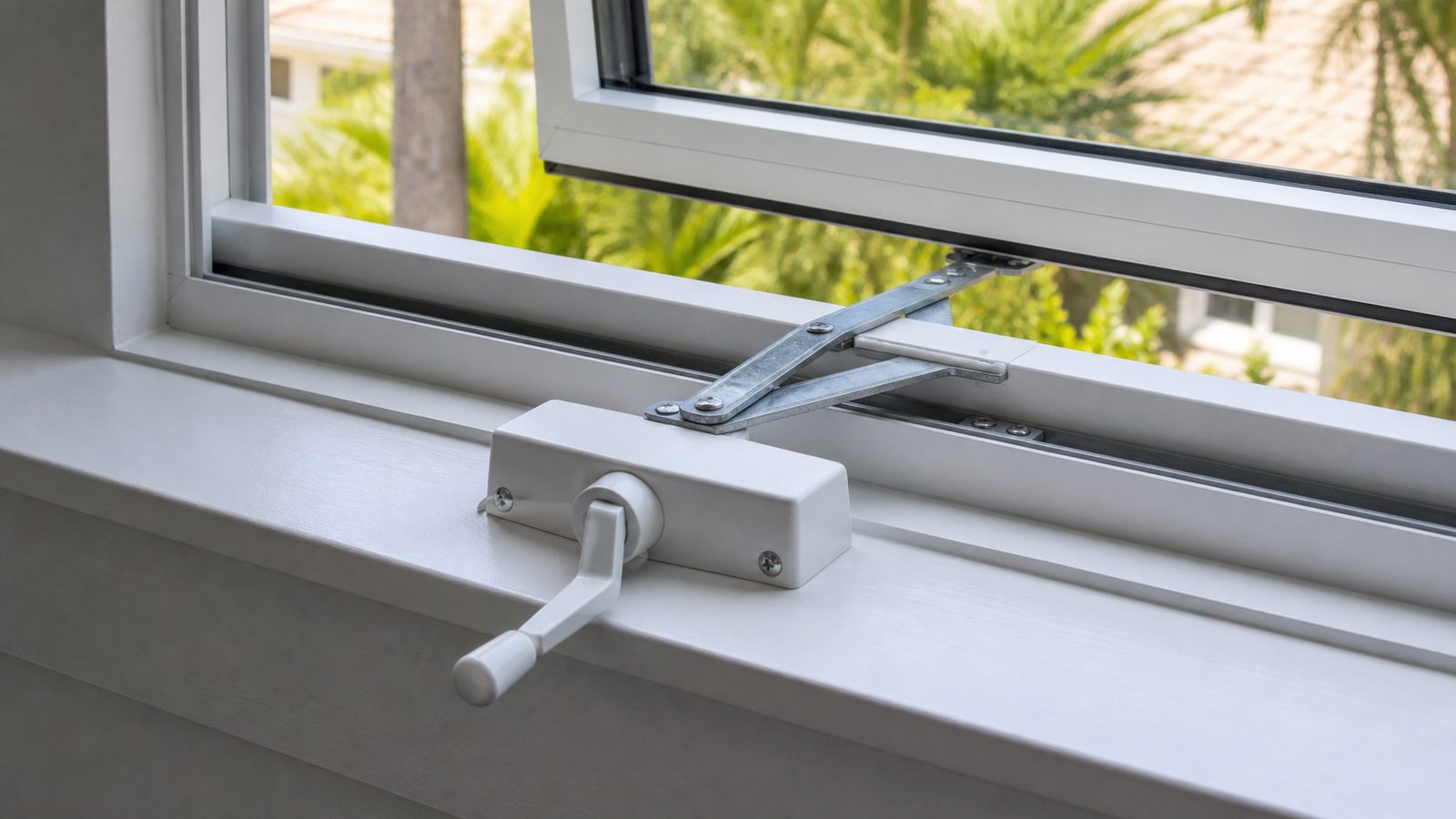
Salt air drives most operator failures near the beaches and along the Intracoastal, from Atlantic Beach and Jacksonville Beach through Ponte Vedra. Salt-laden humid air corrodes standard zinc-plated steel gears and screws faster than inland exposure, and a pitted gearbox is usually beyond repair. Coastal properties are worth upgrading to stainless steel or marine-rated hardware.
Away from the coast, year-round humidity and long summers still stress window hardware. Heat cycling expands and contracts the frame, gradually shifting track alignment. Sand and grit tracked in from storms or yard work settle into the hinge channel and wear moving parts like sandpaper. On older windows with plastic gear components, sustained UV exposure through south and west-facing glass can make gears brittle, so the crank fails suddenly instead of wearing down gradually.
What It Costs in Jacksonville (DIY vs. Hiring a Pro)
| Approach | Typical Cost Range | Notes |
|---|---|---|
| DIY, operator only | $25 to $75 per unit | Depends on brand match and stainless upgrade |
| DIY, operator plus arm and track shoe | $50 to $120 | For corrosion beyond the gearbox |
| Professional service call | $150 to $300 per window | Diagnosis, sourcing, and labor |
| Multiple windows in one visit | Often discounted per window | Worth batching aging casements |
These are general planning ranges, not a quote. Actual pricing depends on hardware brand, window count, and site access.
When to Call JK Prestige
If you cannot identify the operator brand, the handing is unclear, or corrosion has spread into the arm, track, or mounting frame, it is time to bring in a professional. JK Prestige can source hard-to-match hardware, check for water damage around a failed seal, and recommend replacement when repair no longer makes sense.
No call center. No coordinator. A JK principal reviews every inquiry and replies with a real number, not a range, not a follow-up form.
Request Free Estimate →