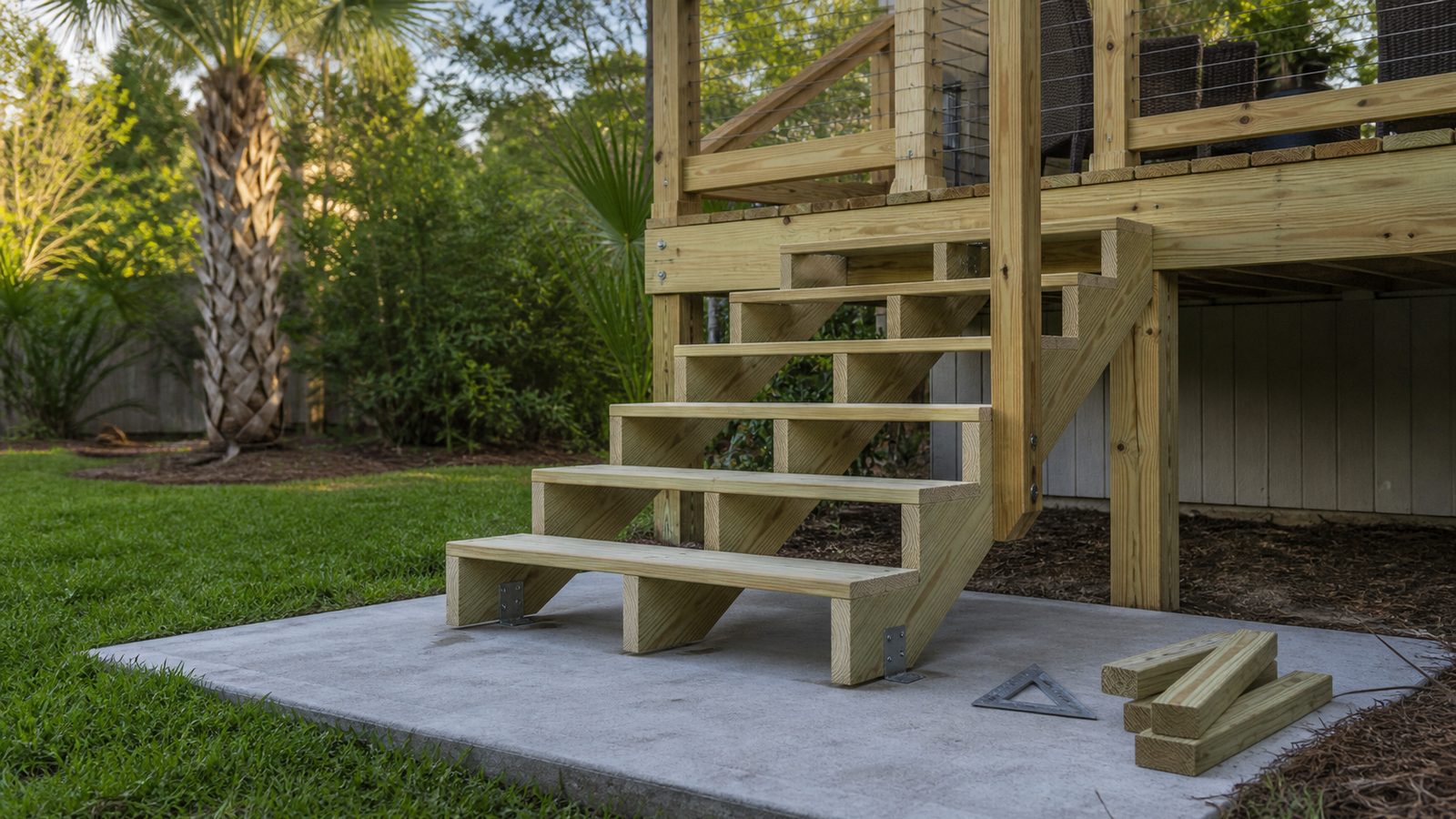
If a deck stair bounces or flexes underfoot, there is a good chance the stringers, the diagonal boards that carry every step, have started to rot. In Jacksonville's climate, ground contact moisture and long humid stretches can take a stringer from solid to soft faster than homeowners expect. Replacing stair stringers is exacting work because stairs are a life safety item. Every riser has to match the one next to it almost exactly, or someone's foot will catch on the way down. This guide covers what a Jacksonville homeowner needs to know before pulling out the old stringers, including when the city wants a permit, how to lay out even risers, and which hardware holds up near the coast.
When You Need a Permit in Jacksonville
A straight like-for-like repair, swapping a rotted stringer for a new one of the same size and location, is often treated as maintenance in many jurisdictions. But stair and deck framing is structural, and Duval County and the City of Jacksonville commonly require a permit and inspection for structural deck and stair work, especially anything attached to the house or elevated off the ground. Call the City of Jacksonville Building Inspection Division before you cut a single board and describe exactly what you are replacing, since the answer depends on the deck's height, its attachment to the house, and how much of the structure you are touching. Rental properties can carry extra inspection requirements, and a deck in a flood zone, which covers property near the St. Johns River and the Intracoastal, can have extra rules about work below the base flood elevation. Do not assume a small stair repair is exempt. A five minute phone call is cheaper than a stop work order.
Tools and Materials
- Tape measure, framing square, and speed square
- Stair gauge clips or a stringer layout tool
- Circular saw and a handsaw or jigsaw for the seat cuts
- Level and string line for checking the landing
- Pressure treated 2x12 lumber rated for ground contact
- Hot dip galvanized or stainless structural screws rated for treated lumber
- Stair stringer connectors or hurricane style hangers
- Concrete mix or paver base material for the landing pad
- Ledger hardware if the stringers attach to a ledger board
Step-by-Step
- Measure total rise and total run. Measure from the top decking surface down to the finished grade or landing pad for your total rise. Measure the horizontal distance the stairs will cover for your total run.
- Calculate the number of risers. Divide the total rise by a target riser height in the range typically used for exterior stairs, then round to a whole number. Divide the total rise by that whole number to get your exact riser height, since every riser in the run has to match. Uneven risers, even by a fraction of an inch, are a common cause of trips on outdoor stairs.
- Lay out and cut the stringers. Set stair gauge clips on your framing square to the riser height and tread depth, then walk the square down a piece of pressure treated 2x12 to mark each step. Cut one stringer first, test fit it against the deck rim and landing, then use it as a template so the rest match exactly.
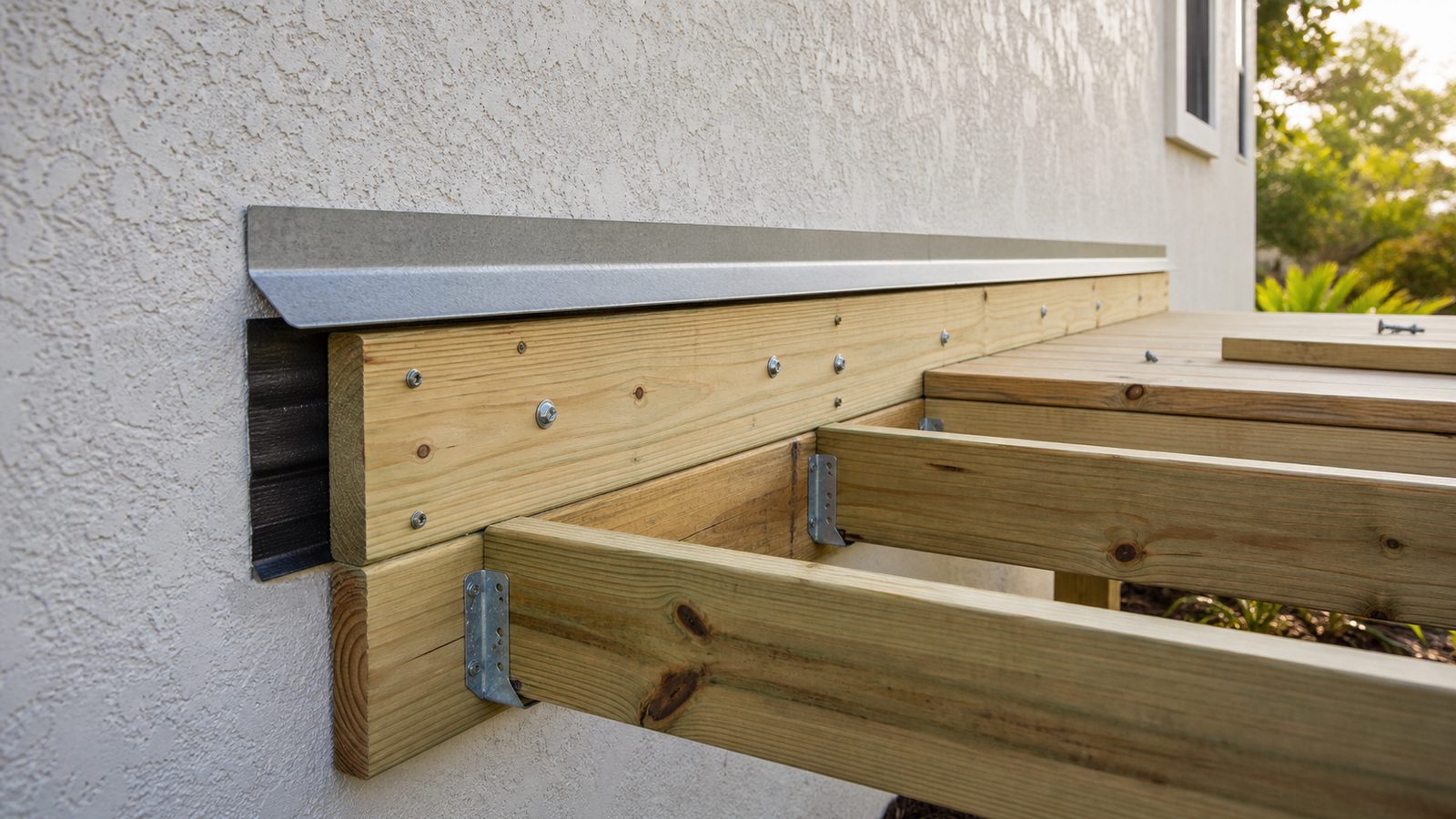
- Attach at the top. Use stringer hangers or approved connectors at the ledger or rim joist rather than toenailing, which loosens over time.
- Set the landing pad. The bottom of the stringers needs a solid, level, properly draining surface, a concrete pad or compacted paver base. A stringer resting on soil or mulch will rot again quickly.
- Check code minimums before you finish. Codes set a maximum riser height, a minimum tread depth, and a graspable handrail requirement once a stair passes a small number of steps. Do not guess at these numbers. Confirm current figures with the City of Jacksonville Building Inspection Division or your inspector before finalizing cuts.
- Install treads, risers, and rail. Attach treads with corrosion resistant fasteners, add a handrail if required, and walk test the assembly before calling it done.
Jacksonville Climate Considerations
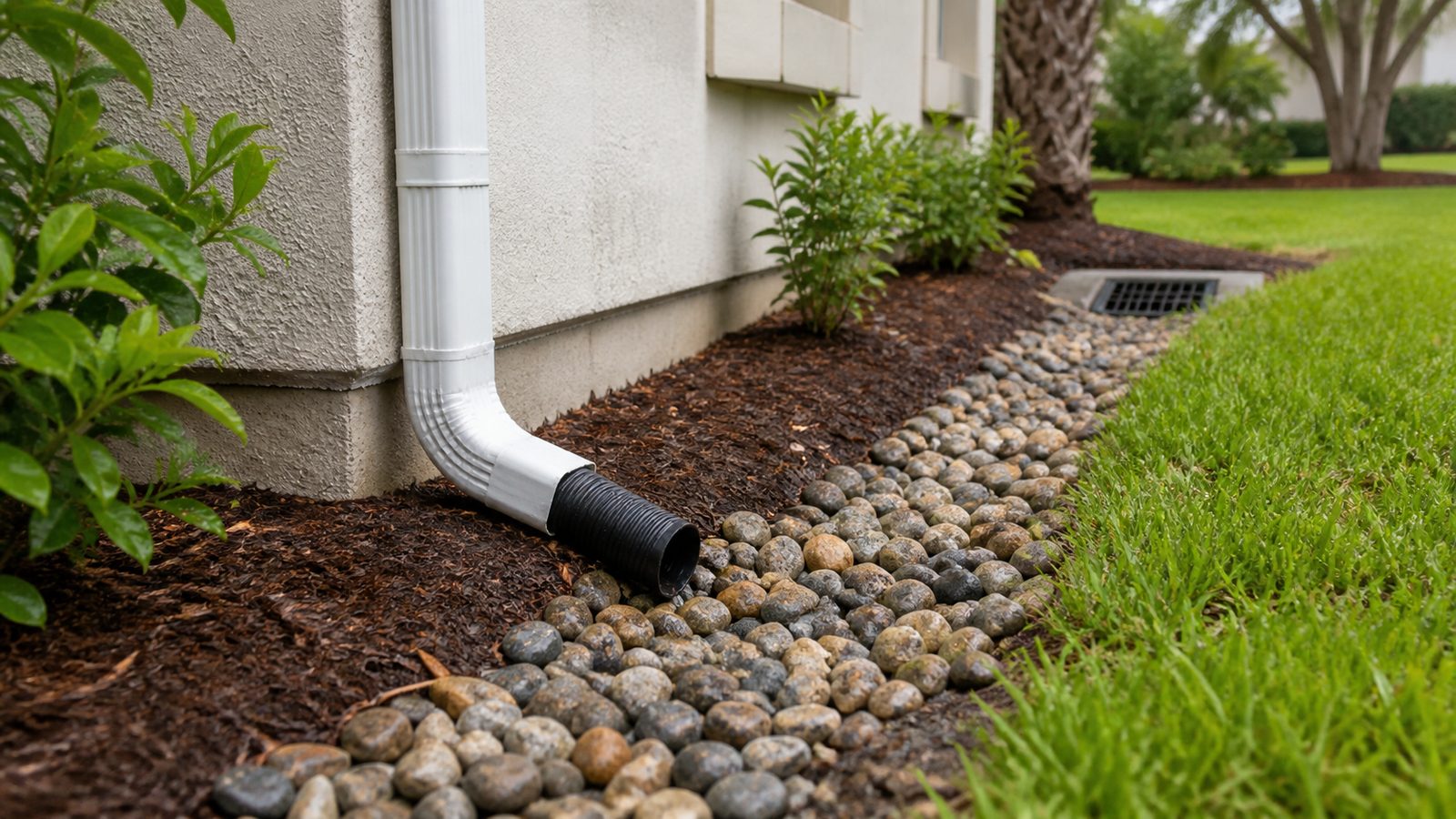
Northeast Florida is hard on exterior wood. The point where a stringer meets soil or a low landing pad is the single most common failure spot, because moisture wicks into end grain and stays there in our humidity, inviting rot before the rest of the board shows damage. Subterranean termites are active throughout Duval County, and a soft, damaged stringer is an easy target, so it is worth a quick look for mud tubes or hollow sounding wood while the old stair is torn apart. Pressure treated lumber also moves as it dries, shrinking and sometimes twisting after installation, which is one more reason to use screws rather than smooth nails, since screws hold through that movement. Near the beaches or the Intracoastal, salt air corrodes standard fasteners and hangers far faster than inland, so hot dip galvanized or stainless hardware rated for treated lumber is not optional there, it is the difference between hardware that lasts and hardware that fails quietly underneath the stair.
What It Costs in Jacksonville (DIY vs. Hiring a Pro)
These are rough estimates based on typical material and labor costs in the Jacksonville area, not official pricing.
| Approach | Estimated Cost Range | Notes |
|---|---|---|
| DIY, materials only | $150 to $400 | Treated lumber, hangers, fasteners, and pad material for a typical 3 to 5 step stair |
| Hiring a licensed contractor | $800 to $2,500 | Includes labor, permit handling, hauling, and a new landing pad |
| Hiring a contractor with structural repairs beyond the stair | $2,500 and up | If the rim joist, ledger, or deck framing also needs work |
When to Call JK Prestige
If the rot has spread into the rim joist, ledger board, or deck framing, or you are not confident cutting a precise, uniform stair layout, bring in a licensed contractor. JK Prestige Constructor Corp is a principal-led general contractor based in Jacksonville, and we handle deck and stair repairs from permit through final inspection, including the structural connections and hardware suited to our climate. A stair that looks fine but was built with mismatched risers or the wrong fasteners is a liability that shows up later, often after someone gets hurt. Reach out if you would rather have it done right the first time.
No call center. No coordinator. A JK principal reviews every inquiry and replies with a real number, not a range, not a follow-up form.
Request Free Estimate →