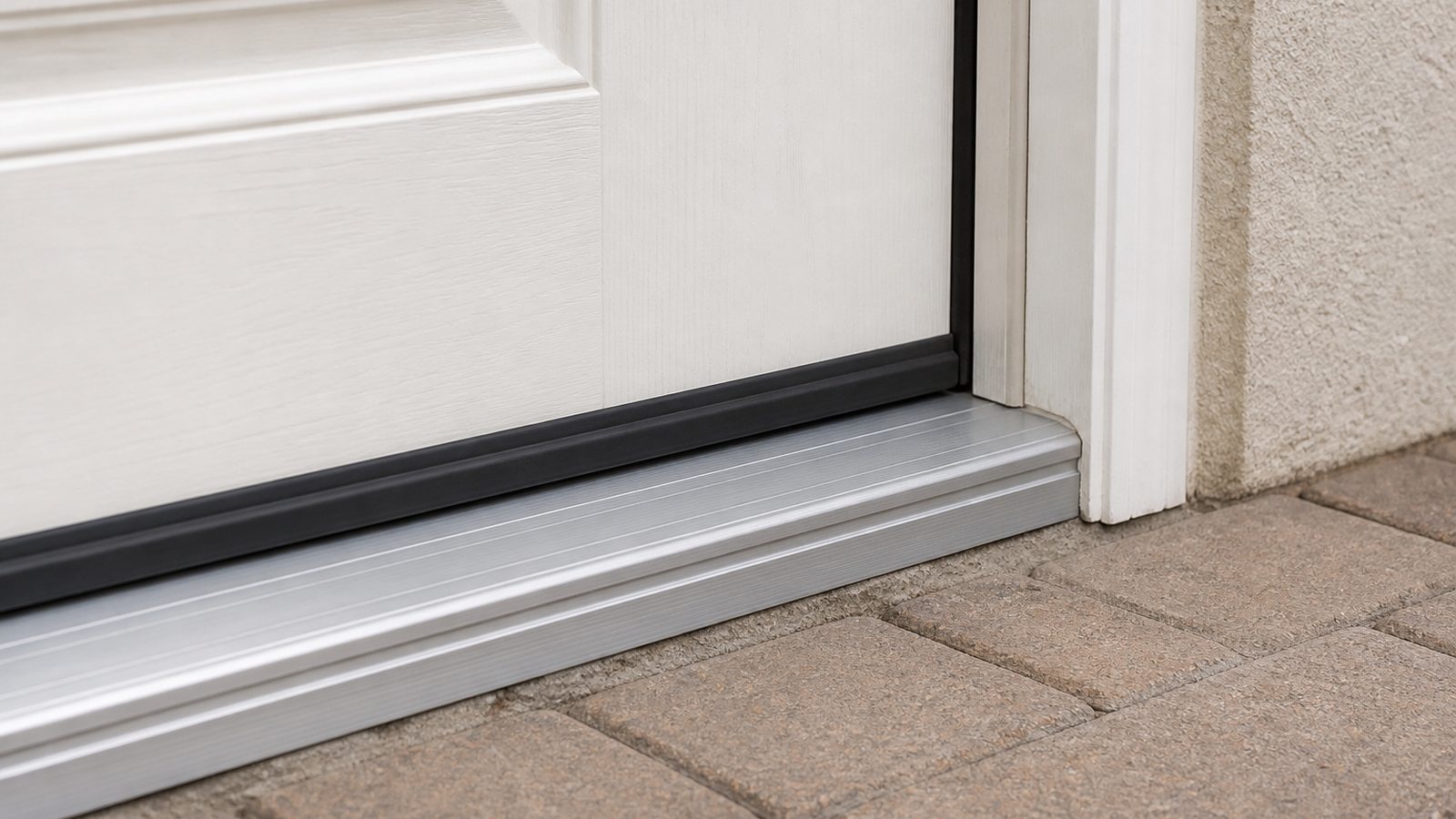
In Jacksonville, a failing door threshold is more than a minor nuisance. Between the summer thunderstorms that push water horizontally under your door, the near-constant humidity that rots wood faster than most homeowners expect, and the steady AC loss that drives up your FPL bill, a worn threshold and sweep combination costs you money every month you ignore it. Replacing them is a straightforward weekend job for most exterior doors — no special licenses required, no inspector involved — but there are a few local details that make it worth doing right the first time.
When You Need a Permit in Jacksonville
Swapping out a door threshold or sweep is maintenance work. The City of Jacksonville Building Inspection Division does not require a permit to replace a threshold or door sweep on an existing door in an existing frame. You are replacing components, not altering the opening.
A permit is required when you replace the entire door unit — door slab, frame, and all — or when you widen or relocate the opening. If you pull the threshold and discover that the subfloor or sill plate underneath has rotted through, repairs to that framing are structural and do require a permit. That is the point where a licensed general contractor needs to be involved.
Tools and Materials
- Adjustable aluminum threshold (measure your door width; most exterior doors are 32 or 36 inches)
- Door sweep — choose between a surface-mounted aluminum sweep with rubber seal, an under-door automatic sweep, or a slide-on vinyl sweep for hollow-core doors
- Exterior-grade silicone sealant (clear or paintable)
- Utility knife
- Flat pry bar and hammer
- Drill with Phillips and Torx bits
- Oscillating multi-tool or circular saw (if cutting the old threshold to length)
- Tape measure and pencil
- Safety glasses
- Work light (thresholds sit low; you will be on your knees)
Step-by-Step
- Remove the door sweep first. Open the door fully and unscrew the existing sweep from the door bottom. If it is a slide-on type, it may simply pull off. Scrape away any old adhesive foam with a putty knife.
- Remove the old threshold. Most thresholds are screwed down through the top surface. Locate the screws — they are often concealed under a rubber or vinyl gasket strip — and back them out. If the threshold was set in caulk or is stubborn, work a flat pry bar underneath from the interior side. Do not force it; old thresholds in Jacksonville homes frequently have corroded screws that snap. Use a screw extractor if needed.
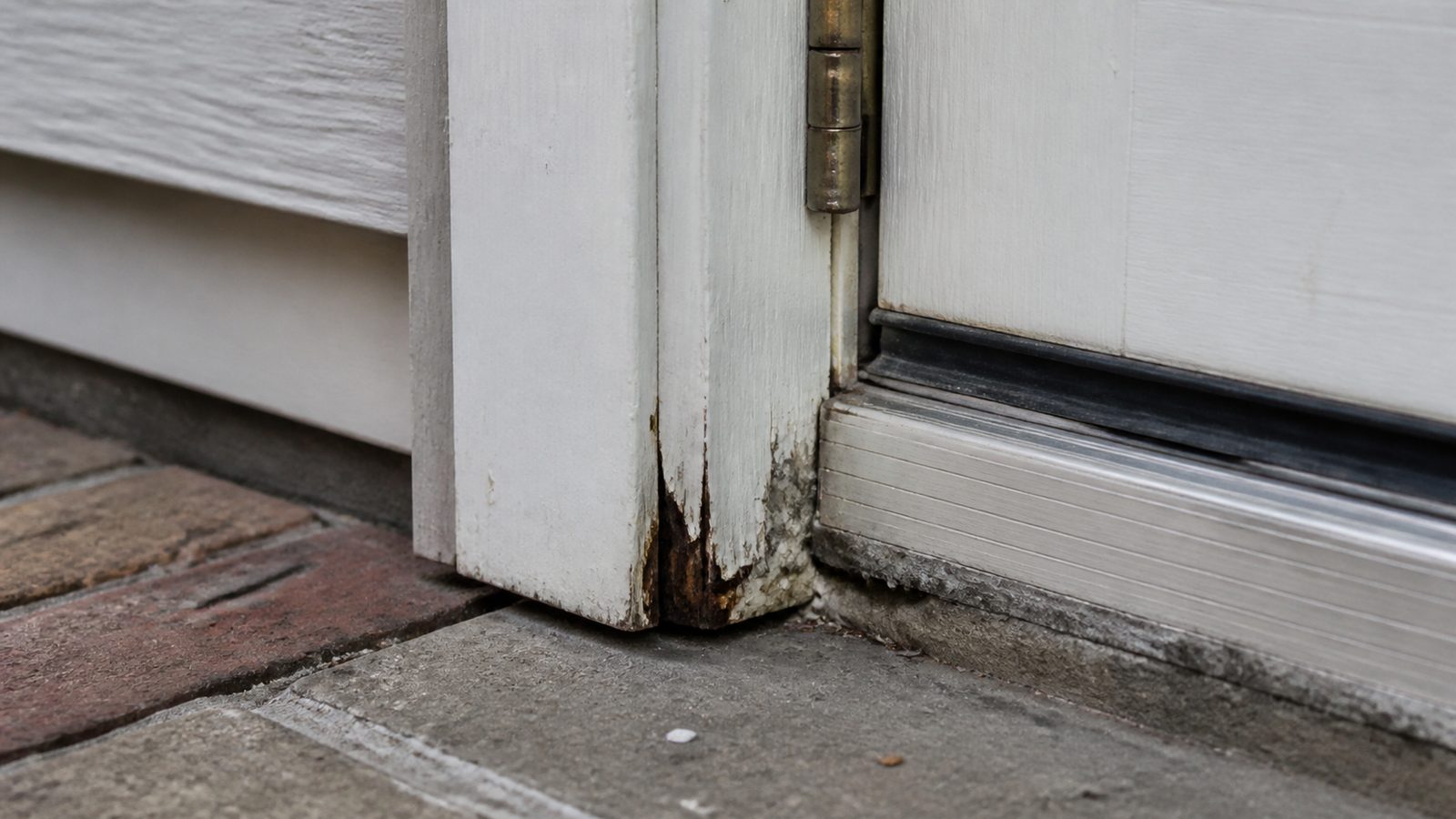
- Inspect the subfloor and sill plate. This is the critical step. Before you do anything else, press a screwdriver into the wood around the old threshold opening. Healthy wood resists. If the screwdriver sinks with light pressure or the wood feels soft and springy, you have rot. Note the extent of it before proceeding. Minor surface discoloration without structural softness is common and acceptable; anything that compromises the structural layer is not.
- Clean the opening. Scrape out old caulk, debris, and any remnants of gasket material. A clean, dry surface is essential for the new sealant to bond properly.
- Cut the new threshold to length if needed. Aluminum thresholds score and snap cleanly with a circular saw and metal-cutting blade, or a hacksaw for shorter cuts. Deburr the cut ends with a file.
- Apply a bead of exterior silicone sealant along the subfloor where the threshold will sit, particularly at the front edge facing the exterior. This bead is your primary moisture barrier.
- Set the threshold and fasten it. Press it firmly into the sealant and drive the screws. Do not overtighten — aluminum threads strip easily. Wipe excess sealant before it skins over.
- Adjust the threshold height. Most adjustable aluminum thresholds have four set screws across the top that raise or lower the sealing fin. Close the door and look for consistent contact with the door bottom across the full width. Adjust until you feel slight resistance when you drag a piece of paper under the closed door at any point.
- Install the new door sweep. Position it so the rubber seal makes full contact with the threshold when the door is closed, without dragging so hard it resists opening. Mark the screw holes, pilot drill if necessary, and fasten.
- Final bead of sealant at the interior and exterior edges of the threshold where it meets the floor or tile. Smooth with a wet finger and let cure per manufacturer instructions — typically 24 hours before heavy moisture exposure.
Jacksonville Climate Considerations
Jacksonville sits in USDA hardiness zone 9a with a humid subtropical climate, and that combination creates specific problems at door thresholds that homeowners in drier regions rarely deal with.
Wind-driven rain during afternoon thunderstorms and named storms pushes water horizontally with enough force to get past a threshold that would perform fine in a calmer climate. The seal between the door sweep and threshold needs to be tight and continuous — any gap is an entry point.
Subfloor and sill plate rot is the biggest hidden risk. The combination of high ambient humidity, occasional minor flooding, and a failed threshold can rot a wood subfloor in one to two rainy seasons without any visible exterior sign. By the time you feel softness underfoot near the door, the damage often extends well beyond the threshold area.
AC loss through a bad threshold is real and measurable. Jacksonville summers push cooling loads high. A gap that runs the full width of a 36-inch door lets conditioned air escape and humid outside air enter continuously.
Palmetto bugs, ants, and subterranean termites actively use gaps under doors as entry points. A properly seated threshold and sweep eliminates one of the most common pest entry routes in Jacksonville homes.
What It Costs in Jacksonville (DIY vs. Hiring a Pro)
| Option | Typical Cost Range |
|---|---|
| DIY — adjustable aluminum threshold + sweep | $45–$110 in materials |
| Handyman — labor + materials | $150–$275 |
| General contractor (threshold only, no structural work) | $200–$400 |
| GC with minor sill plate repair included | $600–$1,500+ depending on rot extent |
Material prices vary by supplier and season. The ranges above reflect typical Jacksonville-area pricing and are not guarantees.
When to Call JK Prestige
If you remove your old threshold and find that the screwdriver test reveals soft, rotted subfloor or sill plate material, stop and call a licensed general contractor. Rot repair at a door opening requires pulling flooring, cutting out compromised framing, sistering or replacing structural members, and reestablishing a solid nailing surface before any new threshold goes in — work that a door sweep and a tube of silicone cannot fix. JK Prestige Construction handles exactly this type of scope on Jacksonville homes, from the framing repair through finish carpentry, so the job is done under one roof with a licensed principal on site.
No call center. No coordinator. A JK principal reviews every inquiry and replies with a real number, not a range, not a follow-up form.
Request Free Estimate →