Jacksonville gets more rainfall than most cities in the continental United States, and your downspouts are the last line of defense between that water and your foundation. A cracked seam, disconnected section, or completely missing downspout allows hundreds of gallons per hour to dump directly against your footings or pool against your slab. On the flat, sandy lots common across the Westside, Southside, and older neighborhoods like Riverside and San Marco, that water has nowhere to go — it saturates the soil, undercuts landscaping, and eventually works its way toward your foundation or crawl space. Replacing a downspout is a manageable DIY project for most homeowners, but doing it right in Jacksonville requires a few local considerations that generic guides skip.
When You Need a Permit in Jacksonville
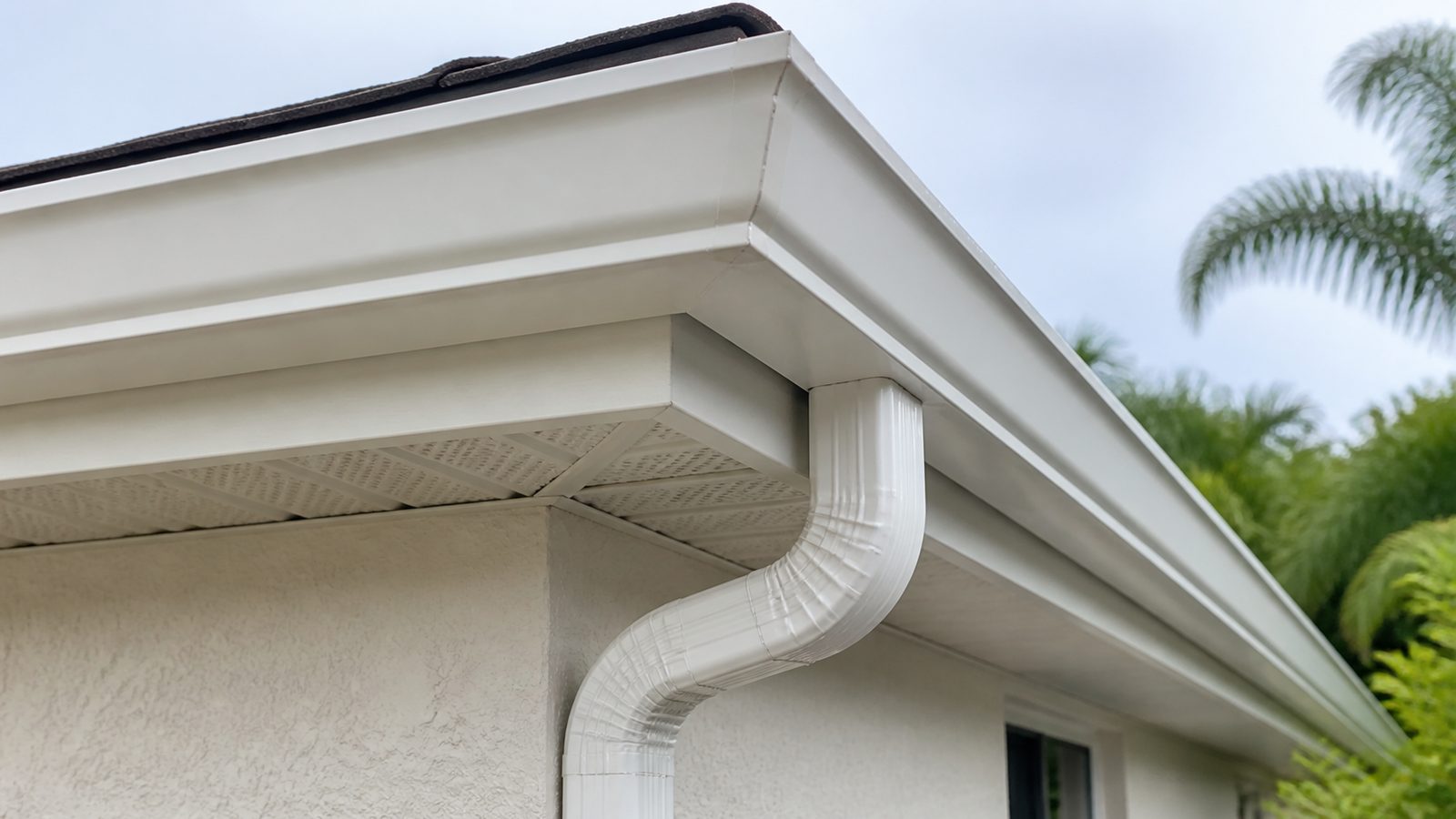
Replacing an existing downspout on a residential property — same size, same location — does not require a building permit under the City of Jacksonville's permitting rules or the Florida Building Code. It is considered routine maintenance. However, if you are extending the drainage system underground, adding a dry well, connecting to a French drain, or making changes that alter site drainage in a meaningful way, you may need a grading or site work permit through the Duval County portion of the Consolidated City. When in doubt, call the City of Jacksonville Building Inspection Division at (904) 255-8500 before you dig. Unpermitted underground drainage work that gets discovered during a property sale can create real headaches at closing.
Tools and Materials
- Replacement downspout sections (aluminum or galvanized steel, 2x3 or 3x4 inch to match your existing gutters)
- Downspout elbows (A-style and B-style as needed for your layout)
- Downspout straps or brackets
- Sheet metal screws (hex-head, #8 x 1/2 inch)
- Tin snips or aviation shears
- Cordless drill with Phillips and hex bit
- Caulk gun and gutter sealant (silicone or polyurethane rated for exterior use)
- Tape measure and pencil
- Ladder (6-foot stepladder for single-story, extension ladder for two-story)
- Splash block or downspout extension (minimum 4 feet away from foundation)
- Safety glasses and work gloves
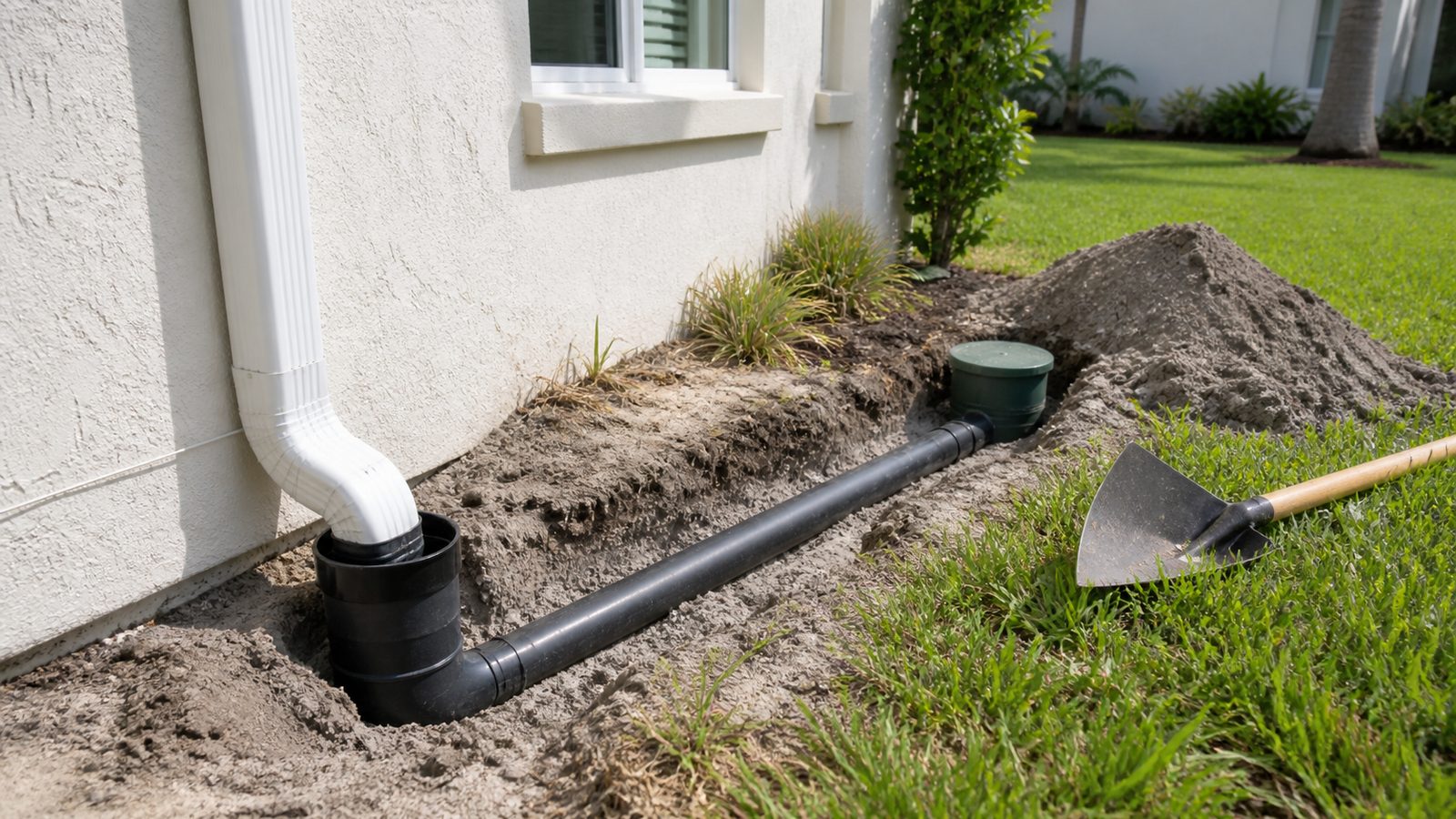
- Optional: underground downspout extension kit or pop-up emitter if routing water away from the house
Step-by-Step
- Remove the damaged downspout. Start at the bottom and work up. Unscrew the straps holding the downspout to the fascia or wall. Disconnect the bottom section first, then work toward the outlet at the gutter. Keep all screws and straps if they are still serviceable.
- Inspect the gutter outlet. Before installing anything new, look inside the gutter drop outlet for debris, rust, or deformation. Flush it with a garden hose. If the outlet sleeve is cracked or corroded, replace it now — it is much harder to swap once the downspout is back in place.
- Cut replacement sections to length. Measure each run carefully. Use tin snips to cut aluminum downspout. Slide the crimped end of each section into the uncrimped end of the section below it so water flows outward at every joint, not behind it. This direction matters — reversed joints leak inward and rust faster.
- Install the upper elbow. The upper elbow connects the gutter outlet to the vertical downspout run. Angle it to bring the pipe tight against the wall. Secure with two hex-head screws through the elbow collar into the outlet.
- Hang the vertical run. Attach downspout straps every 6 feet along the vertical run, or every 4 feet on exposed corners where wind can catch the pipe. Pre-drill strap holes into wood fascia or use masonry anchors if attaching to stucco or block — both are common in Jacksonville-area construction.
- Seal all joints. Apply a bead of gutter sealant on the inside of each joint before you lock sections together. Do not skip this step in Florida. The expansion and contraction from heat cycling causes unsealed joints to gap and drip within one to two seasons.
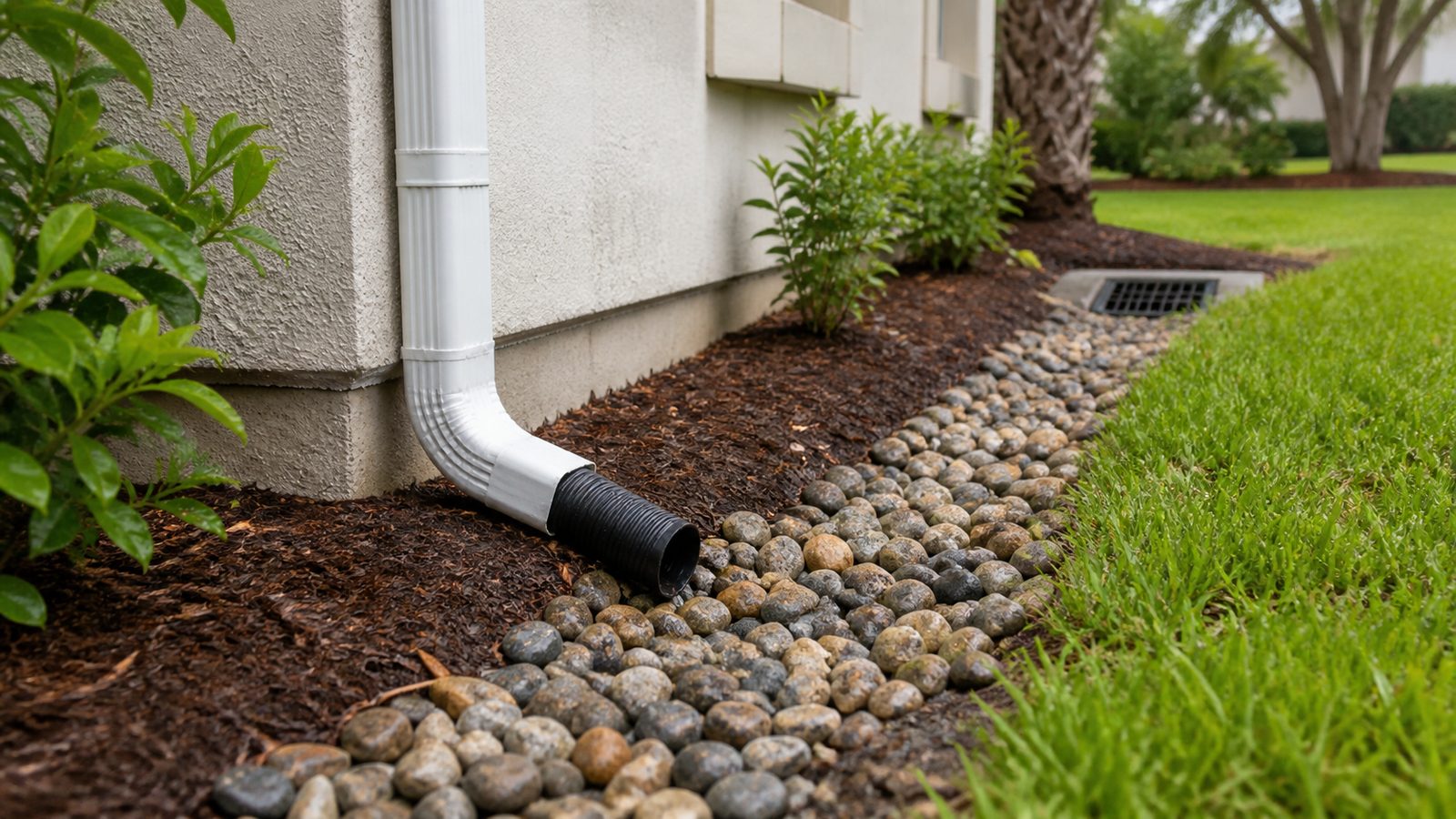
- Install the lower elbow and extension. The bottom of the downspout needs a lower elbow directing water away from the house, followed by a rigid or flexible extension that deposits water at least 4 feet from the foundation. On a flat lot, consider a pop-up emitter connected by underground pipe — it closes between rain events and reduces mosquito habitat compared to an open splash block.
- Test with a hose. Run water from the roof level through the system. Check every joint for drips. Walk the discharge point to confirm water is moving away from the house and not pooling against the foundation or running toward a neighbor's property.
Jacksonville Climate Considerations
Jacksonville's summers bring intense, fast-moving afternoon thunderstorms that can drop an inch of rain in 30 minutes or less. A standard 2x3 downspout handles roughly 600–700 square feet of roof area adequately under normal conditions, but undersized or partially blocked downspouts overflow quickly under that kind of load. If you notice your gutters overflowing at the corners even when the downspout appears clear, the downspout is likely undersized for the roof section it drains.
The flat sandy soil across much of Duval County drains poorly once it is saturated. Water that pools within 3–4 feet of a slab foundation can migrate under the slab during repeated wet-dry cycles, causing settlement and cracks. Homes on the Westside and in older Northside neighborhoods also have shallower footings in some cases, making proper drainage even more critical.
Standing water around splash blocks is also a mosquito breeding concern. The City of Jacksonville's Mosquito Control Division actively targets standing water, and homeowners can face nuisance citations for persistent pooling. A properly extended and graded discharge point eliminates the problem at the source.
What It Costs in Jacksonville (DIY vs. Hiring a Pro)
| Item | DIY Cost | Pro Cost (Labor + Materials) |
|---|---|---|
| Single downspout replacement (1-story) | $20–$60 materials | $150–$300 |
| Single downspout replacement (2-story) | $25–$75 materials | $200–$400 |
| Underground extension / pop-up emitter | $50–$120 materials | $300–$600 |
| Full gutter and downspout system replacement | $400–$800 materials | $1,500–$3,500 |
Prices reflect typical Jacksonville-area contractor rates and vary by material grade, access difficulty, and scope. Aluminum is the most common and cost-effective material in Northeast Florida. Galvanized steel costs slightly more but resists denting from falling debris better — worth considering if you have large oaks dropping branches over the roofline.
When to Call JK Prestige
If replacing the downspout surfaces a larger problem — rotted fascia board, damaged soffit, foundation staining, or soil that has already washed away against your footing — that is a sign the drainage issue has been running longer than the visible damage suggests. JK Prestige Construction Corp handles drainage remediation as part of broader exterior and renovation scopes, with a principal-led team that inspects the full picture rather than patching symptoms. Call us at (904) 595-3564 or reach out through jkprestigeconstruction.com to schedule a walkthrough.
No call center. No coordinator. A JK principal reviews every inquiry and replies with a real number, not a range, not a follow-up form.
Request Free Estimate →