If your garage door is grinding, squealing, or jerking along the track, the cause is usually simple wear, not a failing opener. Rollers wear out from thousands of trips, and the hinges connecting the door sections rust and loosen, especially in a coastal climate like Jacksonville's. Replacing worn rollers and hinges is one of the few garage door repairs a reasonably handy homeowner can do safely, provided you know where the safe zone ends. This guide covers that job and draws a hard line around the parts of the door under spring tension, which should never be touched without a trained technician.
When You Need a Permit in Jacksonville
Swapping out rollers and hinges on your existing door is routine hardware maintenance. It does not require a permit from the City of Jacksonville. You are not altering the structure, the opening, or the door's wind rating, so this falls under normal homeowner upkeep.
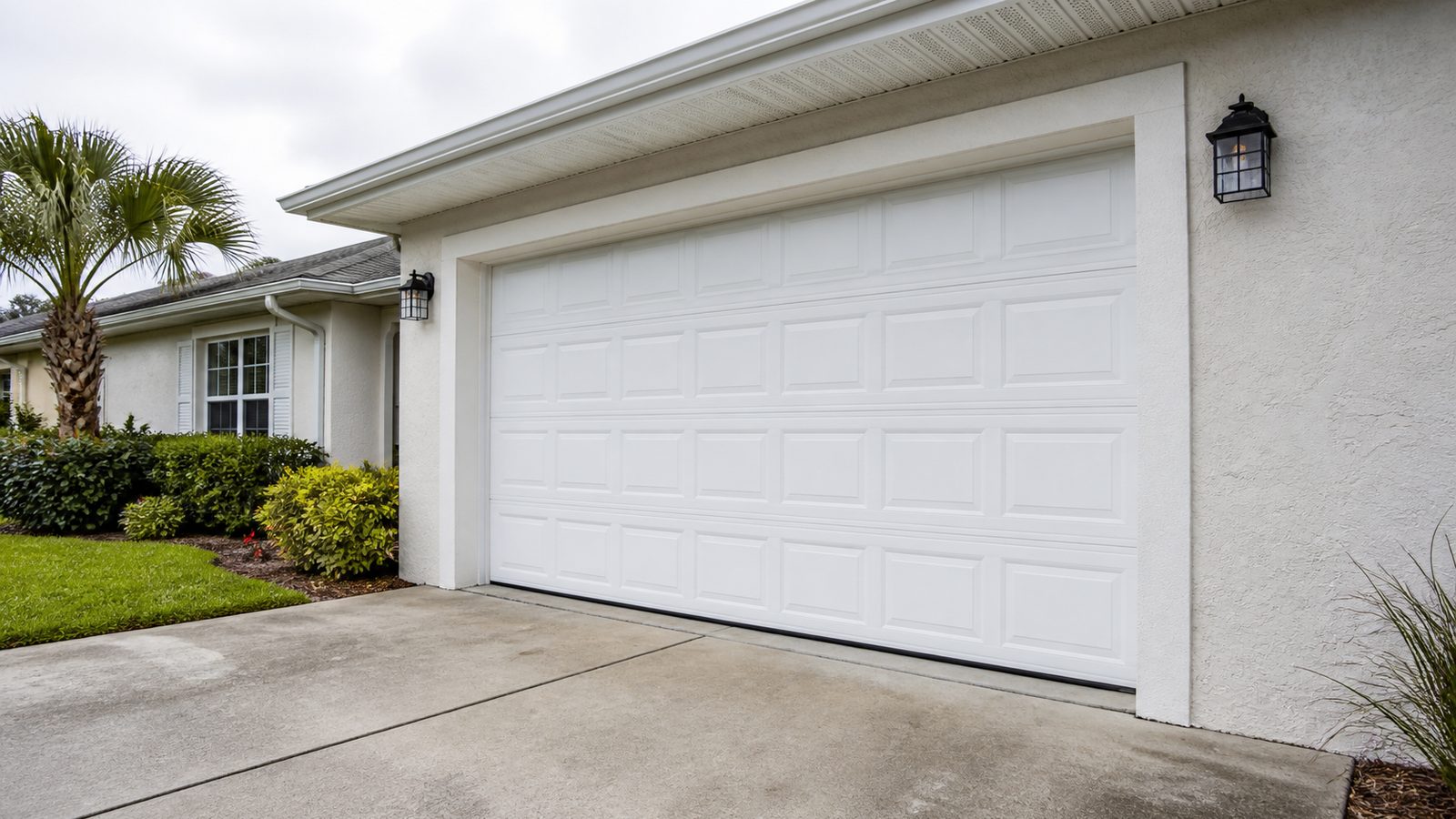
That changes if you replace the entire garage door rather than just its hardware. A garage door is typically the largest opening in a Jacksonville house, and a new door installation is permitted through the City of Jacksonville Building Inspection Division. A replacement door also needs Florida Product Approval or a Miami-Dade Notice of Acceptance rated for your wind zone, since it must resist the wind pressures the code assumes for that opening. If you are only replacing rollers and hinges, none of this applies. For a full door replacement, confirm current requirements with the Building Inspection Division before you order.
Tools and Materials
- Nylon rollers (10 ball bearing recommended) or galvanized steel rollers, matched to your stem length
- Replacement hinges rated for your door's section weight and gauge
- Locking pliers or a C-clamp
- Adjustable wrench or nut driver set
- Work gloves and safety glasses
- A stepladder for the upper sections
Nylon rollers cost more than steel but run quieter and need less lubrication, which matters where humidity and salt air work against anything metal-on-metal. Steel rollers hold up better under heavy daily use, but are noisier and rust faster near the coast. For a typical home, nylon is the better long-term choice unless the door cycles dozens of times a day, as it might on a rental or a shop.
Step-by-Step
- Disconnect the opener and leave the door fully closed for this work. Do not replace rollers or hinges with the door raised, since the weight is normally balanced by the torsion spring and you do not want to work under an unsupported panel.
- Identify which rollers and hinges need replacing. Surface rust, a bent hinge leaf, or a roller with a flat spot or cracked wheel are signs to replace that piece.
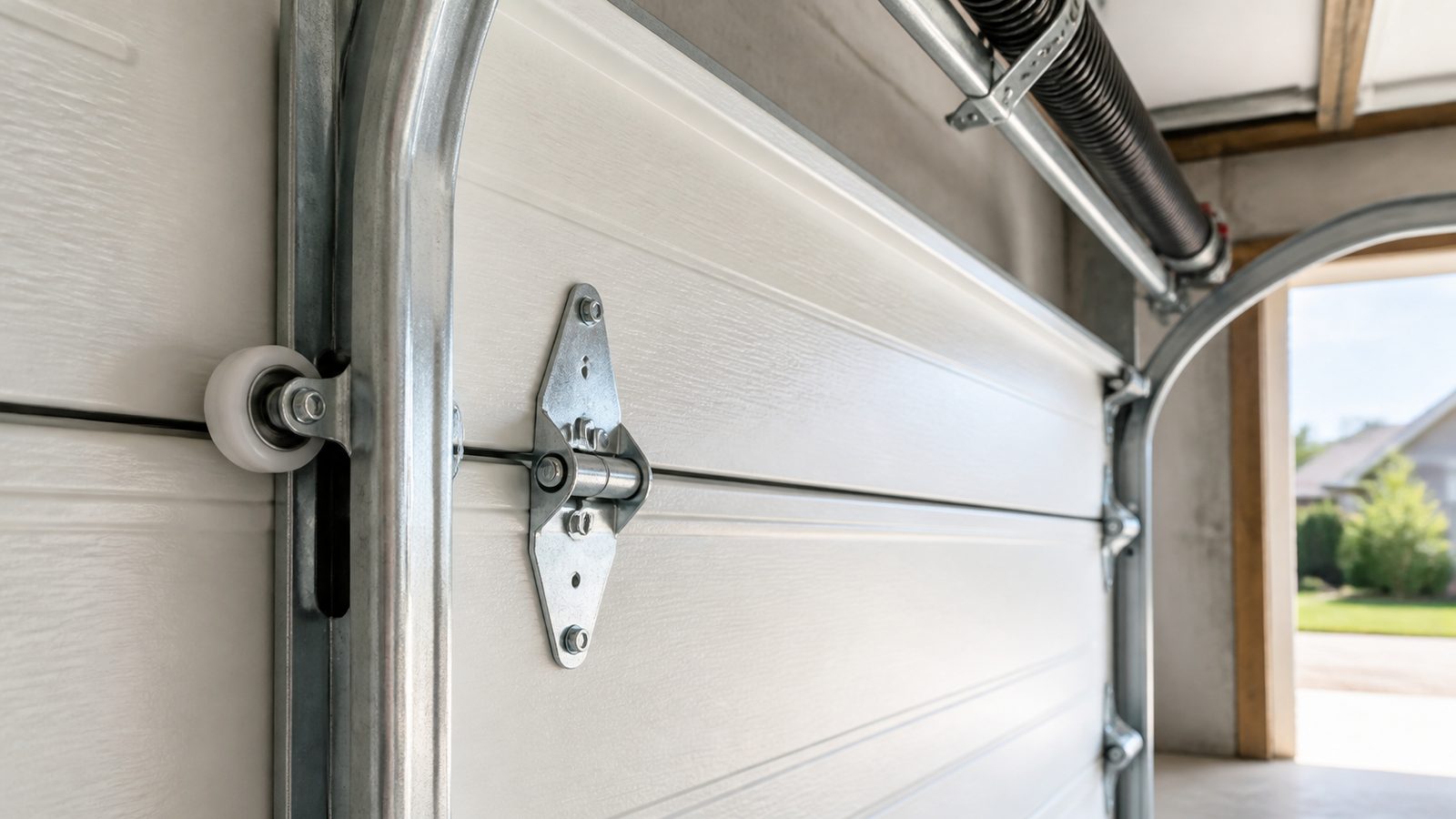
- Work on one roller at a time. Never remove the two bottom rollers connected to the bottom bracket. For every other roller, use locking pliers to hold the hinge, then pull the roller stem out far enough to swap it.
- Move to the next roller only after the current one is reseated. Working one at a time keeps the section supported by its neighbors at all times.
- For hinges, support the section on either side of the one you are working on, remove the mounting bolts, and swap it like for like. Never remove more than one hinge on a given section at once.
- Once everything is replaced, reconnect the opener and cycle the door manually a few times, checking for smooth travel and no new grinding or binding.
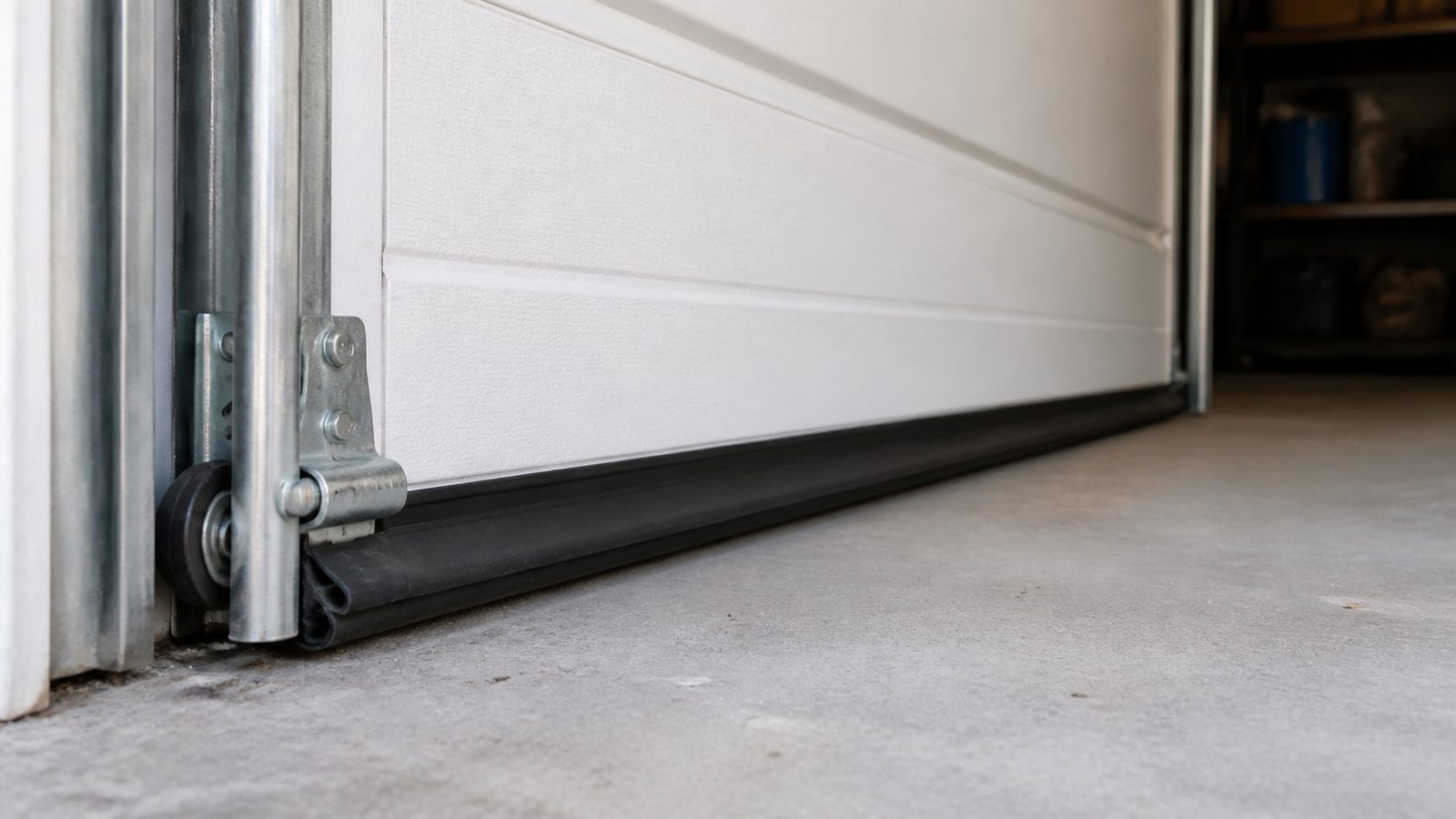
Do not touch the torsion spring, the lift cables, or the bottom corner brackets. The spring is wound under extreme tension and stores enough energy to cause serious injury or death if it releases uncontrolled. The lift cables carry that same tension whenever the door is closed. The bottom bracket is where the cable attaches to the door, and loosening it under tension can let the cable snap free. If a spring looks stretched, rusted, or broken, stop and call a garage door technician. That is not a DIY repair at any skill level.
Jacksonville Climate Considerations
Jacksonville's salt air, humidity, and sandy soil are hard on garage door hardware. Homes near the beaches or the Intracoastal see hinges and roller stems rust noticeably faster than homes further inland, even with regular lubrication. Humidity keeps metal parts damp longer after rain, accelerating corrosion at the roller stem and hinge pins. Sand and grit blown into the track wear down roller bearings and can bind the door if not cleaned out periodically. UV exposure dries out weatherstripping, worth checking while you are at it. One more reason to keep this hardware sound: a garage door that fails during a hurricane lets wind pressurize the house, which can lift the roof off. Keeping the rollers, hinges, and door sound is part of storm readiness, not just a noise fix.
What It Costs in Jacksonville (DIY vs. Hiring a Pro)
Rough local estimates, not quoted or surveyed prices, will vary by door size and hardware quality.
| Approach | Estimated Cost | Notes |
|---|---|---|
| DIY, nylon rollers and hinges (parts only) | $60 to $150 | Full set for a double door, standard hardware |
| DIY, steel rollers and hinges (parts only) | $40 to $100 | Slightly cheaper, louder, rusts faster near the coast |
| Professional service call, rollers and hinges | $150 to $350 | Labor plus parts, single visit |
| Professional full tune-up (rollers, hinges, lubrication, inspection) | $200 to $450 | Often includes a spring and cable check |
When to Call JK Prestige
If you are comfortable with basic tools and the door is currently operable, roller and hinge replacement is a reasonable weekend project. Call a professional if the spring looks worn or broken, a cable is frayed or off its drum, the bottom bracket or track is bent, or the door slams or drifts on its own. JK Prestige works with garage systems as part of broader construction across Jacksonville, and can point you to a qualified technician for spring and cable work, or handle the surrounding carpentry when a door replacement is part of a larger renovation.
No call center. No coordinator. A JK principal reviews every inquiry and replies with a real number, not a range, not a follow-up form.
Request Free Estimate →