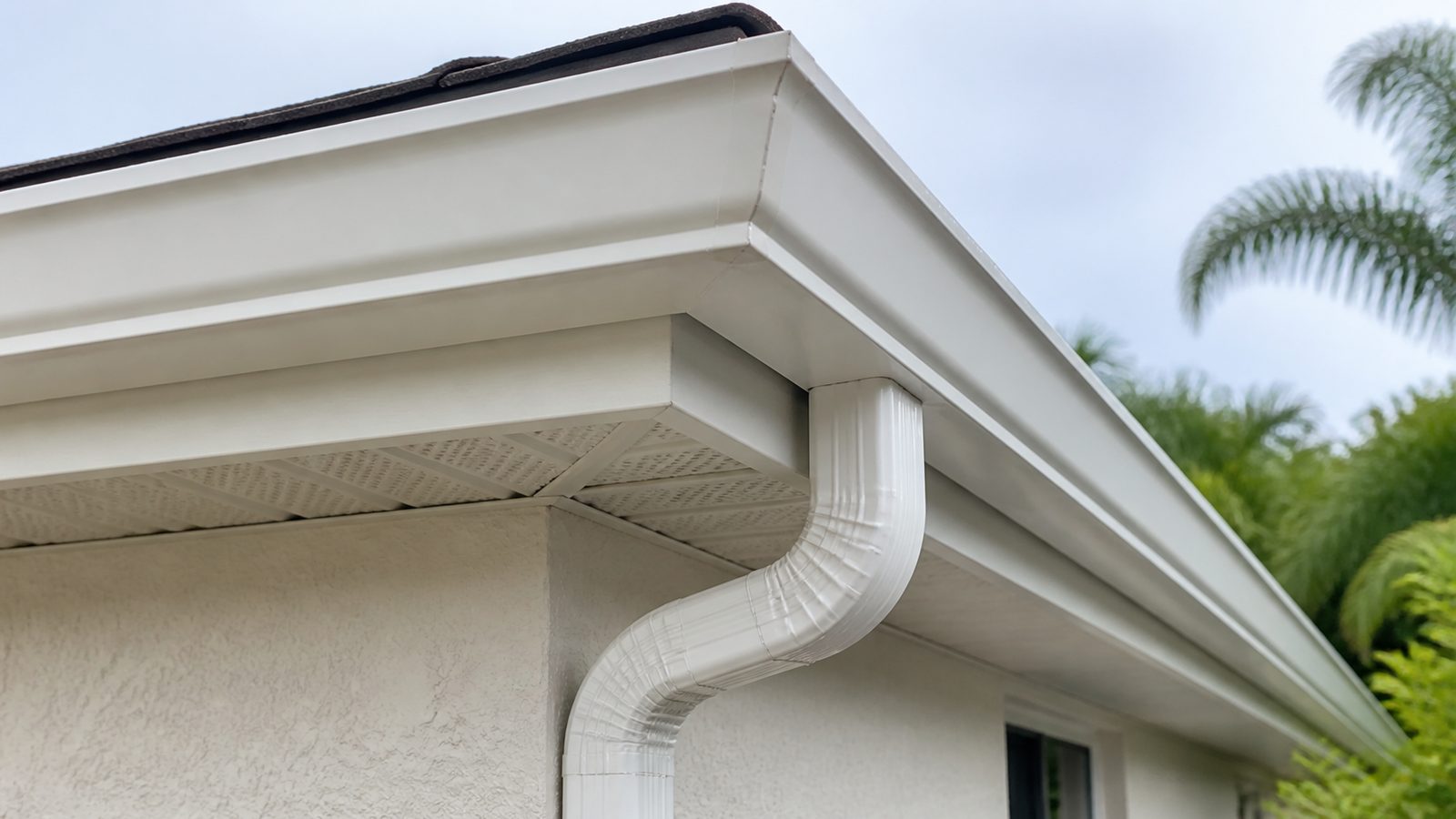
If a section of your gutter is pulling away from the roofline, dipping in the middle, or dumping water down the siding instead of into the downspout, the hangers holding it up have likely failed. In Jacksonville this happens faster than in drier climates, because summer storms load a gutter with more water than old hardware was sized for, and years of humidity work on the fascia board behind it. The fix is usually straightforward: pull the failed hangers, check the wood underneath, reset the slope, and rehang with hardware that will hold. Here is how to do it, and how to tell when it is a fascia repair rather than a gutter repair.
When You Need a Permit in Jacksonville
Swapping hangers, re-sloping a run, and replacing a gutter or downspout section is routine maintenance in Duval County and normally does not require a building permit. That changes once the work goes past the gutter itself. Rotted fascia or roof framing (sub-fascia, rafter tails, sheathing) that needs to be cut out and replaced, rather than re-anchored into, is a structural repair, and the City can require a permit for that scope. The same applies if you are tying new drainage into an underground stormwater system. Thresholds vary by project, so confirm your scope with the City of Jacksonville Building Inspection Division before starting any fascia or structural work.
Tools and Materials
- Sturdy extension ladder with a stabilizer
- Cordless drill/driver, star bit, 3/16-inch pilot bit
- Hidden hanger brackets sized to your gutter profile
- 2 to 3-inch stainless or coated hidden-hanger screws
- Optional 7-inch spikes and ferrules, if matching an existing system
- Line level, mason's string, and a chalk line
- Pry bar and hammer for removing old spikes
- Wood chisel and exterior epoxy consolidant for fascia rot
- Pressure-treated fascia stock, for sistering or replacement
- Gutter sealant, work gloves, safety glasses
Step-by-Step
- Inspect the run first. Walk the ladder along the gutter and note every spot where it has pulled loose, bowed, or shows water staining behind its back edge. Press on the fascia at each hanger point. If it flexes or a screwdriver sinks in easily, that is rot, not just a loose fastener.
- Remove the failed hardware. Older Jacksonville gutters are often held with spike-and-ferrule hangers, a long spike driven through the gutter and a metal sleeve into the fascia. Spikes back out over time because they drive into end grain with little thread to grip. Pull failed spikes and ferrules with a pry bar.
- Choose your hanger system. Spike-and-ferrule can be reinstalled, but it is the weaker system and likely what failed the first time. Hidden hangers drive a screw into solid wood at a better angle and spread the load across a bracket, holding up better against wind and heavy rain. Swap failed spike points over to hidden hangers rather than replacing spikes with spikes.
- Repair rotted fascia before rehanging. Cut soft wood back to solid material with a chisel, then sister in new pressure-treated board or replace the section outright. Never drive a hanger screw into wood you know is rotten, it will hold for a season and fail again in the next storm.
- Re-establish the slope. Gutters need a slight, consistent pitch toward the downspout, roughly a quarter inch of drop per 10 feet of run. Snap a chalk line from the high point to the downspout and use a level to hold that pitch. A sagging middle section usually means the center hangers failed and the gutter bellied down.
- Set new hidden hangers. Space them every 24 to 36 inches, tighter on runs that catch heavy roof water or debris. Screw into solid fascia and, where possible, into the rafter tail behind it. Snap the gutter in and confirm it sits tight with no gap behind it.
- Reseal downspout joints with exterior gutter sealant and confirm the outlet is clear.
- Run a hose test, pouring water in at the high end and watching it reach the downspout without pooling.
Jacksonville Climate Considerations
Jacksonville's humidity keeps fascia boards damp for long stretches of the year, speeding up rot exactly where hangers need to bite into solid wood. Homes near the beaches, the Intracoastal, or the St. Johns River deal with salt-laden air that corrodes plain steel fasteners faster than inland homes, so stainless or coated hardware is worth the cost close to the coast. Summer downpours drop a large volume of rain in a short window, and a gutter that has lost its slope will overflow at the low spot instead of draining, loading the nearest hangers. UV exposure dries and cracks vinyl components faster than metal ones. With pine trees and live oaks common on local lots, needle and leaf debris builds up and holds water in the trough, adding weight a marginal hanger cannot carry through a storm.
What It Costs in Jacksonville (DIY vs. Hiring a Pro)
These are rough, non-official estimates. Actual pricing depends on gutter length, access, and how much fascia repair is involved.
| Scope | DIY Cost (materials only) | Hiring a Pro (materials + labor) |
|---|---|---|
| Hidden hangers, single section (10-20 ft) | $30 to $70 | $150 to $350 |
| Full-run rehang, one-story home | $100 to $250 | $400 to $900 |
| Rehang plus minor fascia repair | $150 to $350 | $600 to $1,500 |
| Rehang plus sub-fascia or framing repair | Not recommended as DIY | $1,200 to $3,500+ |
When to Call JK Prestige
A few loose hangers on solid fascia is a reasonable DIY project for someone comfortable on a ladder. Call a professional when you find rotted or soft fascia, especially anything extending into sub-fascia or rafter tails, when the gutter has pulled away along a long run, when you are working above a second story or steep roofline, or when you cannot hold a consistent slope by eye. JK Prestige handles the gutter hardware and any fascia or framing repair as one job, so you are not paying for a gutter fix now and a rot repair later.
No call center. No coordinator. A JK principal reviews every inquiry and replies with a real number, not a range, not a follow-up form.
Request Free Estimate →