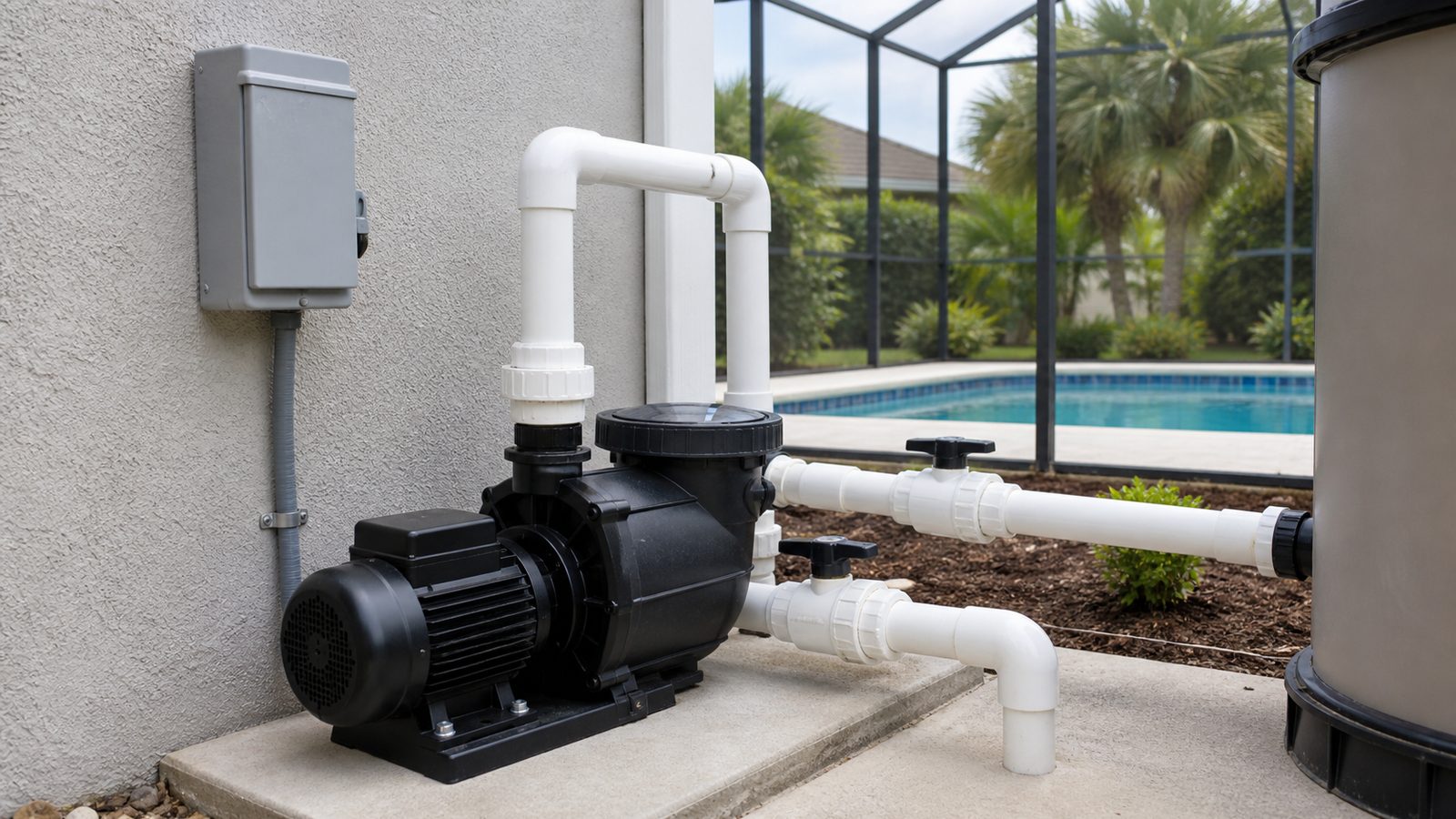
If your pool pump is grinding, leaking from the shaft seal, or not moving water like it used to, replacing it is an approachable repair for a Jacksonville homeowner. The pump sits on the equipment pad outside, the plumbing connections are usually PVC unions you can turn by hand, and the wiring, while it demands respect, is straightforward on a like-for-like swap. That said, this is still an electrical appliance living inches from a body of water, so safety matters as much as the wrench work. This guide covers when you need a permit in Duval County, what Florida's efficiency rules require for the new pump, the replacement steps, and what it costs to DIY versus hire a licensed pro.
When You Need a Permit in Jacksonville
A lot of Jacksonville homeowners assume pool equipment repairs are always permit-free, and that's often close to true, but not always. A straightforward like-for-like pump swap, same horsepower class, same footprint, reconnected to the existing plumbing and existing dedicated electrical circuit, is frequently treated by the City of Jacksonville's Building Inspection Division as routine maintenance that doesn't trigger a separate permit. Rules and interpretation can shift, so confirm with the city's permitting office or your pool contractor before you start, especially if your pump is older and the replacement isn't an exact match.
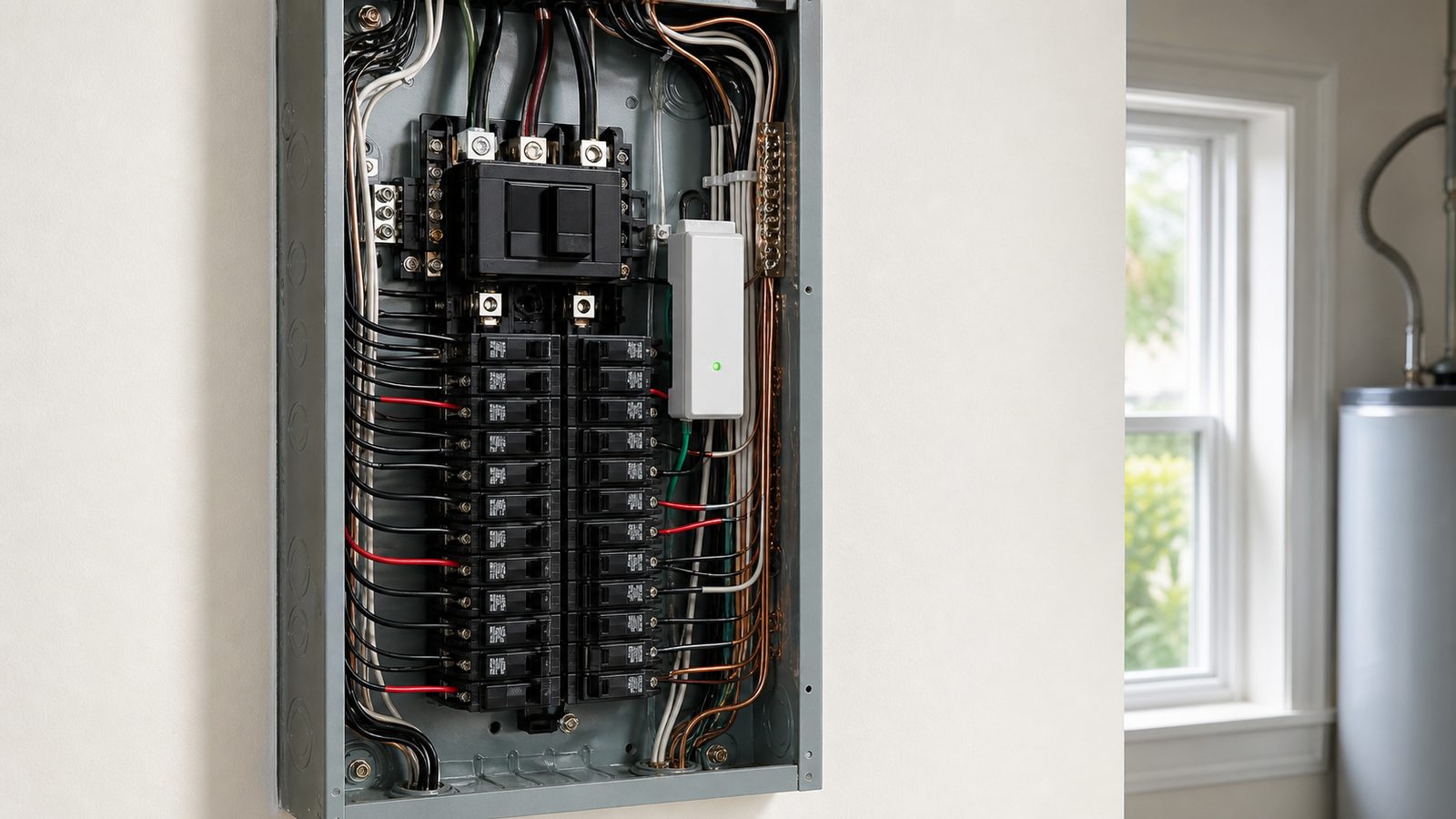
Where a permit is not optional is any change to the electrical circuit. If the new pump needs a different breaker size, new wire gauge, a new disconnect, or any modification to the wiring between the panel and the equipment pad, that's electrical work requiring a permit pulled by a licensed electrician. This isn't bureaucratic overkill. Pool circuits fall under NEC Article 680, which governs bonding and grounding around pools specifically because water and stray voltage are a dangerous combination. Every metal pump housing, motor frame, and piece of equipment on the pad must be bonded to the pool's bonding grid with a solid copper conductor, intact and properly connected on the new pump, not left dangling. If you're not confident identifying the bonding lug or verifying continuity, call an electrician rather than guess.
Before you touch anything, turn the breaker off at the panel and verify it's dead with a voltage tester at the pump's disconnect. Don't rely on the switch at the equipment pad alone.
There's also a Florida-specific wrinkle affecting what pump you're even allowed to buy. Federal efficiency standards for dedicated-purpose pool pump motors require most pumps rated at or above 1 total horsepower to be variable-speed rather than single-speed, and Florida's building energy code follows this standard for new installations and replacements. In practice, if you're replacing anything but the smallest single-speed pump, you'll be buying a variable-speed model regardless of what came off the pad. Confirm the specific requirement for your pump's horsepower class with your electrician or the manufacturer's spec sheet before buying, since exceptions exist for certain small pumps.
Tools and Materials
- Replacement variable-speed pool pump, sized to match your existing plumbing and flow requirements
- PVC unions (usually 1.5 inch or 2 inch, matching your existing plumbing)
- PVC primer and cement, or Teflon tape and rubber unions if your setup uses those instead
- Thread sealant (Teflon tape or pipe dope) rated for pool equipment
- Non-contact voltage tester
- Screwdrivers, adjustable wrench, and a pipe cutter or hacksaw
- Bucket and towels for water cleanup
- Copper bonding wire and a lug, if the new pump's bonding point differs from the old one
Step-by-Step
- Turn off power at the breaker panel, not just the pad switch, and confirm it's off with a voltage tester at the disconnect.
- Close or note the position of any valves, then loosen the pump lid or a union slowly to bleed off trapped pressure before fully disconnecting anything.
- Disconnect the unions on the suction (from the pool/skimmer) and discharge (to the filter) sides of the old pump, with a bucket ready for residual water.
- Disconnect the electrical conduit or whip from the old pump's wiring compartment, noting which wire went where, then remove the old pump.
- Set the new pump in place, trimming or adding PVC as needed so the unions meet the existing plumbing without stressing the housing.
- Prime the union connections with PVC primer and cement, or hand-tighten rubber unions, per the manufacturer's plumbing instructions.
- Connect the wiring to the new pump's terminal block per its diagram, matching line, neutral (if applicable), and ground.
- Reconnect the bonding wire to the pump's bonding lug. Don't skip this. Verify a tight, solid metal-to-metal connection.
- Open any closed valves, fill the strainer basket with water to help it prime, and confirm the lid o-ring is seated and lubricated.
- Restore power and turn the pump on, watching for proper priming and checking every connection you touched for leaks.
- On a variable-speed model, program the speed and schedule settings per the controller's instructions.
Jacksonville Climate Considerations
Pools in Jacksonville run close to year-round, not just a summer season, so your pump logs far more annual runtime than in colder climates. That makes the efficiency gains from a variable-speed pump add up faster here than somewhere pools sit covered half the year.
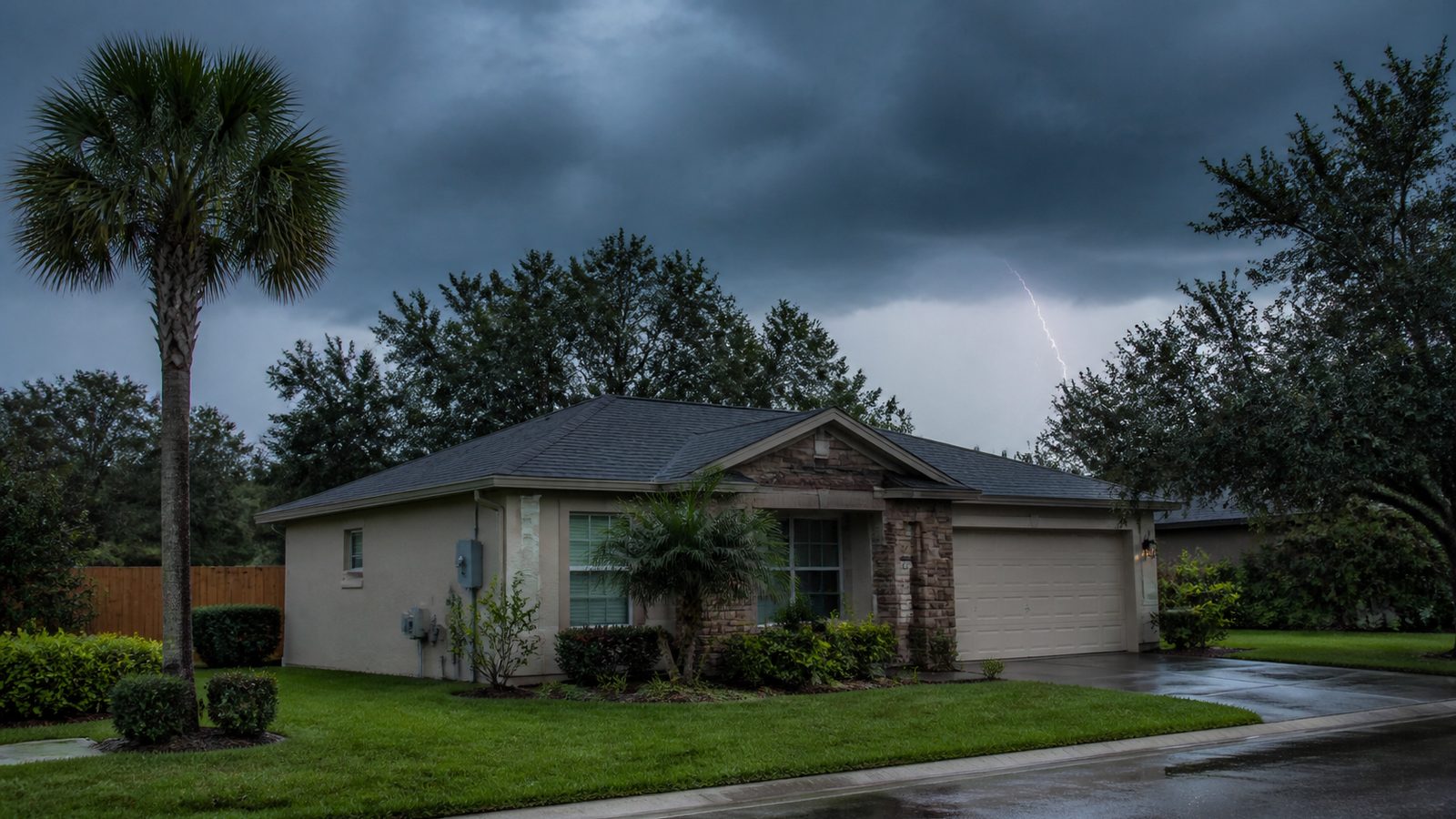
The equipment pad also takes a beating from Northeast Florida's climate. Intense summer UV degrades plastic pump housings and gaskets over time, and the region's humidity accelerates corrosion on exposed metal fasteners or bonding connections, so check that bonding wire and lug periodically, not just at install. If your pool uses a salt chlorine generator, the corrosive nature of salt water makes stainless fittings and rinsing the pad after storms worthwhile habits. Hurricane season also brings real risk of power outages and voltage surges, so a surge protector for the pad is a reasonable addition alongside a new pump, and know how to shut the system down safely if a storm is approaching.
What It Costs in Jacksonville (DIY vs. Hiring a Pro)
| Approach | Typical Cost Range | What's Included |
|---|---|---|
| DIY: pump only | $600 to $1,200 | Variable-speed pump, mid-size residential pool |
| DIY: pump + materials | $650 to $1,350 | Pump plus unions, cement, sealant, minor fittings |
| Professional install | $900 to $1,800 | Pump, labor, plumbing hookup, basic startup/testing |
| Professional install + electrical work | $1,200 to $2,400+ | Above, plus new circuit, disconnect, or wiring changes |
Actual pricing depends on pump brand, horsepower, and whether your existing plumbing and electrical need modification to accept the new unit.
When to Call JK Prestige
If your pump's replacement isn't a clean like-for-like swap, if the electrical circuit needs upgrading, or if you're not fully comfortable verifying the bonding connection yourself, that's the point to bring in a licensed professional rather than push through. JK Prestige Construction can evaluate your equipment pad, coordinate any required electrical or permitting work with Duval County, and make sure the installation meets Florida's efficiency and safety codes from the start.
No call center. No coordinator. A JK principal reviews every inquiry and replies with a real number, not a range, not a follow-up form.
Request Free Estimate →