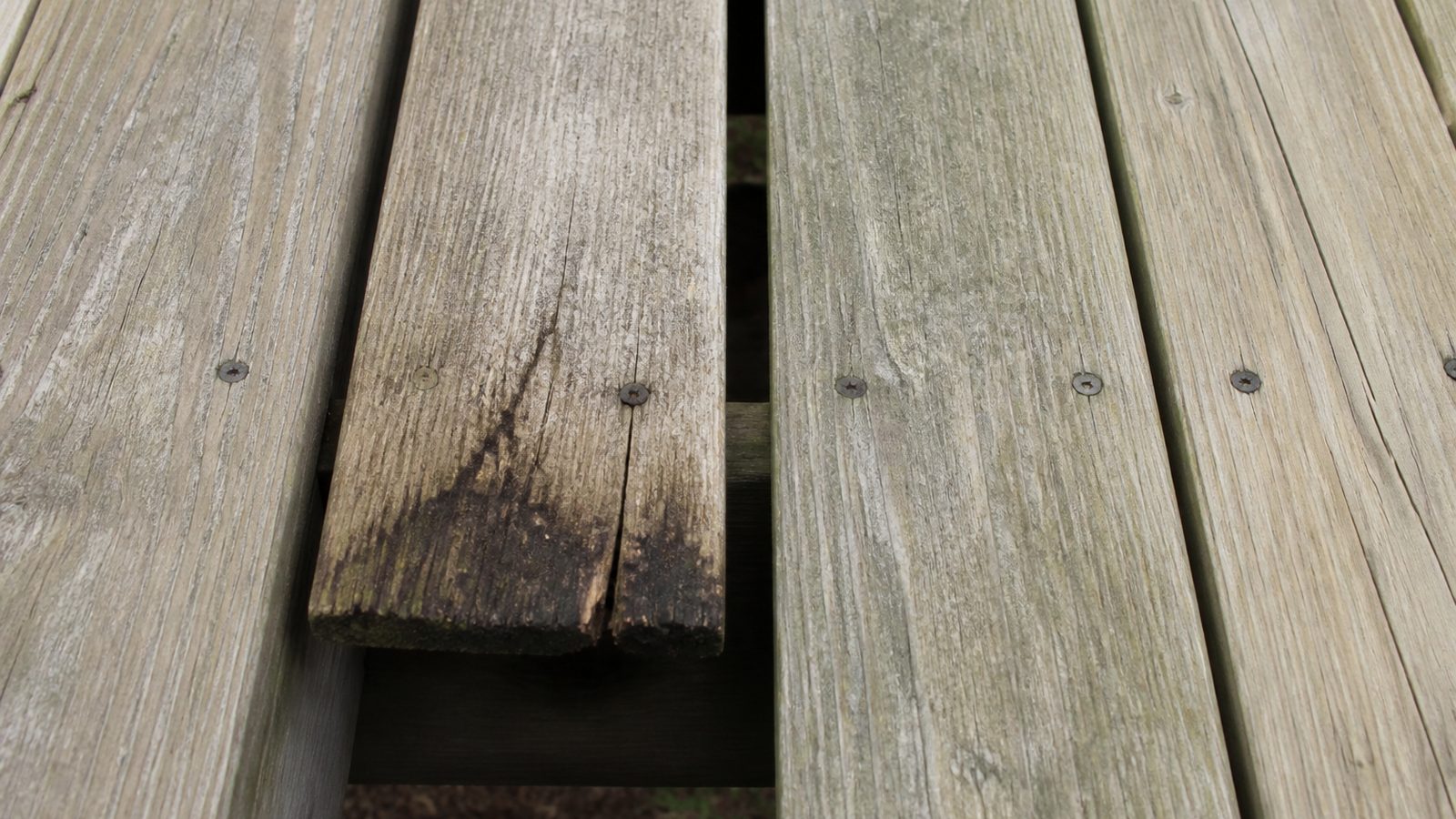
A soft spot underfoot or a board that gives when you press it with a screwdriver is all the warning you usually get before a deck board fails. In Jacksonville, that moment tends to arrive faster than homeowners expect. The combination of persistent heat, high humidity, afternoon thunderstorms, and a long warm season gives wood rot very little resistance. Replacing rotted deck boards is a manageable project for a careful DIYer, but only if the damage stops at the surface boards. Once rot reaches the joists or posts beneath, the job changes scope — and so does your permit situation.
When You Need a Permit in Jacksonville
Replacing individual deck boards on an existing structure is generally considered routine maintenance in Duval County and does not require a building permit, provided you are swapping like-for-like on an existing, permitted deck. No structural work, no permit.
The calculation changes the moment you touch the framing beneath. If inspection reveals rotted joists, ledger boards, or posts, repairing or replacing that structural framing requires a permit from the City of Jacksonville's Building Inspection Division. Adding square footage or building a new deck from scratch also requires a permit and inspections.
Before you pull a single board, probe the joists below with an awl or screwdriver. If the tool sinks in more than a quarter inch with light pressure, you have structural rot — stop the DIY project and call a licensed contractor. Proceeding without a permit on structural work carries fines and can complicate home sales and insurance claims.
Tools and Materials
- Pry bar and flat bar
- Oscillating multi-tool or circular saw with a demo blade (for cutting boards flush to fasteners)
- Drill and impact driver
- Speed square and tape measure
- Safety glasses and gloves
- Replacement decking: pressure-treated pine (ground contact rated, .40 CCA or ACQ) or composite decking (PVC-capped composite holds up best in North Florida humidity)
- Stainless steel or hot-dipped galvanized screws — avoid standard zinc screws, which corrode quickly in salt-air coastal conditions
- Hidden fasteners (Camo clips or Ipe Clip style) if matching an existing hidden-fastener deck
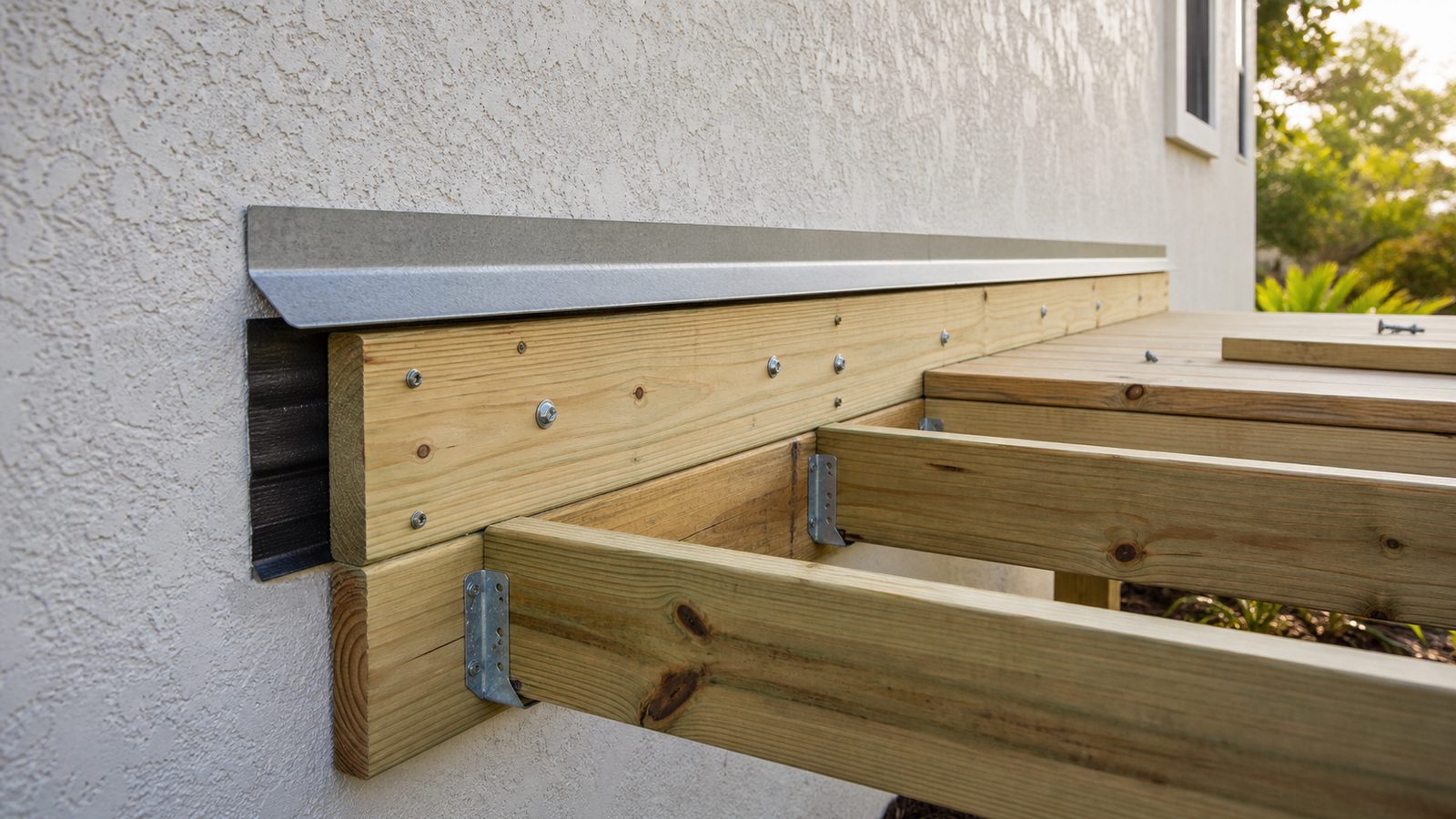
- Joist tape or membrane (applied to joist tops to block water intrusion before laying new boards)
- Penetrating wood sealer or end-cut solution for pressure-treated lumber cut ends
Composite decking costs more upfront but eliminates the maintenance cycle of sealing and staining that pressure-treated pine demands every two to three years in this climate.
Step-by-Step
- Clear the deck and identify every bad board. Walk the entire surface, pressing with your foot and probing with a screwdriver. Mark each board that is soft, cracked through, or separating from fasteners.
- Remove the bad boards. Drive a flat bar under the board edge and lever upward. For boards held with screws, remove the screws first; stripped screws can be cut with an oscillating tool. Work carefully to avoid splitting adjacent boards.
- Inspect every joist the removed board exposed. Probe with the awl. Discoloration alone is not rot — test for softness. Check the ledger board where the deck attaches to the house. If you find soft spots in the framing, stop and call a contractor before continuing.
- Apply joist tape. Before laying new boards, run joist tape along the top of each exposed joist. This is cheap insurance against the water intrusion that rotted the boards in the first place.
- Cut replacement boards to length. For pressure-treated pine, apply a penetrating end-cut sealer to every cut end immediately after cutting. This is one of the most skipped steps and one of the most important in a wet climate.
- Set the board spacing. Use a 16d nail or a dedicated spacer to maintain a consistent gap between boards — typically 1/8 to 3/16 inch — for drainage and to allow wood movement. Composite may need slightly wider gaps per the manufacturer's spec sheet.
- Fasten securely. Pre-drill near board ends to prevent splitting. Drive two fasteners per joist crossing. For hidden fasteners, follow the clip manufacturer's pattern exactly.
- Seal and finish. For pressure-treated pine, allow new lumber to dry for a minimum of a few weeks before applying a water-repellent sealer. Composite does not need sealing, but the surrounding framing does.
Jacksonville Climate Considerations
North Florida's climate creates conditions that are harder on decks than most of the southeastern United States.
Humidity and continuous moisture keep wood at elevated moisture content for much of the year, which accelerates fungal decay. Even "dry" periods come with high overnight humidity.
UV exposure is intense. Untreated wood grays and checks quickly, giving moisture more surface area to penetrate.
Mildew and algae appear on shaded decks — especially under tree canopy — within a single season. Beyond being a slip hazard, mildew holds moisture against the wood surface and speeds rot from the top down.
Termites and wood-destroying organisms (WDO) are active year-round in Duval County. Subterranean termites are the primary threat. Ground-contact rated lumber provides some resistance, but no pressure treatment is a permanent termite barrier. If you see mud tubes or damaged wood with a honeycomb interior, address the pest issue before replacing any boards.
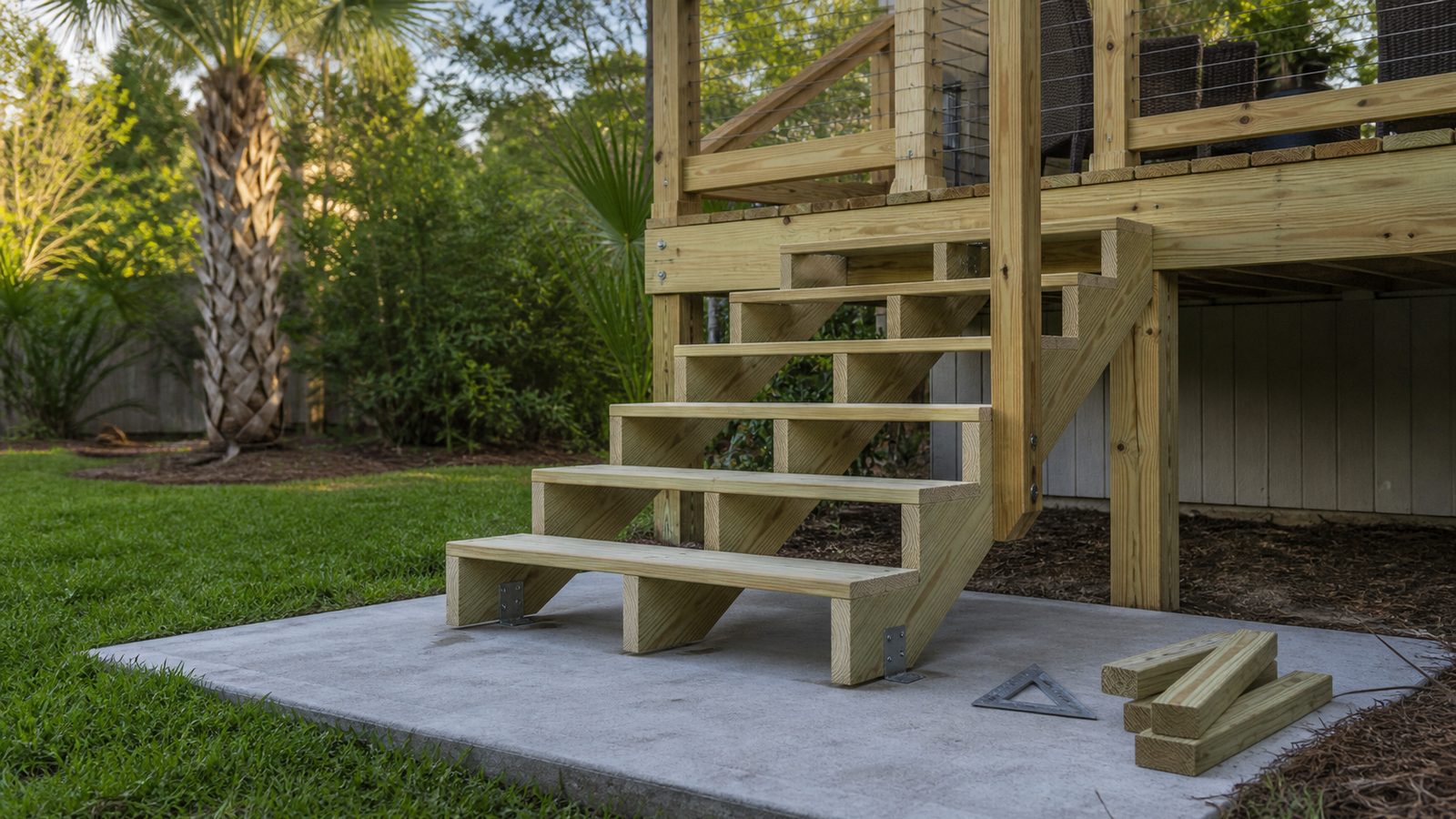
Ground contact on below-grade posts or any framing close to soil should use lumber rated for ground contact (.40 or higher). Standard above-ground .15 rated lumber fails quickly at grade.
What It Costs in Jacksonville (DIY vs. Hiring a Pro)
| Scenario | Estimated Cost Range |
|---|---|
| DIY board replacement (materials only, 100 sq ft) | $200 – $500 |
| Pro board-only replacement (labor + materials, 100 sq ft) | $600 – $1,200 |
| Pro joist repair (per joist, permit may apply) | $150 – $400 per joist |
| Full deck rebuild (new structure, permitted) | $8,000 – $20,000+ depending on size and material |
These ranges reflect Jacksonville market conditions. Composite decking materials run two to three times the cost of pressure-treated pine at the same square footage.
When to Call JK Prestige
Surface board replacement is something a prepared homeowner can handle. Structural rot is not. If your inspection reveals soft joists, a failing ledger board, or posts that move when pushed, the project requires a licensed general contractor who can pull the appropriate Duval County permit, manage the framing work, and get it inspected. JK Prestige Construction handles deck repairs and rebuilds throughout Jacksonville — contact us before the rot spreads to framing that triples the scope of the job.
No call center. No coordinator. A JK principal reviews every inquiry and replies with a real number, not a range, not a follow-up form.
Request Free Estimate →