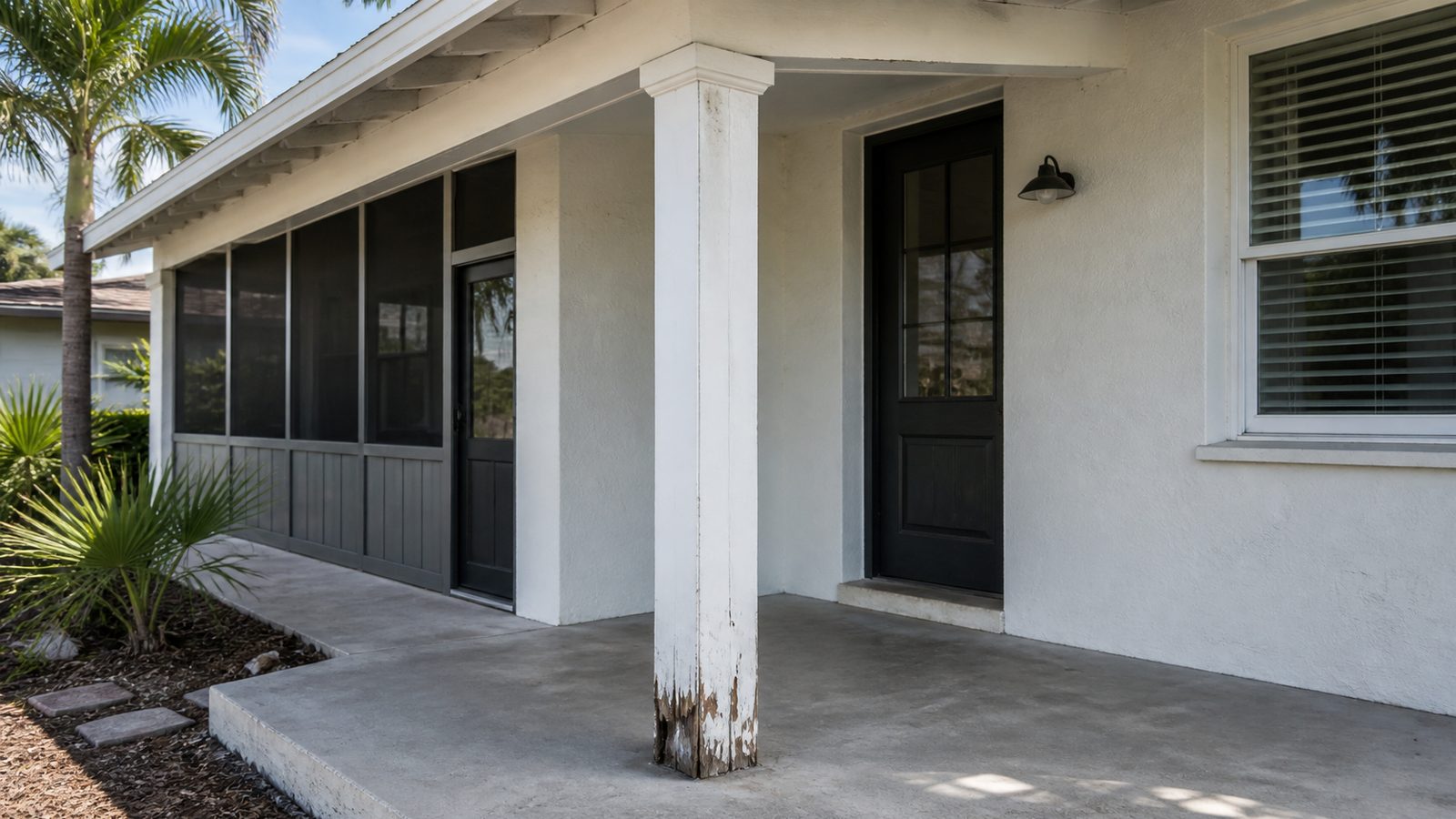
A rotted porch column looks cosmetic until you press a screwdriver into the base and it disappears into soft, spongy wood. In Jacksonville's humidity, a column that traps water at its base can go from a little soft to structurally compromised in a couple of seasons. Replacing one is a manageable weekend project for a confident DIYer, but only if the roof load gets supported correctly first. This guide covers the temporary shoring, the material choice, and the base detail that keeps the new post from rotting the same way.
When You Need a Permit in Jacksonville
This is genuinely a gray area. Replacing a rotted post with a like-for-like column of the same size and location, carrying the same roof load, is often treated as a repair, and plenty of Jacksonville homeowners handle it without a permit. A permit is clearly expected if you change the post material or dimensions in a way that affects load transfer, replace more than one post on a roof that shows sagging, change the connectors at the top or bottom, or touch the beam or roof framing above it. Duval County residents fall under the City of Jacksonville's Building Inspection Division, and it is worth a call to confirm before you start, since inspectors can read repair versus replacement differently. Nassau, Clay, and St. Johns counties each run their own separate permitting office, so do not assume Duval's answer applies there. If the home sits in the Riverside, Avondale, or Springfield historic districts, any visible exterior change to a porch column is likely to trigger historic district design review, even for a straightforward replacement. The Florida Building Code governs wind and load requirements whenever a post is structurally reworked, so expect an inspector to review the connections if your project crosses into that territory.
Tools and Materials
- Screw jack or hydraulic post jack, rated above the estimated roof load
- 4x4 or 6x6 pressure-treated lumber for temporary shoring
- Wide plywood or a 2x10 pad to spread the jack's load on the deck
- Reciprocating saw and pry bar for removing the old column
- Moisture meter to check for rot beyond the visible damage
- Replacement column in cellular PVC, fiberglass, or pressure-treated wood
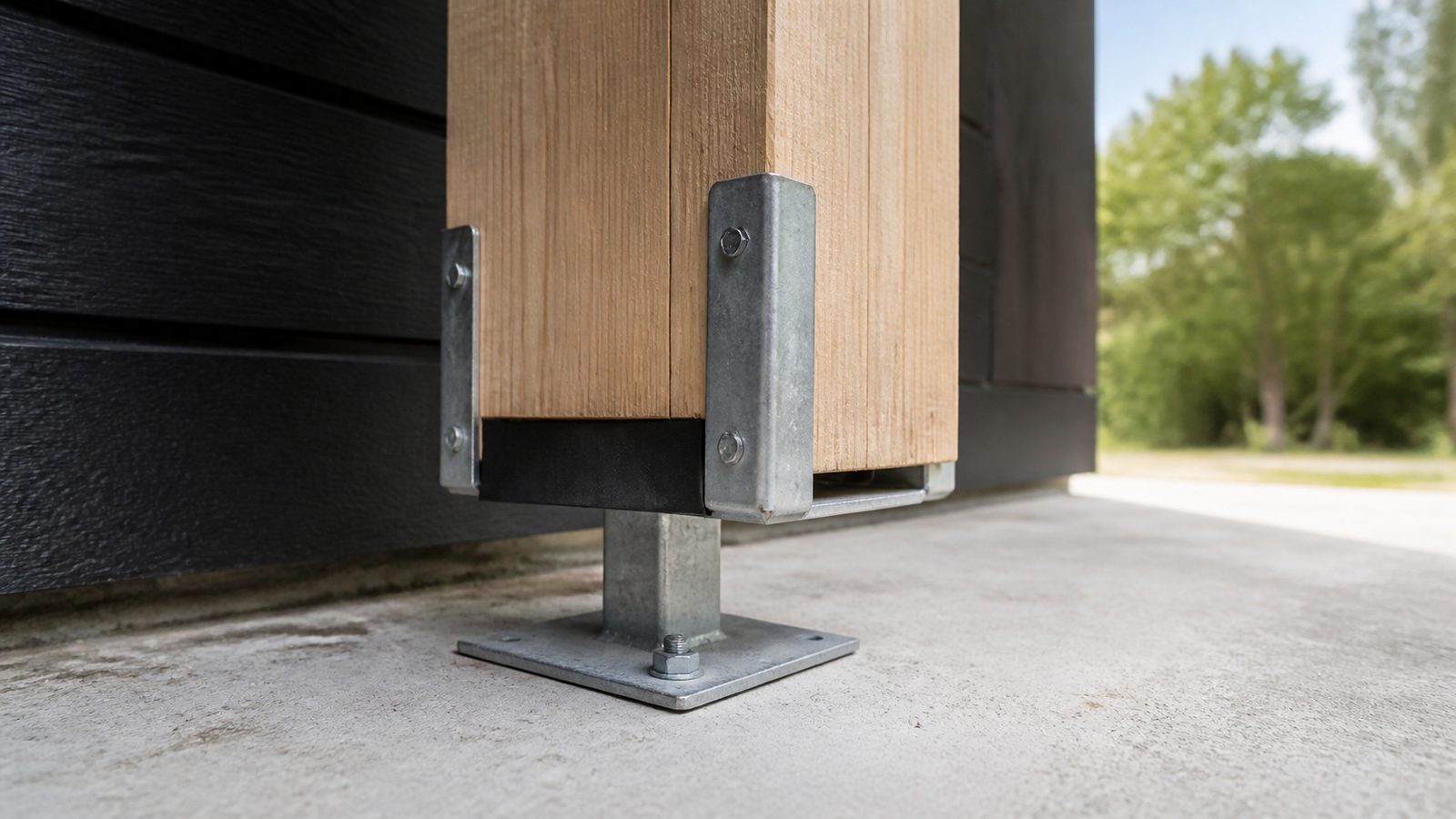
- Raised, adjustable post base connector rated for the load
- Post cap or top connector matching the beam width
- Stainless or hot-dip galvanized structural fasteners
- Flashing tape for the post base
- Level, tape measure, caulk gun, exterior sealant
Step-by-Step
- Probe the full column with a screwdriver or awl at several heights to map how far the rot extends, not just at the base.
- Check the beam and framing above the post for staining or softness, since a rotted post often means the connection above has been leaking too.
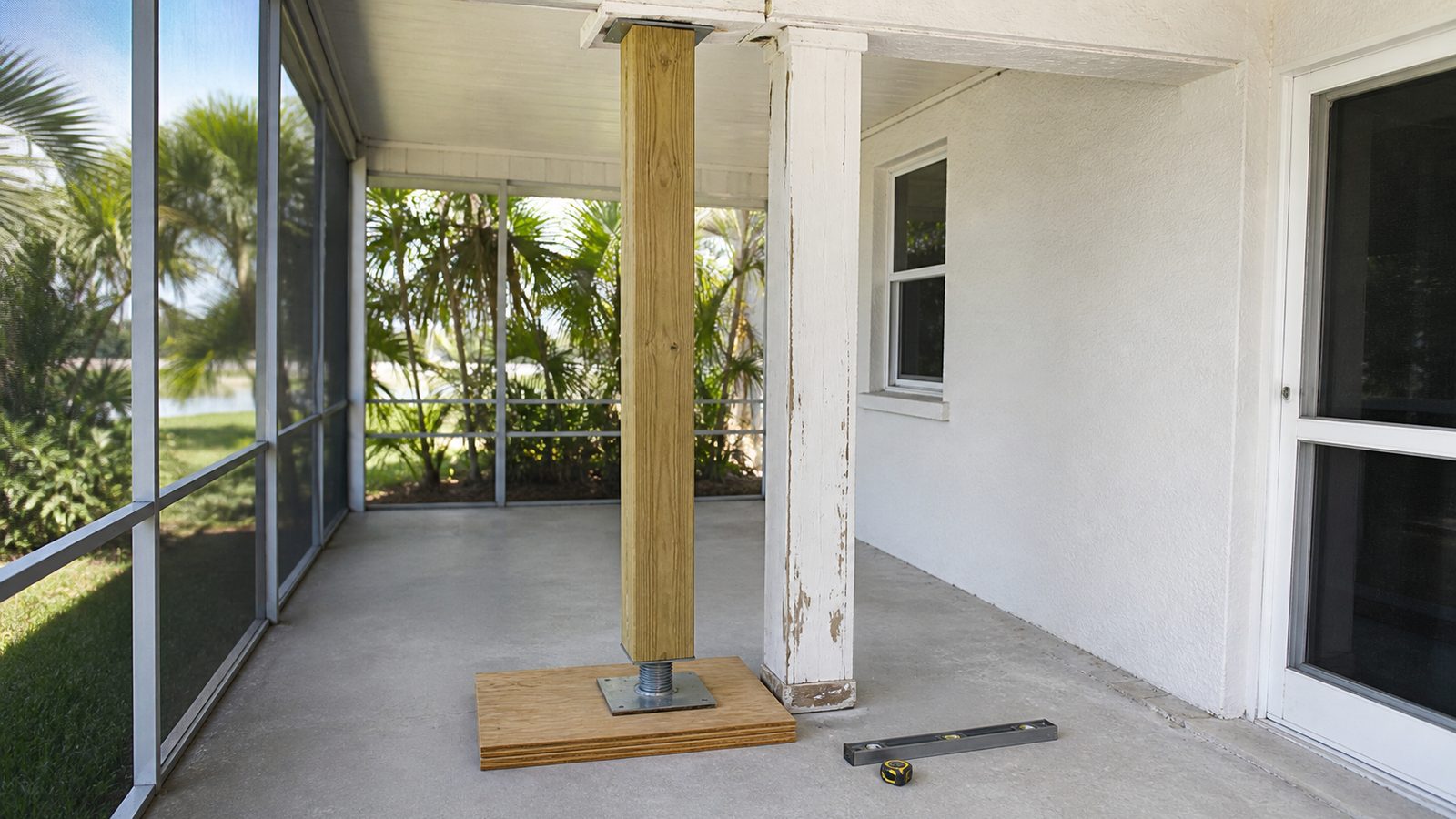
- Set a temporary shoring post next to the damaged column on a plywood pad to spread the load across the deck.
- Raise the jack slowly until it contacts the beam, then continue in small increments to lift the load off the failing column. Watch for cracking or movement and stop if you see any.
- Once unloaded, remove the post caps and base connectors, then cut or pry the old column free.
- Inspect the deck or slab under the old base for rot or standing water evidence, and repair that surface first.
- Measure the exact height needed, accounting for the new base connector, and cut the replacement column to length.
- Install the raised post base connector on the deck or slab, anchored per its fastener schedule.
- Set the new column on the base, plumb it on two faces, shim as needed, then fasten the base connector to the column.
- Install the top connector to the beam, seal the top and bottom joints, and wrap the base with flashing tape to shed water off the end grain.
- Release the jack slowly, watching the new post take the load evenly, then remove the shoring.
- Caulk, prime, and paint to match, and recheck the base seal once cured.
Common Mistakes to Avoid
- Cutting the old post out before the roof load is fully supported
- Setting end grain directly on a wet deck or slab instead of a raised base connector
- Reusing a corroded or undersized connector instead of matching it to the load
- Painting over the base joint without sealing it, which traps moisture instead of shedding it
- Ignoring soft wood in the beam above, so the new post rots again from the top down
Jacksonville Climate Considerations
Jacksonville's humidity keeps porch columns damp longer after a rainstorm than they would stay in a drier climate, which is the main reason base rot is so common here. Homes near the beaches or the Intracoastal deal with salt-laden air on top of that, which accelerates corrosion on any fastener not rated for coastal exposure. Wind uplift is a real design factor for porch roofs, and the post-to-beam connector does real structural work during a storm, not just cosmetic holding. Termites and other wood-destroying organisms are active year-round here, so a wood column benefits from a pest check while the framing is already exposed. Driving rain during summer storms hits columns at an angle, which is why the base flashing detail matters as much as the connector itself.
What It Costs in Jacksonville (DIY vs. Hiring a Pro)
| Approach | Typical Cost Range | Notes |
|---|---|---|
| DIY, single wood column | $150 to $400 | Jack rental, lumber, connectors |
| DIY, single PVC or fiberglass column | $300 to $700 | Longer service life |
| Hired pro, single column, no permit | $500 to $1,200 | Labor, shoring, cleanup |
| Hired pro, single column, with permit | $900 to $2,000 | Includes permit and inspection |
| Hired pro, multiple columns or beam repair | $2,000 and up | Scope grows if framing is compromised |
When to Call JK Prestige
If the rot has reached the beam, if more than one column shows softness, or you are not confident jacking a roof load safely, have a licensed contractor look before you start cutting. JK Prestige can assess the damage, handle the permit conversation with your county, and get the base and connector details right the first time.
No call center. No coordinator. A JK principal reviews every inquiry and replies with a real number, not a range, not a follow-up form.
Request Free Estimate →