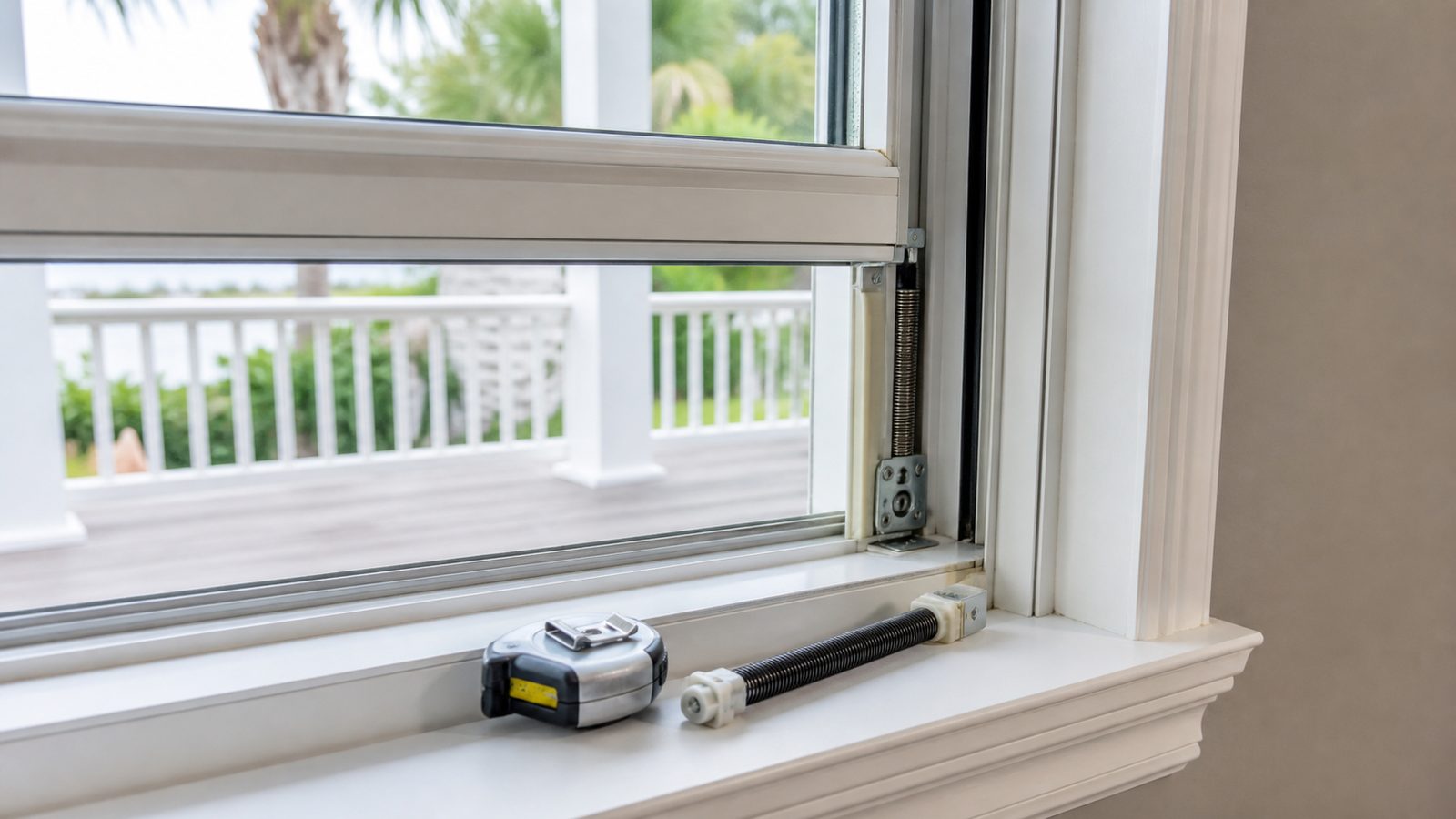
If the upper sash on your single hung window drops the moment you let go, or the sash tilts oddly out of the frame when you try to raise it, the balance has failed. This is one of the most common window complaints we hear across Jacksonville, from older double hung units in Riverside to newer vinyl single hung windows in Mandarin and Southside. The balance is the spring-loaded mechanism hidden in the side jamb that counteracts the weight of the sash so it stays wherever you leave it. When it wears out, snaps, or slips off its pivot, the sash will not stay up, or it will not move at all. Here is how to identify the type of balance you have, source the correct part, and swap it out safely.
When You Need a Permit in Jacksonville
Repairing or replacing a window balance is maintenance, not construction. You are not altering the opening, the structure, or the exterior envelope, so no permit is required from the City of Jacksonville for this repair, whether you are replacing a block and tackle unit or a spiral balance rod.
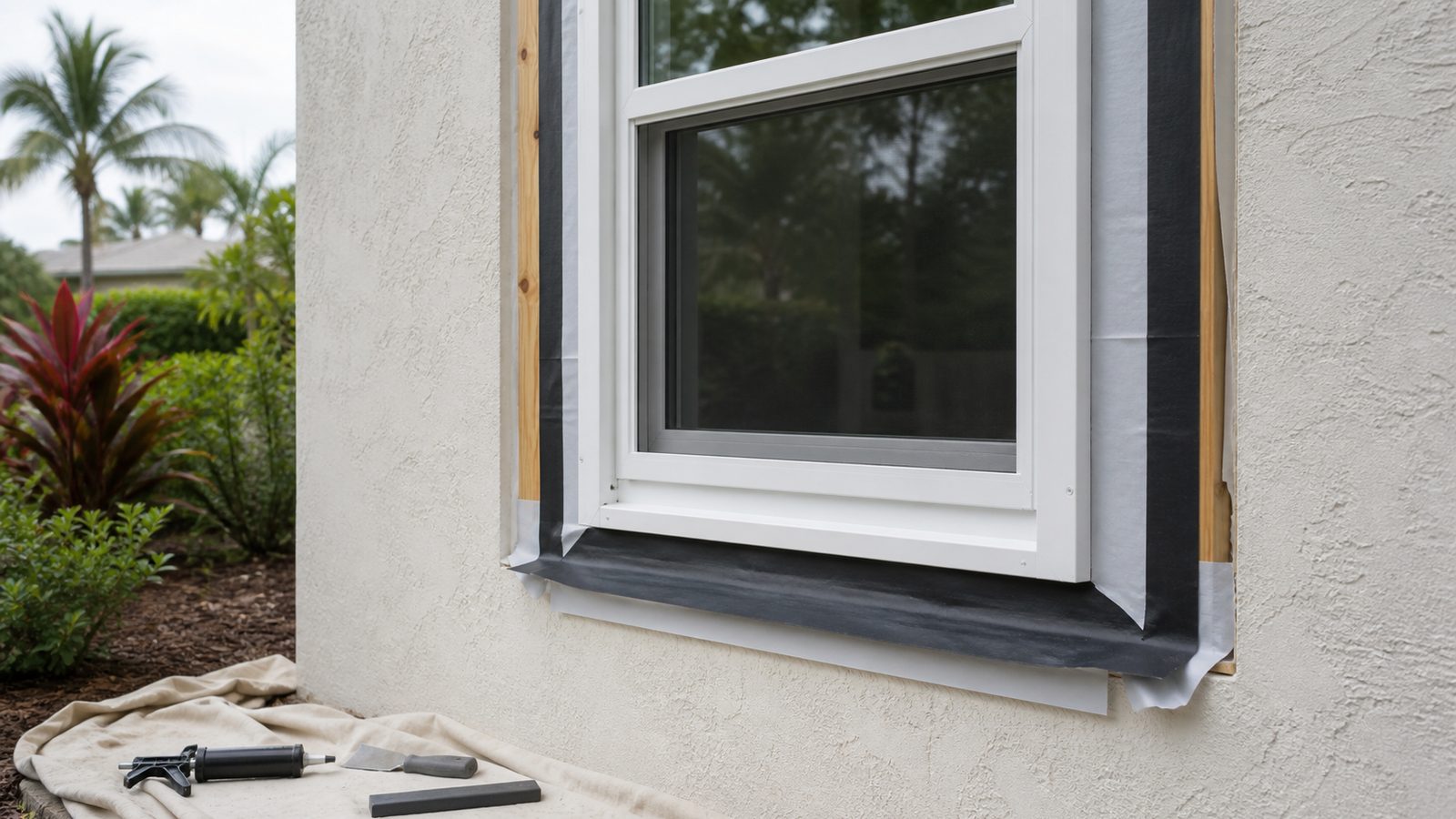
The line moves once you replace the entire window unit rather than just the hardware inside it. Full window replacement in Duval County is permitted work, and the new unit has to carry Florida Product Approval or, in some cases, a Miami-Dade County Notice of Acceptance rated for our wind zone. Enlarging, shrinking, or relocating the rough opening is structural work and is reviewed separately.
Worth knowing if the window is in a bedroom: many bedroom windows serve as an emergency escape and rescue opening, meaning it has to be operable. A sash that will not stay up or will not open is not just an annoyance in that room, it is a life safety issue. If you are unsure whether your situation needs a permit or review, call the City of Jacksonville Building Inspection Division before you start.
Tools and Materials
- Flathead screwdriver and a stiff putty knife
- Needle nose pliers
- Utility knife, for painted or caulked stops
- Tape measure
- The old balance, removed intact, to match against the new one
- Replacement balance, matched by type, length, and weight rating
- Work gloves and safety glasses
- A second person to help support a large or heavy sash
Step-by-Step
- Lower the sash and remove it. On most single hung vinyl windows, tilt latches sit at the top corners of the sash. Press them in, tilt the bottom of the sash toward you, and lift it free of the balance shoes. On older double hung wood windows without tilt latches, pry the interior stop off first with a putty knife.
- Identify the balance type. Look inside the jamb channel where the sash rode. A block and tackle balance uses a coiled spring in a plastic housing with a cord or tape running to a pivot shoe. A spiral balance is a thin steel rod that twists inside a tube, with a pin or clip at the top. The two are not interchangeable.
- Find the manufacturer stamp. Check the corner of the glass for a small etched logo identifying the window manufacturer. Check the jamb channel itself, often near the top or bottom, for a printed or stamped label with a part number or balance rating. Between the two, you usually have enough to identify the exact window line.
- Remove the old balance. With the sash out, unhook the shoe from the pivot if still attached, then slide the balance housing out of the jamb channel, releasing any retaining clip. Handle a block and tackle unit carefully. It holds spring tension even out of the window, and a sudden release can pinch fingers or snap the cord.
- Take the old balance to a window hardware supplier. Balances are sold by length, by the pull weight they are rated for, and often by a manufacturer-specific hook or clip style. Bringing the physical part in, or at minimum the jamb label's part number, is the most reliable way to get the right replacement. Guessing leads to a sash that is too heavy or too light for the new spring.
- Install the new balance. Slide it into the jamb channel, seat the retaining clip or screw, and hook the shoe onto the sash pivot pin.
- Reset the sash. With a helper supporting the weight, tilt the sash back into the frame and engage both balance shoes evenly before releasing the tilt latches. Uneven engagement is the most common reason a freshly repaired sash still tilts or binds.
- Test through a full cycle. Raise and lower the sash several times, checking that it holds at multiple heights and both sides move together.
A charged balance is under real spring tension, and a sash that drops unexpectedly is both a hand injury risk and a glass breakage hazard. Always support the sash weight while you work, and never handle a large or upper-floor window alone.
Jacksonville Climate Considerations
Our climate is hard on vinyl window hardware. Constant UV exposure makes vinyl frames and plastic balance shoes brittle over the years, which is why a shoe often cracks or snaps rather than wears smooth. Homes near the beaches or the Intracoastal deal with salt air that corrodes metal balance springs and screws faster than it would inland. A west-facing wall gets the worst of Florida's humidity and heat cycling, which can warp vinyl channels enough to bind an otherwise good balance. Sand and pollen work into the jamb tracks year round and add friction that stresses the balance further.
Older houses in Springfield and Riverside often have a different problem entirely: windows painted shut over decades of repainting. That is a paint and glazing issue, not a balance failure, and forcing a painted-shut sash can snap a good balance or crack old glass. Score the paint line with a utility knife before assuming the hardware is at fault.
What It Costs in Jacksonville (DIY vs. Hiring a Pro)
These are rough local estimates, not quoted or surveyed prices, and actual cost depends on window brand, age, and how many sashes need work.
| Approach | Estimated Cost | Notes |
|---|---|---|
| DIY, single balance | $15 to $40 per balance | Part cost only, correct match on first try |
| DIY, both balances on one sash | $30 to $80 | Common to replace both sides together |
| Professional repair, one window | $125 to $250 | Includes diagnosis, sourcing, and labor |
| Professional repair, multiple windows | $90 to $175 per window | Volume pricing common on a full-house visit |
When to Call JK Prestige
Call us if the balance type is unclear, the window is an obsolete or discontinued line where matching parts is difficult, more than a couple of windows in the house are failing at once, or the sash is large, heavy, or on an upper floor where handling it alone is not safe. We also step in when what looks like a balance problem turns out to be a warped frame, failed glazing, or a window that has reached the end of its service life and is better replaced than repaired.
No call center. No coordinator. A JK principal reviews every inquiry and replies with a real number, not a range, not a follow-up form.
Request Free Estimate →