If the handle on your lanai slider has started grinding, sticking, or spinning loose in your hand, you're not dealing with a defective part. You're dealing with a mortise lock that's worn out or corroded, and it's one of the more common service calls we get from homeowners in Jacksonville, especially anyone within a few miles of the water. Most sliding door handle sets are a bolt-in replacement once you know what you're measuring. The part that trips people up is buying the wrong lock the first time because they guessed at the size instead of measuring it.
When You Need a Permit in Jacksonville
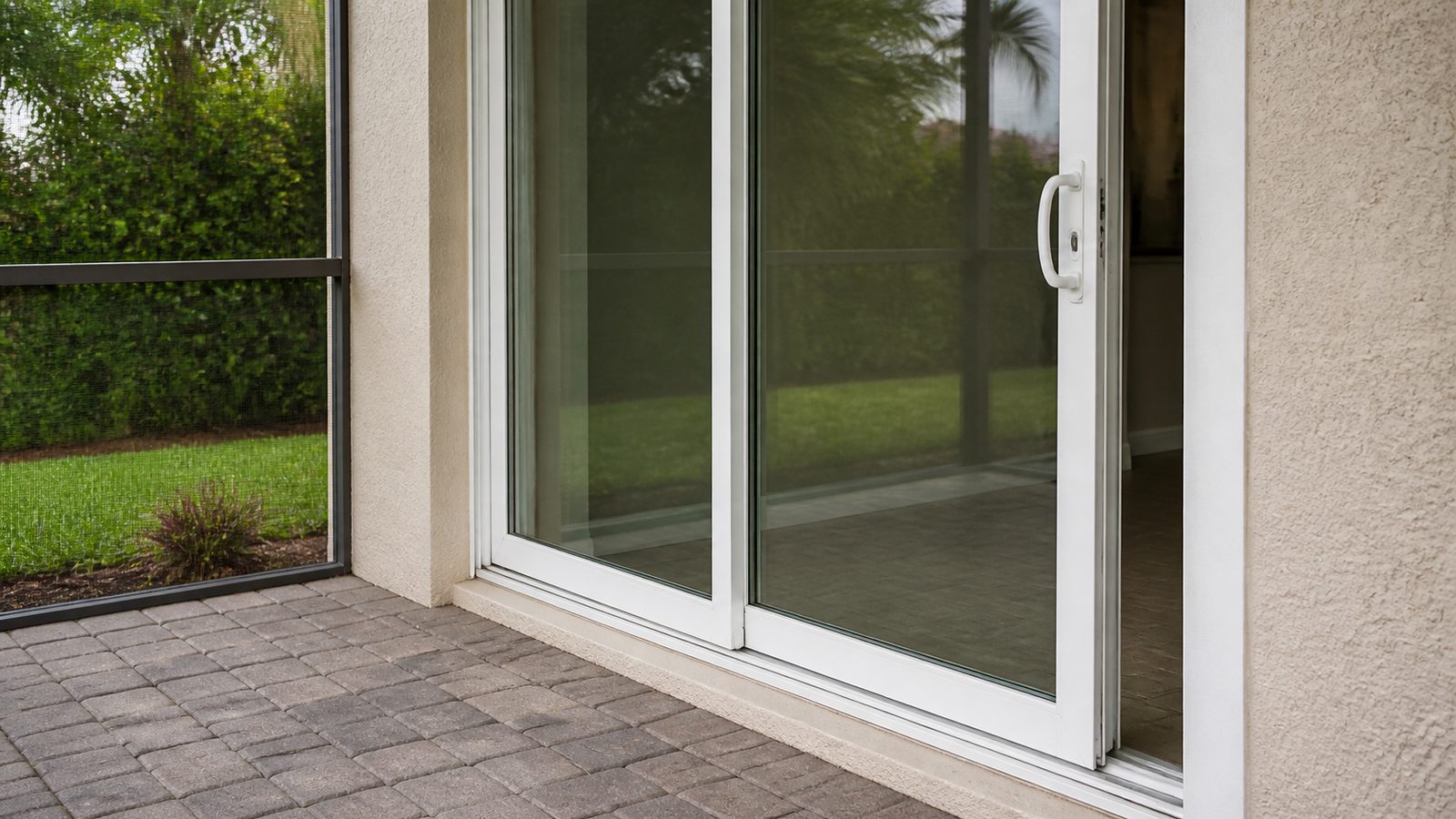
Swapping out the handle set and mortise lock on an existing sliding door is maintenance, not construction. In Duval County, that kind of hardware replacement does not require a permit through the City of Jacksonville Building Inspection Division, because you aren't altering the door unit, the opening, or the structure's wind resistance.
That changes if the door itself is damaged, the frame is bent or corroded through, or you're replacing the whole slider rather than just the lock. A full door replacement is permitted work in Jacksonville and has to meet current Florida Building Code product approval and wind load requirements for our wind zone, which usually means a Notice of Acceptance or Florida Product Approval number for the new unit. If you're not sure which category your job falls into, a quick call to the City of Jacksonville Building Inspection Division will settle it before you buy anything.
Tools and Materials
- Phillips and flathead screwdrivers
- Tape measure or a mortise lock backset gauge
- Replacement mortise lock and handle set sized to match your measurements
- Small pry bar or flat screwdriver for a stuck lock body
- Penetrating oil (a corrosion-specific product, not just WD-40) for seized screws
- Silicone-based lubricant, not household oil, for the new lock and track
- Painter's tape to protect the door finish
- Optional: secondary security bar (Charley bar) or a sliding door foot bolt
Step-by-Step
- Take the door off its track if the lock is seized. On an older aluminum frame slider with a corroded lock, it's often easier to lift the door out, lay it flat, and work on the edge than to fight it while it's hanging.
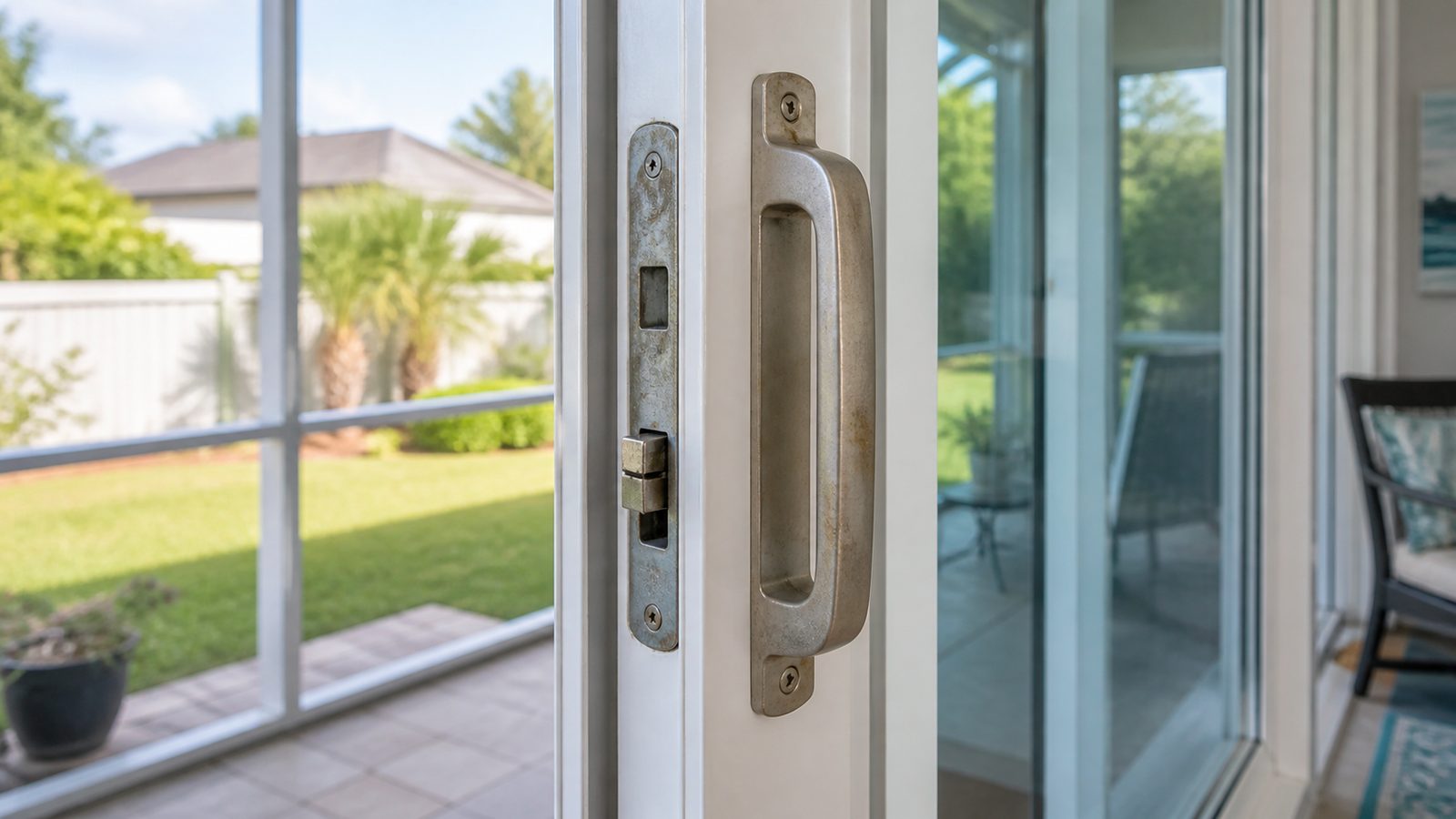
- Remove the old handle set. Take out the visible screws on the interior handle, then slide the handle assembly and strike plate out through the edge of the door. On most aluminum frame doors from the 1970s through the 1990s, still common all over Jacksonville, the mortise lock body sits in a routed pocket in the door's edge and comes out once the mounting screws are free.
- Measure the mortise lock before you order anything. This is the step people skip, and it's why the replacement doesn't fit. You need three numbers: the backset, the distance from the door edge to the center of the keyhole or thumb-turn spindle hole; the face plate screw spacing, the distance between the two mounting screw holes on the edge plate, usually 3-1/8 to 3-15/16 inches on residential sliders; and the latch type, hooked or flat. Bring the old lock to the hardware store. These locks are not universal, and one built for a different backset will not thread into your existing holes.
- Decide on keyed or non-keyed. Ground-level lanai and patio doors leading to a pool enclosure or fenced yard should almost always get a keyed lock, especially if that door is a secondary entry point. Doors opening onto a screened, locked pool cage with no direct outside access are sometimes left non-keyed for convenience, but we'd rather see every exterior slider keyed given how often those enclosures get left open.
- Install the new mortise lock into the routed pocket and secure it with the face plate screws, without overtightening the aluminum-threaded screws, which strip easily.
- Attach the new handle set on both sides, then test the latch and cylinder before rehanging the door.
- Rehang the door and check the strike plate alignment. Adjust the strike position if the latch isn't seating fully, the most common reason a "new" lock still feels loose or won't catch.
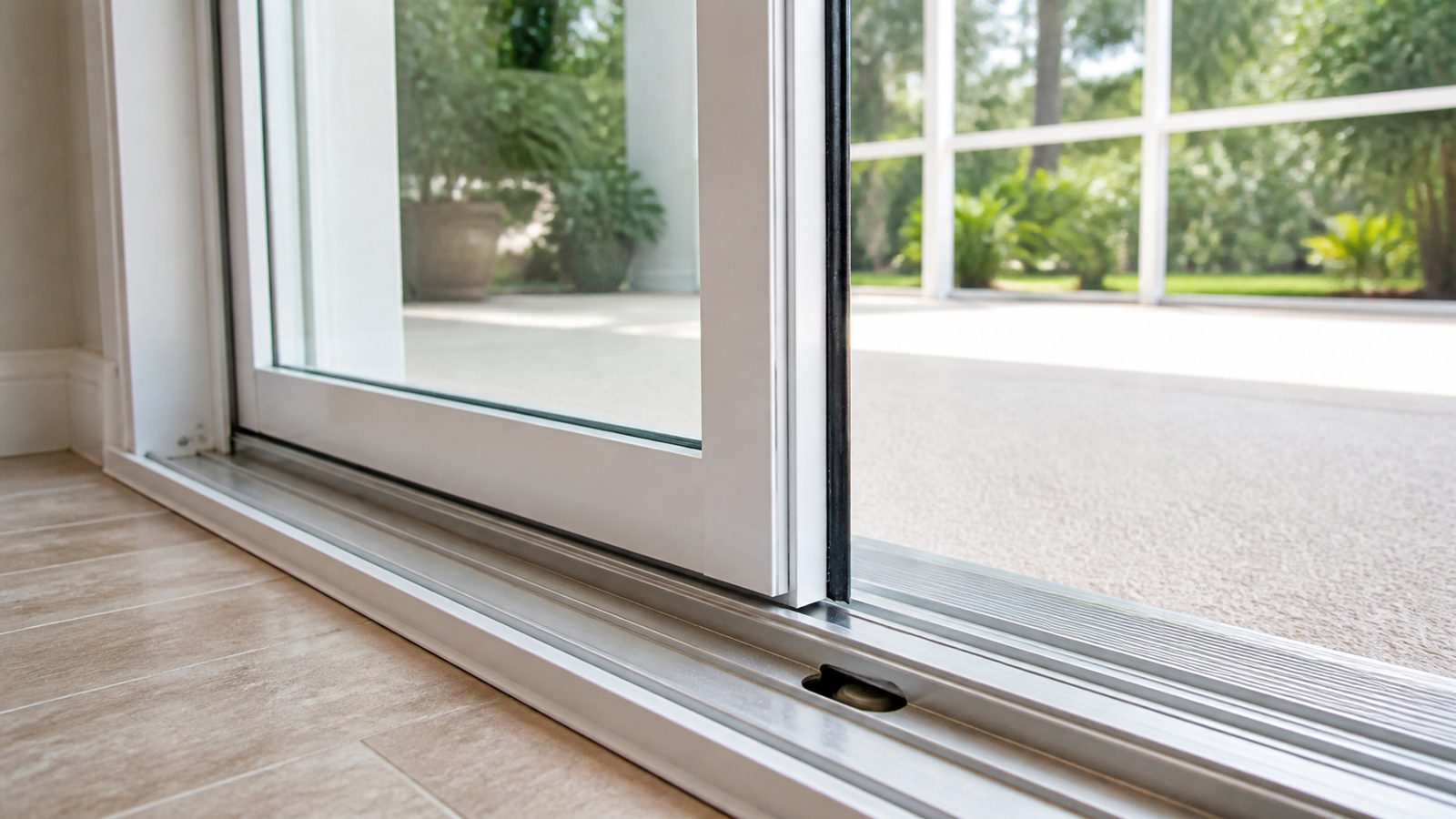
- Add a secondary security bar or foot bolt. A Charley bar across the interior track, or a foot bolt dropped into a hole drilled in the track, adds a second point of resistance that doesn't rely on the handle lock at all, and a sliding door's factory lock alone is often the weakest lock in the house.
Jacksonville Climate Considerations
Salt air is the main reason sliding door hardware fails here faster than it would inland. Homes near the Atlantic in Jacksonville Beach, Neptune Beach, Atlantic Beach, and Ponte Vedra see accelerated corrosion on the pot metal inside most standard handle sets, the same alloy that makes a lock feel gritty and eventually seize solid. Within a mile or two of the ocean, it's worth paying more for hardware rated for coastal or marine environments, stainless steel or a heavier zinc alloy, rather than the builder-grade set sold at a big box store.
Humidity plays a role too. Jacksonville's year-round moisture works into the lock body and accelerates rust on steel components even away from the coast. On a west-facing lanai door, UV exposure also breaks down composite handle housings and fades finishes over a few years, so a cracked or chalky handle on a west-facing slider isn't unusual even on a newer home.
During hurricane season, a slider with a weak or corroded lock and no secondary bar is one of the easier points of entry on the house. Replacing the lock and adding a foot bolt before storm season is cheap insurance compared to dealing with a forced door afterward.
What It Costs in Jacksonville (DIY vs. Hiring a Pro)
| Job | DIY Cost | Professional Cost |
|---|---|---|
| Handle set only (non-keyed) | $30 to $80 in parts | $150 to $250 installed |
| Full mortise lock + handle set (keyed) | $60 to $150 in parts | $200 to $350 installed |
| Coastal-grade/marine hardware upgrade | $100 to $220 in parts | $275 to $425 installed |
| Add Charley bar or foot bolt | $20 to $50 in parts | $100 to $175 installed |
| Full door replacement (permitted) | Not recommended as DIY | $1,200 to $3,500+ per opening, permit included |
When to Call JK Prestige
If the lock has seized to the point of damaging the door edge, the frame shows corrosion or won't sit square in the track, or you're weighing a full door replacement instead of another repair, that's when it makes sense to bring in a contractor rather than keep patching it. We handle both the hardware side and the permitted door replacement itself, so you're not guessing at which category your project falls into.
No call center. No coordinator. A JK principal reviews every inquiry and replies with a real number, not a range, not a follow-up form.
Request Free Estimate →