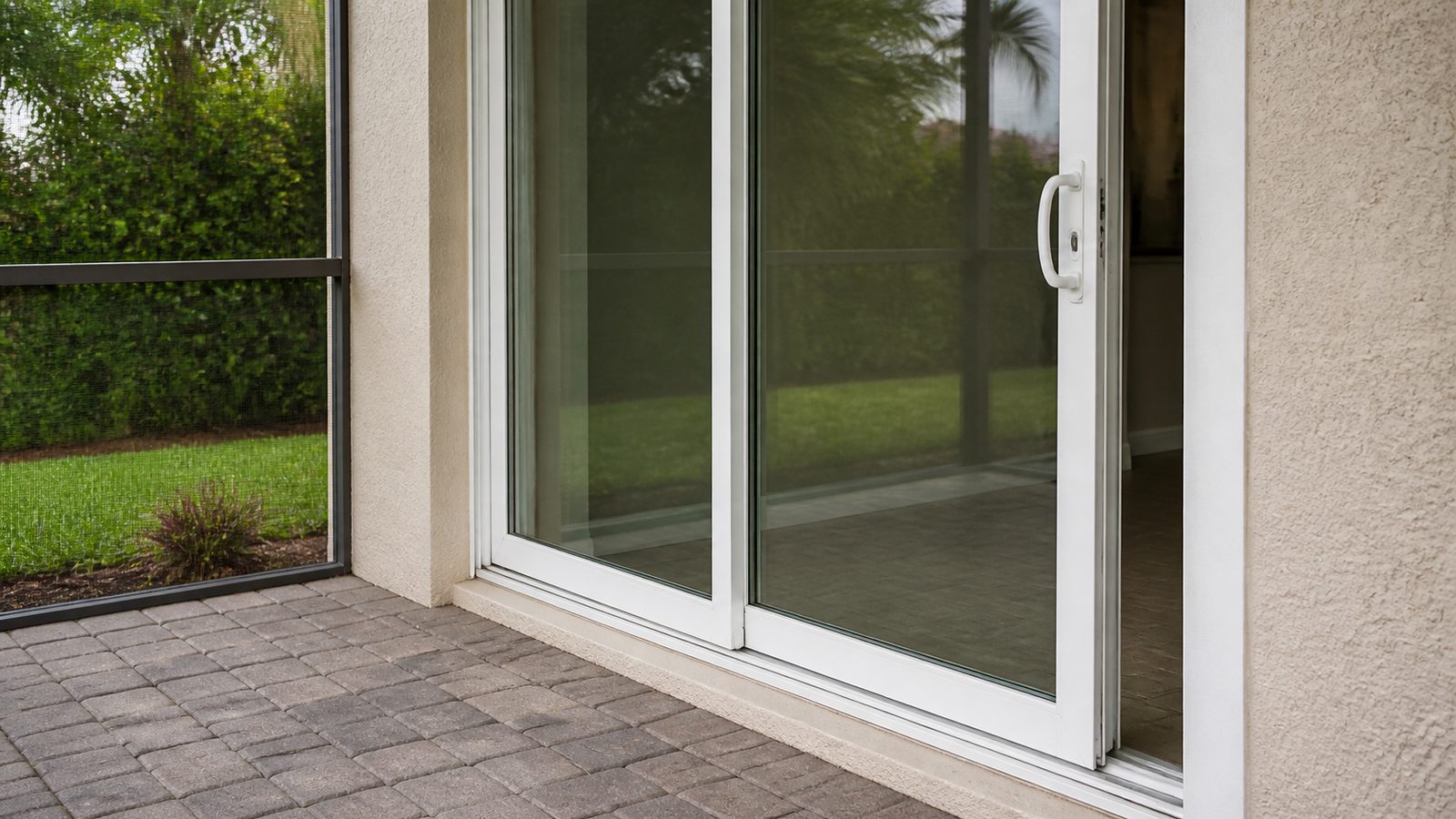
If your sliding glass door has started dragging, sticking, or grinding every time you open it, the rollers are almost always the culprit. It's one of the most common repair calls we get on Jacksonville homes, especially anything within a few miles of the water, and it's also one of the more approachable DIY jobs on a house, as long as you know what you're dealing with before pulling the door off its track. Here's how the process works, what it costs locally, and when it makes more sense to call a pro.
When You Need a Permit in Jacksonville
Replacing worn rollers on an existing sliding glass door is a maintenance repair, not a permitted alteration. The City of Jacksonville's Building Inspection Division, which handles permitting for Duval County, generally does not require a permit to swap out hardware like rollers, tracks, or handles on a door that's already installed and isn't changing size, structure, or the opening.
This changes if the roller problem turns out to be caused by a bent or corroded frame, a cracked track, or if you decide to replace the entire door unit instead of just the rollers. That work falls under the Florida Building Code's wind-load and, depending on location and elevation, impact requirements for exterior openings. A full door replacement in Duval County typically does require a permit, since the new unit has to meet current wind pressure standards for the area. If you're not sure whether your situation is a repair or a replacement, call the Building Inspection Division or a licensed contractor before ordering parts, so you don't end up doing work that should have had a permit pulled.
Tools and Materials
- Replacement roller assemblies (measure your existing rollers or bring the door's brand/model info to a glass and door supplier)
- Phillips and flathead screwdrivers
- Adjustable wrench or nut driver
- Putty knife or flat pry bar
- Vacuum or shop vac
- Silicone-based lubricant (not WD-40 or petroleum-based products)
- Wire brush or old toothbrush for track cleaning
- Work gloves
- A second person to help lift the door panel
Step-by-Step
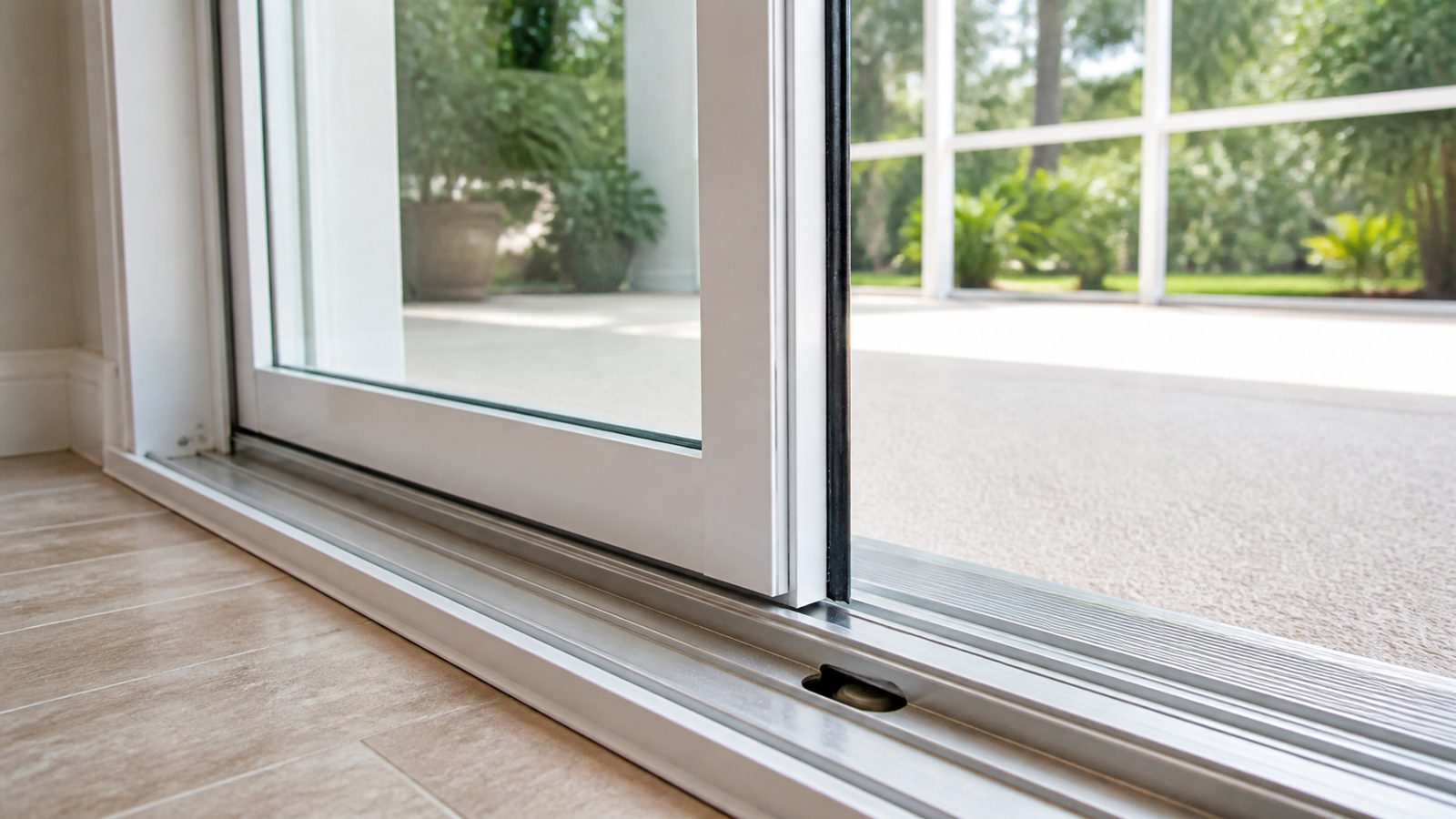
- Confirm the rollers are the problem. Slide the door and feel for grinding, catching, or a "hopping" sensation. Check the track first for debris, sand, or a bent section, since a dirty track can mimic roller failure and costs nothing to fix.
- Remove the door panel. Most sliding doors have adjustment screws near the bottom corners, visible on the interior face of the frame. Turning these counterclockwise usually lowers the rollers and gives clearance to lift the panel up and out of the track. Have a second person help support the weight, since even a standard panel is heavy and awkward.
- Lay the panel flat on a padded surface and remove the bottom rail cover or access plate to expose the roller assemblies, typically held in with one or two screws each.
- Remove the old rollers and inspect the housing. Note the wheel size, housing style, and whether it's ball-bearing or plain wheel. Bring the old roller with you when buying replacements, since hardware varies between manufacturers.
- Install the new rollers in the same orientation and secure with the original screws.
- Clean the track thoroughly before rehanging. This is the step people skip, and it matters most here, since sand and salt residue in the track wears down new rollers almost as fast as the old ones.
- Rehang the panel, tilting it into the top track first, then guiding the bottom into the lower track.
- Adjust the roller height until the door slides smoothly and seals evenly against the weatherstripping at both the top and the latch side.
- Lubricate the track and rollers with a silicone-based lubricant, then test the door through its full range before calling it done.
Jacksonville Climate Considerations
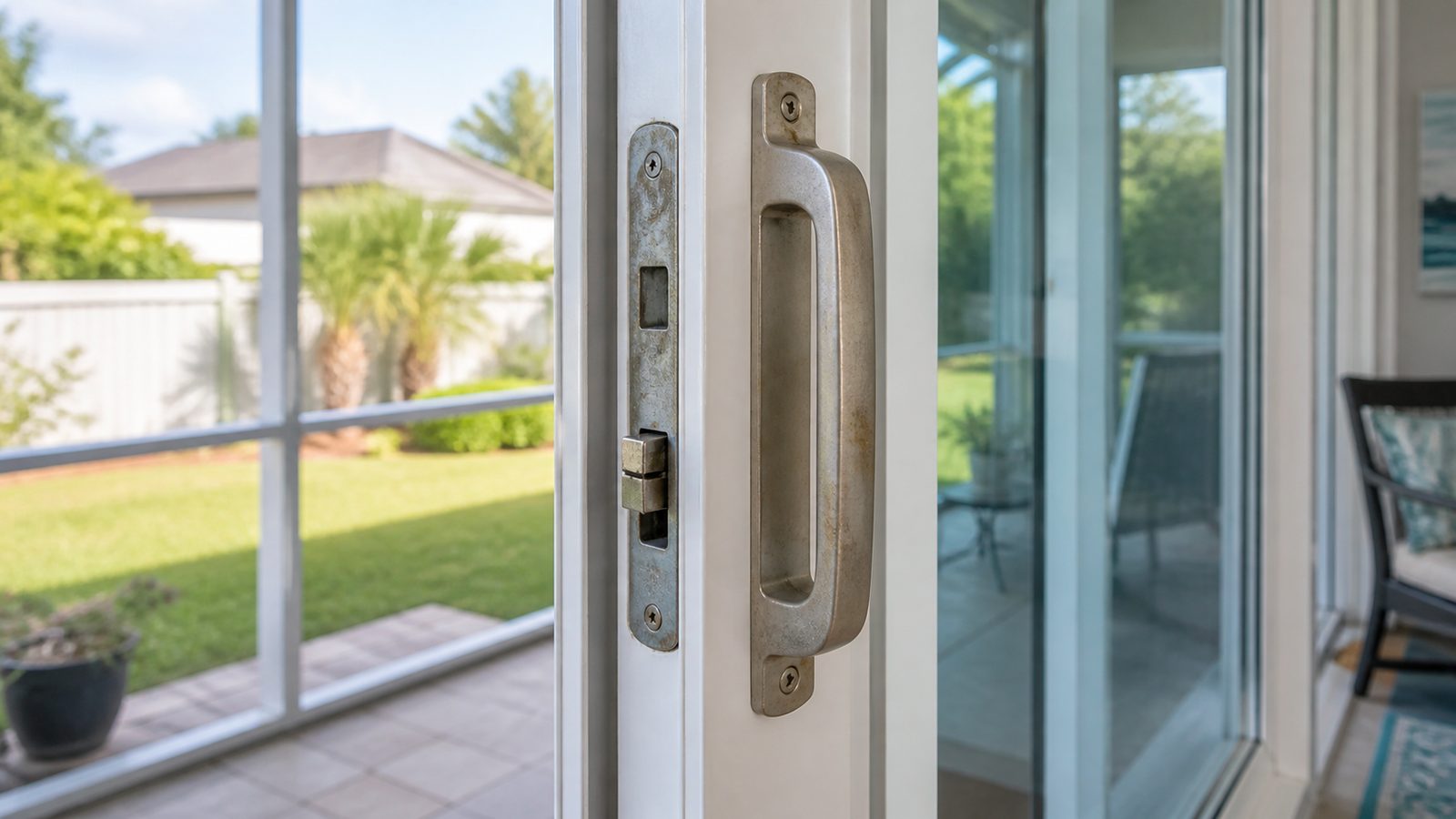
Sliding door hardware in Northeast Florida works harder than it does in most of the country. Salt-laden air from the coast accelerates corrosion on steel rollers and track hardware, even well inland, which is why we generally recommend stainless steel or heavy-duty composite roller assemblies over standard steel for a Jacksonville home. Humidity swells wood-clad door frames seasonally, which changes how a door sits in its track and can make a perfectly good roller look like it's failing when the real issue is frame movement. During hurricane season, doors get opened and closed under wind-driven rain and blowing sand far more than usual, and that grit is exactly what grinds down roller wheels over time. Direct afternoon sun on the track can also get hot enough to degrade plastic components in cheaper roller assemblies faster, so a regular cleaning and lubrication schedule matters more here than in a milder climate.
What It Costs in Jacksonville (DIY vs. Hiring a Pro)
| Approach | Typical Cost Range | Notes |
|---|---|---|
| DIY, roller parts only | $30 to $90 per set | Cost depends on roller quality and whether the door is a common or specialty brand |
| Handyman or door repair service | $150 to $350 | Covers labor, diagnosis, and standard roller hardware |
| Full sliding door replacement | $1,200 to $4,500+ | Varies widely with size, impact glass requirements, and frame material |
These are general market ranges for the Jacksonville area and will vary by door size, hardware brand, and site conditions. Get a written quote before committing to any repair or replacement.
When to Call JK Prestige
If the door is dragging even after new rollers are installed, if the frame is bent, corroded, or no longer sealing tight against wind-driven rain, or if you're weighing a roller repair against a full door replacement, it's worth having someone look at it who can tell the difference. We handle both the small hardware fixes and the larger door and window replacement work that sometimes turns out to be the real fix, including anything that needs to be brought up to current Florida Building Code wind and impact standards.
No call center. No coordinator. A JK principal reviews every inquiry and replies with a real number, not a range, not a follow-up form.
Request Free Estimate →