If your sliding patio screen door keeps skipping off its track, sagging at the corners, or letting in every no-see-um from the yard, you are not alone. Between salt air near the beaches, sandy grit off yards near the marsh, and Jacksonville's year-round UV load, screen doors here wear out fast. The good news is that a sliding screen door is one of the more forgiving DIY repairs on a house. Most homeowners can pull the old door, clean up the frame and track, and rehang a new or rescreened door in an afternoon with basic tools. This guide covers measuring the frame, adjusting the rollers, cleaning the track, and picking the right mesh for a Northeast Florida yard.
When You Need a Permit in Jacksonville
Swapping a sliding screen door for a new one, or rescreening the panel you already have, is routine maintenance in Duval County. You are not altering the structure or the opening, so no permit is required.
What does trigger a permit is different work sometimes confused with a screen door swap. Replacing the actual glass sliding patio door is a change to a structural opening and needs a permit. Building or modifying a screen enclosure or pool cage is also structural work, permitted separately, since it involves posts, footers, and roof or wall attachment. If your patio sits next to a pool, note that a sliding screen door is not a recognized barrier under Florida's pool safety code and does not count toward pool enclosure requirements, even if it is the only thing between the pool deck and the house.
If you are ever unsure whether your project crosses from maintenance into permitted work, the City of Jacksonville Building Inspection Division is the right place to confirm before you start.
Tools and Materials
- Tape measure
- Flathead and Phillips screwdrivers
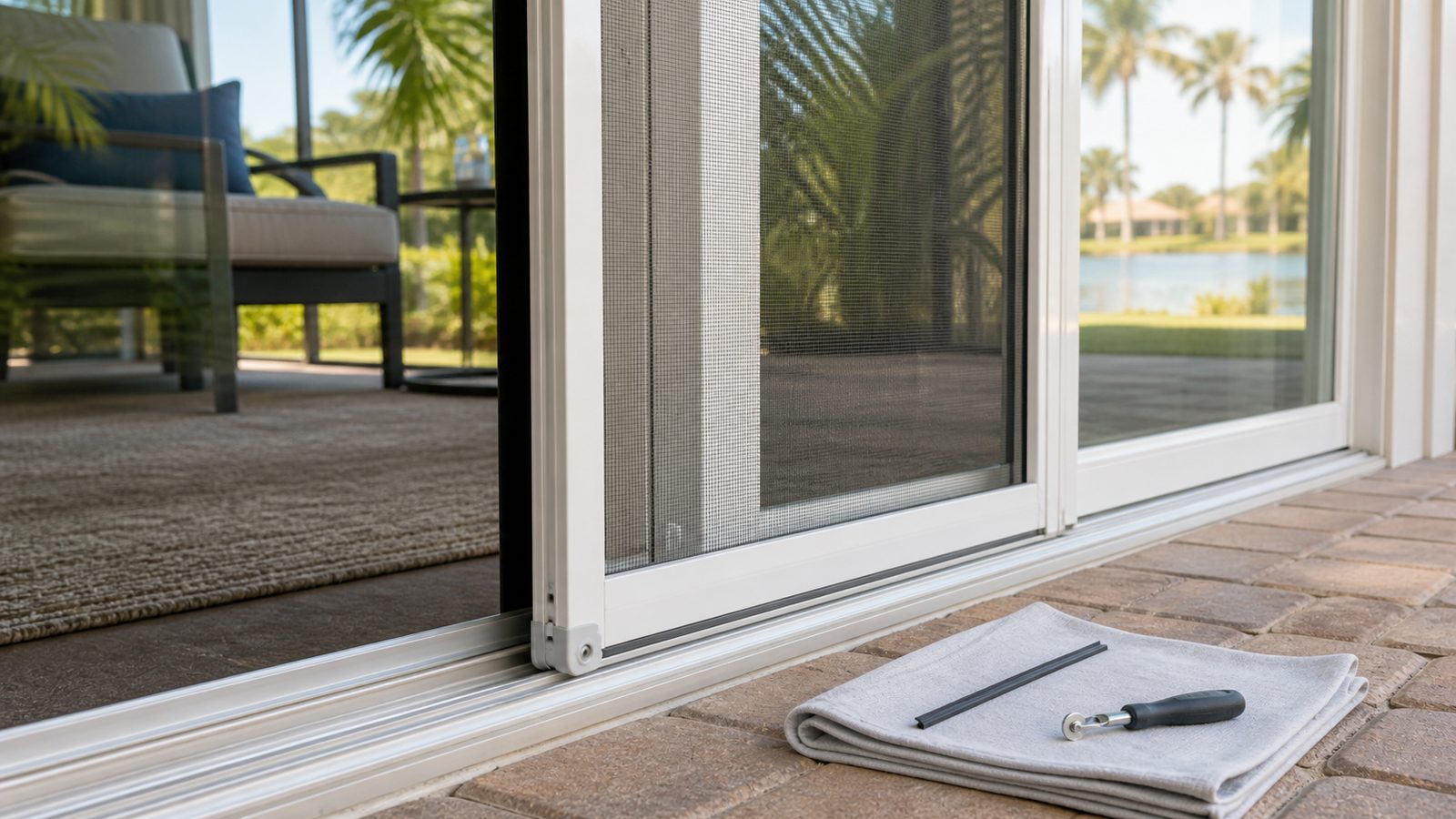
- Spline roller tool and utility knife
- Replacement screen mesh (fiberglass, pet-resistant, or no-see-um)
- Vinyl spline sized to your door's channel
- Shop vacuum or stiff brush
- Silicone-based track lubricant
- Replacement roller wheels, if worn or cracked
Step-by-Step
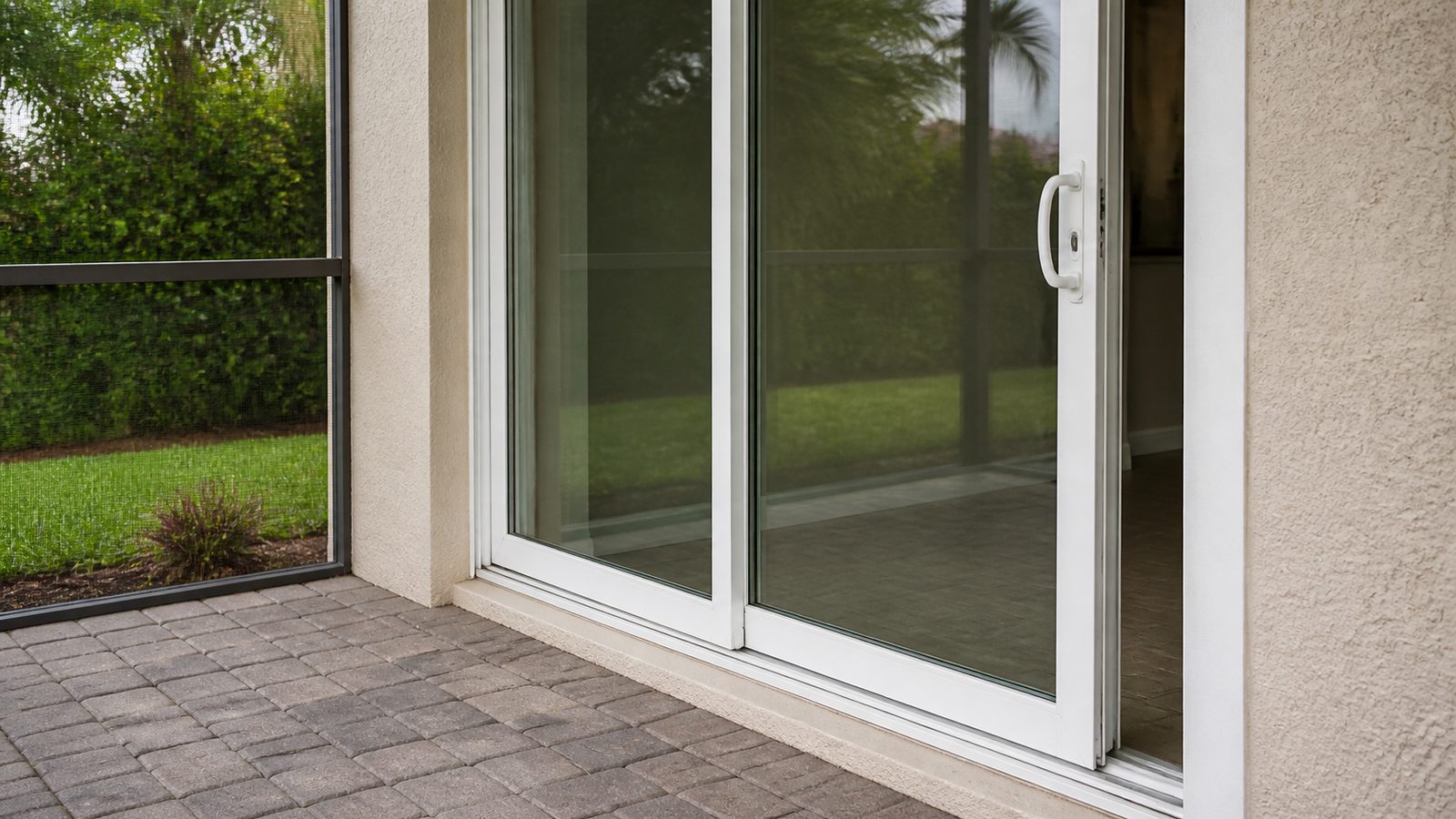
- Measure the opening. Measure the height and width of the existing frame, not the rough opening, at three points each way, since older frames can be slightly out of square. Note the roller style, since hardware varies by builder.
- Remove the old door. Lift the door, angle the bottom out of the lower track, then swing it free of the top track.
- Clean and inspect the frame. Check the corners for cracked welds or bent aluminum, common after a door gets caught by wind. If sound, reuse it and just replace the mesh and spline.
- Pull the old spline and mesh. Pry up an end of the spline with the flathead screwdriver and pull it from the channel. The old mesh lifts out once the spline is gone.
- Lay in the new mesh and spline. Center the mesh over the frame with a couple inches of overhang, press it into the channel with the convex wheel of the spline roller, then roll the spline in on top with the concave wheel. Keep the mesh taut but not distorted.
- Trim the excess mesh. Run a utility knife along the outside edge of the spline channel, angled away from the frame, for a clean cut.
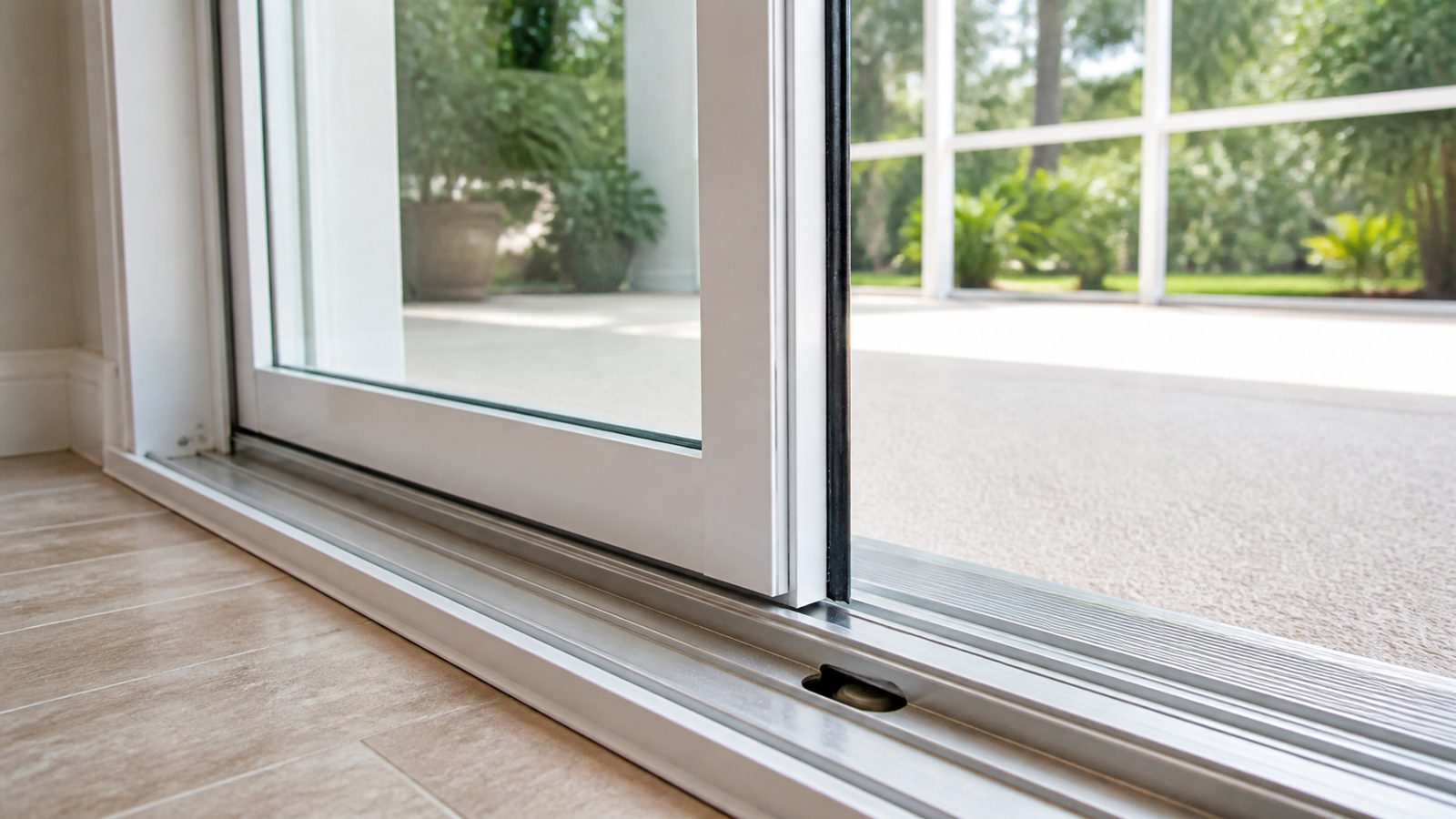
- Adjust or replace the rollers. Most doors have adjustment screws near the bottom corners that raise or lower the door in the track. Replace a cracked or flattened wheel rather than fighting the adjustment.
- Clean the track. Vacuum out sand, dead insects, and debris, then wipe with a damp cloth. Skip oil-based lubricants, which grab grit.
- Rehang the door. Angle the top into the upper track first, set the rollers into the bottom track, and let it drop into place. Slide it to confirm it rolls smoothly and latches without binding.
Jacksonville Climate Considerations
Homes near the beaches, the Intracoastal, and the St. Johns River see salt air that corrodes aluminum frames and roller hardware faster than inland, so rinse the frame and track periodically near water. Year-round UV makes vinyl spline and standard fiberglass mesh brittle and crack years before the frame fails, usually the real reason a screen starts shedding at the corners. Sand and pollen, especially in spring, pack into the track and roller housing, often the actual cause of a door that feels "stuck" rather than broken. Near the marshes and river, no-see-ums and mosquitoes are a real nuisance, and standard mesh has gaps wide enough for them to pass through. A screen door left open during a storm or a squall off the river can also get torn off its track, so close it before weather rolls in.
Most Jacksonville homeowners do better with a heavier-duty mesh than standard fiberglass. Pet-resistant mesh is a vinyl-coated polyester weave that resists scratching from dogs and cats. No-see-um mesh uses a tighter weave to keep out biting midges, though it reduces airflow slightly. Some homeowners use pet-resistant mesh on the main door and reserve no-see-um mesh for porches or lanais where bugs are the bigger issue.
What It Costs in Jacksonville (DIY vs. Hiring a Pro)
These are rough, informal estimates, not official pricing or a survey. Actual costs vary by door size, hardware condition, and mesh choice.
| Approach | Estimated Cost | Notes |
|---|---|---|
| DIY rescreen (frame reused) | $25 to $60 | Mesh, spline, and roller tool if you don't already own one |
| DIY new door and hardware | $80 to $200 | Standard aluminum frame door, off the shelf |
| Pro rescreen or roller service | $100 to $200 | Labor plus materials, same-day in most cases |
| Pro full door replacement | $200 to $450 | Includes frame, mesh, hardware, and haul-away |
When to Call JK Prestige
Rescreening a sound frame is a reasonable weekend project. Call a contractor when the frame is bent, cracked, or corroded beyond a simple roller swap, when the track itself is damaged, when you are dealing with multiple doors or a full screen enclosure, or when you would rather have it done right the first time. JK Prestige handles everything from a single screen door to full enclosure and lanai work across Jacksonville, and can tell you plainly whether a repair or a replacement makes more sense.
No call center. No coordinator. A JK principal reviews every inquiry and replies with a real number, not a range, not a follow-up form.
Request Free Estimate →