If your water heater is leaking, no longer holding hot water, or just old enough that you are waiting for the other shoe to drop, you are probably weighing whether to replace it yourself or call in a licensed contractor. In Jacksonville, that decision comes with a wrinkle a lot of homeowners do not expect: swapping a water heater here is not a quiet, permit-free weekend project. Florida treats it as life-safety work, and Duval County enforces that. Before you buy a tank or call a plumber, it helps to know what the city actually requires, so you are not caught off guard mid-project or stuck with a system that fails inspection.
When You Need a Permit in Jacksonville
Water heater replacement is one of the few home repairs where Florida law is explicit: a building permit is required, even for a like-for-like swap. This surprises homeowners who assume permits are only for additions or remodels. The City of Jacksonville's Building Inspection Division, part of the consolidated city-county government covering Duval County outside the beaches cities and Baldwin, handles the permit and inspection.
Things the Florida Building Code and local plumbing code will check:
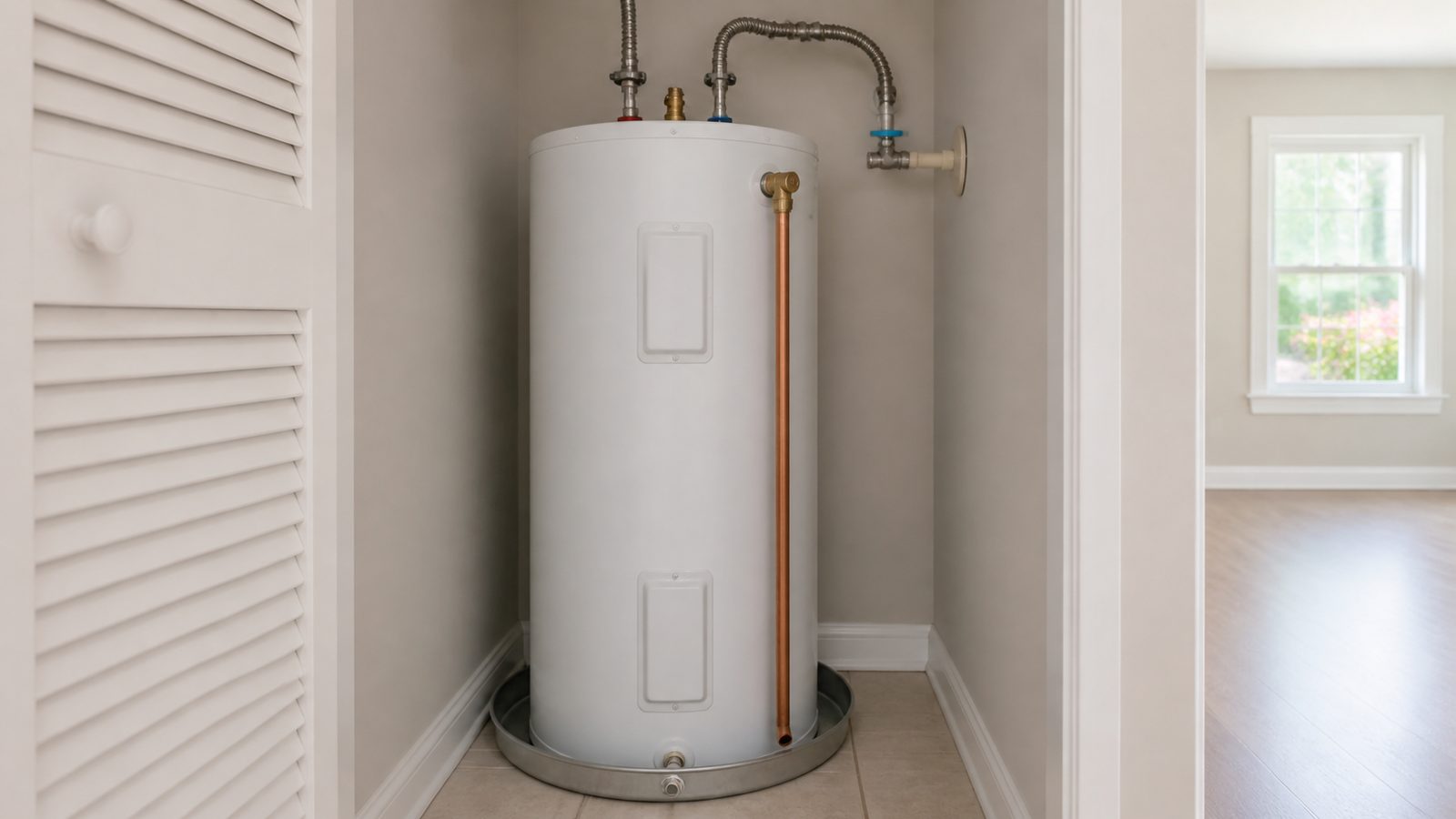
- Expansion tank. If your water service has a backflow preventer or check valve at the meter, common with JEA-served properties, your system is "closed" and requires a thermal expansion tank on the cold supply line to absorb pressure from heated water.
- T&P relief valve and discharge pipe. Every tank heater needs a temperature and pressure relief valve, with its discharge pipe running by gravity to an approved location, typically outside or to a floor drain, unthreaded at the end and free of traps.
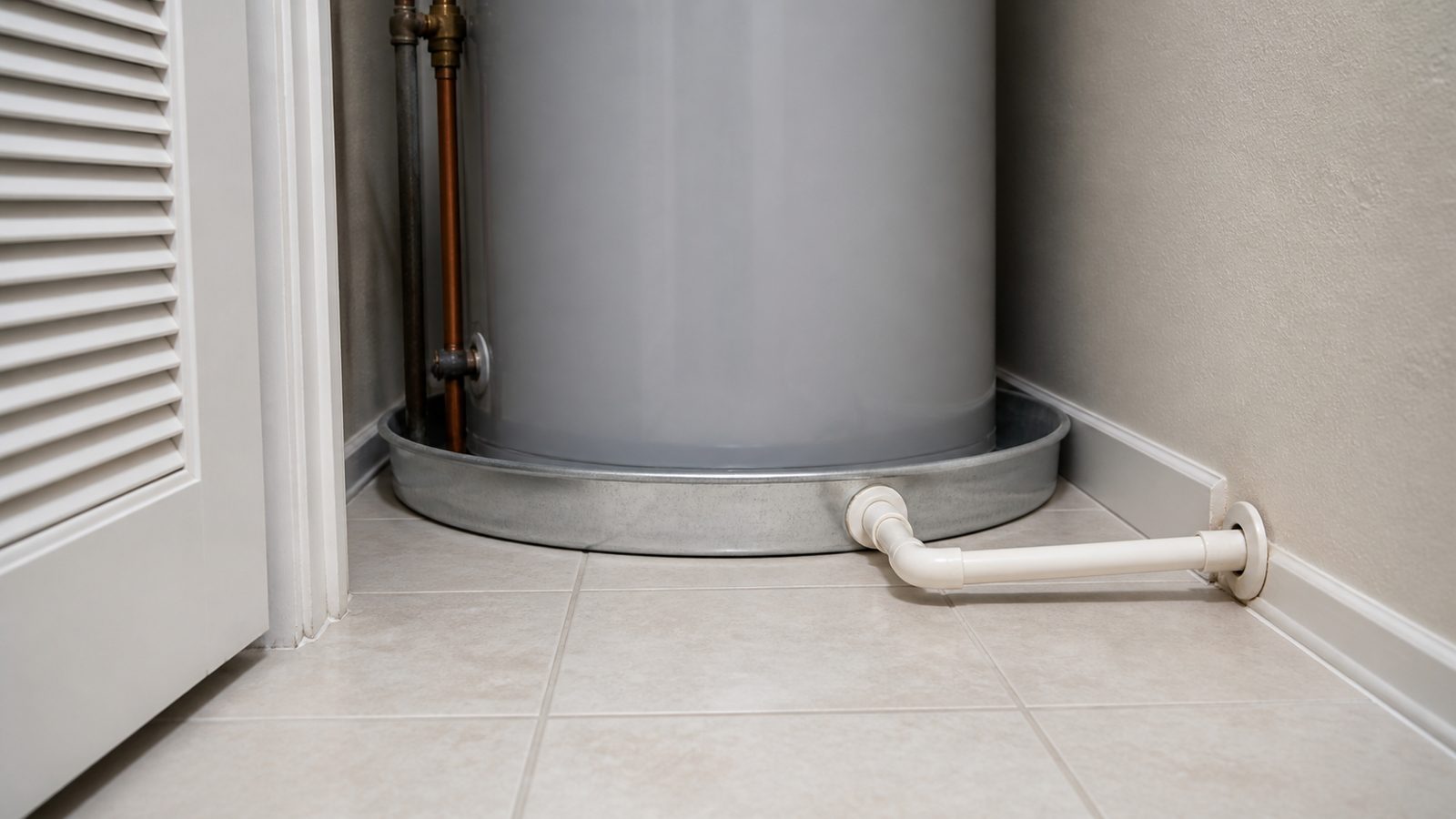
- Drain pan. If the heater sits in an attic, a closet over living space, or anywhere a leak could damage the structure below, a drain pan with a line to the exterior or an approved receptor is required.
- No seismic strapping needed. Strapping shows up in guides written for earthquake-prone states; Florida is not a seismic zone. What Florida does require, that many other states skip, is the permit and inspection itself.
- Gas or electrical connections. A gas unit needs correctly sized gas line and venting; an electric unit needs a dedicated circuit matched to the manufacturer's spec.
Permit types and fees change, so do not rely on secondhand numbers. Confirm the exact permit category and current fee with the City of Jacksonville Building Inspection Division before you start. If you are in Atlantic Beach, Jacksonville Beach, Neptune Beach, or Baldwin, check with that municipality instead, since they permit separately from the consolidated city.
Tools and Materials
- New water heater sized for your household (tank or tankless)
- Pipe wrench, adjustable wrenches, tubing cutter or hacksaw
- Teflon tape, joint compound, solder/flux/torch or push-fit fittings
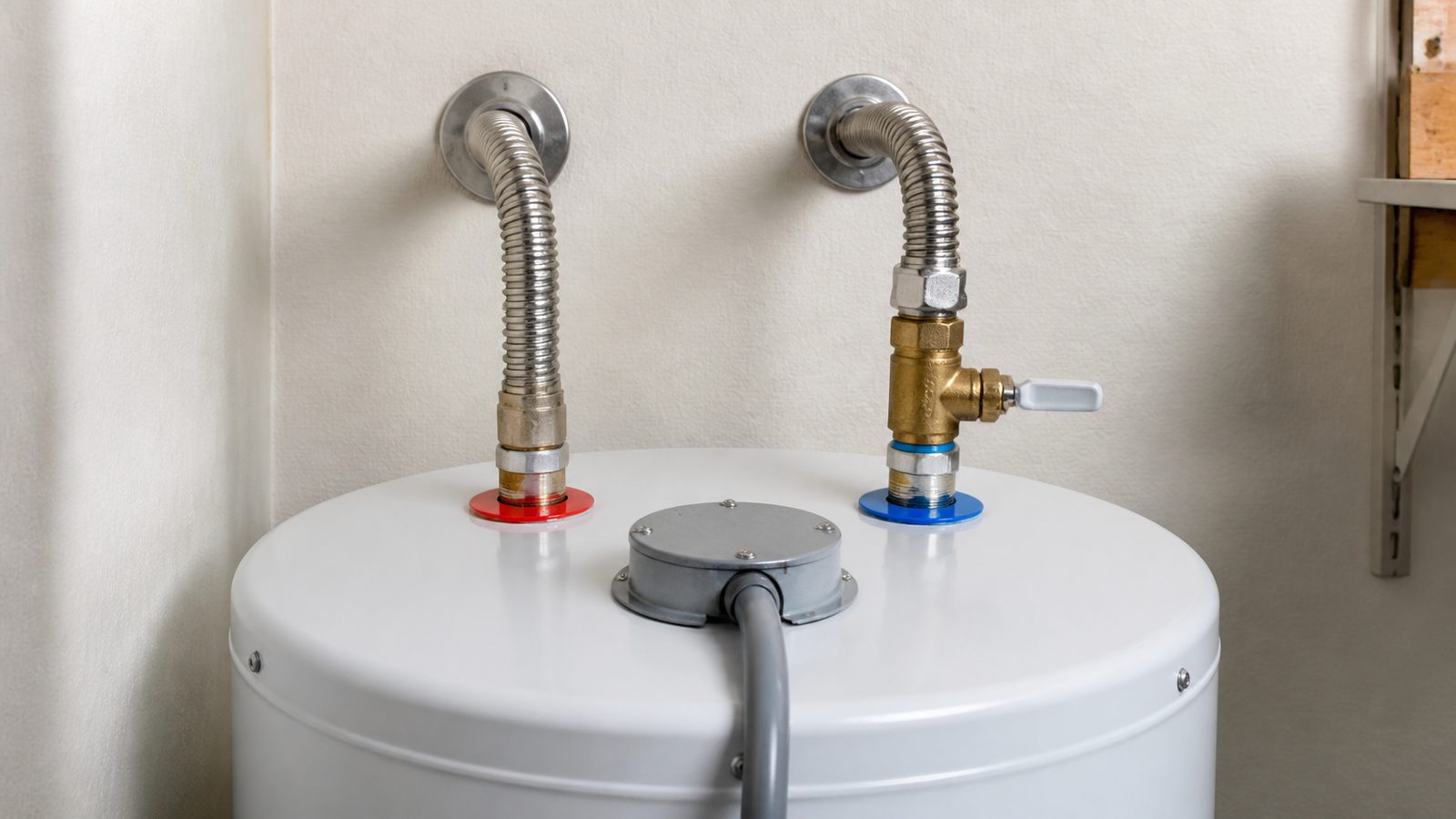
- New flexible water supply connectors
- Thermal expansion tank, if your system is closed
- New T&P relief valve, if not included
- Drain pan and drain line materials, if required
- Wet/dry shop vacuum for draining the old tank
- Multimeter (electric) or approved gas leak detector
- Permit paperwork and manufacturer instructions
Step-by-Step
- Shut off power or gas and the cold water supply. For electric, kill the breaker and verify with a multimeter. For gas, close the shutoff valve.
- Drain the tank through a hose run to a floor drain or outside, opening a nearby hot water tap to speed draining.
- Disconnect the old unit, including water lines, the gas line or electrical whip, and the vent connector on gas units.
- Set the new unit in place, on a stand or platform if code requires elevation, and level it.
- Connect the water lines, adding a new expansion tank on the cold side if your system is closed, using new flexible connectors.
- Install the T&P relief valve and discharge piping so it terminates correctly, typically within 6 to 24 inches of the floor.
- Reconnect gas or electrical. Check every gas joint with an approved leak detector, or confirm the electrical circuit matches the nameplate rating.
- Install or verify the drain pan, with the drain line running to an approved point.
- Fill the tank before applying power or gas. Never energize an element or ignite a burner on an empty tank.
- Test for leaks, check operation, and set the thermostat, typically to 120°F.
- Call for your inspection. Do not close up walls until the City inspector has signed off.
Jacksonville Climate Considerations
Jacksonville's humid subtropical climate is harder on a water heater than most homeowners realize. High ambient humidity accelerates corrosion on fittings, especially in the garages and unconditioned utility closets where most tanks sit locally. Near the coast, Mayport, the beaches, or even a few miles inland on a breezy day, salt-laden air eats through unprotected fittings and shortens anode rod life faster than further inland, so check and replace the anode rod on a shorter interval if you are coastal.
Hurricane season is also a factor. If your heater sits in a garage or ground-floor utility space in a flood-prone part of Duval County, consider platform height above expected flood elevation and keep electrical connections higher than the minimum. Power surges from storm outages and grid restoration can also stress electric heating elements, so a surge protector on the circuit is cheap insurance.
What It Costs in Jacksonville (DIY vs. Hiring a Pro)
These are general estimate ranges for the Jacksonville market, not quotes.
| Item | DIY (materials only) | Licensed Pro (installed) |
|---|---|---|
| Standard electric tank (40-50 gal) | $600 - $950 | $1,200 - $1,900 |
| Standard gas tank (40-50 gal) | $700 - $1,100 | $1,400 - $2,200 |
| Tankless gas unit | $1,200 - $2,000 | $2,800 - $4,500 |
| Expansion tank (if needed) | $40 - $80 | Often bundled into install price |
| Permit fee | Confirm current fee schedule with the City of Jacksonville Building Inspection Division | Typically handled by the contractor and included in the quote |
DIY numbers exclude your time, tools you may not own, and the risk of a failed inspection.
When to Call JK Prestige
If your water heater is hard to access, you are not comfortable with gas or electrical connections, or you would rather not explain a failed T&P line to a city inspector, that is exactly the job we handle. JK Prestige pulls the permit, installs to code the first time, and stands behind the work.
No call center. No coordinator. A JK principal reviews every inquiry and replies with a real number, not a range, not a follow-up form.
Request Free Estimate →