If you live anywhere near the St. Johns River, the Intracoastal, or Jacksonville's marshlands, you already know that standard fiberglass window screens are basically temporary. Between no-see-um midges punching through every gap, UV radiation bleaching the mesh gray within a few seasons, and salt air corroding aluminum frames faster than you'd expect, replacing a window screen in Jacksonville is less of a rare fix and more of a routine maintenance task. The good news is that re-screening an existing frame is a straightforward Saturday project — as long as you pick the right mesh for where you actually live.
When You Need a Permit in Jacksonville
No permit is required to replace a window screen in Jacksonville. Re-screening an existing frame is routine maintenance, not a structural alteration. If you're replacing the entire window unit or cutting a new opening, that's a different conversation.
Tools and Materials
You'll need the following before you start:
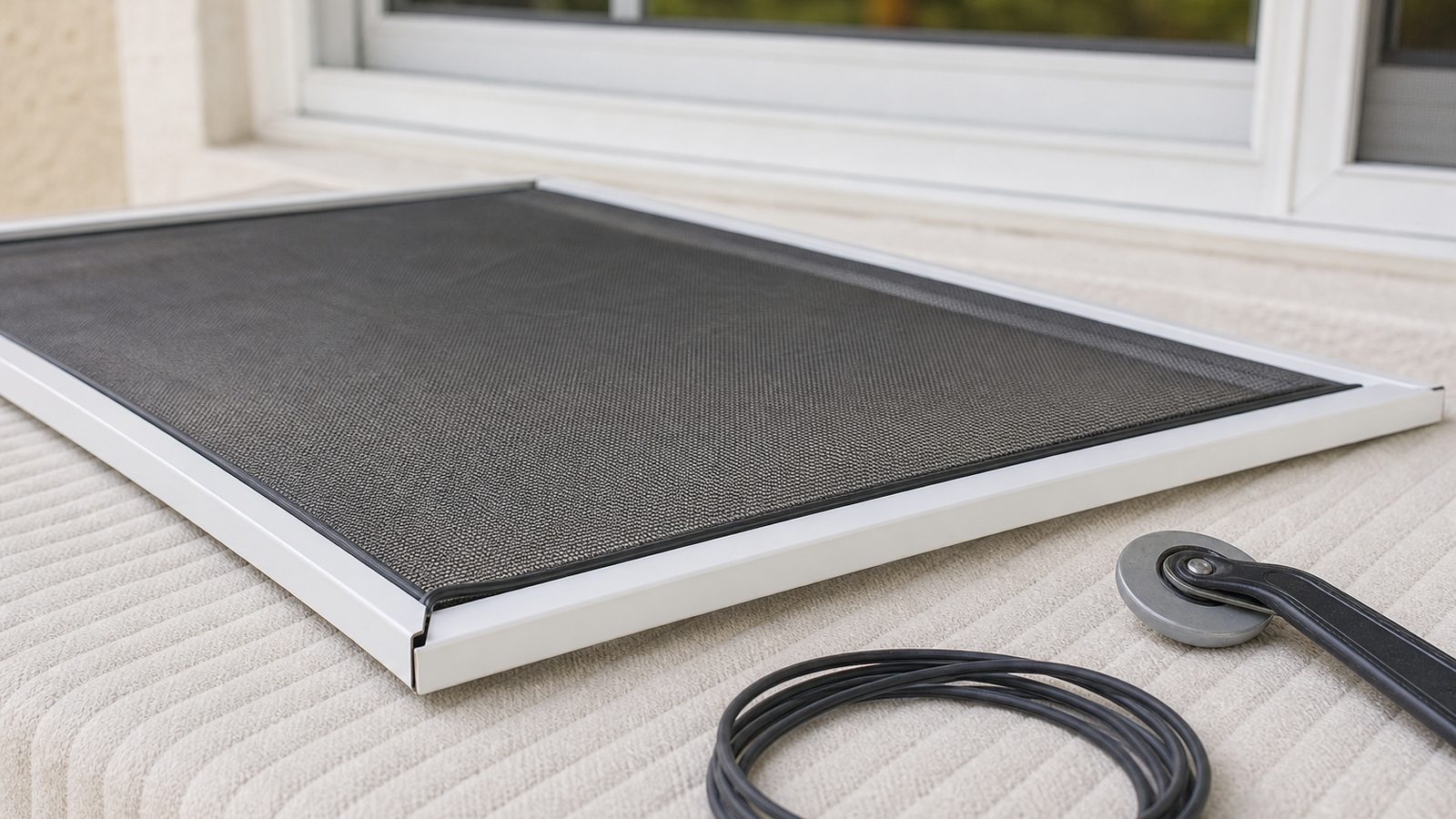
- Spline roller — the double-wheel version makes getting the spline seated on corners much easier
- Flathead screwdriver or spline removal tool — for popping out the old rubber spline
- Utility knife or scissors — for trimming excess mesh
- Replacement spline — match the diameter of your existing spline (usually 0.140" to 0.175"; bring the old piece to the hardware store to compare)
- Screen mesh — this is the most important choice for Jacksonville:
- Standard fiberglass mesh (18x16): Fine for interior rooms away from the water. Cheap and easy to work with, but won't stop no-see-ums.
- No-see-um / tiny mesh (20x20 or finer): Required if you're near marsh, the Intracoastal, or anywhere east of I-95. The tighter weave blocks midges and biting gnats but slightly reduces airflow.
- Solar / sun screen mesh: Designed to block 60–90% of solar heat gain. Heavier than standard mesh and often charcoal-colored. A good call for west- and south-facing windows that take the full afternoon sun.
- Corner picks or a small awl — helpful for lifting the frame out of the window channel without bending it
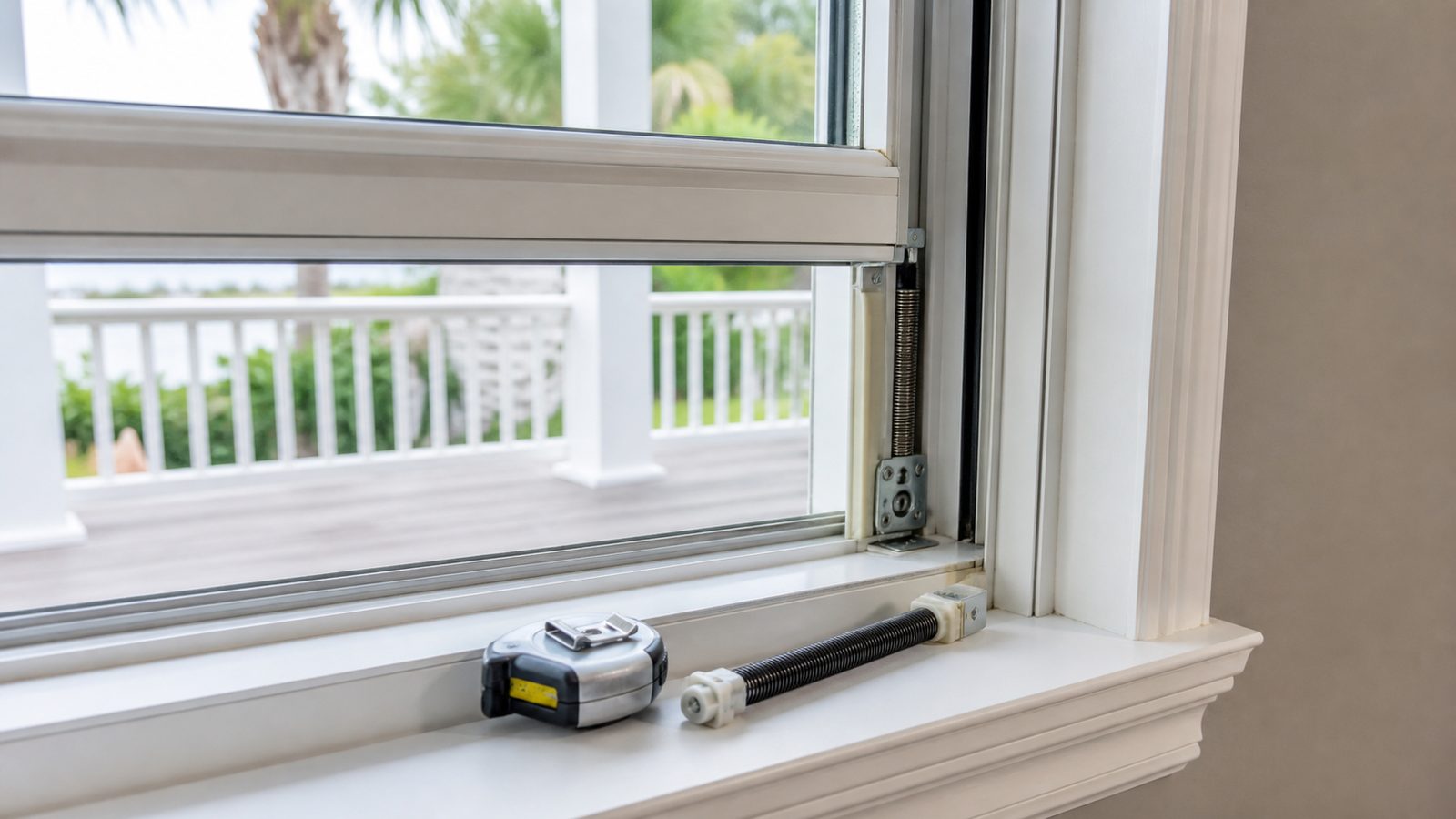
- Measuring tape and marker
Step-by-Step
- Remove the screen frame from the window. Most sliding window screens lift up slightly and then tilt toward you to release. Double-hung window screens usually have two pull tabs at the bottom. Set the frame on a flat surface — a workbench or garage floor works fine.
- Pull out the old spline. Find a corner and use your screwdriver or spline tool to lift an edge of the rubber spline out of the channel. Pull it free in one continuous piece if you can. Discard it — old spline gets brittle and won't seat properly if you try to reuse it.
- Remove the damaged mesh. Once the spline is out, the mesh lifts right off. Inspect the frame channel for corrosion, especially on aluminum frames near the coast. Light surface corrosion is fine; deep pitting means the frame is worth replacing rather than re-screening.
- Cut your new mesh to size. Lay the new mesh over the frame and cut it about one inch larger than the frame on all four sides. This overhang gives you material to work with as you seat the spline.
- Start rolling in the spline. Begin at one corner and use the convex wheel of the spline roller to press the spline and mesh into the channel together. Work along one long side first, pulling the mesh taut as you go — not so tight that the frame bows, but with no visible slack. Then do the opposite long side, then the two short sides.
- Trim the excess mesh. Run your utility knife along the outside edge of the spline channel to cut away the overhang. A sharp blade in one clean pass gives a cleaner edge than sawing.
- Reinstall the frame. Slide it back into the window channel and confirm it moves or locks as it should. Check that the mesh sits flush with no bubbles or loose corners.
Jacksonville Climate Considerations
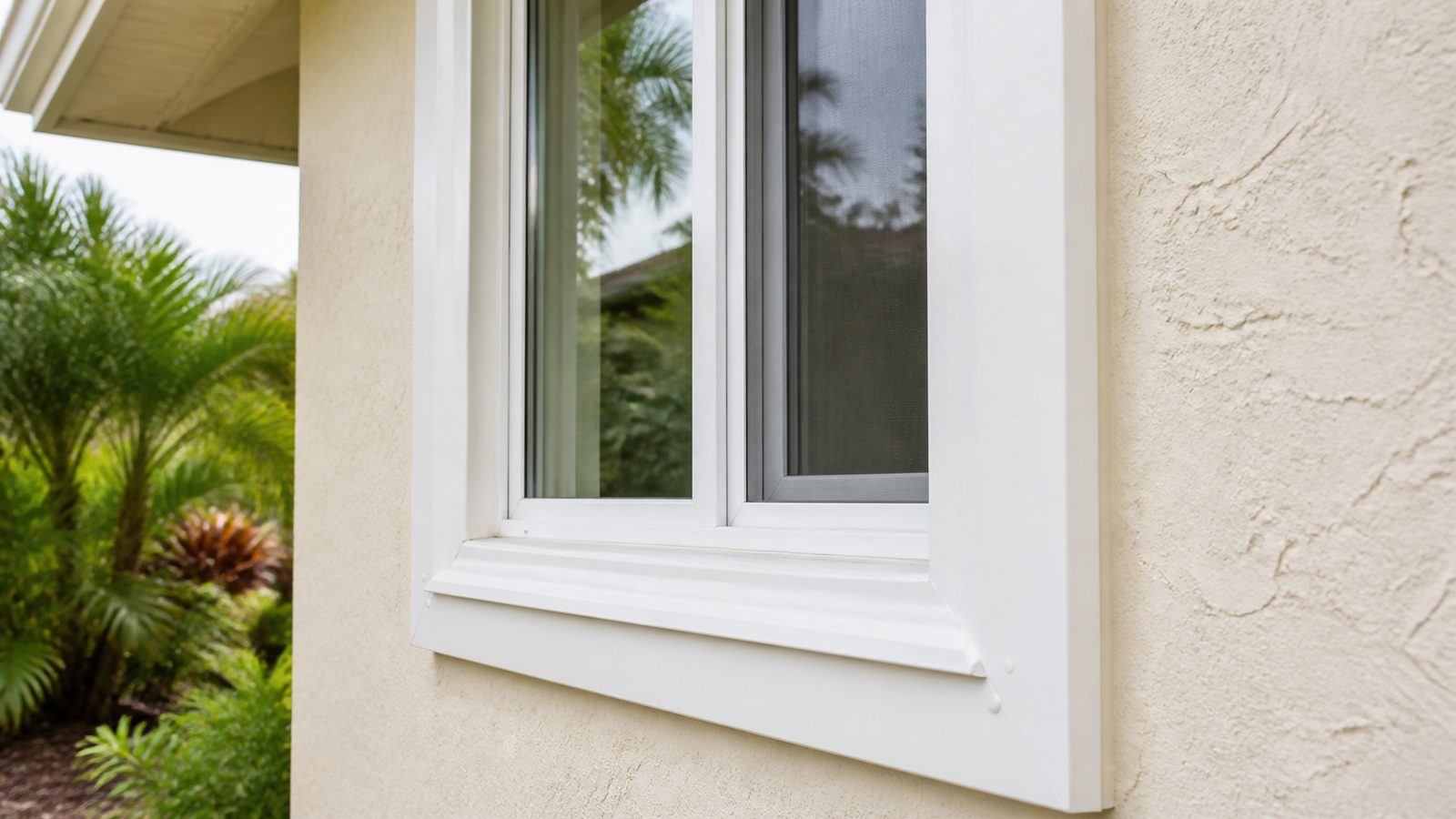
Jacksonville's climate puts specific demands on window screens that homeowners in more temperate regions don't face.
No-see-ums and biting midges are the primary reason to upgrade from standard 18x16 mesh if you live near water. These insects are roughly 1–3 millimeters in size and pass through standard screen openings without resistance. Neighborhoods along the Intracoastal, Atlantic Beach, Neptune Beach, and anywhere with adjacent marsh or tidal flats are most affected. A 20x20 mesh will stop them. Some manufacturers offer even tighter weaves (40x40), though those reduce airflow noticeably and are generally unnecessary for most homes.
UV intensity in Northeast Florida is high year-round. Standard fiberglass mesh fades and becomes brittle, which accelerates tearing and frame separation. If you're re-screening a south- or west-facing window, a solar screen mesh handles the UV better and has the added benefit of reducing indoor heat gain — which directly affects your air conditioning load during Jacksonville's long summers.
Salt air is a corrosion factor within roughly two to three miles of the coast or tidal waterways. If your aluminum frame shows white powdery oxidation or the corners have started to separate, the frame itself may need replacement rather than just the mesh. Fiberglass frames or vinyl-coated aluminum are more resistant in salt-air environments.
What It Costs in Jacksonville (DIY vs. Hiring a Pro)
| Option | Typical Cost Range |
|---|---|
| DIY materials (one screen) | $8 – $20 |
| DIY materials (solar/no-see-um mesh) | $15 – $35 per screen |
| Local screen repair shop (drop-off) | $15 – $40 per screen |
| In-home professional re-screening | $40 – $80 per screen |
| Full screen frame replacement (pro) | $75 – $150+ per screen |
Prices vary by screen size, mesh type, and whether the contractor comes to you or you drop frames off. Larger picture-window screens or specialty shapes like arched frames cost more.
When to Call JK Prestige
If your window screens are damaged as part of broader storm damage, or you're dealing with rotting wood around the frame, water intrusion at the sill, or casement windows that no longer operate correctly, those issues go beyond a screen swap. JK Prestige handles the full scope — from minor repairs to window and door replacement — for Jacksonville homeowners who want one contractor to assess and fix the whole problem correctly. Give us a call before a cosmetic screen issue turns into a water damage claim.
No call center. No coordinator. A JK principal reviews every inquiry and replies with a real number, not a range, not a follow-up form.
Request Free Estimate →