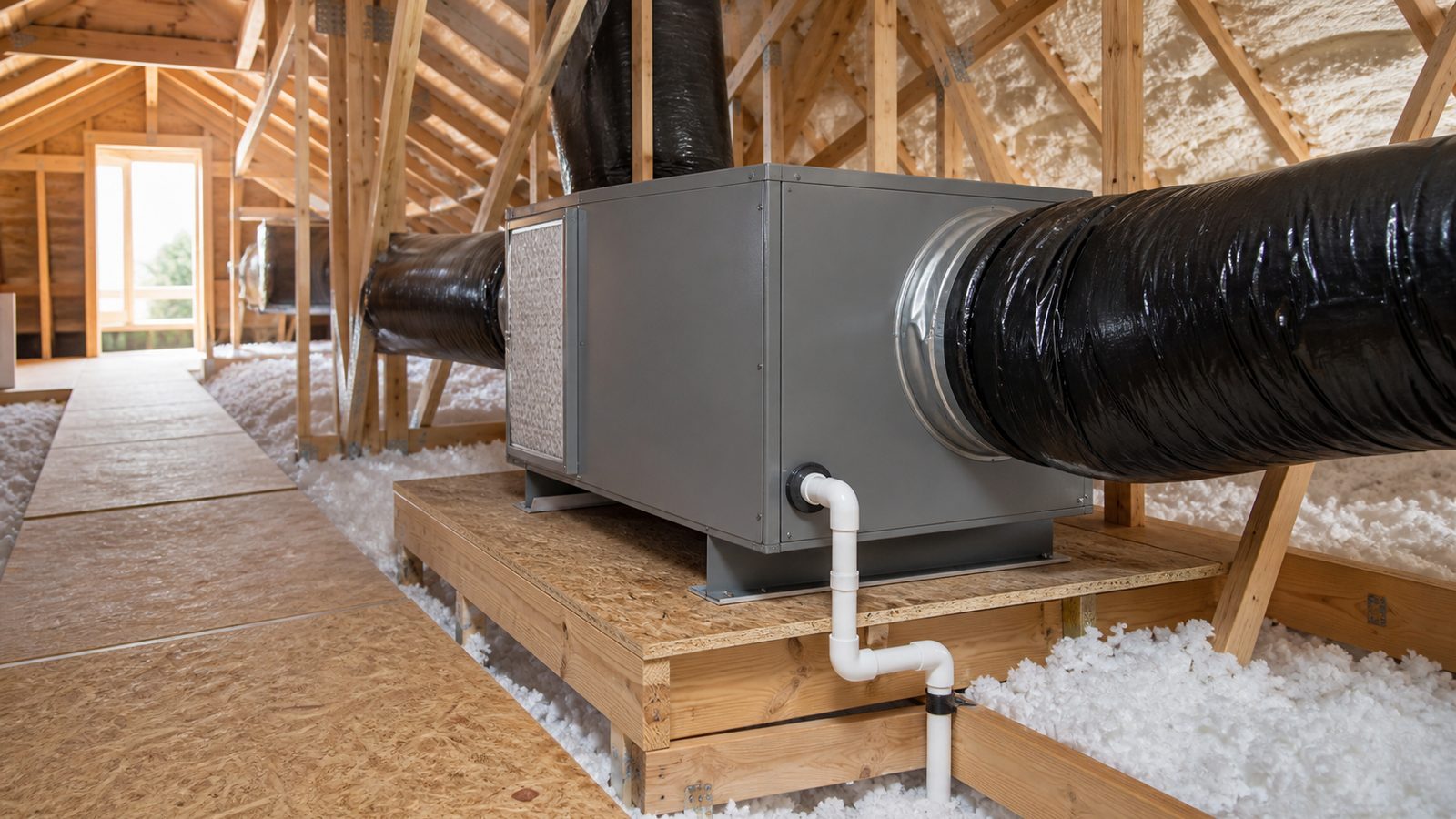
If your Jacksonville attic runs flexible ductwork, the connections at every collar, boot, and splice are the weak point in the system. A loose collar or a strip of dried out duct tape can leak conditioned air into a space that regularly tops 120 degrees in July, and your air handler never knows it is happening. Most of this work is within reach for a homeowner with a flashlight, a respirator, and patience for attic heat. Here is how to find the leaks, seal them properly, and know when the job crosses into licensed contractor territory.
When You Need a Permit in Jacksonville
Sealing existing duct connections, replacing worn strapping, and patching the outer jacket or inner liner on ducts that stay in place is routine maintenance. It does not typically trigger a mechanical permit through the City of Jacksonville or Duval County, because you are not altering the system's design, adding capacity, or touching the equipment.
That changes once the work becomes a duct system replacement, a change out of a damaged run, or anything tied to swapping the air handler or condenser. That is mechanical work, and Florida requires it to be performed or supervised by a licensed mechanical or air conditioning contractor when sold as a service to a homeowner. Duval County pulls that permit through its building department, with inspections to follow. Simple resealing and re-strapping is almost always fine to do yourself. A duct torn beyond repair belongs to a licensed contractor.
This guide reflects Duval County practice. Nassau, Clay, and St. Johns counties run their own permit offices with their own thresholds, so confirm locally.
Tools and Materials
- Water based duct mastic, 1 gallon covers a typical attic's worth of collars
- Mastic brush or disposable chip brush, 2 to 3 inches wide
- Fiberglass mesh tape, 2 inches wide, for gaps over about 1/8 inch
- UL 181 rated foil tape (not cloth duct tape), for temporary tacking only
- Nylon or metal duct straps sized to the duct, plus extra strap
- Headlamp and a handheld work light
- N95 or better respirator and safety glasses
- Kneeling boards or plywood scraps to spread weight across joists
- Small mirror or phone camera on a stick to check behind collars
- Zip ties as a backup fastener, never a substitute for mastic
- Utility knife and rags for wiping surfaces before sealing
Step-by-Step
- Work early morning before the attic heats up, and bring a headlamp, water, and your respirator.
- Turn the HVAC system on so you can feel and hear air movement at connections while you inspect.
- Starting at the air handler, trace every supply and return run to its register or boot, noting each metal collar.
- At each collar, feel for escaping air with the back of your hand, and look for dust streaking or sagging insulation that signals a chronic leak.
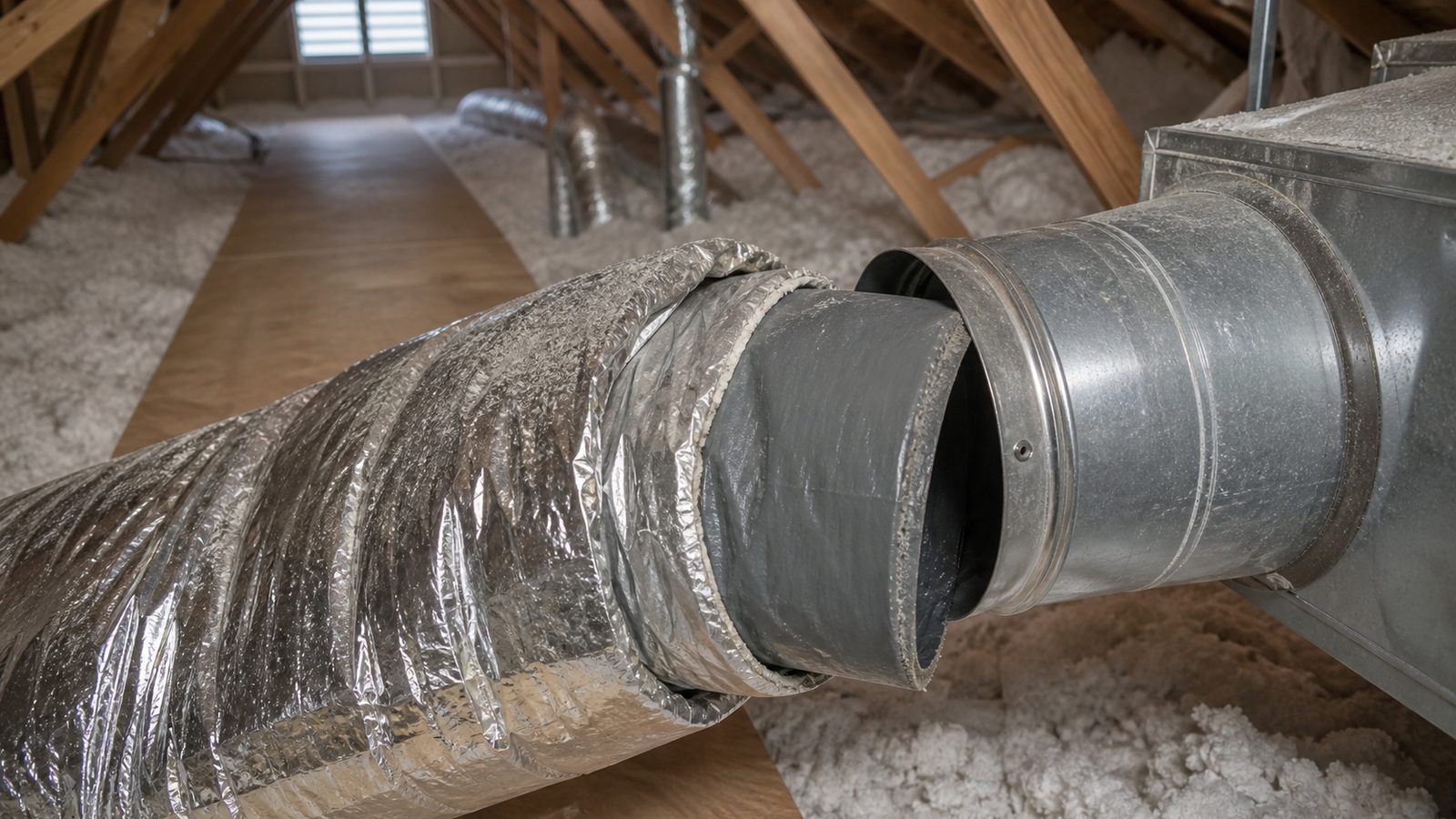
- Pull back or cut open the outer insulation jacket at suspect collars, then check the inner liner itself where it slides over the collar. That connection carries the air, and it is the one people skip when they only tape the outer jacket.
- Remove old cloth duct tape completely and wipe the collar and liner clean of dust so mastic has something to grip.
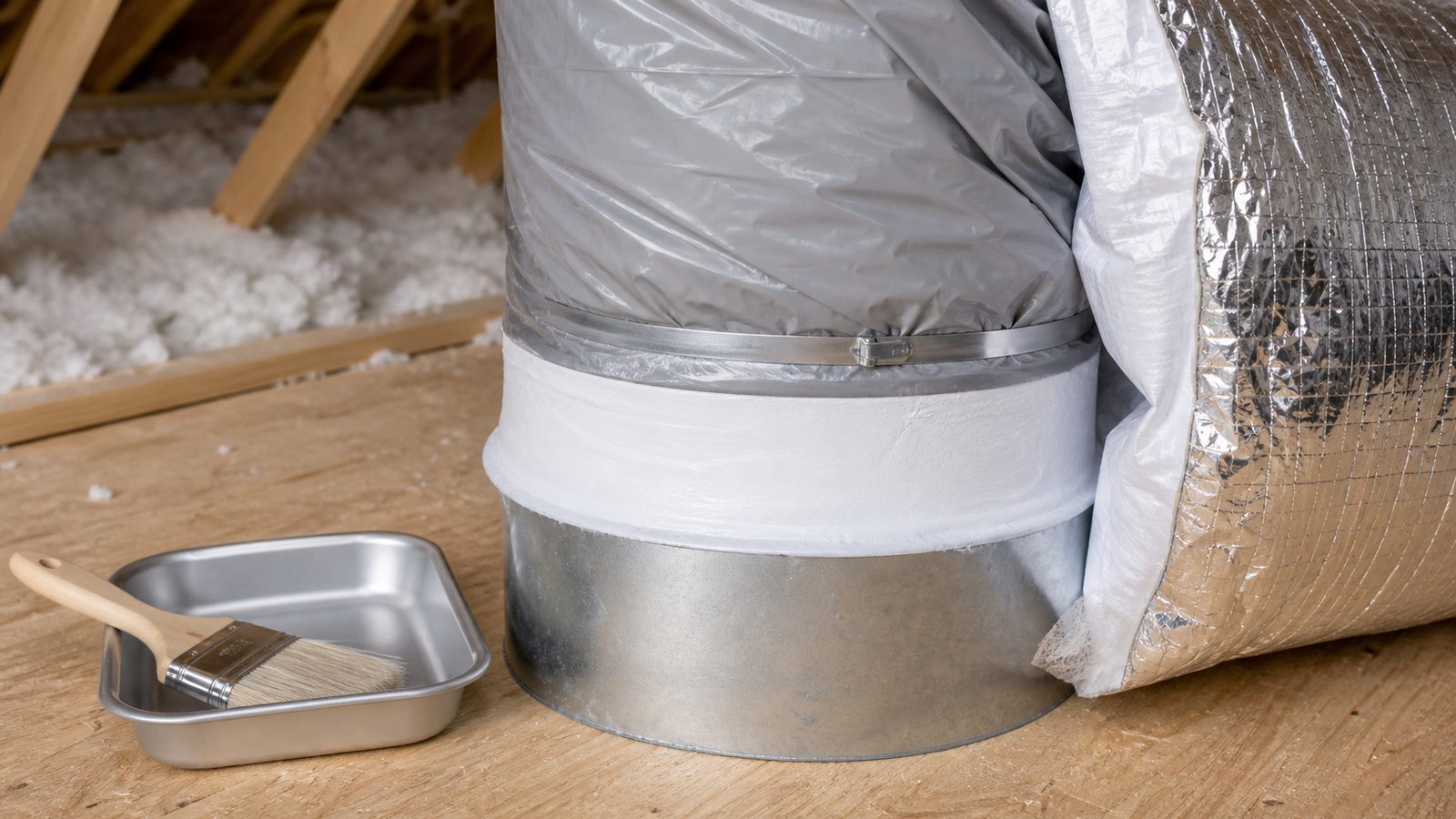
- Brush a generous, even coat of mastic completely around the inner liner to collar joint, working it into any gap.
- For gaps wider than roughly 1/8 inch, embed a strip of fiberglass mesh tape into a first coat of mastic, then cover it with a second coat.
- Pull the outer jacket back over the sealed connection and secure it with a zip tie or foil tape, just to hold the jacket, not to seal the air joint.
- Check every strap along each run, and where a run sags between joists, add a nylon strap at least every 4 feet, sized to cradle the duct without pinching it.
- Re-strap any run resting directly on insulation or ceiling drywall, lifting it so it is not crushing its own airflow.
- Run the system again and re-check every collar you worked on for leaks before closing up the attic.
Common Mistakes to Avoid
- Using cloth or fabric backed duct tape, which fails within a year or two in attic heat despite the name
- Sealing only the outer insulation jacket and never checking the actual inner liner connection underneath
- Skipping mesh tape on wide gaps, so the mastic cracks and falls out once cured
- Over-tightening straps so they pinch the duct and choke airflow
- Letting a repaired run sag back onto insulation because strap spacing was too wide
- Applying mastic over a dusty surface, which prevents adhesion and lets the seal fail early
Jacksonville Climate Considerations
A Northeast Florida attic in July regularly climbs well past 120 degrees, and every bit of supply air leaking into that space is cooling capacity thrown away before it reaches a room. Leaks on the return side are worse in a different way: a loose return connection pulls hot, humid attic air directly into the system, raising indoor humidity and forcing the equipment to work harder than it should.
Humidity is also why condensation shows up on ducts that are not properly wrapped or sealed. Cold supply ducts sweating inside a humid attic can drip onto insulation and ceiling drywall below, a common source of the brown ceiling stains homeowners assume are roof leaks. Work early morning before the heat builds, both for your own safety and because mastic sets more reliably in moderate temperatures.
What It Costs in Jacksonville (DIY vs. Hiring a Pro)
| Approach | Typical Cost Range | Notes |
|---|---|---|
| DIY materials only | $75 to $200 | Mastic, mesh tape, straps, respirator for a single-story attic |
| Pro duct sealing and re-strapping | $400 to $1,200 | Labor plus materials, varies with access and number of runs |
| Full duct system replacement | $3,000 to $8,000+ | Licensed mechanical contractor, permitted through Duval County |
When to Call JK Prestige
If you have found torn or crushed duct sections, widespread liner separation, or you are simply not comfortable working a hot attic on your hands and knees, have someone assess the whole system rather than chasing leaks one at a time. JK Prestige can determine whether targeted sealing solves the problem or a run has reached the point of needing replacement, and can bring in a licensed mechanical contractor for anything that crosses that line.
No call center. No coordinator. A JK principal reviews every inquiry and replies with a real number, not a range, not a follow-up form.
Request Free Estimate →