Tenant fit-out projects move fast and the stakes are high. You have a lease with a rent commencement date, a TI allowance that covers part of your build-out cost, and a landlord who has opinions about who does the work. Pick the wrong GC and you will be paying rent on a space you cannot occupy, asking for schedule extensions you may not get, and debugging permit problems that a more experienced contractor would not have created.
Jacksonville has a large pool of residential and semi-commercial contractors who will quote your fit-out. Fewer of them understand Duval County commercial permitting, carry the right license, and self-perform the trades that actually control your schedule.
Here is how to separate the contractors who can deliver from the ones who cannot.
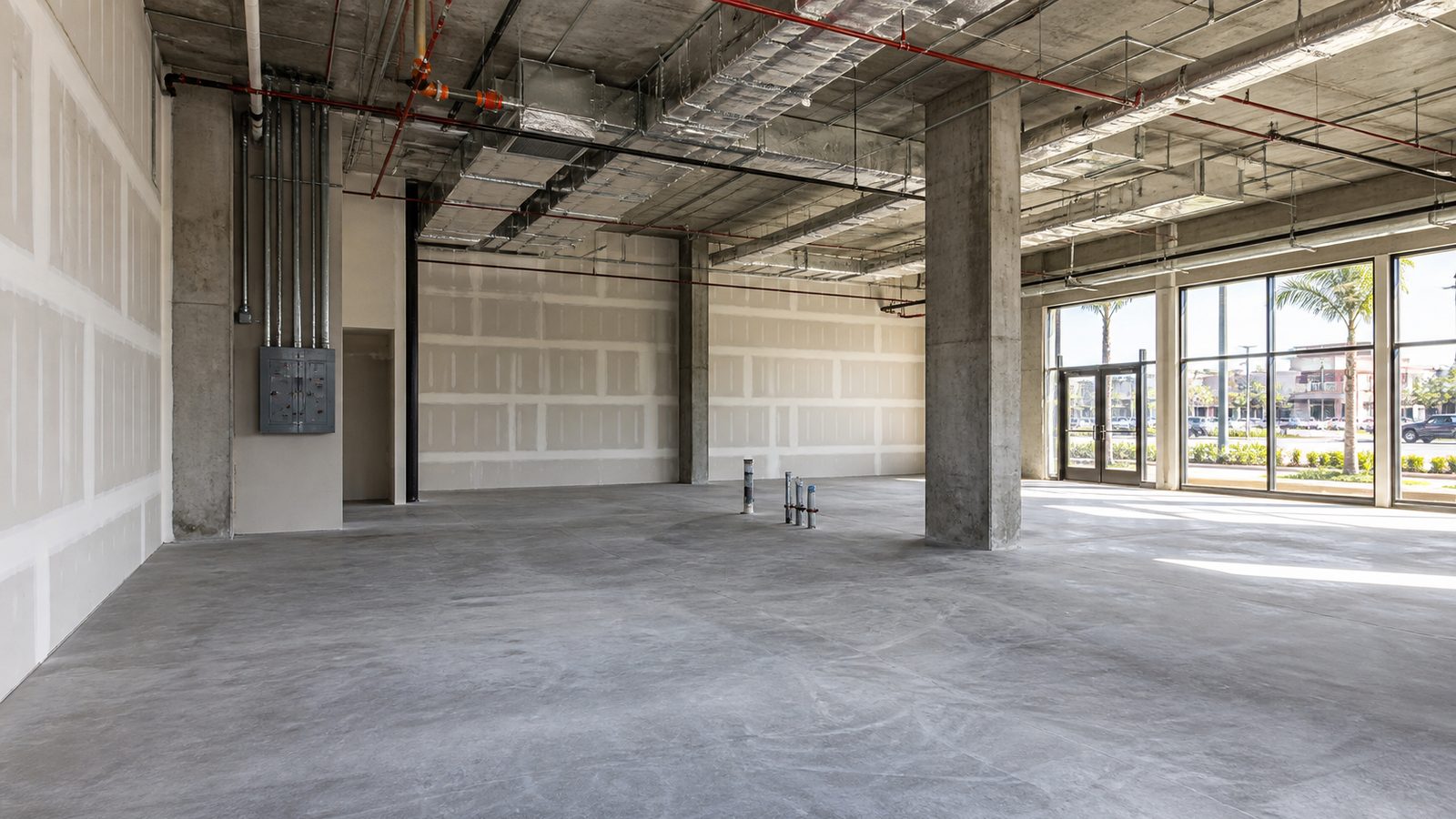
Step 1: Define Your TI Allowance and Actual Budget Gap
Before you engage any GC, know exactly what you are working with financially.
Your Tenant Improvement (TI) allowance is defined in your lease -- typically expressed as a dollar amount per square foot of rentable area. The lease will specify what the TI allowance can be used for (usually hard construction costs, sometimes including furniture, fixtures, and equipment (FF&E), sometimes excluding it) and the timeline for spending it.
Calculate the gap between your TI allowance and your actual construction budget:
- Obtain a preliminary estimate before signing the lease if possible. Many GCs will provide a rough order of magnitude (ROM) estimate from a space plan at no charge.
- Know your fit-out program: open plan vs. private offices, wet bar, server room, specialty finishes, AV buildout. Each adds cost.
- Add a 10% contingency to your estimated cost. Tenant fit-outs in older Jacksonville office and retail buildings routinely encounter existing conditions (buried conduit, asbestos-containing materials in older construction, undersized electrical panels) that add cost.
Pro tip: If your TI allowance is $40 per square foot and your ROM estimate is $65 per square foot, you know your out-of-pocket exposure before you engage a GC for final pricing. Use this number to right-size the scope before pricing, not after.
Step 2: Verify the GC's Commercial License (CGC vs. Residential Only)
In Florida, construction licensing is tiered. A Certified General Contractor (CGC) license allows the holder to construct, alter, and repair any type of building. A Registered Building Contractor (RBC) or residential contractor license does not authorize commercial construction above certain thresholds.
For any commercial tenant fit-out in Jacksonville -- office, retail, medical, industrial -- your GC must hold a Florida State Certified General Contractor license. Verify by searching the Florida Department of Business and Professional Regulation (DBPR) license lookup at myfloridalicense.com.
Also verify:
- The license is active (not expired, suspended, or on probation)
- The license is held by the entity you are contracting with, not just an individual who may have left the company
- The company carries general liability insurance at appropriate limits (minimum $1 million per occurrence for commercial work; $2 million or more for medical or healthcare fit-outs)
Warning: Some contractors operate in Jacksonville under a qualifier arrangement -- a licensed individual who "pulls" permits for a company that they may not actively manage. Ask specifically: "Will the CGC whose license you are using be actively supervising this project?" If the answer is no, you have a compliance risk.
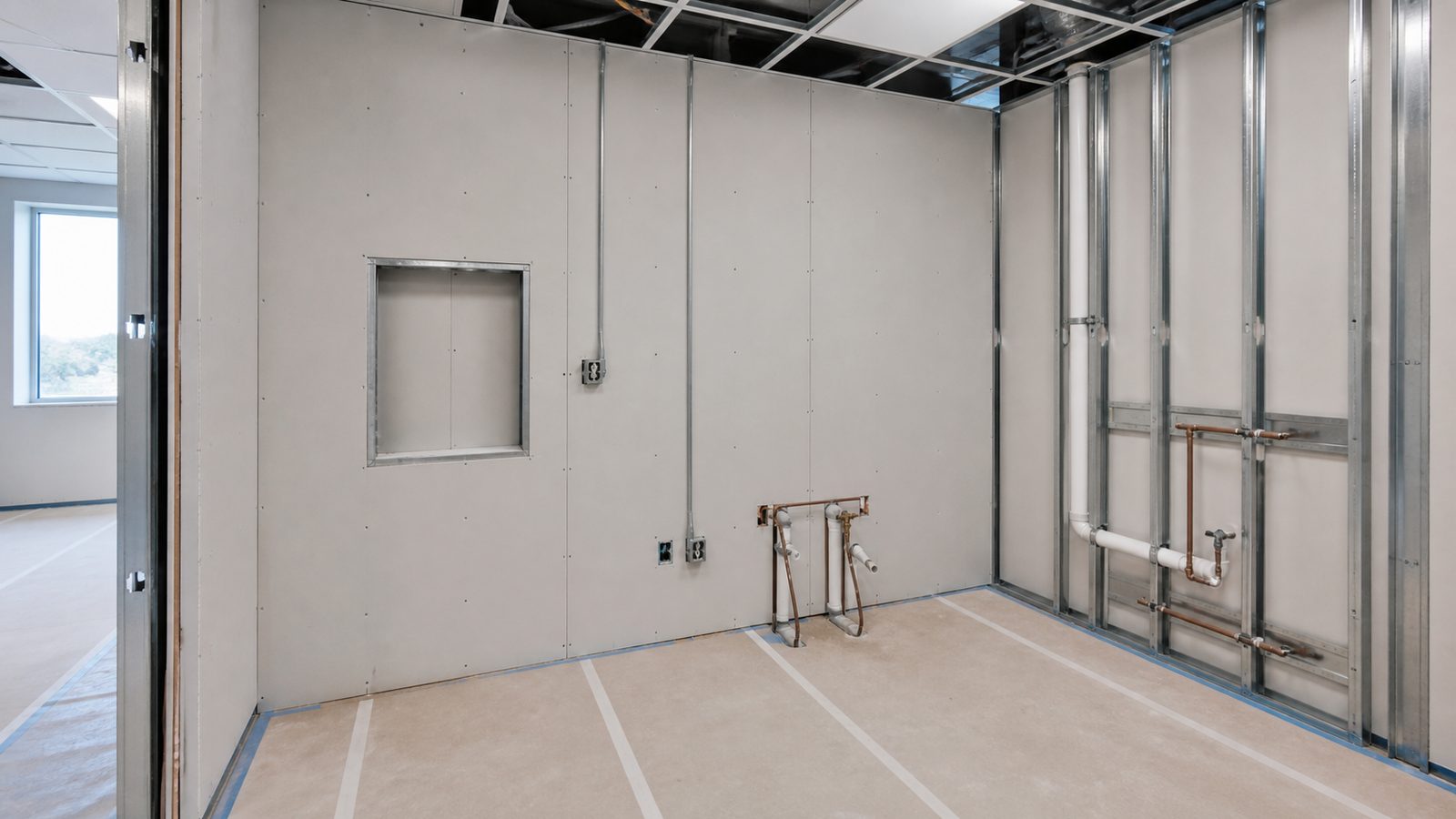
Step 3: Confirm Self-Perform Trades (Especially Drywall and Framing)
On a commercial tenant fit-out, drywall and framing are the trades that most directly control the schedule and quality of the space. If the GC subs these trades, they depend on a subcontractor's availability, a subcontractor's quality, and a subcontractor's willingness to prioritize your project.
A GC who self-performs framing and drywall:
- Controls the crew schedule directly -- no competing project priorities
- Can increase crew size to recover schedule without negotiating a subcontract change
- Manages quality through their own supervision rather than through a subcontract relationship
- Carries the risk of drywall quality directly rather than hiding behind a sub warranty
Ask the GC directly: "Do you self-perform framing and drywall with your own employees, or do you subcontract these trades?" A yes/no answer is sufficient. If the answer is "we have preferred subcontractors we work with closely," that is a no.
JK Prestige Construction self-performs framing, drywall, finish carpentry, and roofing. On tenant fit-outs, this means the drywall crew is a JK crew, not a sub who may have five other jobs running simultaneously.
Pro tip: Also ask about finish carpentry self-performance. Millwork installation, door hanging, and hardware setting are high-visibility trade work that determines how the space looks when it is complete. Self-performance on finish carpentry is a differentiator.
Step 4: Ask About Permit Pull Timeline for Commercial TIs in Duval County
Commercial tenant fit-out permits in Jacksonville are reviewed by the City of Jacksonville (COJAX) Building Inspection Division. The timeline depends on the project type, the quality of the submittal, and the current workload.
Typical review timelines:
- Simple office fit-out (no structural changes, minor MEP): 3 to 5 weeks
- Office with new restrooms, structural changes, or significant MEP: 5 to 8 weeks
- Healthcare or medical fit-out with specialized mechanical and plumbing: 8 to 12 weeks
- Change of use (converting retail to office, office to food service): add 2 to 4 weeks for zoning review
Ask the GC specifically:
- "Who prepares the permit drawings -- do you have an in-house design team or do you use an architect?"
- "How long does it typically take you to get a commercial TI permit issued in Duval County?"
- "Have you had permits rejected on first submittal in the last year? What happened?"
A GC with Jacksonville commercial experience will know the COJAX process, have a relationship with the Building Inspection Division, and know how to prepare a submittal that gets approved on first review.
Warning: A GC who estimates a 2-week permit timeline for a commercial fit-out in Jacksonville either does not understand the process or is telling you what you want to hear. Plan for 4 to 6 weeks minimum, regardless of project simplicity.
Step 5: Get a Reference From a Landlord, Not Just a Tenant
Tenants and landlords evaluate GCs differently. A tenant cares about whether the project was delivered on time and on budget. A landlord cares about whether the GC managed the site professionally, protected existing tenants and common areas, coordinated with the building's MEP systems without causing problems, and left the property clean.
A GC who has worked in Jacksonville office buildings or retail centers and received repeat work from a landlord or property manager has passed a higher bar than one who simply has happy tenants.
Ask for at least one reference from a building owner or property manager, not just an occupant. The questions to ask that reference:
- Did the GC coordinate access and construction hours with other tenants?
- Were there any problems with existing building systems (elevators, fire suppression, base building HVAC)?
- Did the GC leave common areas clean at the end of each day?
- Would you allow this contractor to work in your building again?
Pro tip: Ask the landlord of the building you are leasing for a list of approved or preferred contractors. Many Jacksonville commercial landlords have a short list of contractors they trust with their buildings. Starting with that list eliminates the license and experience verification steps and speeds the landlord approval process for the project.
Step 6: Confirm Scheduling Capacity
A GC stretched across too many concurrent projects will miss your deadline. The best way to assess capacity is to ask directly:
- "How many commercial projects are you currently building?"
- "Who specifically will be the superintendent on my project, and how many other projects will that person be running?"
- "What is your current backlog?"
One superintendent running more than two concurrent commercial fit-outs is a risk. Superintendents who are splitting time between multiple sites miss inspections, fail to resolve RFIs quickly, and allow subcontractor quality problems to go uncorrected.
Ask the GC to name the superintendent who will be assigned to your project before you sign the contract. Then ask for references specifically from that superintendent's previous projects.
Warning: Many GCs assign their best superintendent to land the contract and then assign a less experienced person once work starts. Ask specifically: "Is the superintendent you are proposing the person who will be on site daily during my project?" Get the answer in writing, or in an email you can reference.
Step 7: Fixed-Price vs. GMP for a Tenant Fit-Out
For a well-defined tenant fit-out -- a space plan is complete, finish selections are made, and the MEP scope is defined -- a fixed-price contract is the appropriate delivery method. The scope is knowable and the GC should price it at a fixed amount.
A Guaranteed Maximum Price (GMP) contract is sometimes proposed for fit-outs where the design is not complete. If your landlord's architect is still developing the construction documents when you need to sign a GC contract, a GMP may be the practical choice. However:
- Negotiate a tight GC contingency (3% or less)
- Define exactly what triggers a GMP amendment vs. what is absorbed in the GC contingency
- Require 100% complete design documents within a defined period and a fixed-price conversion at that point
For most Jacksonville tenant fit-outs, a complete space plan and finish schedule are achievable before GC award. Push for fixed-price. A GC who insists on GMP for a fully scoped fit-out may be hedging against their own estimating uncertainty.
Pro tip: The TI allowance structure in your lease creates a natural incentive for cost clarity. If the TI allowance is $40 per square foot and you sign a cost-plus contract with no ceiling, you have no control over your out-of-pocket cost. A fixed-price contract aligns the GC's incentive with yours.

Step 8: What a Complete Scope Document Looks Like for a Tenant Fit-Out
The scope document attached to your contract determines how many change orders you will see. A complete scope document includes:
- A dimensioned floor plan showing all partition locations, door locations, and ceiling heights
- A finish schedule specifying manufacturer, product name, and color for every finish material
- A lighting plan with fixture specifications and quantities
- A mechanical plan showing HVAC zones, duct routing, and diffuser locations
- A plumbing plan showing new fixture locations and drain/supply routing
- An electrical plan showing panel location, circuit counts, and outlet locations
- A reflected ceiling plan
- Written specifications for all systems not fully shown on the drawings
An incomplete scope document -- a conceptual floor plan without MEP, without finish specifications, without a ceiling plan -- is a change order factory. Every decision made after contract award becomes a potential change order.
Ask the GC: "Is the scope document complete enough to give me a fixed price, or are you carrying an allowance for items not yet defined?" Any allowance line item in the contract is an open cost -- verify each one before signing.
For commercial fit-out projects and new commercial construction in Jacksonville, JK Prestige Construction delivers fixed-price contracts tied to a complete scope. The 48-hour estimate turnaround starts from a complete set of documents -- not a concept.
Get a written estimate in 48 hours -- call (904) 944-0278 or request a consultation.
No call center. No coordinator. A JK principal reviews every inquiry and replies with a real number, not a range, not a follow-up form.
Request Free Estimate →