Most owners lose track of their project before the foundation is poured. Not because the contractor hides information, but because the tools exist and nobody explains how to use them. A Gantt chart sitting in a shared folder is useless if you do not know what you are looking at. A weekly call is a courtesy, not a control mechanism.
This guide gives you the specific questions, documents, and checkpoints you need to stay genuinely informed -- not reassured -- from the day you sign a contract to the day you receive your certificate of occupancy (CO).
At JK Prestige Construction, every client gets a direct line to the principal and written weekly reports. This guide explains what to do with that information.
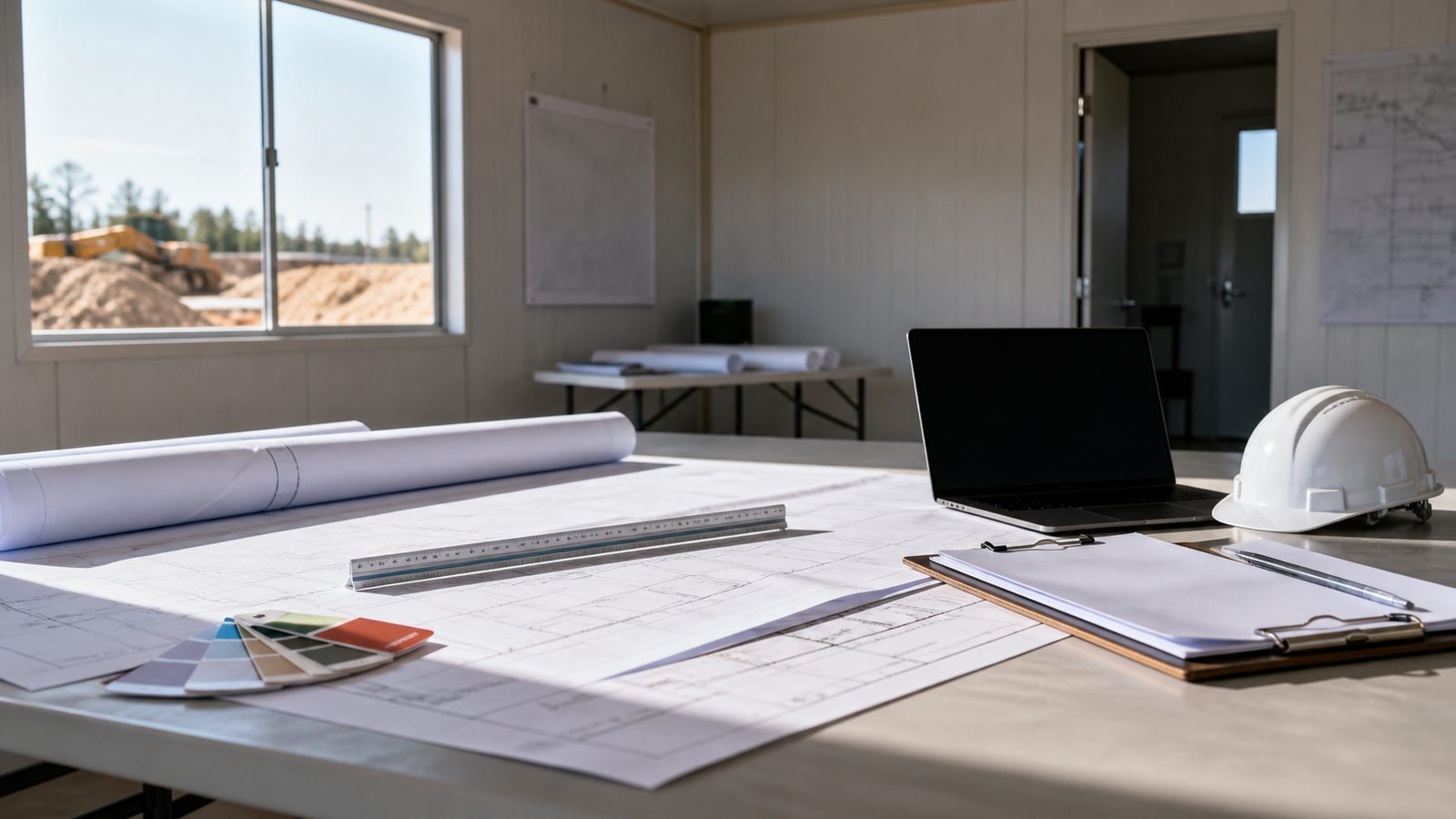
Step 1: Demand the Baseline Schedule Before Ground Breaks
Before any work starts, ask your general contractor (GC) for the project baseline schedule in writing. This is the master document that shows every activity, its planned start and finish date, and its dependency on other activities.
Do not accept "we'll get you that next week." If the GC cannot produce a baseline schedule before mobilization, that is a red flag. It means they are planning as they go.
The baseline schedule should include:
- Permit-dependent activities (framing cannot begin until the building permit is issued)
- Long-lead material delivery dates (windows, roofing systems, specialty MEP equipment)
- Inspection milestones (rough-in inspections unlock the next phase)
- Substantial completion and CO target dates
Pro tip: Request the schedule in PDF format with an activity ID column. When issues come up mid-project, you will reference activities by ID in writing, which creates a clean paper trail.
Step 2: Request a 3-Week Look-Ahead Every Monday
The master schedule tells you what was planned months ago. The 3-week look-ahead tells you what is actually happening this week, next week, and the week after.
Ask your GC to send a written 3-week look-ahead every Monday morning. It should list:
- Activities planned to start or finish in the next three weeks
- Crew counts and subcontractors on site each day
- Any known constraints (material deliveries not yet confirmed, inspections not yet scheduled)
If your GC cannot produce this document, they are not planning their own work with enough detail to manage it. At JK Prestige Construction, the principal reviews the 3-week look-ahead with the field team every Monday before it goes to the owner.
Warning: A 3-week look-ahead that lists only vague categories ("framing," "MEP rough-in") is not useful. Each entry should name a specific scope of work with a specific completion date.
Step 3: Know the Difference Between Milestone Progress and Daily Activity
There is a difference between a crew showing up and work actually advancing. An owner who walks a site and sees activity is not necessarily seeing progress.
Milestone progress is measurable: framing complete on floors 1 and 2, rough plumbing inspection passed, exterior sheathing 80% complete. Daily activity is simply the presence of workers.
Ask your GC to report progress in terms of milestones completed, not days worked. A weekly report that says "framing crew on site all week" tells you nothing. A report that says "exterior wall framing complete, roof framing 60% complete, on track for rough inspection by Friday" tells you exactly where you stand.
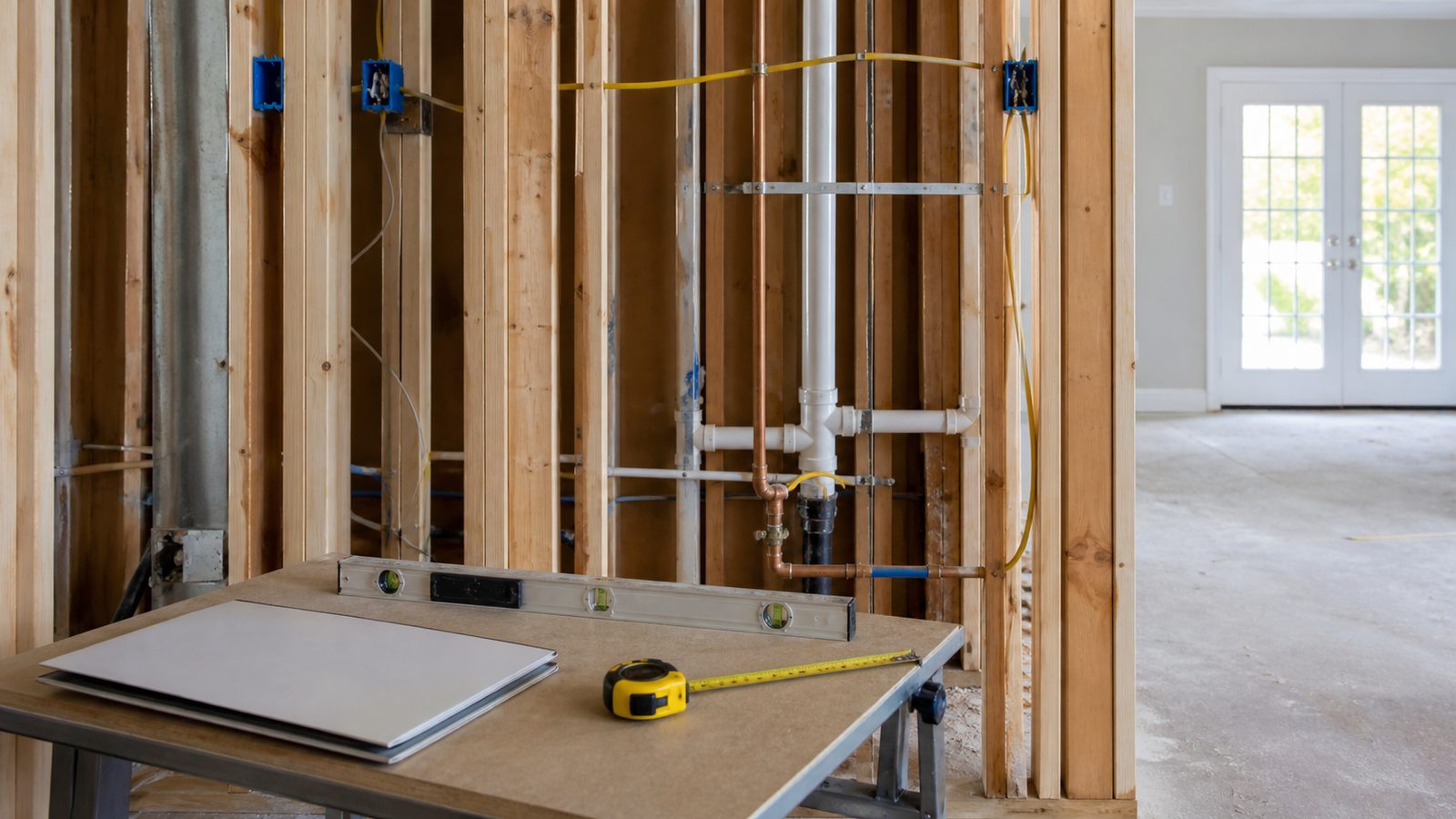
Step 4: What to Look For in Weekly Written Reports
Weekly written reports are where owners get the real picture -- if they know what to read. Most GCs send narrative summaries that are professionally optimistic. Here is what to look for:
- Percent complete vs. activities completed: A project that is "40% complete" by cost might have 60% of its highest-risk activities still ahead. Ask which specific milestones have been achieved this week, not just an overall percentage.
- Planned vs. actual comparison: Every weekly report should show what was planned for that week and what actually happened. If this comparison is absent, ask for it.
- Look-ahead constraints: The report should flag any upcoming activity that does not yet have a confirmed material delivery, approved submittal, or scheduled inspection.
- RFI and submittal log: Requests for Information (RFIs) and material submittals awaiting owner or architect approval are often the silent killers of schedule. If five submittals are waiting for your architect's stamp, you need to know that this week.
Pro tip: Keep a running log of each weekly report. After four weeks, you will have a pattern that tells you whether the project is consistently behind or whether individual weeks are anomalies.
Step 5: How to Read a Simple Gantt Chart
A Gantt chart is a bar chart where each activity is a row and time runs left to right. The bar for each activity starts at its planned start date and ends at its planned finish date.
Here is what to look for:
- Critical path activities: These are typically highlighted in a different color or marked with a flag. Any delay to a critical path activity delays the project end date by the same number of days.
- Float: Activities with float have slack time. A framing activity with 5 days of float can start 5 days late without affecting the completion date. Float is not an invitation to delay -- it is a buffer.
- Dependency arrows: Arrows between activities show what cannot start until something else finishes. If drywall cannot start until rough MEP inspection passes, and the inspection is two weeks behind, the drywall delay is already locked in.
Warning: A Gantt chart that shows no critical path designation is either incomplete or being hidden from you. Everything is on the critical path at some point in a project.
Step 6: What Questions to Ask at Site Visits
A site visit without a specific agenda is a tour. Come with questions written down before you arrive.
Effective site visit questions:
- Which activity was supposed to be complete today? Is it?
- What is the next inspection, and is it currently scheduled with the building department?
- Are there any material deliveries this week that are not yet confirmed?
- Is any subcontractor behind on their scope, and what is the plan?
- Are there any open RFIs that are blocking work?
Bring a notepad and write down the answers. If you get a different answer at the next site visit, you have a record. At JK Prestige Construction, the founder walks every site personally, which means you get the same answer in writing and in person.
Step 7: What to Do When the Schedule Slips
Schedule slips are normal. How your GC handles them is not always normal.
When a slip occurs, ask for three things in writing within 24 hours:
- The specific cause of the delay (material delivery, weather, inspection failure, subcontractor performance)
- The number of calendar days the delay affects the project completion date
- The recovery plan (what changes to sequencing, crew size, or work hours will compress the schedule)
If the answer is "we'll make it up," ask how, specifically. If the answer involves overtime or weekend work, ask whether that changes the cost under your contract.
Pro tip: Distinguish between excusable delays (weather events, acts of God, owner-directed changes) and non-excusable delays (poor planning, subcontractor management failures). Only excusable delays typically entitle a GC to a time extension under standard construction contracts.

Step 8: How a Fixed-Price Contract Protects You When Delays Happen
Under a fixed-price contract, the risk of cost overruns from inefficiency or poor planning sits with the GC, not the owner. If the crew has to work overtime to recover a self-inflicted schedule slip, that is the GC's problem to absorb.
What a fixed-price contract does not protect you from:
- Owner-directed scope changes that add duration
- Permit delays caused by incomplete submittals (which are often a GC responsibility depending on contract language)
- Delays that push work into weather events (the contract should define what constitutes a weather delay)
At JK Prestige Construction, fixed-price contracts are written with a defined scope before work begins. That means the baseline schedule is tied to a specific scope, and any change to that scope goes through a written change order before work proceeds. It also means you have a direct line to the principal -- not a project manager who reports to someone who reports to someone else.
Get a written estimate in 48 hours -- call (904) 944-0278 or request a consultation.
No call center. No coordinator. A JK principal reviews every inquiry and replies with a real number, not a range, not a follow-up form.
Request Free Estimate →