Roofing is the trade that bites GCs hardest when the wrong sub shows up. A bad framing sub creates punch list work. A bad roofing sub creates water intrusion, call-backs, warranty claims, and sometimes litigation. The liability exposure on a roofing failure is disproportionate to the size of the subcontract.
JK Prestige self-performs roofing on our own crews. We made that decision early because roofing quality control with outside subs is hard to maintain at the level our projects require. But for GCs who do use roofing subs, here is the vetting protocol that catches the problems before they become your problems.

Step 1: Verify the Florida CCC License
Florida roofing contractors require a Certified Roofing Contractor (CRC) license. This is not optional and not the same as a general contractor license. A GC can pull a roofing permit under their CGC license in certain circumstances, but a subcontractor operating as a roofing-only entity needs a CRC.
Verify at: myfloridalicense.com — search by company name and by the qualifier's name. Look for:
- Active license status (not expired, not suspended)
- License type: CRC1 (certified) is what you want
- Qualifier name that matches the person who will sign your subcontract
Red flags:
- License registered to a different entity name than the sub's company
- Multiple qualifier changes in the past 3 years (indicates instability)
- Expired certificate of insurance showing on the DBPR record
Step 2: Insurance Certificate Review
Require a current certificate of insurance with:
- General Liability: $1,000,000 per occurrence / $2,000,000 aggregate minimum. Higher if your project contract requires it.
- Workers' Compensation: Required in Florida for any roofing company with one or more employees, regardless of corporate structure. Florida's construction exemption does NOT apply to roofing — Florida Statutes 440.02 specifically excludes roofing contractors from the standard corporate exemption.
- Your company listed as Additional Insured on the GL policy
- Certificate Holder address matching your project or company address
- Expiration dates that cover your project duration
The workers' comp requirement is the one most roofing subs try to work around. A roofing sub that shows up without workers' comp is exposing you to direct liability for any worker injured on your site. Verify independently by calling the insurance carrier on the certificate — don't rely on the paper.
Step 3: Safety Record Check
Request the sub's OSHA 300 log for the prior two calendar years. This is the legally required annual summary of workplace injuries and illnesses.
Calculate their TRIR (Total Recordable Incident Rate): TRIR = (Number of recordable incidents × 200,000) / Total hours worked
Industry average for roofing is approximately 3.5 to 4.0. Below 2.0 is good. Above 5.0 is a red flag.
Also check: has this company had any OSHA citations in the past three years? OSHA's enforcement database at osha.gov is searchable by company name and state.
OSHA 10 certification is a baseline expectation. OSHA 30 is better. Require it for any project where your project specs or owner contract require it.
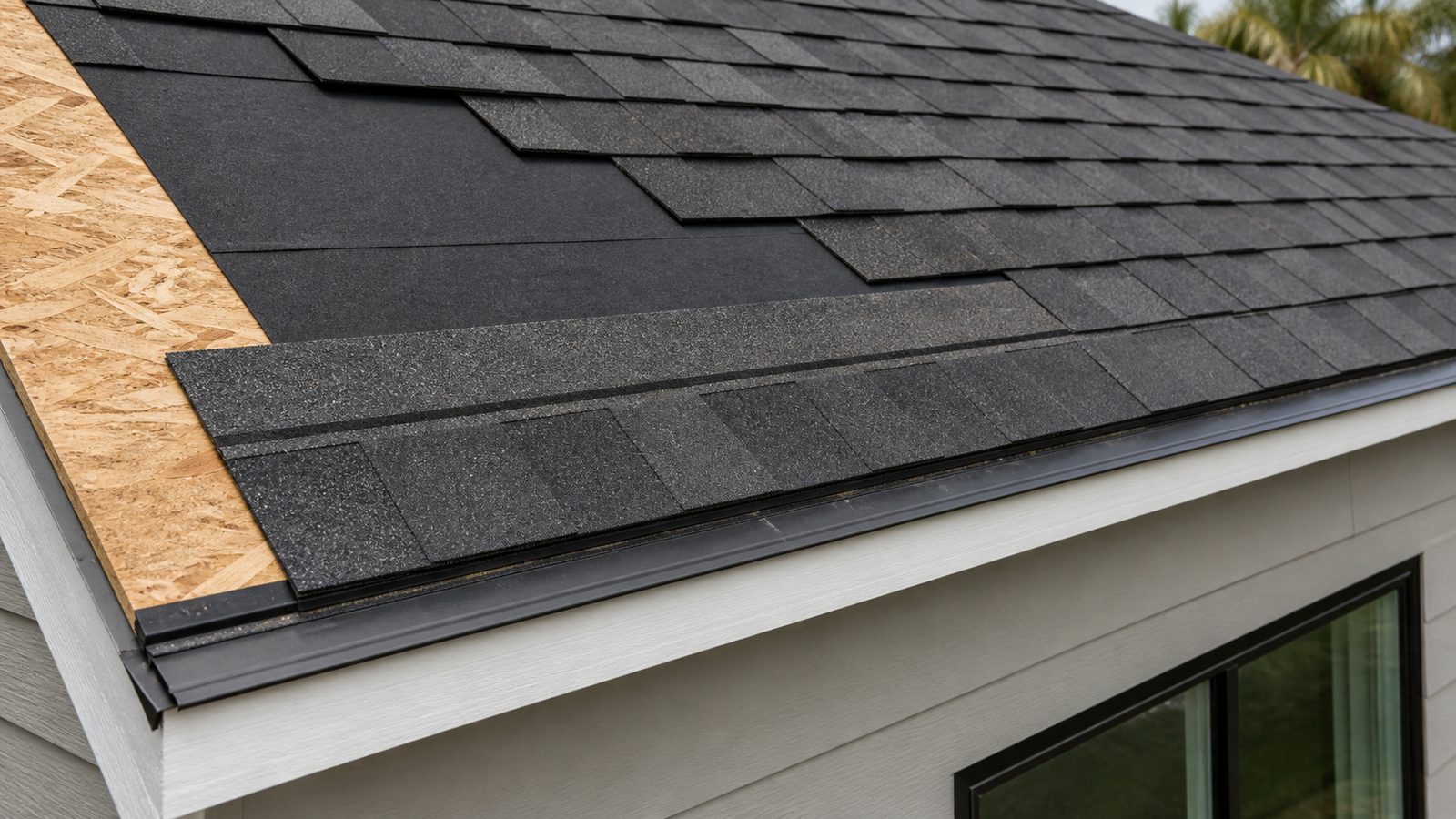
Step 4: Manufacturer Certifications and Product Requirements
If your project specifies a particular roofing system — GAF, Owens Corning, Carlisle, CertainTeed — the roofing sub needs the appropriate installer certification to maintain the manufacturer warranty.
GAF certification tiers:
- Certified Contractor — baseline
- Master Elite — top 3% of GAF contractors, required for 50-year Golden Pledge warranties
If your project requires a manufacturer warranty that extends beyond the standard labor warranty, the sub must hold the certification level required by the manufacturer for that warranty class. Verify the certification directly with the manufacturer, not just from the sub's marketing materials.
JK Prestige holds GAF Master Elite certification. We verify this annually and can provide documentation on request.

Step 5: Review Their Scope Sheet
A roofing sub's bid should specify:
- Roofing system by manufacturer and product line
- Underlayment type and specification
- Flashing material and method (metal type, thickness, counter-flashing detail)
- Penetration detail (pipe boots, HVAC curbs, skylights)
- Ventilation method and calculation
- Drip edge specification
- Warranty coverage: manufacturer, labor, duration
- Haul-off and disposal of existing material (if applicable)
If the bid says "replace roof, per plans," that's not a scope sheet. That's a placeholder that will generate change orders.
Step 6: References and Local Work Volume
Ask for three project references in the past 18 months, with GC contact names and phone numbers — not homeowner testimonials. Call them. Ask:
- Did the sub complete the scope as bid with no material scope changes?
- Were there call-backs after completion?
- Would you use this sub on your next project?
Local work volume matters. A roofing sub who is spread across five counties with minimal local crew stability will not mobilize reliably. Know where their active crews are.
What JK Prestige Looks for in a Roofing Sub
When JK Prestige does engage roofing subs on specialized scopes (large commercial flat roofs, TPO systems beyond our own crew capacity), our minimum requirements are:
- Active CRC license, no violations in 24 months
- Workers' comp verified by carrier
- TRIR below 3.0
- GAF or Owens Corning certified for residential; Carlisle or Sika certified for TPO
- Written scope sheet with full material specifications
- Three GC references with phone numbers
This is not an unusual standard. It's what every GC should require before signing.
No call center. No coordinator. A JK principal reviews every inquiry and replies with a real number, not a range, not a follow-up form.
Request Free Estimate →