A roofing subcontractor failure on your project is not the sub's problem — it is yours. A leak-back within 12 months of project completion hits your warranty fund, your client relationship, and your reputation with the property owner. A workers' comp claim filed under the wrong NCCI code can come back as an audit finding that costs your firm tens of thousands of dollars.
Vetting a roofing sub correctly takes about four hours the first time. That investment prevents problems that take forty hours to resolve.
This guide is written for GC partners and project managers who need a repeatable framework for qualifying new roofing subcontractors in the Florida market. JK Prestige Construction is a licensed roofing contractor that self-performs commercial and residential roofing. Here is how we would evaluate any roofing sub we were considering using.

Step 1: Verify Florida CCC License on DBPR
Every roofing contractor doing business in Florida must hold a Florida Certified Roofing Contractor license — CCC classification — issued by the Florida Department of Business and Professional Regulation (DBPR). This is a state-level license that permits roofing work statewide, unlike registered contractor licenses which are tied to a local jurisdiction.
Verify the license at myfloridalicense.com. Enter the company name or license number and confirm:
- License status is "current and active" — not "null and void," "suspended," or "on probation"
- License type is CCC (Certified Roofing Contractor), not CGC (General Contractor) or CBC (Building Contractor) — a GC license does not authorize roofing work as a specialty trade
- The licensee name matches the entity you are contracting with — not a related entity, a principal's individual license, or a former company name
- The license has no disciplinary history — click through to the complaint and discipline history if available
License verification takes five minutes and should be non-negotiable before any roofing sub is added to your approved vendor list.
Warning: A sub who says "our license is being renewed" or "we operate under our qualifier's license" is not licensed. "Being renewed" means the license is expired. A qualifier's license covers work done by that specific entity with that individual as the qualifier on record — not a related entity, a parent company, or a commonly owned firm. Require a current, active CCC license with no exceptions.
Step 2: Confirm GL Insurance with Roofing NCCI Workers' Comp Code 5551
This step is where most GC pre-qualification processes fail. GCs verify that the sub has general liability (GL) insurance and workers' compensation (WC) insurance. What they do not verify is whether the workers' compensation policy covers the actual work being performed.
Workers' compensation premiums are calculated by NCCI — National Council on Compensation Insurance — job classification codes. Roofing is code 5551. Carpentry is code 5403. Painting is code 5474. The code 5551 roofing classification carries a significantly higher premium rate than carpentry or general building trades — because roofing carries higher risk of fall injuries.
A roofing contractor whose WC policy lists code 5403 (carpentry) or another non-roofing code has either misclassified their workers to reduce premiums (insurance fraud), or is not actually performing roofing work under their WC coverage. If an injured worker on your job site was performing roofing work but the sub's WC policy lists carpentry code, the WC claim may be denied, and the injured worker's claim may migrate to your policy.
Request the WC certificate and ask your insurance broker to verify that code 5551 appears on the certificate. If the sub cannot produce a certificate with roofing code, do not use them.
Pro tip: Run an insurance verification call with the sub's carrier — not just the certificate of insurance document. Certificates can be back-dated or generated from policies that have since lapsed. A direct verification call to the carrier confirms policy status as of today.
Step 3: Require Manufacturer Certification So Warranty Can Be Registered
If your project specifications include a manufacturer-warranted roofing system, your roofing sub must hold current certification from that manufacturer. Without certification, the manufacturer warranty cannot be registered, and you cannot deliver the warranted system to the property owner.
Major manufacturer certification programs:
- GAF: Registered Contractor, Certified Contractor, Master Elite (fewer than 3% of US roofing contractors)
- CertainTeed: SELECT ShingleMaster, Master ShingleRocker
- Owens Corning: Preferred Contractor, Platinum Preferred Contractor
Verify certification status directly on the manufacturer's contractor locator — not from the sub's marketing materials or certificate of insurance. Certifications must be current and active. A sub who was Master Elite three years ago but has not renewed is no longer certified.
If your project requires an NDL — No-Dollar-Limit — warranty (common on institutional or healthcare roofing projects), verify that the sub holds the certification tier that unlocks NDL coverage. For GAF, that is Master Elite. A sub who holds only Certified Contractor status cannot register an NDL warranty regardless of what they tell you.
Warning: A project where the specification requires a 20-year NDL warranty and the installed warranty is a basic 10-year material-only coverage because the sub was not actually certified is a significant owner-facing deficiency. Catch this before contract award, not at closeout.
Step 4: Check Leak-Back Rate — Ask References What Percentage Came Back in the First Year
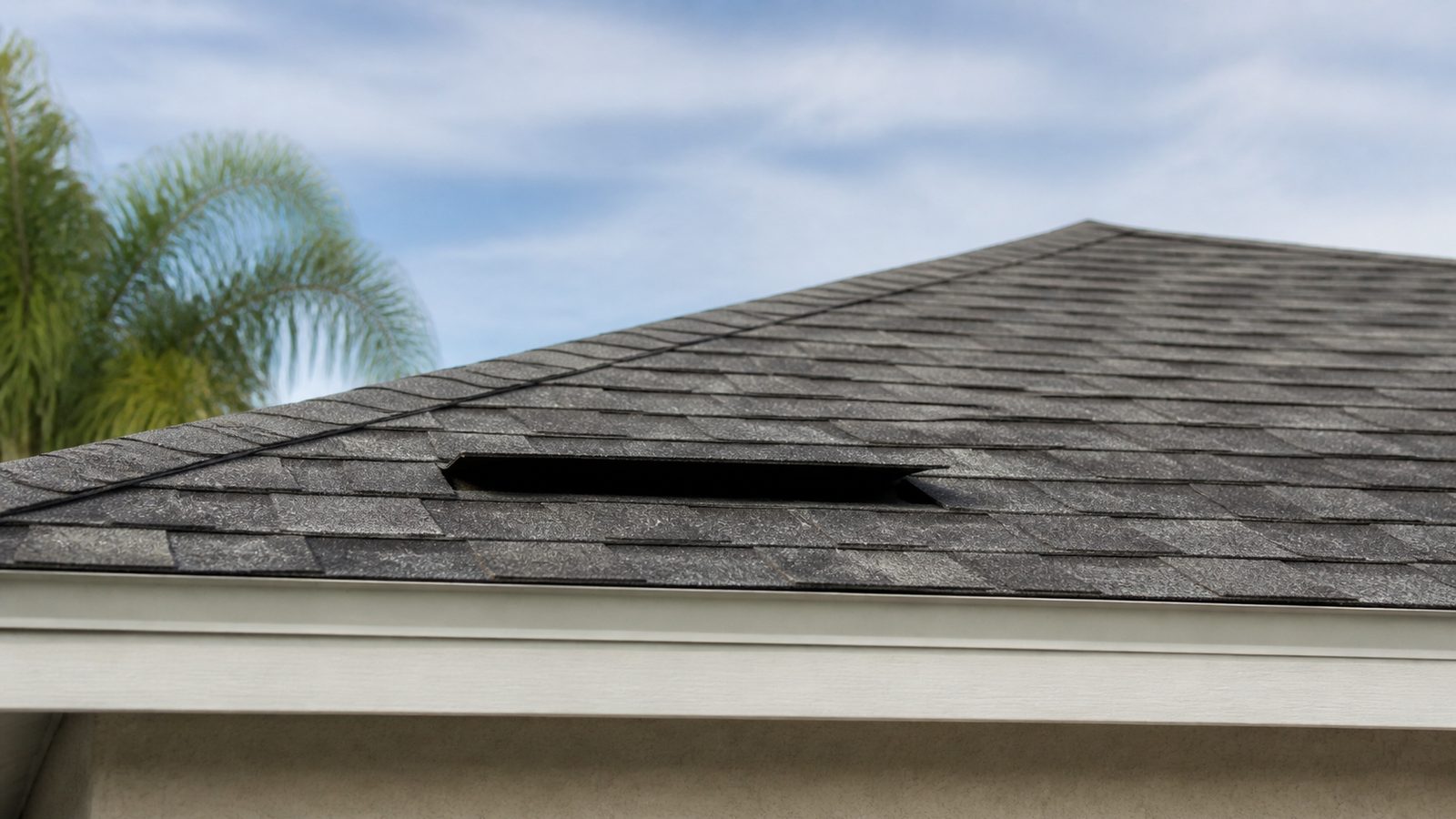
Leak-back rate is the single most predictive quality metric for a roofing subcontractor. It measures the percentage of completed roofs that required a return service visit within the first 12 months due to a leak or installation deficiency.
Ask the sub directly: what is your leak-back rate? A strong roofing contractor will know this number and answer without hesitation. A rate below 3% is solid. Above 5% indicates systemic installation quality problems. A sub who says "we don't track that" has not built the quality management infrastructure that serious contractors maintain.
Then verify with references. Call three to five GCs or owners who have used the sub in the last two years. Ask each reference: "What percentage of the sub's work came back in the first year with a leak?" The reference answers are more reliable than the sub's self-reported number.
For commercial projects, also ask references whether the sub has ever walked away from a leak-back without completing the repair. A sub who disputes liability for their own leaks and forces arbitration to close out a warranty claim is a sub who will cost you more in management overhead than their bid savings are worth.
Pro tip: Ask references specifically about the sub's crew consistency. A sub who self-performs with their own direct-hire crew is more predictable in quality than a sub who uses day labor or rotating supplemental crews sourced from different sources. Crew consistency drives installation quality consistency.
Step 5: Review Scope Capability — Do They Do Commercial Membrane or Only Residential Shingles?
Roofing is not a single trade — it is several distinct installation systems that require different crew skills, equipment, and manufacturer training:
- Asphalt shingles (residential, most common system)
- TPO (Thermoplastic Polyolefin) and EPDM (Ethylene Propylene Diene Monomer) single-ply membrane (commercial flat and low-slope)
- Modified bitumen (commercial, applied by torch or cold-process)
- Metal roofing (standing seam and screw-down panel systems)
- Built-up roofing (hot-mop BUR, less common in new construction)
- Spray polyurethane foam (SPF) systems
A sub who does residential shingles and claims they can handle a TPO membrane roof on a commercial addition is a sub who is learning on your project. Confirm that the sub has documented, reference-verifiable experience with the specific system your project requires.
In the Jacksonville market, a significant portion of commercial roofing projects use TPO single-ply on low-slope decks. Residential roofing is predominantly asphalt shingle with tile in coastal and upscale residential markets. Do not assume that a sub strong in one system has transferable expertise in another.
Warning: Contractor licensing does not define scope capability. A CCC-licensed roofing contractor is legally permitted to install any roofing system. Legal permission and actual crew competency are different things.
Step 6: Confirm Mobilization Timeline and Crew Headcount
A roofing sub who cannot mobilize when your project sequence requires them is a schedule risk — and roofing is typically on the critical path for everything that follows: MEP rough-ins, insulation, drywall, and exterior finishes cannot begin in earnest until the roof is weather-tight.
Ask specifically: how many projects are you currently running? What is your crew count? If we need you mobilized in six weeks, what is your current pipeline and can you commit to that window?
A sub who is running eight simultaneous projects with two crews is overextended. A sub who pauses to look it up and comes back with a clear answer is organized. A sub who agrees to mobilize in six weeks and then shows up three weeks late has already told you something about how they operate.
For larger roofing scopes (10,000+ square feet), confirm that the sub's headcount is appropriate for the production rate the schedule requires. A 3-person crew installing commercial TPO at 1,500 square feet per day on a 25,000 square foot roof needs approximately 17 working days of continuous production. If your window is 12 working days, the sub needs a larger crew.
Pro tip: Ask the sub for a brief schedule submittal — a simple weekly production target showing when each phase of the roof installation will be complete. A sub who can produce this is a sub who manages their own work proactively. A sub who says "we'll finish when we finish" is not a sub who will coordinate well in a multi-trade environment.
Step 7: First Project Should Be a Smaller Job — Build the Relationship Before You Scale
The standard for qualifying a new subcontractor in any trade: start small. Give the sub a project that is representative of your typical work but on the lower end of scale and complexity. Observe how they perform on:
- Mobilization timing
- Crew professionalism on site
- Communication responsiveness (do they return calls? Do they proactively flag issues?)
- Closeout documentation (do they submit as-builts, warranty registrations, and close-out paperwork without chasing?)
- Billing accuracy and timeliness
A roofing sub who performs well on a $45,000 residential replacement is a candidate for the $400,000 commercial re-roofing project. A sub who is hard to reach on a small job will be hard to reach on a large one — only the consequences will be larger.
Do not feel pressure to give a new sub a large project to "prove they can handle it." You bear the risk of that proof, not them. Earn the relationship incrementally.
JK Prestige Construction self-performs commercial and residential roofing as a licensed CCC roofing contractor in the Jacksonville and Duval County market. We have direct experience with the quality variables that matter in roofing sub selection because we operate as both a GC that coordinates roofing subs and a licensed roofing contractor that performs roofing work directly.
For GC partners interested in working with us, learn more at The JK Way. For our roofing capabilities specifically, visit jkprestigeconstruction.com/#/roofing.
Get a written estimate in 48 hours. Call (904) 944-0278 or request a consultation.
No call center. No coordinator. A JK principal reviews every inquiry and replies with a real number, not a range, not a follow-up form.
Request Free Estimate →