Impact-resistant (IR) roofing is marketed heavily in Florida after every major storm season. The claims are broad — "hurricane resistant," "hail proof," "storm-rated" — and the price premium can be significant. Homeowners replacing a roof after a storm want to make the right call, and the marketing language does not always help.
Here is what impact-resistant roofing actually does, what the testing standards mean, how Class 4 IR shingles perform in Florida's specific storm environment, and whether the cost premium makes financial sense for a Jacksonville homeowner.
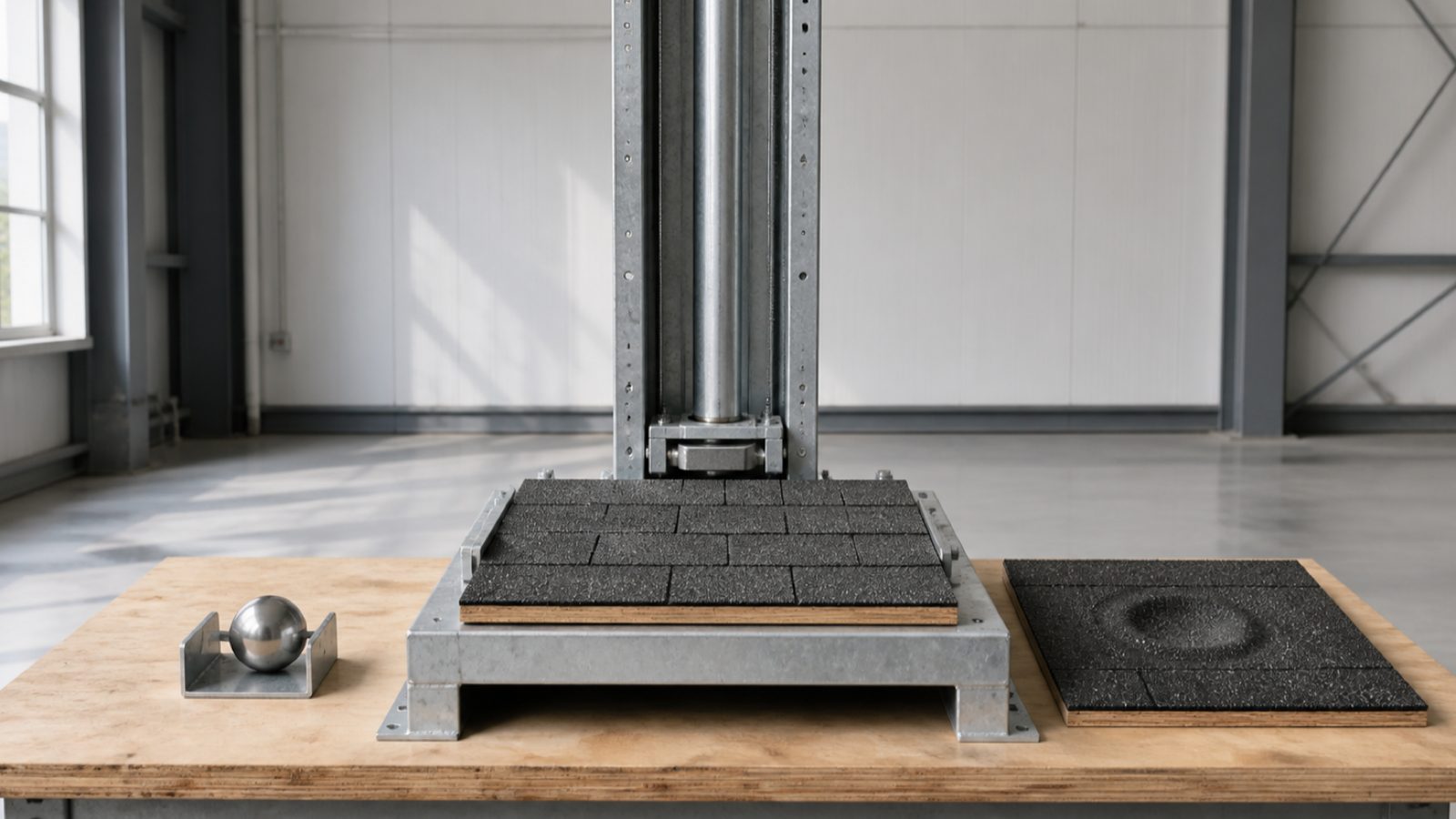
What "Impact Resistant" Means: The UL 2218 Test
UL 2218 is the Underwriters Laboratories standard for impact resistance testing of roof coverings. The test simulates hailstone impact by dropping a steel ball of defined diameter from a defined height onto a conditioned shingle sample.
The four classes:
- Class 1: 1.25-inch steel ball dropped from 10 feet — one impact, same location
- Class 2: 1.50-inch steel ball from 15 feet — two impacts, same location
- Class 3: 1.75-inch steel ball from 17 feet — two impacts, same location
- Class 4: 2.0-inch steel ball from 20 feet — two impacts at the same location — no fracture, cracking, or opening of the shingle
A Class 4 rating means the shingle survived two impacts from a 2-inch steel ball dropped from 20 feet with no structural failure. That is a meaningful test — real hailstones in the 1.5-2.0 inch diameter range cause significant damage to standard shingles, and Class 4 shingles demonstrably resist that damage.
Class 4 is the highest UL 2218 rating. There is no Class 5.
What Class 4 IR Shingles Are Made Of
The engineering that achieves Class 4 performance is in the shingle mat — the fiberglass reinforcing layer that forms the core of an asphalt shingle. Standard shingles use a conventional fiberglass mat. Class 4 IR shingles use one of three reinforcement approaches:
Polymer-modified asphalt: The asphalt coating is modified with a polymer (typically SBS — styrene-butadiene-styrene) that gives the asphalt more flexibility and resistance to fracture under impact. SBS-modified shingles are the most common Class 4 IR construction.
Fiber reinforcement in the mat: Some manufacturers weave additional fiber reinforcement directly into the fiberglass mat to resist tearing under impact. This produces a denser, heavier shingle.
Dual-layer mat construction: A secondary mat layer bonded to the primary mat adds thickness and impact resistance at the cost of increased weight.
The result is a shingle that is generally heavier and stiffer than a standard 3-tab or architectural shingle — which affects installation (heavier to handle) but also means the fastening mechanics are slightly different. JK Prestige's crews are trained on manufacturer-specific installation requirements for each IR shingle line.
Florida Hurricane Performance: What IR Shingles Actually Protect Against
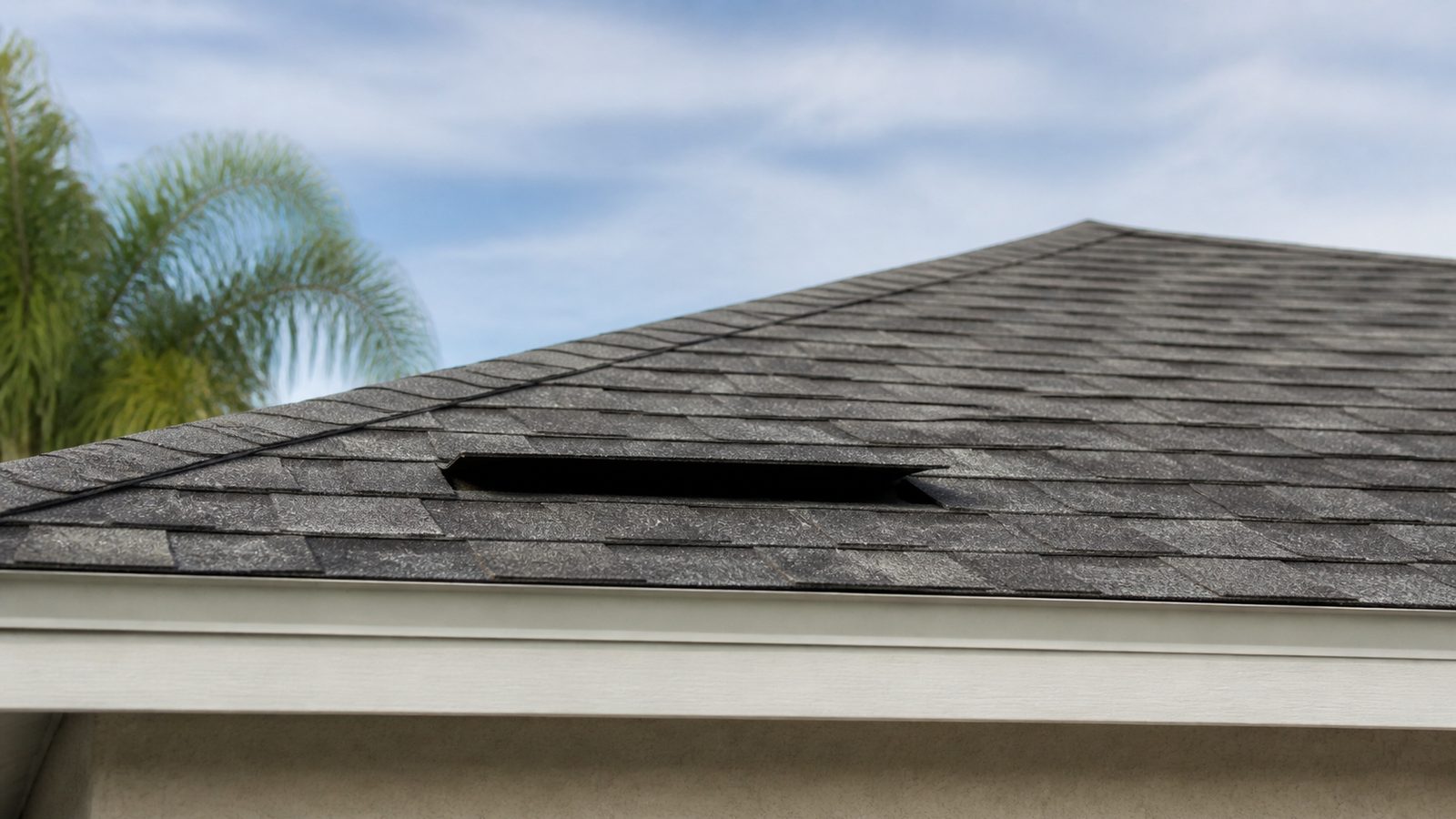
Here is where the marketing and the reality diverge. The UL 2218 test is a hail impact test — not a wind test. Florida hurricanes bring wind-driven rain as their primary roof threat, not hail.
This does not mean IR shingles are irrelevant for Florida. But the benefit analysis is different from a hail-belt state.
What IR Shingles Do in a Florida Hurricane
Hail reduction: Florida does experience hail — typically small-diameter (0.75-1.25 inch) in most events, with occasional larger hail in strong convective cells. Class 4 IR shingles significantly outperform standard shingles in hail resistance. For homeowners who have had shingle damage from hail in past events, IR shingles are a direct upgrade.
Wind resistance through mat integrity: The reinforced mat construction in Class 4 IR shingles is more resistant to cracking, fracturing, or tearing under stress — which includes the stress of wind uplift. Standard shingles that age and become brittle are more susceptible to tab fracture when exposed to repetitive wind cycles. The SBS-modified asphalt and reinforced mat in IR shingles maintain flexibility longer, which translates to better performance under wind cycling.
Retained structural integrity post-impact: In a storm with both wind and hail components (a common Florida thunderstorm signature), a standard shingle fractured by hail is immediately more vulnerable to wind uplift. A Class 4 shingle that does not fracture under the same hail impact maintains its wind resistance through the rest of the storm event.
What IR Shingles Do Not Do
They are not wind-rated shingles. There is a separate standard — ASTM D3161 and FM 4473 — for wind uplift resistance. A Class 4 UL 2218 rating says nothing about wind uplift performance. A shingle can be Class 4 IR and have no formal wind-resistance enhancement. Verify the manufacturer's wind speed rating (typically tested in MPH, with 130 mph being the standard for Duval County compliance) separately from the IR rating.
They are not waterproof. If the shingle is lifted in wind, rain infiltrates behind it regardless of IR rating. The wind uplift resistance of the shingle — determined by nail count, nail placement, and seal tab adhesion — determines what happens to the shingle in sustained high wind, not the IR classification.
Florida Insurance Discounts for Class 4 IR Shingles
Florida homeowner's insurance carriers offer premium discounts for Class 4 IR shingle installation. The discount is applied to the wind portion of the premium.
Typical discount range in Duval County: 10-25% on the wind coverage component, depending on carrier and policy structure. For a Jacksonville homeowner paying $4,000 annually with 40% of the premium attributable to wind risk, a 20% discount on wind coverage produces $320 annually in savings.
Important caveats:
- Not all carriers offer the discount. Verify before assuming.
- The discount applies to the wind coverage portion, not the total premium. Ask the carrier to calculate the dollar amount before making the decision based on the discount.
- The discount typically requires documentation of the UL 2218 Class 4 rating — provide the Florida Product Approval (FPA) number and the manufacturer's IR certification at the time of installation.
JK Prestige provides all relevant product documentation — FPA number, UL 2218 classification, manufacturer's wind speed rating — as standard deliverables at project completion.
Cost Premium Over Standard Shingles in Jacksonville
Class 4 IR shingles cost more than standard architectural shingles. The premium varies by product and market conditions, but in the current Jacksonville market:
Typical cost premium: $1.00 to $2.00 per square foot of installed roofing. For a 2,000 sqft home with a moderately complex roof (approximately 25 squares of roofing), that is a $2,500 to $5,000 premium over a standard architectural shingle installation.
Payback calculation: If the insurance discount is $300/year, payback on a $3,750 premium is approximately 12.5 years — which roughly aligns with the roof's first re-inspection window. If the discount is $600/year, payback is 6 years.
For homeowners planning to stay in the home long-term, the financial case for Class 4 IR shingles in Duval County is solid. For homeowners in higher-value homes (where both the insurance premium and the potential storm damage cost are higher), the case is stronger.
Which Manufacturers Offer Class 4 IR in Jacksonville
Three manufacturers dominate the Duval County residential roofing market with Class 4 IR products that JK Prestige installs:
GAF Timberline HDZ: GAF's flagship architectural shingle in the standard line also carries a Class 4 IR rating. The TimberTex and StainGuard Plus products in the HDZ series are the most commonly installed IR product in Jacksonville. JK Prestige holds GAF Master Elite certification — the highest tier in the GAF contractor program — which allows us to offer GAF's Golden Pledge warranty (the strongest coverage available).
CertainTeed Landmark IR: CertainTeed's dedicated impact-resistant line in the Landmark series. SBS-polymer modified asphalt matrix. Available in a wide color range with SureStart Protection warranty through CertainTeed Select certified contractors. JK Prestige holds CertainTeed Select certification.
Owens Corning Duration Storm: Owens Corning's IR line uses a fiberglass mat with additional polymer reinforcement. The Duration Storm is available in the standard Owens Corning color palette. Owens Corning's TRU PROtection warranty is available through preferred contractors.
Is Class 4 IR Worth It in Duval County?
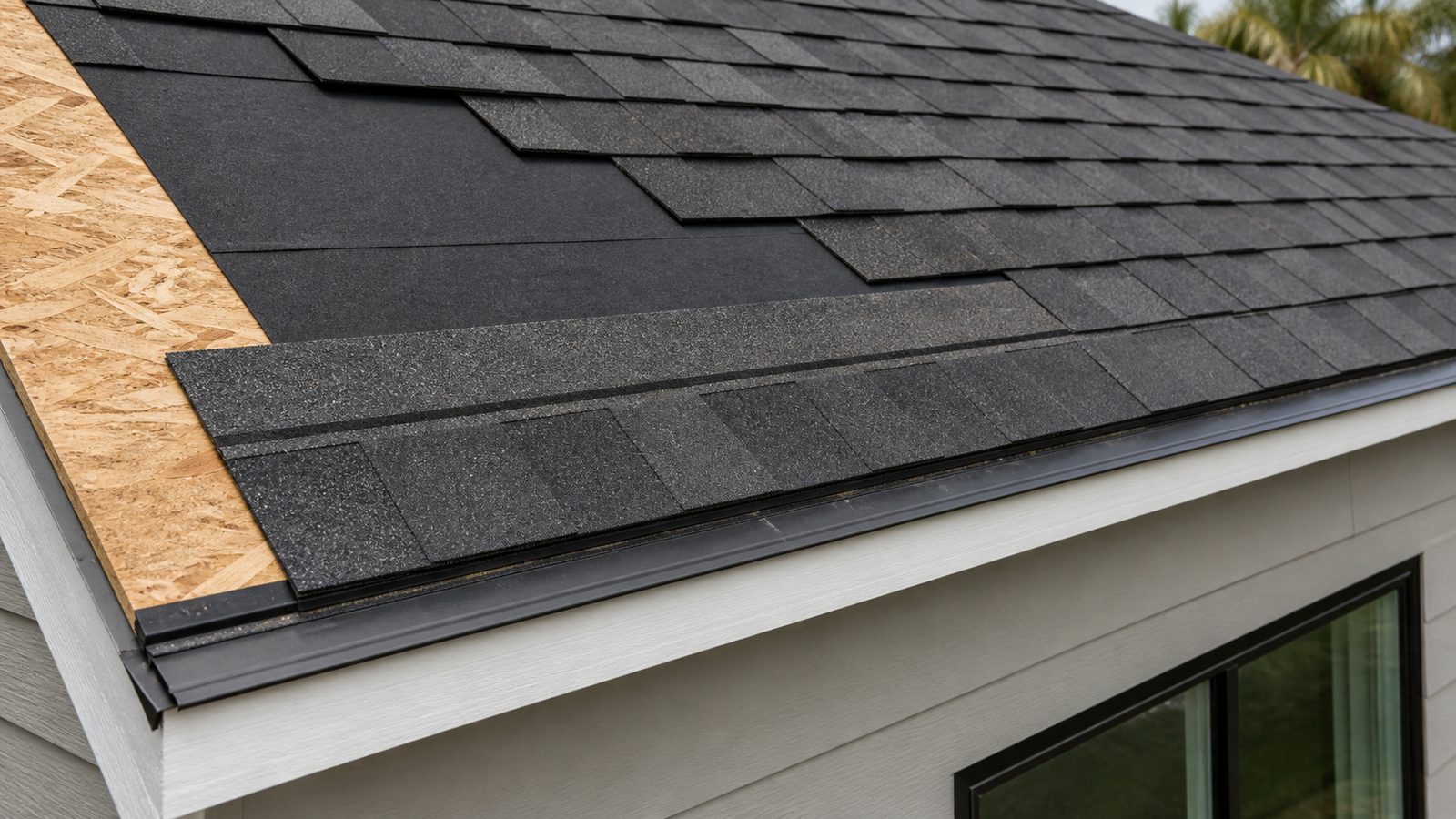
The honest answer: for most Jacksonville homeowners replacing their roof, yes — but verify the insurance discount with your specific carrier before committing to the premium.
The reinforced mat construction delivers real performance improvements beyond hail resistance — flexibility, fracture resistance under wind cycling, and longer useful life in Florida's UV and heat environment. The insurance discount offsets a significant portion of the cost premium. And after a decade of Florida insurance market volatility, any legitimate premium reduction is worth capturing.
What IR shingles do not do: eliminate the need for proper installation. A Class 4 shingle installed with 4 nails at the wrong location, without manufacturer-specified ice and water shield at penetrations, and without code-compliant drip edge fastening will fail at the same wind speeds as a standard shingle installed incorrectly. The material is only as good as the installation.
JK Prestige's own roofing crews — not brokered-out nail gangs — install to manufacturer specification on every project. See our full roofing division capabilities and how JK Prestige manages quality control at The JK Way.
Book your free 24-point roof inspection. contact the JK Prestige roofing team. Call (904) 944-0278. A principal answers.
No call center. No coordinator. A JK principal reviews every inquiry and replies with a real number, not a range, not a follow-up form.
Request Free Estimate →