If a storm hit your Jacksonville roof, the insurance adjuster's written scope determines how much you get paid — and adjusters miss items. Flashing damage, degraded underlayment, and code-upgrade requirements are routinely left off initial estimates. A roofer who can identify those gaps, document them in writing, and negotiate directly with the carrier recovers money you would otherwise leave on the table. JK Prestige attends every adjuster visit with a principal or project lead, produces an independent written damage assessment, and handles scope negotiations directly. Here is how that process works from first call to check-in-hand.
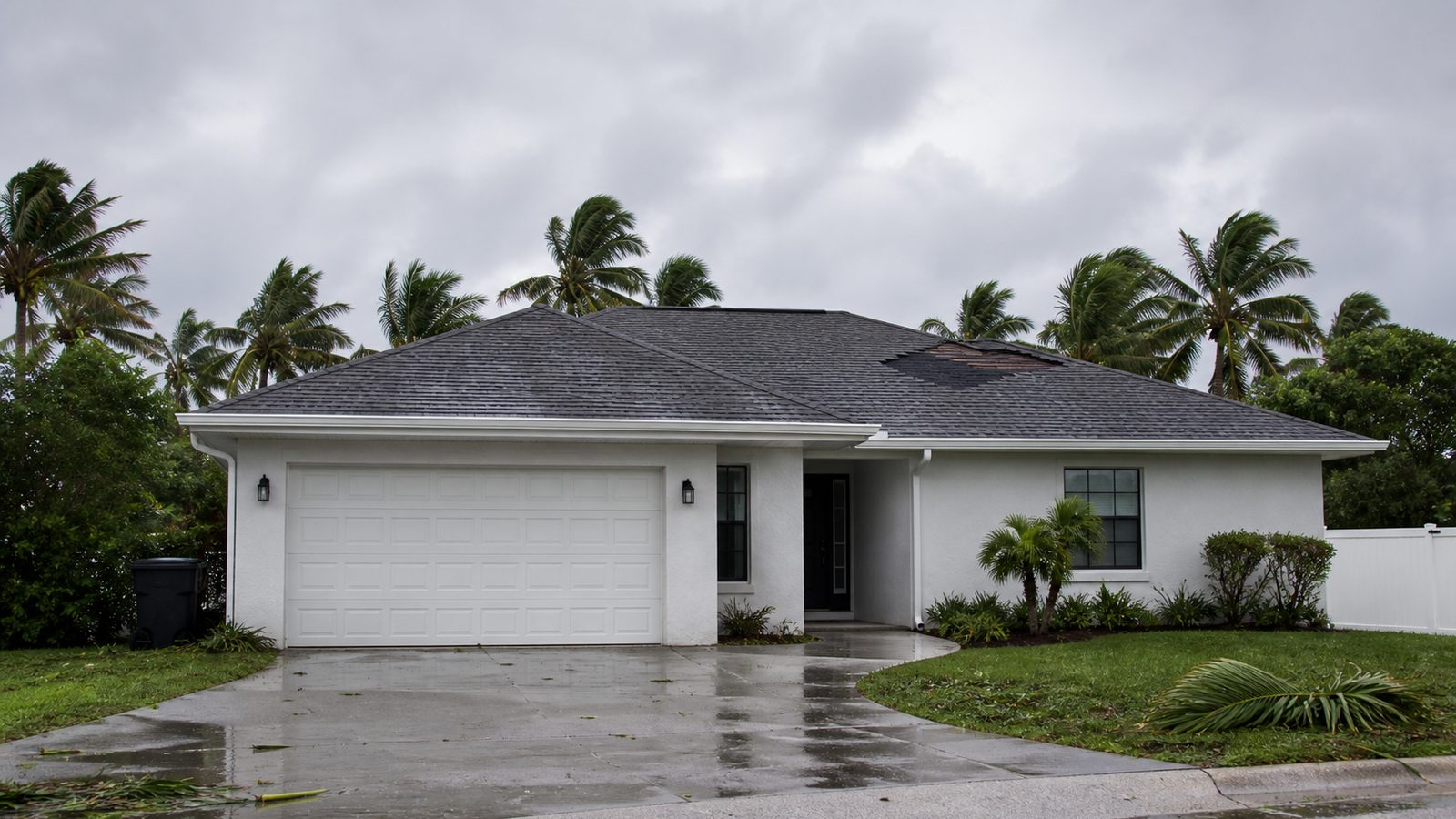
How the Insurance Adjuster Roof Claim Process Works in Jacksonville
What Adjusters Look For — and What They Miss
When the adjuster visits your property, they are assessing the visible, quantifiable damage from the reported storm event. They document:
- Shingle impact marks, fractures, and granule loss consistent with hail
- Missing or lifted shingles from wind
- Dented or bent metal components (gutters, flashings, ridge cap)
- Interior water intrusion traced to roof penetrations
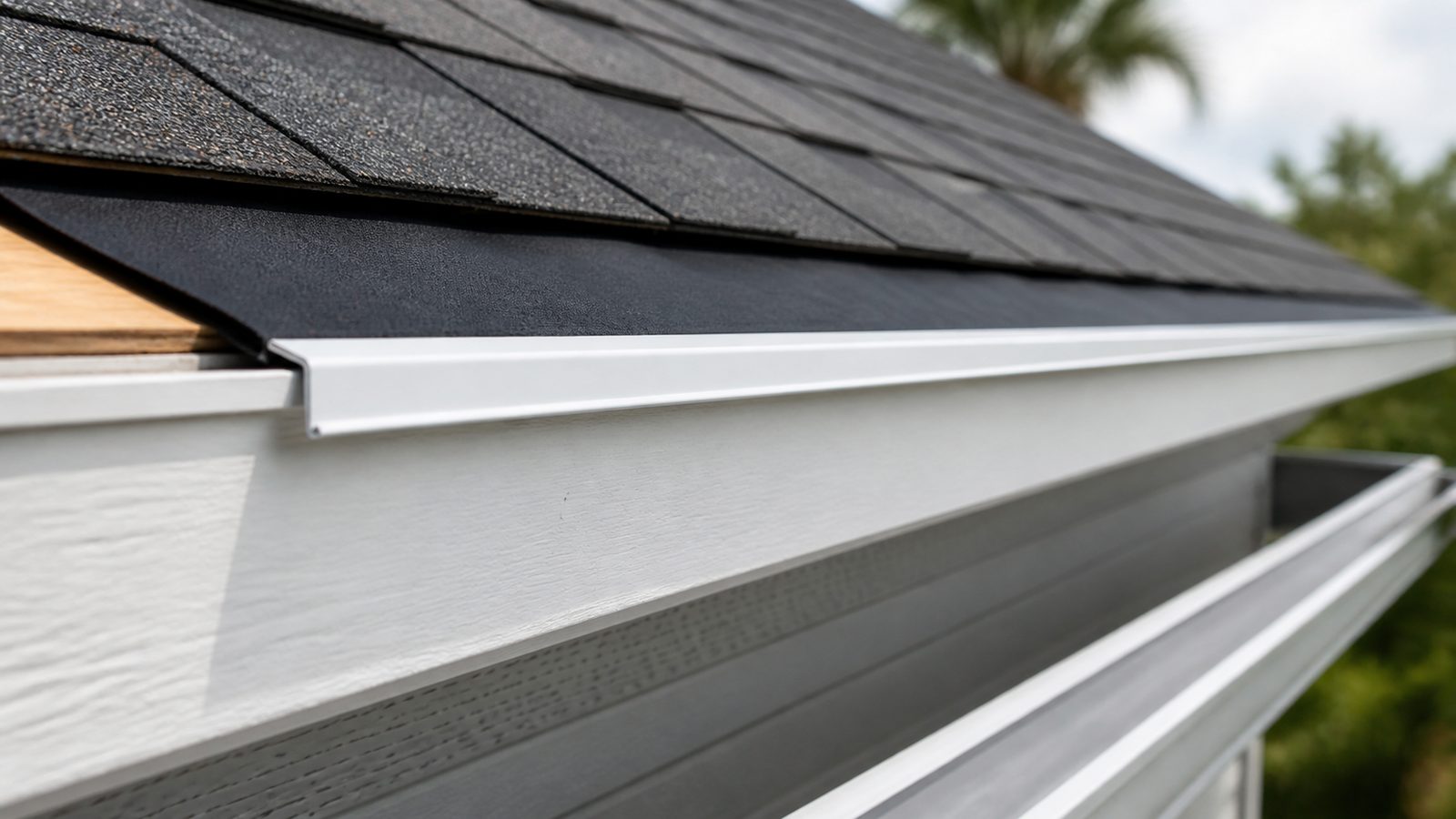
What they frequently miss — or intentionally exclude — is a different list. Step flashing along dormers and chimneys is common. So is pipe boot flashing, which cracks under UV exposure and is often pre-existing on borderline claims. Adjusters regularly exclude underlayment replacement, even when the existing underlayment is saturated or torn, on the grounds that it is a secondary material. They also miss drip edge code upgrades (required in Florida when re-roofing to current code), soffit damage from wind-driven rain entry, and ventilation components impacted by the same storm.
Each of these exclusions reduces your approved scope. Each one that stays off the estimate becomes your out-of-pocket cost — or a deficiency in the final roof if you accept a cheaper bid to stay within the insurance payment.
The Written Damage Assessment
Before the adjuster arrives, JK's project lead or principal does an independent inspection. This produces a written scope document that itemizes every damaged component: field shingles, hip and ridge caps, all flashings by type, underlayment condition, deck condition where visible, and all metal components. Quantities are measured. Manufacturer specs are noted where warranty requirements apply.
That document goes into the adjuster visit. When the adjuster's scope and JK's scope diverge — and they almost always do — there is a written record to argue from. "The underlayment is saturated and must be replaced per the manufacturer's installation requirements for a GAF HDZ shingle warranty" is a more effective argument than a verbal dispute on a ladder.
Common Scope Discrepancies and How JK Negotiates Them
Items Most Often Left Off an Initial Estimate
| Item | Why Adjusters Exclude It | JK's Argument |
|---|---|---|
| Underlayment | "Secondary damage," not directly wind-impacted | Manufacturer requires replacement for full warranty; without it the shingle claim is incomplete |
| Step and counter flashing | Partial damage; "only X pieces affected" | Matching and integration — partial flashing replacement leaves moisture pathways |
| Pipe boot flashing | "Pre-existing deterioration" | Storm accelerated failure; boots were intact per prior inspection photos |
| Drip edge | Not visible from street | Florida code 706.1.1 requires drip edge on all re-roofs |
| Code upgrade line items | Missing entirely | Florida Building Code Section R905.2.8.5 applies; carrier must cover to code |
JK's project lead brings product datasheets, installation manuals, and the applicable Florida Building Code sections to the adjuster visit. These are not arguments — they are documentation. Most carriers resolve scope discrepancies when the contractor provides written technical support.
What a Supplemental Claim Is — and When You Need One
A supplemental claim is a formal request to reopen the approved scope after the initial payment has been issued. Supplements happen when:
- Hidden damage is found during tear-off (saturated decking, deteriorated nailer boards, rotted sheathing)
- Code-required line items were omitted from the first estimate
- Material costs changed between estimate date and installation date (carriers must match current Xactimate pricing)
- The adjuster missed components that photographs and measurements now document
JK initiates supplemental claims in writing, with photographs, measurements, and line-item pricing. The carrier reviews and either approves or issues a partial supplement. Supplements take 10 to 30 days to process in most cases. Starting the documented conversation early — at the initial adjuster visit — reduces how much has to be re-argued after the fact.

What Documentation Speeds Up the Payment Process
Delays in insurance roof payments almost always trace back to missing documentation. These items, provided proactively, move the claim faster:
- Signed Authorization to Supplement — allows JK to communicate directly with the carrier on your behalf without requiring you to relay every message
- Date-stamped storm event documentation — NOAA storm reports, NWS damage reports for Jacksonville (Duval County) for the reported date
- Prior inspection records — any inspection report showing your roof was in acceptable condition before the storm defeats "pre-existing condition" arguments
- Photographs with timestamps — taken immediately after the storm before any temporary repairs
- Proof of emergency tarp installation — JK provides 24/7 emergency tarp service; that documentation establishes the damage date and prevents further damage claims from the carrier
JK provides written scope documents and photograph packages formatted for carrier submission. The process should not require you to manage paperwork between two technical parties who speak different languages.
How the GC-Backed Model Matters Here
Most roofing companies are roofing companies. JK Prestige is a general contractor with a roofing division — meaning the project lead who attends your adjuster visit has GC-level documentation training, can identify structural damage that a roofing-only contractor might miss (rafter damage, fascia board rot, sheathing failure), and can coordinate repair of those structural elements under the same contract.
When the adjuster's scope includes framing repair or fascia replacement, JK's crews handle it directly. That is not a subcontract handoff — JK self-performs the trade work. One scope, one contract, one point of contact.
That principal's number is in your contract from day one. See our completed projects and past work for the track record behind that claim.
Book Your Free 24-Point Inspection Before Filing
If you are assessing storm damage and have not yet filed, a pre-claim inspection is worth doing first. JK's free 24-point inspection produces a written condition report — that becomes your pre-claim baseline documentation.
A principal answers.
No call center. No coordinator. A JK principal reviews every inquiry and replies with a real number, not a range, not a follow-up form.
Request Free Estimate →